Murray Hunter
Three issues that politics cannot solve in Malaysia
Mar 12, 2026
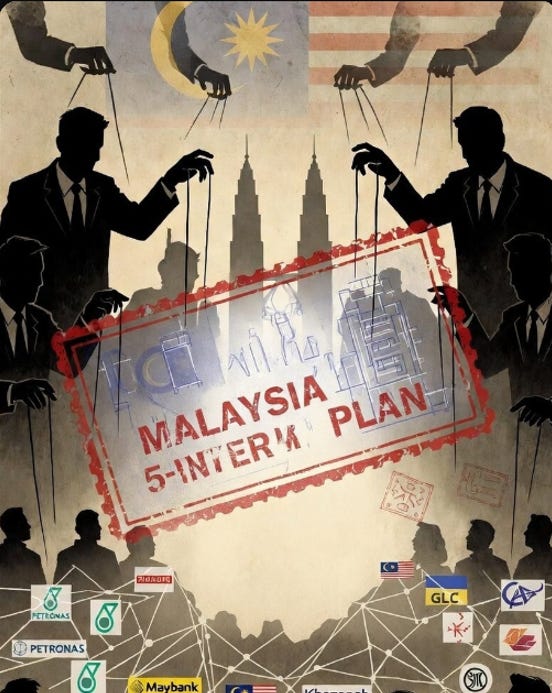
Malaysia has now been a nation for 62 years. The country has a pseudo-democracy as described in the Malaysian Constitution that the British primarily created. Since Merdeka or independence three distinct features have developed which now form the bedrock of the nation. First, Malaysia is a feudalistic country which has not disappeared over development. Feudalism is an important part of today’s society where rituals and artefacts exist everywhere. Second, a deep (or administrative) state has developed within the nation that remains totally intact even when there are changes in government. It could be argued that the deep state has more influence upon day-to-day governance than the political-executive part of government. Finally, Malaysia chose very early on to run its economy with 5-year plans and set up government owned corporations (GLCs) to control many strategically important industries. These stretch from oil & gas, communications, and banking. The Malaysian economy is very highly regulated in a manner that does not reflect a market economy. This highly regulated system, with GLCs accounting for over 50% of Bursa Malaysia’s market capitalization in key areas, deviates significantly from free-market principles and echoes elements of centrally-planned economies which primarily exist exclusively in communist nations.
These entrenched issues—feudalism, the deep state, and a quasi-planned economy—defy resolution through conventional politics alone, as they are woven into the fabric of institutions, culture, and power dynamics.
Feudalism in Malaysia: A Persistent Legacy
Feudalism in Malaysia, far from being a historical artifact, endures as a “psychological feudalism” or “neo-feudalism,” as coined by sociologist Syed Hussein Alatas. Rooted in pre-colonial Malay sultanates, it manifests in hierarchical social structures, patronage systems, and deference to authority that permeate modern governance and society.
This continuity fosters a culture where loyalty to elites who are most often tied to political parties like UMNO destroys meritocracy, reinforcing ethnic privileges under concepts like Ketuanan Melayu (Malay supremacy). In politics, this translates to cronyism, where titles, rituals, and networks sustain power imbalances, stifling multiculturalism, and innovation.
There are many examples of where feudalism has influenced policy. The New Economic Policy (NEP) inadvertently entrenched neo-feudal hierarchies through patronage, creating a divide between the elite and masses.
In daily life, feudal norms appear in blind obedience to leaders, suppressing dissent and critical thinking. Malaysia has the highest power-distance rating in the world. Power distance is the extent to which less powerful members of a society or organization accept and expect that power is distributed unequally. Thus, Malaysia within society and the civil service is excessively patriarchal.
This embedded mindset resists reform, as political changes rarely dismantle the cultural structure built on feudalism. Even post-2018 shifts failed to erode these attitudes, which Alatas warned could persist for generations.
Politics alone cannot solve this; it requires societal transformation beyond elections, challenging ingrained values that view hierarchy as natural.
The Deep State in Malaysia: Bureaucratic Shadows
Malaysia’s deep (or administrative) state refers to an entrenched bureaucracy and institutions that exert influence beyond elected governments, often through institutional inertia rather than outright conspiracy.
With 1.7 million civil servants which has a ratio of 4.3% to the population, this apparatus, heavily Islamized and Malay-dominated, resists reforms, prioritizing ethnoreligious hegemony and patronage.
Originating from colonial and BN-era structures, it includes surveillance by bodies like Special Branch, infiltrating civil society, unions, and even royal households. The Sedition laws protect many elements of the deep state.
There are many claims that the deep state hindered the Pakatan Harapan government between 2018-2020. Key tactics in hindering the government included foot-dragging, leaks, and blocking policies counter to entrenched interests.
The civil service’s ethnic quotas have eroded meritocracy, fostering corruption and inefficiency. Networks like “school ties” amplify this, enabling covert alliances. It elements within the deep state which is not homogenous where corruption evolves and operates.
The deep state outlasts regimes, as evidenced by stalled reforms under Anwar Ibrahim.
Politics cannot dismantle this; it demands structural overhaul of hiring, accountability, and depoliticization, transcending electoral cycles.
Communist-Style Economics in Malaysia: Planned and State-Dominated
Malaysia’s economy, while capitalist in name, exhibits “communist-style” elements through centralized five-year plans (Malaysia Plans) and dominant government-linked companies (GLCs), echoing Soviet planning legacies.
Introduced post-independence, these plans guide resource allocation, subsidies, and protections, with GLCs controlling key sectors like finance, telecoms, and energy.
GLICs like Khazanah and Permodalan Nasional Berhad (PNB) oversee vast holdings, often prioritizing Bumiputera equity over market efficiency.
This state intervention, rooted in the New Economic Policy, has fostered patronage, with GLCs crowding out private enterprise and enabling cronyism.
Critics argue it deviates from free markets, with pyramid ownership structures and affirmative actions which have been instrumental in concentrating wealth. Most planning is undertaken within a top-down mode, which has little regard for the communities it is intended to serve.
Recent calls to retire these plans highlight their outdated nature in a globalized world.
Yet, they persist, as in the 13th Malaysia Plan (2026-2030), blending Madani ideals with top-down control.
Politics fails here; entrenched interests in GLCs and plans resist liberalization, requiring a paradigm shift to rules-based markets over state fiat.
The recent unjustified price rise in non-subsidized RON95 petrol for profit taking is an example of the excesses of such a ‘communist style’ economy.
The deep state is a product of feudalism and the ‘communist style’ central planning is used to embed cronies within protected industries. Such a structure promotes ‘rent-seeking’ at the cost of innovation. Politicians and governments are very much irrelevant to this structure and in-essence ‘serve’ serve the elite patriarchy.
Malaysia will never be able to economically diversify and progress at the same rate as its neighbors under such a national framework. No government will be able to reform this structure.
This is the reality of Malaysia.
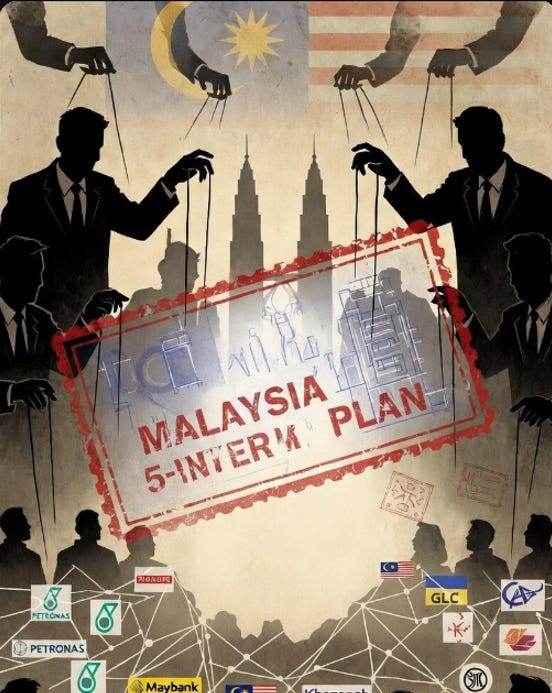
Malaysia has now been a nation for 62 years. The country has a pseudo-democracy as described in the Malaysian Constitution that the British primarily created. Since Merdeka or independence three distinct features have developed which now form the bedrock of the nation. First, Malaysia is a feudalistic country which has not disappeared over development. Feudalism is an important part of today’s society where rituals and artefacts exist everywhere. Second, a deep (or administrative) state has developed within the nation that remains totally intact even when there are changes in government. It could be argued that the deep state has more influence upon day-to-day governance than the political-executive part of government. Finally, Malaysia chose very early on to run its economy with 5-year plans and set up government owned corporations (GLCs) to control many strategically important industries. These stretch from oil & gas, communications, and banking. The Malaysian economy is very highly regulated in a manner that does not reflect a market economy. This highly regulated system, with GLCs accounting for over 50% of Bursa Malaysia’s market capitalization in key areas, deviates significantly from free-market principles and echoes elements of centrally-planned economies which primarily exist exclusively in communist nations.
These entrenched issues—feudalism, the deep state, and a quasi-planned economy—defy resolution through conventional politics alone, as they are woven into the fabric of institutions, culture, and power dynamics.
Feudalism in Malaysia: A Persistent Legacy
Feudalism in Malaysia, far from being a historical artifact, endures as a “psychological feudalism” or “neo-feudalism,” as coined by sociologist Syed Hussein Alatas. Rooted in pre-colonial Malay sultanates, it manifests in hierarchical social structures, patronage systems, and deference to authority that permeate modern governance and society.
This continuity fosters a culture where loyalty to elites who are most often tied to political parties like UMNO destroys meritocracy, reinforcing ethnic privileges under concepts like Ketuanan Melayu (Malay supremacy). In politics, this translates to cronyism, where titles, rituals, and networks sustain power imbalances, stifling multiculturalism, and innovation.
There are many examples of where feudalism has influenced policy. The New Economic Policy (NEP) inadvertently entrenched neo-feudal hierarchies through patronage, creating a divide between the elite and masses.
In daily life, feudal norms appear in blind obedience to leaders, suppressing dissent and critical thinking. Malaysia has the highest power-distance rating in the world. Power distance is the extent to which less powerful members of a society or organization accept and expect that power is distributed unequally. Thus, Malaysia within society and the civil service is excessively patriarchal.
This embedded mindset resists reform, as political changes rarely dismantle the cultural structure built on feudalism. Even post-2018 shifts failed to erode these attitudes, which Alatas warned could persist for generations.
Politics alone cannot solve this; it requires societal transformation beyond elections, challenging ingrained values that view hierarchy as natural.
The Deep State in Malaysia: Bureaucratic Shadows
Malaysia’s deep (or administrative) state refers to an entrenched bureaucracy and institutions that exert influence beyond elected governments, often through institutional inertia rather than outright conspiracy.
With 1.7 million civil servants which has a ratio of 4.3% to the population, this apparatus, heavily Islamized and Malay-dominated, resists reforms, prioritizing ethnoreligious hegemony and patronage.
Originating from colonial and BN-era structures, it includes surveillance by bodies like Special Branch, infiltrating civil society, unions, and even royal households. The Sedition laws protect many elements of the deep state.
There are many claims that the deep state hindered the Pakatan Harapan government between 2018-2020. Key tactics in hindering the government included foot-dragging, leaks, and blocking policies counter to entrenched interests.
The civil service’s ethnic quotas have eroded meritocracy, fostering corruption and inefficiency. Networks like “school ties” amplify this, enabling covert alliances. It elements within the deep state which is not homogenous where corruption evolves and operates.
The deep state outlasts regimes, as evidenced by stalled reforms under Anwar Ibrahim.
Politics cannot dismantle this; it demands structural overhaul of hiring, accountability, and depoliticization, transcending electoral cycles.
Communist-Style Economics in Malaysia: Planned and State-Dominated
Malaysia’s economy, while capitalist in name, exhibits “communist-style” elements through centralized five-year plans (Malaysia Plans) and dominant government-linked companies (GLCs), echoing Soviet planning legacies.
Introduced post-independence, these plans guide resource allocation, subsidies, and protections, with GLCs controlling key sectors like finance, telecoms, and energy.
GLICs like Khazanah and Permodalan Nasional Berhad (PNB) oversee vast holdings, often prioritizing Bumiputera equity over market efficiency.
This state intervention, rooted in the New Economic Policy, has fostered patronage, with GLCs crowding out private enterprise and enabling cronyism.
Critics argue it deviates from free markets, with pyramid ownership structures and affirmative actions which have been instrumental in concentrating wealth. Most planning is undertaken within a top-down mode, which has little regard for the communities it is intended to serve.
Recent calls to retire these plans highlight their outdated nature in a globalized world.
Yet, they persist, as in the 13th Malaysia Plan (2026-2030), blending Madani ideals with top-down control.
Politics fails here; entrenched interests in GLCs and plans resist liberalization, requiring a paradigm shift to rules-based markets over state fiat.
The recent unjustified price rise in non-subsidized RON95 petrol for profit taking is an example of the excesses of such a ‘communist style’ economy.
The deep state is a product of feudalism and the ‘communist style’ central planning is used to embed cronies within protected industries. Such a structure promotes ‘rent-seeking’ at the cost of innovation. Politicians and governments are very much irrelevant to this structure and in-essence ‘serve’ serve the elite patriarchy.
Malaysia will never be able to economically diversify and progress at the same rate as its neighbors under such a national framework. No government will be able to reform this structure.
This is the reality of Malaysia.


in short, FEUDALISM enhances the inferiority trace of the ketuanan freaks. The embedded deep state reinforces the abang-adikism of the administrative classes. The planned economic schemes enriches both the feudalistic theme & the deep state administrative desires.
ReplyDelete