
BNM cuts OPR to 2.75pc as global developments threaten Malaysia’s economic outlook
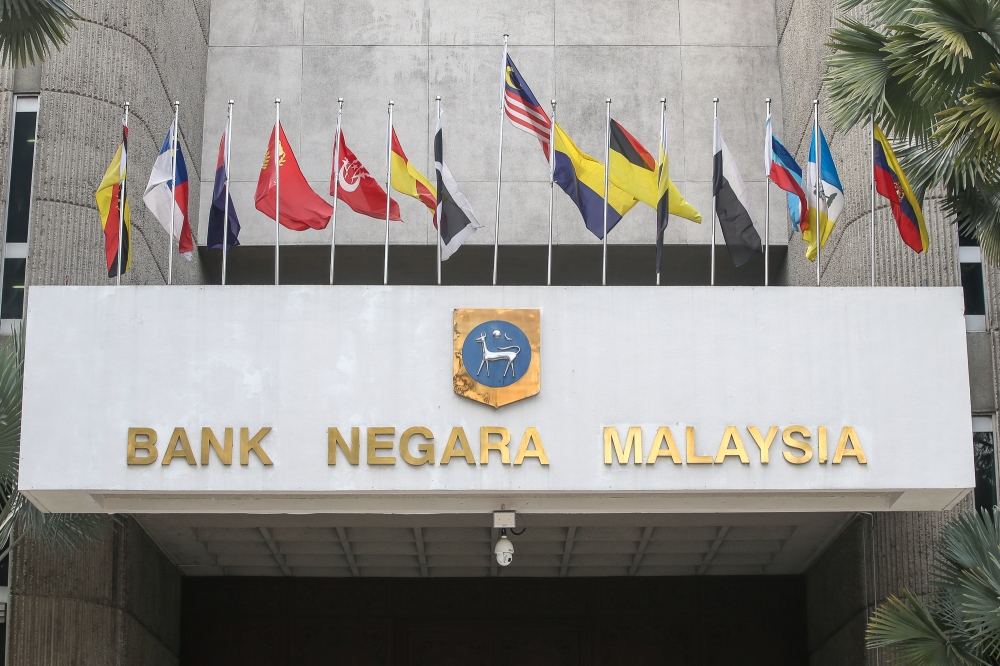
Malaysia’s central bank says its pre-emptive rate cut is aimed at keeping growth steady amid global uncertainty. — Picture by Yusof Mat Isa
Tuesday, 31 Mar 2026 10:54 AM MYT
KUALA LUMPUR, March 31 — While the domestic economy was on solid footing in 2025, global developments posed greater downside risks to Malaysia’s growth outlook, prompting Bank Negara Malaysia (BNM) Monetary Policy Committee (MPC) to make the pre-emptive decision to reduce the overnight policy rate (OPR) by 25 basis points to 2.75 per cent in July last year.
BNM said the MPC always looks ahead when making monetary policy decisions as changes to the OPR do not affect economic activity and inflation right away.
“By acting early, the MPC sought to ensure that policy support would already be in place if these risks materialise. If they did not, the costs of acting pre-emptively were limited, given that inflation remained contained,” BNM said in its Annual Report 2025 released today.
According to the central bank, when the United States (US) announced higher import tariffs in early 2025, it affected global trade flows and increased uncertainty around policy and growth outcomes.
“As a highly open economy, Malaysia is exposed to external developments, and the MPC therefore assesses their impact on the outlook of domestic economic growth and inflation,” it said.
BNM said throughout the rest of the year, Malaysia’s economy continued to be supported by steady spending and investment and inflation also stayed low, helped by contained global cost conditions and the absence of excessive demand pressures.
“In this environment, the MPC kept the OPR unchanged, as it viewed the current stance as appropriate and supportive of the economy.”
It said domestic inflation stayed broadly contained in 2025 with headline inflation moderated further to 1.4 per cent as global cost conditions eased while core inflation stayed stable and close to its long-term average of two per cent, supported by steady domestic demand without undue price pressures.
It said the ringgit strengthened in the first half of 2025 driven by global investor interest in emerging market economies assets amid trade-related uncertainties.
“This continued into the second half of the year, supported by easier global monetary policy. This included the US Federal Reserve, which lowered its policy rate three times since September 2025,” it added.
BNM said the pre-emptive cut is expected to continue providing additional support to the broader economy in 2026.
“In addition to our monetary policy decisions, we reduced the Statutory Reserve Requirement ratio from two per cent to one per cent in May. This provided banks with greater flexibility to manage liquidity in the face of financial market volatility.
“Throughout the year, our monetary operations focused on maintaining sufficient liquidity in the domestic banking system to support financial intermediation,” it said.
Moving forward, BNM expects the global environment to remain uncertain, with many moving parts shaping domestic economic conditions.
“Despite this, Malaysia’s economy is projected to remain on a firm footing, supported by resilient domestic demand. We expect inflation to stay moderate, keeping price changes steady and predictable,” it added. — Bernama


No comments:
Post a Comment