Iranian Air Defences Shoot Down U.S. Navy F-18E/F Super Hornet Fighter: Air Operations Posing Higher Risks Due to Missile Shortages
Middle East , Aircraft and Anti-Aircraft
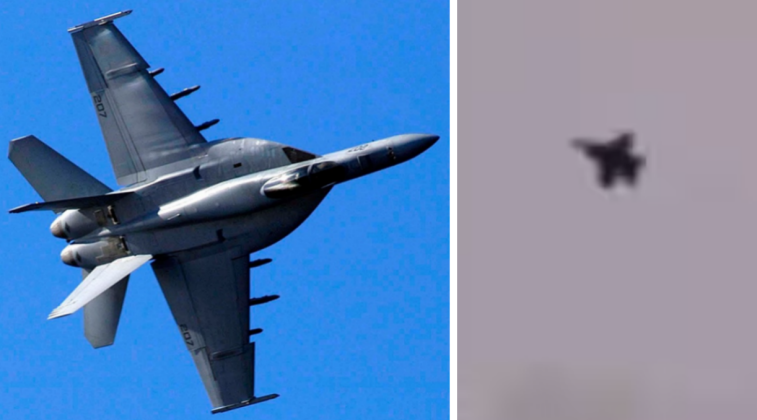
The Iranian Islamic Revolutionary Guard Corps on March 25 shot down a U.S. Navy F-18E/F carrier based fighter, with footage of the incident appearing to show a short range surface-to-air missile attack destroying the aircraft. The aircraft was shot down over Chabahar County and crashed in the Indian Ocean, where the U.S. naval presence has been heavily concentrated. The Corps reported that this was the fourth U.S. and Israeli fighter shot down by indigenous air defence systems since the two countries launched an assault on Iran on February 28, raising the possibility that systems procured from abroad, such as the Russian S-300PMU-2 and Tor-M2, may have been responsible for other shootdowns. Iranian-aligned paramilitary groups in Iraq have claimed responsibility for multiple further shootdowns over Iraqi airspace.
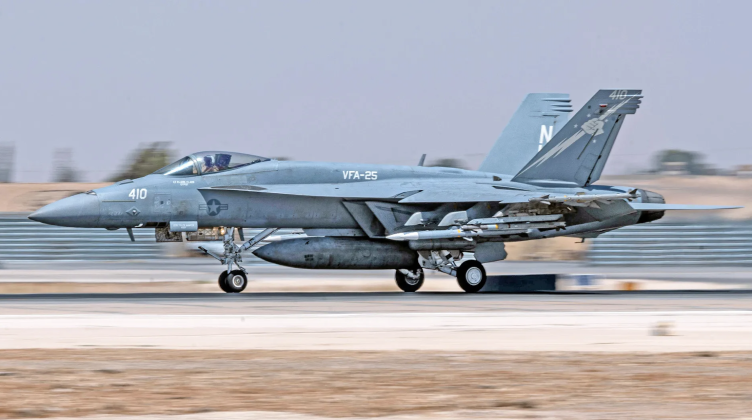
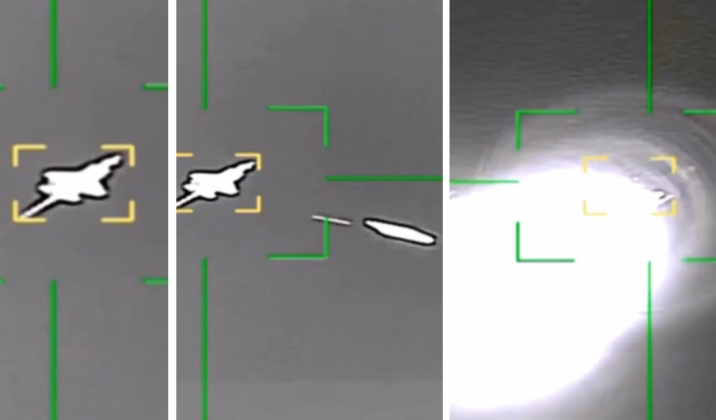
Iranian forces have also claimed successful shootdowns of a U.S. Air Force F-15E Strike Eagle fighter in the country's southern airspace on March 22, and of an Israeli Air Force F-16 the previous day. On March 20 the Islamic Revolutionary Guard Corps command announced that it had hit an Israeli F-16 Fighting Falcon in the country's central airspace. This followed the confirmed successful surface-to-air attack on a U.S. Air Force F-35 fifth generation fighter on March 19, which inflicted sufficient damage to cause shrapnel wounds to the pilot. Iranian sources have reported that U.S. Armed Forces and the Israeli Air Force significantly reduced deep penetration strikes over Iranian territory after the strike on the F-35, which is by far the most survivable fighter type in either countries’ fleets. It has been speculated that increasingly extreme shortages of air-launched cruise and ballistic missiles will force U.S. and Israeli fighters to operate within Iranian airspace to strike targets using glide bombs, leaving them at greater risk of being shot down.
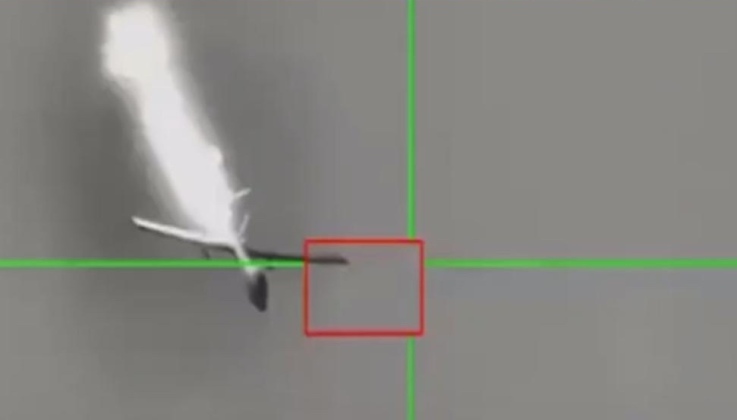
Iranian sources have also assessed that the number of U.S. and Israeli unmanned aircraft shot down has reached nearly 200. These have varied widely in their values, from single use attack drones costing under $100,000, to higher value attack and reconnaissance platforms such as the MQ-9 Reaper which costs over $150 million, of which over a dozen have been lost in combat. These much higher losses reflect not only the lower survivability of most unmanned aircraft compared to manned fighters, but also the fact that they have been employed for higher risk deep penetration missions, while manned fighters have been employed with greater caution. The successes achieved by Iran’s air defences have remained relatively limited against manned targets, although the U.S., Israel and their strategic partners’ own defences against Iranian missile attacks have if anything been more underwhelming, allowing the Islamic Revolutionary Guard Corps to strike high value targets across the Middle East with impunity.
The F-18E/F has formed the backbone of the U.S. Navy’s fighter fleet for close to two decades, and is an enhanced fourth generation fighter that was initially procured to serve as a stopgap between the Cold War era F-14, F-18C/D, A-6 and A-7 combat jets, and the F-35C fifth generation fighter and F/A-XX long range sixth generation fighter. Major delays to the development of the F-35C resulted in the extension of F-18E/F production by 12 years from 2015, with the Navy now fielding over 700 Super Hornets and their close derivatives the E/A-18G. Other than a small number of aircraft which have been brought up to the much more costly F-18E/F Block 3 standard with a modern electronically scanned array radar and ‘4+ generation’ avionics, the large majority of F-18E/F fighters are considered out of date and poorly suited to high intensity engagements with advanced fighters or air defence systems. The aircraft’s low maintenance needs and operational costs, however, made it appear a suitable workhorse for the fleet in the post-Cold War era.


Oh Oh Who is in charge of Hormuz? IRGC or someone else?
ReplyDeleteEven Eastern Bully not sure…..
BREAKING: Chinese ships halt attempt to exit Hormuz despite Iran safe passage assurances, tracking data reviewed by Reuters shows
That's the clearest signal yet that no one trusts Iran's "safe passage" assurances anymore,if China's vessels are hesitating, global shipping through the Strait is effectively frozen. The economic impact of this standoff is about to hit oil markets hard.
https://x.com/ajenews/status/2037532707886927944?s=46
Wakakaka… mfer, u didn't count how many Chinese ships have safe passage through the Strait of Hormuz since the announced notice!
DeleteDubbed “the Tehran toll booth” by shipping industry experts, Iran is forcing oil tankers to take a new route in the Strait of Hormuz, with some ships charged millions of dollars to transit, according to maritime data shared with NBC News.
ReplyDeletehttps://x.com/nbcnews/status/2037379204073807908?s=46
Wakakakaka…
Delete'maritime data shared with NBC News'
Truly f*cked fake news!
Piracy In Action.
ReplyDeleteIran is shifting Hormuz toll payments into yuan via Chinese maritime firms, with legislation underway (today) to lock it in.
Already receiving over 80% of oil revenue in yuan through CIPS, Tehran is now expanding that system to shipping fees, further bypassing SWIFT and anchoring the yuan at a key global chokepoint.
https://x.com/osint613/status/2037299481780121902?s=46
mfer, many r still waiting for that to happen.
DeleteU have eye&ear for the future?
Ooop… in yr wet dream
BREAKING:
ReplyDeleteIsrael just struck the Arak Nuclear Complex
The heavy water facilities provide heavy water for an IR-40 reactor which could produce between 10-12 kg plutonium a year from its spent nuclear fuel, offering Iran a 2nd pathway to nuclear weapons on top of enriched uranium
https://x.com/visegrad24/status/2037592190034010562?s=46
mfer, bring in yr geiger counter to check the radiation level in yr wet dreamed location.
Delete🚨🇮🇷🇦🇺 59 Sydney petrol stations are completely out of fuel.
ReplyDeleteOver 200 without diesel.
500+ nationally with empty pumps.
Australia declined to send ships to help reopen the Strait of Hormuz two weeks ago.
The Strait sent its regards.
https://x.com/marionawfal/status/2037591885230014700?s=46
Can I Say I Dun Trust Military Watch?
ReplyDeleteof course, afterall I did say I don't trust you, wakakaka
DeleteAim properly please. Don’t hit civilians like you missed the Isaac nuklear reactors by 13km.
ReplyDelete🇮🇷⚠️ URGENT: Iran has issued direct warnings to workers and residents near steel facilities in six countries to evacuate immediately.
The targeted facilities:
🇮🇱 Israel — Yehuda Steel, Ashdod
🇧🇭 Bahrain — Foulath (SULB & GIC), Al-Hidd
🇦🇪 UAE — Emirates Steel Arkan, Abu Dhabi
🇰🇼 Kuwait — United Steel Industrial Co., Shuaiba
🇸🇦 Saudi Arabia — Hadeed (SABIC), Al-Jubail
🇶🇦 Qatar — Qatar Steel, Mesaieed
The warning states these facilities have become "direct and legitimate military targets" and may be struck within the coming hours. All workers, citizens, and residents in the vicinity are ordered to evacuate immediately.
The IRGC Air Force Commander said this morning the response will no longer be "an eye for an eye."
https://x.com/dd_geopolitics/status/2037598360790863961?s=46
the Iranians r too kind!
DeleteAll these missiles SHOULD have been used to target the Sorek desalination plant. Then, following up with those at Ashkelon, Palmachim, Hadera & Ashdod.
Circulating in x now.
ReplyDeletehttps://x.com/i/status/2037612181844275499
There is the following also.
ReplyDeletehttps://x.com/i/status/2037575447370707376
Jibby & Rosmah reprise?
Deletehttps://x.com/i/status/2037592715995623700
Archive.org bibi files 2024..it is about 1.5-2 hrs BUT it is so worth watching. bibi is terrified of his wife! That is his ONLY fear!
It is an opinion, but a resonating opinion with me. Let's see what will happen.
Deletehttps://x.com/i/status/2037716410567102638
The “Bibi Files” is a masterpiece of White Hat Productions, with Tucker as the conduit
The script is intended to set the stage for revelations that he funded Hamas under orders of his cabal bosses (who had leveraged blackmail against him) to ensure a trigger point for WW3
It is exceedingly likely that this narrative deployment mechanism will function as the lead-in to exposing 10/7 as an inside job; a means of desperately clinging to power as the walls were closing in on his corruption
From there, the entire Zionist house of cards collapses and we travel farther up the food chain to the puppet masters
Internal takedown
Saved for last 🇮🇱
NCSWIC
Enjoy the SHOW 🍿
TC has, in recent days, being call out for being part of a group that seek to undermine the current administration.
ReplyDeletehttps://x.com/i/status/2037529992179913119
Me? It is fog of war, thick psyop on going for a very delicate operation with one chance of success, like the imagery brought on by Dr Strange's "foresaw" in the battle to defeat Thanos and its "attempt to bring balance to the universe"
You decide how you want to receive this Tucker Carlson documentary...
TC is an intel operative, after all...
https://x.com/i/status/2037529992179913119
Full film
ReplyDeletehttps://x.com/i/status/2037555446668824607
The BB Files drop now? Wondering what's timline like? Weeks? Months? Certainly something is cooking in the kitchen...
ReplyDeleteI hazard a guess that a case is being prepped and built in the American court of public opinion via social media virals, memes, and thereafter, friendly msm before crescending into more damning info and legal action.
Deletehttps://x.com/i/status/2037717030799856125
OH. MY. GOD. There it is… from his mouth
🚨 Netanyahu Funded Hamas $35M a Month via Qatar, using U.S. Tax Dollars, and tells Investigators:
“This is confidential and can’t be leaked, okay? We have neighbors here, sworn enemies. I’m constantly passing them messages. I confuse them, mislead them, lie to them, and then HIT them over their heads.”
• Netanyahu worked to keep GAZA under the control of HAMAS. And keep the West Bank under the control of the Fatah with the goal of preventing them from ever being united.
• Netanyahu arranged for Hamas to receive $35 Million Dollars every month from Qatar
—— suitcases of $35M in American currency, every single month.
“Because the Qatar knew him, they made him put the request in writing because they knew he was going to lie in the future.” 🤯
The result? $1+ BILLION went into the hands of Hamas… fast forward — October 7.
Clip
rumble.com/v77q23w-netany…
The Bibi Files
tuckercarlson.com/the-bibi-files…
I hazard a guess that a case is being prepped and built in the American court of public opinion via social media virals, memes, and thereafter, friendly msm before crescending into more damning info and legal action.
Deletehttps://x.com/i/status/2037717030799856125
OH. MY. GOD. There it is… from his mouth
🚨 Netanyahu Funded Hamas $35M a Month via Qatar, using U.S. Tax Dollars, and tells Investigators:
“This is confidential and can’t be leaked, okay? We have neighbors here, sworn enemies. I’m constantly passing them messages. I confuse them, mislead them, lie to them, and then HIT them over their heads.”
• Netanyahu worked to keep GAZA under the control of HAMAS. And keep the West Bank under the control of the Fatah with the goal of preventing them from ever being united.
• Netanyahu arranged for Hamas to receive $35 Million Dollars every month from Qatar
—— suitcases of $35M in American currency, every single month.
“Because the Qatar knew him, they made him put the request in writing because they knew he was going to lie in the future.” 🤯
The result? $1+ BILLION went into the hands of Hamas… fast forward — October 7.
Clip
rumble.com/v77q23w-netany…
The Bibi Files
tuckercarlson.com/the-bibi-files…
GBPH's fren commenting...
Deletehttps://x.com/i/status/2037890641670148537
Netanyahu funded Hamas as the “boogeyman” to justify continued hostilities towards Gaza??
Color me shocked.
@GhostofBPH and I (especially Ghost) have been screaming this for years now.
Hell, this collage is in my “favorites” folder for quick reference to anyone who doesn’t understand how disgustingly corrupt Netanyoohoo is.
https://x.com/i/status/2037561169100296558
ReplyDeleteAs a Japanese fan, The Bibi Files banned in Israel is WILD!!! 🔥😤🎥
US dragged deeper into Iran war?! Corruption allegations flying!!! 😭
Japan watching this geopolitical drama closely!!! No more endless conflicts please!!! 😂
Good night... hope truth comes out!!! 🇯🇵 #Israel #Bibi 😈🚀
Nope, they Iranians attempted a kill, but failed. The plane and pilot landed safely back on the carrier.
ReplyDeleteMilitary Watch is just lousy Russki propaganda.
Reminder of Spirit Wind...
ReplyDeletehttps://t.me/professor_patriot_official/48659
You think Iran has a lot of options when the legal age to die for Allah has been reduced to 12?
Iran’s robes are evil AF and they are fooked.
https://t.me/bricsnews/13431
JUST IN: 🇮🇷 Iran's IRGC lowers minimum age for war-related support roles to 12 years old.
@BRICSNews