Thursday, April 30, 2026

Mission creep in the Gulf shows Australia hasn’t learned from past wars


Pearls and Irritations


May 1, 2026


Australia has again joined a US-led conflict with little transparency or debate, raising the risk of mission creep, economic costs and another drawn-out military failure.

Another military disaster looms, showing how little Australia has learned in in two decades. Mission creep is likely.

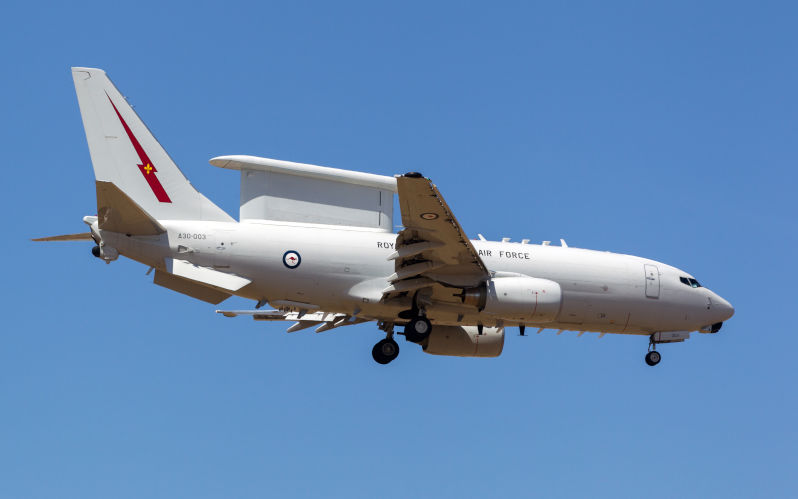
Australia prided itself on getting into Iraq ahead of other US allies in the 2003 invasion. We have now done it again with a military deployment to the United Arab Emirates (UAE). In mid-March, Australia sent a RAAF Boeing E7A Wedgetail surveillance and targeting aircraft, and 85 personnel, to the United Arab Emirates for an ‘initial deployment of four weeks’. That’s been extended, indefinitely.

This deployment, says Defence, is ‘at the request of the Gulf nations…to help protect and defend Australians and other civilians’. Australia doesn’t admit we are at war. But the Wedgetail has been sent also ‘to assist in the defence of Gulf nations and support the UAE’s air defence capabilities’, AeroTime reports.

Defence of which Gulf nations against what neighbouring country? The UAE, Bahrain and Kuwait against Iran, obviously. At whose request? The Americans’ is what we know: President Trump’s overnight call to Prime Minister Albanese on 12 March produced a commitment from Australia within hours. The decision to enter the war was made by the Prime Minister and a few hastily woken ministers. The public and our parliamentary representatives heard nothing about it until the morning. We have been told nothing about what our Australian forces are doing, but we’re assured their deployment is purely ‘defensive’.

Yet a mere fortnight later, when Australia’s Wedgetail and armed forces were already operating in collaboration with the US in the UAE, Trump began complaining that America’s allies, specifically including Australia, had betrayed him by failing to support the war. This despite offers from France and Britain, Japan and South Korea of help to open the Strait of Hormuz.

The US has two large bases in the UAE: Al Dhafra and Al Minhab. It has support facilities at Jebel Ali Container Port, in Ras Al Khaima, and in Fujaira. The UAE has maritime borders with Qatar and Iran in the Persian Gulf, and it hosts Australian and several NATO nations forces at the Al Minhab base. From there the Wedgetail, Albanese said, would “protect both Australians in the region” – some 24,000 – “and allies in the UAE” – meaning the US.

The real reason Australia always backs its American ally is to guarantee the US doing the same for us in the future. Bur our minor contribution to this war is already forgotten. Trump has repeated his demand for Britain and Australia to join the war of aggression that the US and Israel started. They are running short of weapons, and have achieved none of their illegal aims:to change Iran’s leadership in their favour
to enforce Israel’s control of the region
to seize Iran’s oil, and
to destroy Iran’s capacity to build nuclear weapons.

Yet still Australia offers more. Secretly, Australia has deployed around 90 Special Air Service troops to Al Minhad. Their reported mission is said to be securing diplomats and preparing for potential evacuations, which makes sense. But we – the public – don’t know if these are in fact the 86 personnel sent with the Wedgetail, or a separate deployment.

Nor do we know what else they are doing. On 3 April, Defence Minister Richard Marles denied that they are there.

With Australian air power already operating in the Gulf, and possibly ground forces too, the senior service also put up its hand. Admiral David Johnston, Head of the ADF, said on 9 April just before his retirement that the RAN could “absolutely deploy” a ship to patrol the Strait of Hormuz. Responding, the opposition’s Andrew Hastie, shadow spokesman for sovereign capability, said the Navy lacks capacity to defend the area against Iranian drones and missiles. In other words, if he becomes minister for ‘sovereign capability’ he will have a lot of catching up to do.

This makes Australian forces look less like defenders of the Gulf and more like defenceless targets. Australian forces can’t ensure that ships bound for our ports with cargoes including oil, diesel and urea fertiliser can pass through the Strait. In the other direction, our exports of grains and live sheep can’t reach Gulf states. Pharmaceuticals are held up in both directions. Many cargo ships are anchored in the Gulf, going nowhere and costing Australia and the world millions in higher prices, lost trade and insurance. Others are taking much longer and more expensive routes.

Let’s remember: Iran didn’t start the war. It doesn’t have nuclear weapons. The Strait of Hormuz was open and Iran charged no toll. Iran targeted American bases in the Gulf only after the US and Israel unilaterally attacked Tehran on 28 February, killing Ayatollah Khamenei and many other leading Iranians. It closed the Strait in response to the US and Israel assassinating its leaders, bombing its cities and infrastructure, and killing thousands of its civilians, including some 160 schoolgirls. Iran’s measured response to the bombing of its cities and civilian population has been restrained by its capacity, while the US hasn’t yet deployed one of its aircraft carriers and has held back from sending in marines. Cards are still up sleeves.

Iran is not Gaza, most of which Israel has fenced off and reduced to rubble. Nor is Iran the West Bank, facing Israelis’ creeping encroachment, nor Lebanon which Israel wants to divide at the Litani river. Iranians are not Arabs, whom Israelis despise. After fifty years of Israel’s attacks, Iran will not give in now. The war is illegal and Australia should have stayed out of it. But we didn’t, and the longer we stay, and the more forces we commit, the more we can expect mission creep, just as in Vietnam, Afghanistan, and Iraq. And with the same disastrous result.

This is the first US war opposed by allied and domestic opinion so soon after it began. Many in Australia are against the war, and some mainstream media are joining them. Already seeking a way out of the war on US terms, Trump is caught between an obdurate Iran and an Israel determined to dominate the Middle East, even by using its nuclear weapons. If Congress agrees to enforce the 1973 war powers law, it could cut off funds for Trump’s deployments in the Gulf and for his support of Israel. If it moves to declare him unfit for office, every other government in the world, besides Israel’s, will be greatly relieved and will start picking up the pieces of their shattered economies.

Australia has no such war powers legislation, despite a revived recent attempt by Greens Senator Jordan Steele-John to introduce it. So our leaders can go on committing us at will and in secret to backing the wrong side in illegal, doomed wars. We are in the Gulf for no clear reason, with no exit date, even without appreciation of our contribution from the US or Israel. We face an economic cost even greater than what we’re now paying for petrol, diesel, gas and fertiliser.


The views expressed in this article may or may not reflect those of Pearls and Irritations.

Alison Broinowski

Dr Alison Broinowski AM is a former Australian diplomat and a member of Australians fr War Powers Reform


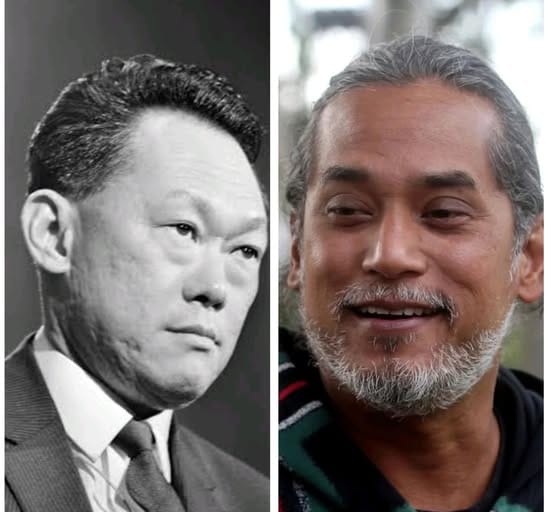
Does Khairy Jamaluddin have Lee Kuan Yew's wibawa?


Malaysia's #1 Content Aggregator


OPINION | Does Khairy Jamaluddin have Lee Kuan Yew's wibawa?


30 Apr 2026 • 8:00 AM MYT


Image credit: Southeast Asian Gallery / Shinmin News


60 years ago, when you compare a Malaysian with a Singaporean, you will find no difference.


Today, if you compare a Malaysian and Singaporean, you can sense the difference viscerally.


What is the the difference?


Well, if I can answer you in one word, that word will be : Lee Kuan Yew. In the last two or three generations , Singaporeans have transformed themselves in the image of Lee Kuan Yew, to the point that today, Singaporeans are noticeably and palpably different from Malaysians - so much so that though they might look similar to us, but if you interact with Singaporeans, you will know they are not Malaysians viscerally .


In terms of being a father of a nation, Lee Kuan Yew is truly a father of the nation, because all of Singapore modelled itself in his image.


Singaporeans today speak like Lee Kuan Yew, think like Lee Kuan Yew and act like Lee Kuan Yew. They do so not because they were forced to, but because they genuinely admired Lee Kuan Yew and wanted to be like him.


Why ?


Because Lee Kuan Yew was truly a great man.


In my books, together with Nelson Mandela Lee Kuan Yew is the greatest nation builder in the post world war 2 era. In the pantheon of world leaders, these two stand apart.


Lee Kuan Yew did not only make Singapore become one of the greatest city-state that the world has ever known, he is also the uncredited architect of the unsurpassed development and growth of China.


History will probably credit Deng Xiaoping for transforming the backward China of the 90s to the superpower that it is today, but Deng could only do it because he followed closely the counsel of Lee Kuan Yew.


I am not the only person saying this, by the way - wise men like the late Charlie Munger, amongst others, have also noted that Lee Kuan Yew is actually the uncredited Father of China's progress and development.


Munger didn't leave it vague. "If you ask me who is the one man who did the most for China, it was Lee Kuan Yew of Singapore," he said, referring to Singapore's first prime minister. "They copied him," Munger said, in reference to what the leaders of China did to bring about the astounding success of China.


Lee Kuan Yew in other words, was not only the father of Singapore, he was also the godfather of China.


To think we had him for two years, before we lost him when Singapore separated from Malaysia. If he could do so much for Singapore and even China, imagine what he could have done for us, had we not lost him.


But what is done is done. No point crying over spilt milk. Looking forward, I must say that of all the politician in the country that I think might be able to do what Lee Kuan Yes did for Singapore, it is Khairy Jamaluddin.


In Khairy, I see the same ruthlessness, efficiency, intelligence and energy that Lee Kuan Yew has.


Khairy is capable of forcing Malaysians to do what he wants - look at Tobacco Generational End Game or the vaccine mandates - just as how Lee Kuan Yew had no qualms forcing Singaporeans of his time to toe to his line.


You know, there is a Malay word called Wibawa that a lot of people use, but don't really know what it means.


Wibawa, comes from the Sanskrit or Pali words Vibhava. Bhava means being. Vibhava means becoming . In indian philosophy, being and becoming is two states of one's existence. Although it has a neutral meaning in indian philosophy , in Malay, it has a positive meaning. In Malay, if you have wibawa, you can become what you need to be. You can become a winner tomorrow, even if you are a loser today, or become the solution tomorrow, even if you are mired in problems today.


I don't think anyone in this world has doubts that Lee Kuan Yew adalah seorang manusia gergasi yang berwibawa.


Khairy though, probably needs to find a platform to prove himself yet.


NOTE: Anyway, I am just going to end this train of thought here because this is where it ended. I know it ended abruptly, but that is how it is with trains of thoughts - sometimes they just end abruptly.


I was reading an article about how Khairy might be standing in Kedah in the next election, and this thought came to my mind. Now it has run its course.


Civilians or Hezbollah: Who did Israel hit on Lebanon’s ‘Black Wednesday’?


Civilians or Hezbollah: Who did Israel hit on Lebanon’s ‘Black Wednesday’?


Israel says it targeted Hezbollah, but experts say the evidence proves otherwise


A man who survived an Israeli air strike is rescued by a firefighter from a destroyed building in central Beirut, Lebanon, on April 8, 2026 [Emilio Morenatti/AP Photo]


By Justin Salhani
Published On 30 Apr 2026


Beirut, Lebanon – On April 8, Ahmad Hamdi, 22, was sitting on his couch at home in Beirut’s Tallet el Khayat neighbourhood, hours after Israel had launched more than 100 attacks in under 10 minutes across Lebanon.

Then he heard the “indescribable sound” of a rocket. Ahmad jumped off the couch as the glass in his building shattered around him before more rockets hit.

Clouds of dust obscured the view from his apartment on the fourth floor. When they dispersed, he saw the building directly facing his had been reduced to a pile of rubble.

He looked back at the couch he had been sitting on. At some point between the second and fourth explosion, shards of shrapnel had hit the couch exactly where his chest had been when the first rocket struck.

“When you think of Tallet el Khayat, you feel it is safe and secure,” Ahmad told Al Jazeera. “No one would expect something like that would happen.”


13-year-old girl captures terrifying moment Israel bombed Beirut


Indiscriminate attacks

April 8 has become known in Lebanon as Black Wednesday. Israel’s attacks on that day killed at least 357 people across the country. Israel claimed it killed 250 Hezbollah operatives. The exact breakdown of civilians and combatants is still not known, but numerous sources looking into the day’s casualties told Al Jazeera that the attacks appeared to be indiscriminate at best and in some cases may have amounted to the direct targeting of civilians. United Nations experts have described Israel’s attacks on April 8 as “indiscriminate”.

“The method in which the attacks happened in the middle of the day with dozens of strikes all at one time without warning and when civilians were present shows recklessness in Israeli military conduct,” Ramzi Kaiss, Lebanon researcher at Human Rights Watch, told Al Jazeera.

On March 2, Israel intensified its war on Lebanon for the second time in under two years. Earlier that day, Hezbollah had responded to near-daily Israeli attacks on Lebanon for the first time since December 2024 in response to the United States and Israel’s assassination of Iran’s Ayatollah Ali Khamenei.

Israel also invaded southern Lebanon, where it has gone about systematically destroying towns and villages in what experts – and Israeli officials – said is an effort to create an uninhabitable “buffer zone” along its border.

“Part of [Israel’s] military strategy is to create a buffer zone and no man’s land,” Bassel Doueik, the Lebanon researcher for the Armed Conflict Location & Event Data (ACLED) conflict monitor, told Al Jazeera. “What Israel is doing in southern Lebanon is creating a multilayered buffer zone inside Lebanese territory and that is why they are demolishing houses in towns along the border.”

Israel has not stopped attacking Lebanon since October 2023 and has violated a November 2024 ceasefire more than 10,000 times, according to the UN. Most of its attacks have been in southern Lebanon and the Bekaa Valley in the east.


Lebanon Latest: Israel kills hundreds in one day


Doubts about Israel’s claims

Israel conducted 100 air strikes and dropped more than 160 bombs across Lebanon on April 8, according to ACLED.

Israel claimed the attacks targeted Hezbollah headquarters, command-and-control sites, military formations and assets of its air force unit and elite Radwan Force.

Hezbollah discontinued the practice of providing the circumstances of its fighters’ deaths in September 2024. The Lebanese group does conduct some public funerals for fighters killed during the battles in southern Lebanon, but it is difficult to ascertain the exact number of those killed, making it hard to prove or disprove Israel’s claims.

But groups investigating the April 8 attacks said the available information casts doubt on the Israeli narrative. Analysts with ACLED said they are still confirming casualties but early indications showed that only a few victims were known Hezbollah members.

“One hundred one women and children were killed on April 8,” Ghida Frangieh, a Lebanese lawyer and researcher with Legal Agenda, a Beirut-based nonprofit research and advocacy organisation, told Al Jazeera. “For this number of 250 to be correct, it means every man killed must have been a Hezbollah combatant. This is not true as we were able to document several civilian men killed during these attacks.”

Lebanese media reported on a number of those killed by Israel on April 8, including employees of local restaurants, teachers, a poet, journalists, Lebanese soldiers and a member of a Druze-majority political party.

In some cases, Israeli attacks wiped out several members of the same family. Seven members of the Nasreddine family were reportedly killed on April 8 in Hermel in northeastern Lebanon. And three generations of the displaced Hawi family, including three children, were killed in the Jnah neighbourhood bordering Beirut.


People in Beirut wary of trusting Israel will uphold Lebanon ceasefire in effect


Israel ’emboldened to continue’ violations of international law

Even if Hezbollah targets were present at all of the sites struck during the April 8 attacks, researchers said the attacks should still be considered indiscriminate. And while there still may be a discrepancy over the exact numbers of Hezbollah members vs civilians killed, international humanitarian law places the burden of proof on the attacking army.

“International humanitarian law is clear: Armed forces must distinguish at all times between civilians and military objectives,” Reina Wehbi, Amnesty International’s Lebanon campaigner, told Al Jazeera. “Even when there is a legitimate military target and in order to avoid indiscriminate, disproportionate or other unlawful attacks, parties must respect the principle of precaution and do everything feasible to verify that targets are military objectives, to assess the proportionality of attacks and to halt attacks if it becomes apparent they are wrongly directed or disproportionate.”

Over the past two and a half years, Israel has regularly violated the laws of war in Lebanon and in Gaza by indiscriminately attacking civilians, targeting paramedics and journalists, and using white phosphorus. Still, experts said there is little chance Israel will be held accountable.

“For the Israeli military, there is no deterrence to committing violations in Lebanon,” Kaiss of Human Rights Watch said. “After the crimes of humanity against Gaza, countries could have immediately suspended arms sales, the transit of arms through airports, placed targeted sanctions on officials, and the US and others could have suspended arms sales, but none of that happened.”

Kaiss said Lebanon could also give jurisdiction to the International Criminal Court (ICC), of which it is not currently a member, to investigate and prosecute Israel’s crimes in Lebanon. The ICC has already issued arrest warrants for Israeli Prime Minister Benjamin Netanyahu and former Defence Minister Yoav Gallant on charges of war crimes and crimes against humanity in Gaza.

Attacks on Beirut have temporarily halted since US President Donald Trump announced a ceasefire in Lebanon on April 16. But the war rages on in southern Lebanon with Israel continuing to kill civilians, including rescue workers. Israel and Lebanon have started to engage in direct negotiations despite Hezbollah’s objections in what the Lebanese state hopes will bring an end to Israel’s attacks and occupation of southern Lebanon.

But on the ground, there has been little deterrence or accountability for Israel’s crimes against civilians.

“This hasn’t happened in the last two years, so the Israeli military on the ground feels emboldened to continue,” Kaiss said.


***


The shailoks must be held accountable for the evil genocides in Gaza and Lebanon, and be brought to a Nuremberg-type trial. Alternatively, one special "bomb" should be dropped on Tel Aviv.


Why is India turning to crocodiles and snakes to ‘fence’ Bangladesh border?


Why is India turning to crocodiles and snakes to ‘fence’ Bangladesh border?


India wants to fence the border with Bangladesh badly – even if it takes venomous snakes or crocodiles


People travel by ferry in the waters of the Hooghly river from the mainland to Ghoramara island in the Sundarbans, in West Bengal, India, on May 16, 2024 [Avijit Ghosh/Reuters]


By Yashraj Sharma
Published On 30 Apr 2026


New Delhi, India – Indian officials have floated a controversial plan to introduce apex predators such as crocodiles and venomous snakes into riverine stretches along the Bangladesh border, to act as natural deterrents against undocumented migration and smuggling in places where erecting fencing is difficult.

India’s 4,096km-long (2,545-mile) border with Bangladesh runs through some challenging terrain – and New Delhi has found some stretches impossible to fence.

In an internal communication dated March 26, India’s Border Security Force (BSF), which patrols international borders with Pakistan and Bangladesh, ordered personnel at its headquarters on the eastern and northeastern fronts to explore “the feasibility of deploying reptiles in vulnerable riverine gaps”.

The government’s latest move to fence the border with Bangladesh has alarmed human rights activists and wildlife conservationists alike in India.

What are the risks of such a move for local communities on both sides of the border – and for the ecosystem of the region?


A view of the river flowing through Petrapole, close to the India-Bangladesh international border, in India on October 16, 2024 [Sahiba Chawdhary/Reuters]


Why does India’s border force want to deploy killer wildlife?

The India-Bangladesh border runs along the Indian states of West Bengal, Tripura, Assam, Meghalaya and Mizoram. There is difficult and unforgiving terrain in these areas, passing through hills, rivers and valleys.

New Delhi has fenced nearly 3,000km of the border. But the remaining stretches include marshy and riverine areas with local populations living on either side.

In its recent communication, the BSF directed its frontier units to observe “strict compliance” by “exploring use of reptiles in riverine gaps”. The officials were also instructed to share “action taken” after receiving the direction. This was first reported by Northeast News, a regional publication.

The Ministry of Home Affairs noted in its report last year that, despite the punishing terrain, the BSF has diligently performed its duty to curb illegal cross-border activities and undocumented migration from Bangladesh.

That report also noted: “Some problem areas such as riverine/low-lying areas, habitations close to the border, pending land acquisition cases and protests by the border population, have slowed down the installation of fencing in certain stretches on this border.”

Analysts and activists have expressed alarm at the prospect of dangerous animals such as crocodiles being used to deter refugees and migrants.

“This would be hilarious if it weren’t sinister and dangerous,” said Angshuman Choudhury, a researcher with a focus on northeastern and eastern Indian border states. “It’s absurd, right?”

Looking at it objectively, argued Choudhury, “once you release venomous snakes and crocodiles, they won’t be able to differentiate if it’s a Bangladeshi or Indian”.

“This is peak cruelty against and dehumanisation of undocumented immigrants. A whole new way of weaponising nature and animals against human beings.
It’s biopolitical violence of a new kind.”

“It is the Achilles’ heel in the India-Bangladesh border: the river,” he told Al Jazeera. “This core impulse comes from the fact that the BSF has always found that the river on the border is practically impossible to fence.”


A Border Security Force (BSF) official registers the names of Muslim-majority Rohingya after they were detained while crossing the India-Bangladesh border from Bangladesh, at Raimura village on the outskirts of Agartala, on January 22, 2019 [Jayanta Deyon/Reuters]


What’s behind this idea?

India’s Hindu majoritarian government, led by Prime Minister Narendra Modi, has long argued that undocumented migrants are a threat because they change the demographics of India.

Human rights observers say Modi’s government has used this rhetoric to harass religious minorities in India, especially Bengali Muslims in the eastern and northeastern parts of the country.

The partition of British India in 1947 sliced through the region of Bengal, with people on either side of the border still sharing cultural and ethnic roots.

BSF officials have, on several occasions, made headlines for physically pushing Indian Muslims into Bangladesh at gunpoint.

There are no formal statistics on the number of undocumented migrants in India. While a new census was begun this month, the last one was undertaken in 2011.

Even if the number of undocumented migrants is rising, said Harsh Mander, a human rights activist, rather than engaging with Bangladesh’s government and following the judicial process to hand over undocumented immigrants, India has opted for “extrajudicial methods” to deal with them.

Furthermore, activists say India is using this as an excuse to mete out unfair treatment to minorities, especially Muslims, by conflating them with migrants.

“India’s approach on the question of what they call ‘contested citizenship’ is one of both cruelty and the defiance of the constitution and international principles,” Mander told Al Jazeera, referring to the government’s drive to round up migrants but, in reality, pushing Indian Muslims across the border and labelling them Bangladeshi.

“This [targeting Muslim Indians] is also a way of continuously keeping Bengali Muslims in the sense of ongoing dread that they might be stripped of citizenship and rendered stateless,” Mander added.

In the state of Assam, for example, Choudhury said, India set up foreign tribunal courts – quasi-judicial bodies established to determine whether a person suspected of being an illegal migrant is a “foreigner” or an Indian citizen under the Foreigners Act of 1946.

Choudhury said he has worked on many cases of Indians being declared “foreigners” in Assam and West Bengal “just because they couldn’t produce documents [that proved their citizenship]”.

“These forced expulsions are new border control mechanisms, which are very sinister,” Choudhury said.

The notion of introducing crocodiles and venomous snakes into border areas is an extension of the same policy towards Indian Muslims, he said.


A woman fishes along the banks of a river near the island of Satjelia in the Sundarbans, India, on December 16, 2019 [Anushree Fadnavis/Reuters]


How will crocodiles and poisonous snakes affect the local ecosystem?

Crocodiles are not native to the riverine stretches along the India-Bangladesh border, Rathin Barman, chief of strategy and liaison at the Wildlife Trust of India, told Al Jazeera.

A species of crocodile is found in the Sundarbans, in southern West Bengal, and another in the restricted wetlands of Assam, far from the border areas. If they are moved to the border areas, they may not survive, Barman said.

“First thing you know, they end up dead soon,” he said. “The same goes for so-called venomous snakes.”

Barman warned against “any manipulation to the natural distribution range of species”.

“If we do impose [this], it may intervene in the entire chain or ecosystem,” Barman said. “I am concerned about other creatures who have equal rights to live in this world and in those stretches.

“Technically, it is definitely not advisable,” he added. “It will definitely never work in an open, flowing river.”

The swampy stretches along the India-Bangladesh border are also prone to flooding, which could result in poisonous snakes spreading into residential areas, exposing the local communities, particularly those involved in fishing, to grave risk.

This kind of policy reflects the Indian state’s cruelty,” said Mander, the human rights activist. “There’s no reason to expose an undocumented immigrant in a river to crocodiles and snakes, or the threat of gunpoint.”

“These animals cannot do what the Indian state is unable to: to identify who is an ‘illegal infiltrator’,” he added. “They will, of course, attack the local population on either side.”


Indian Border Security Force (BSF) soldiers patrol on a boat in the river Brahmaputra near the border with Bangladesh at Dhubri, west of Guwahati, the major city of India’s northeastern state of Assam, on April 22, 2009 [Rupak De Chowdhuri/Reuters]


Has this been done anywhere else in the world?

There is no modern precedent for deploying natural predators to fence an international border.

United States President Donald Trump was reported to have discussed ideas to deter migrants during his first presidency, including building a moat filled with snakes or alligators, and shooting people in the legs.

He denied the reports, saying, “I may be tough on Border Security, but not that tough,” and called it “Fake News!”

However, a comparison of sorts has arisen in the US. The South Florida Detention Facility opened to controversy in July 2025 and has been dubbed “Alligator Alcatraz” by state officials, who support Trump.

The place got its nickname for its remote, swamp-like location, where the terrain, believed to host predators, acts as a perimeter that makes escape impossible. The centre has become notorious for inhumane conditions and has faced criticism for harming the fragile Everglades ecosystem, noted Amnesty International, which has called for it to be shut down.


Now the press is trying to sell the fact that I wanted a Moat stuffed with alligators and snakes, with an electrified fence and sharp spikes on top, at our Southern Border. I may be tough on Border Security, but not that tough. The press has gone Crazy. Fake News!
54.6K
Reply
Copy link


N Sembilan govt tells sacked undang to vacate official residence


N Sembilan govt tells sacked undang to vacate official residence


Haspaizi Zain
Published: Apr 30, 2026 4:05 PM
Updated: 6:14 PM


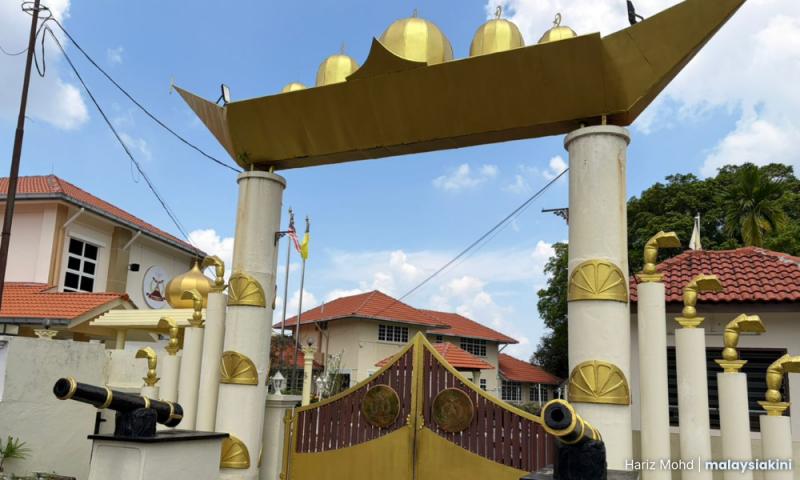
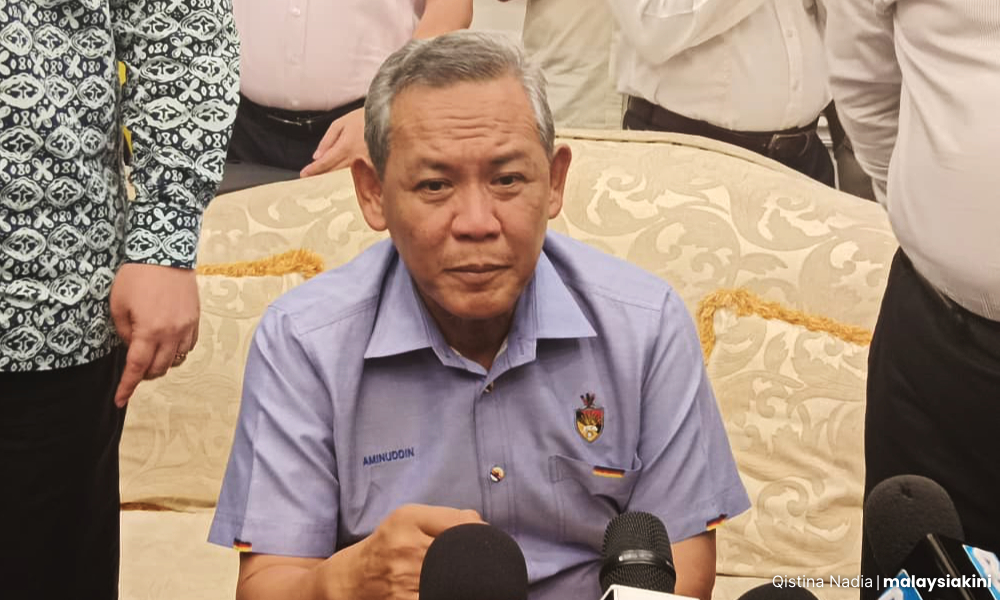
Tensions between Negeri Sembilan’s customary institutions and Menteri Besar Aminuddin Harun had another flare-up when the state government ordered the Sungai Ujong undang’s official residence and council hall to be evacuated.

The state secretary’s office issued the order yesterday via a letter, citing the Negeri Sembilan Council of the Yang di-Pertuan Besar and the Ruling Chiefs (Dewan Keadilan dan Undang)’s purported decision to sack Mubarak Thahak as the Sungai Ujong undang.

Mubarak and the other chieftains have disputed the dismissal, arguing, among others, that the nobles who had moved to sack Mubarak were themselves removed from office due to alleged corruption.

Mubarak’s dismissal was the catalyst that prompted the Undang Yang Empat to push for Tuanku Muhriz Tuanku Munawir to be dethroned as Yang di-Pertuan Besar.

The royal dispute then turned into a political fight between BN and Pakatan Harapan, with the former withdrawing support for Aminuddin.


Negeri Sembilan Menteri Besar Aminuddin Harun


Besides eviction, Malaysiakini understood that state civil servants working at the Sungai Ujong undang’s official residence and council hall have also been issued transfer orders.

Negeri Sembilan state secretary Zafir Ibrahim declined to comment when contacted.

Yesterday, the telaga undang (undang’s custodian) of Sungai Ujong, Sharifah Norzaidah Al-Qadri, issued a statement urging authorities to act if there were unauthorised ceremonies at the council hall without the custodian’s approval.

This is after Mubarak and the three other undangs, as well as the tunku besar Tampin and datuk syahbandar of Sungai Ujong, met at the council hall yesterday evening to discuss the ongoing crisis in the state.

The dispute is at a stalemate, as the Undang Yang Empat can’t enforce their dethronement order without Aminuddin’s support.

Umno, meanwhile, has been unable to remove Aminuddin due to Tuanku Muhriz’s support for the menteri besar.

FT Mufti Office says nay to Bkt Bintang’s water music fanfare, wants “sinful, immoral” event scrapped


FT Mufti Office says nay to Bkt Bintang’s water music fanfare, wants “sinful, immoral” event scrapped


BETTER be late than never.


One wonders if the statement is merely a PR (public relations) exercise to pacify PAS-led rightist groups who has since day one been opposing the three-day Tourism, Arts and Culture Ministry (MOTAC)-backed Rave Water Music Festival 2026 which commences today (April 30).


Henceforth, it remains to be seen if there is any good for the Federal Territory (FT) Mufti Office’s to voice its opposition and objections today (April 30) on grounds that the event runs afoul of values, manners and the syariah (Islamic) law when it is is already on-going.


While Islam does not reject entertainment absolutely, it expressed concern over the “the free association between men and women without clear boundaries”.

“The open and uncontrolled atmosphere of the festival has the potential to encourage excessive interaction between non-spouses when Islam emphasises manners and limits on social interaction to maintain personal dignity,” justified the FT Mufti Office in its lecture series #351.

“In addition, the concept of a water festival usually involves clothing that does not meet the requirements of covering the aurat, especially when wet, which can reveal the shape of the body, thus contradicting the demands of Islamic law.”

Moreover, excessive entertainment elements such as loud music, free dancing and an over-excitement “can lead to neglect of remembering Allah SWT and abandonment of religious obligations such as prayer.

“In many cases, such festivals are also associated with immoral activities such as drinking alcohol and abusing prohibited substances although this does not necessarily occur in all events,” contended the FT Mufti Office.

“However, based on the fiqh method of sad al-zara’i (closing the doors of evil), anything that has the potential to lead to immorality should be avoided at all costs.”’

Plugging wastage

Elsewhere, the lecture also hit out at the excessive and uncontrolled use of water in during the festival solely for entertainment purposes which can be construed as wastage and an act of spendthrift when such expenditure can be channelled to reduce the hardship of the needy or underprivileged members of society.

This is because Islam strictly prohibits wastefulness and exceeding limits in utilising all the blessings of His grace.


“From the perspective of customary norms, the Malaysian society, the majority of whom adheres to Islamic values ​​and Eastern culture, places great emphasis on aspects of politeness, decency and maintaining self-respect,” argued the FT Mufti Office.
Malaysia Policy Analysis


As such, it advised the organisers to re-evaluate the concept and implementation of the festival to be in line with religious, cultural and local law values.


Among the steps that can be taken is to ensure that the event doesn’t involve elements that can trigger immorality such as promiscuity, abuse of prohibited substances and extreme entertainment.

Additionally, the organisers must provide clear guidelines to all parties involved including participants and artists, especially pertaining to dress code, behaviour and limits on socialising.

Security controls and strict monitoring also need to be strengthened to prevent any activities that are contrary to Islamic law. – April 30, 2026

Selangor PAS denies agreeing to Azmin as state PN chief


Selangor PAS denies agreeing to Azmin as state PN chief


Selangor PAS Youth chief Sukri Omar says no official decision has been made


Selangor PAS Youth chief Sukri Omar said the party’s grassroots want a PAS leader at the helm of Selangor PN. (Bernama pic)


PETALING JAYA: Selangor PAS has denied agreeing to Bersatu secretary-general Azmin Ali being named as the state’s Perikatan Nasional (PN) chairman.

“No official decision was made on backing Azmin to lead Selangor PN in any of the coalition’s meetings,” Selangor PAS Youth chief Sukri Omar said in a statement.

Last night, Bersatu Supreme Council member Dr Afif Bahardin claimed that Selangor PAS had agreed to Azmin leading Selangor PN. Azmin is the Hulu Kelang assemblyman.


Afif claimed that at a recent meeting between the state chapters of Bersatu and PAS, the latter had stated its desire for the status quo to remain.

Bersatu proposed last weekend that Azmin be reappointed as the Selangor head of PN.

Party president Muhyiddin Yassin said Azmin was nominated as he was currently the opposition leader in the state assembly.

Azmin, who was Selangor menteri besar from 2014 to 2018, resigned as Selangor PN chief on Jan 1, following Muhyiddin’s decision to step down as coalition chairman.

Sukri said the party’s grassroots wanted a PAS leader at the helm of Selangor PN.

He also said claims that PAS wanted to maintain the status quo were personal views and not the party’s official stance.

He said the decision to appoint a chairman for the coalition’s state chapters was the prerogative of the PN chairman.


DAP Youth wants PM to sack Mat Hasan over N Sembilan crisis


DAP Youth wants PM to sack Mat Hasan over N Sembilan crisis


Published: Apr 30, 2026 12:50 PM
Updated: 3:08 PM


DAP Youth has called on Prime Minister Anwar Ibrahim to sack Umno deputy president Mohamad Hasan as foreign minister.

This is over the Rantau assemblyperson’s involvement in Negeri Sembilan BN withdrawing support from Menteri Besar Aminuddin Harun.

"His (Mohamad) involvement raises serious questions about his integrity and loyalty to the unity government's mandate," DAP Youth said in a statement today.

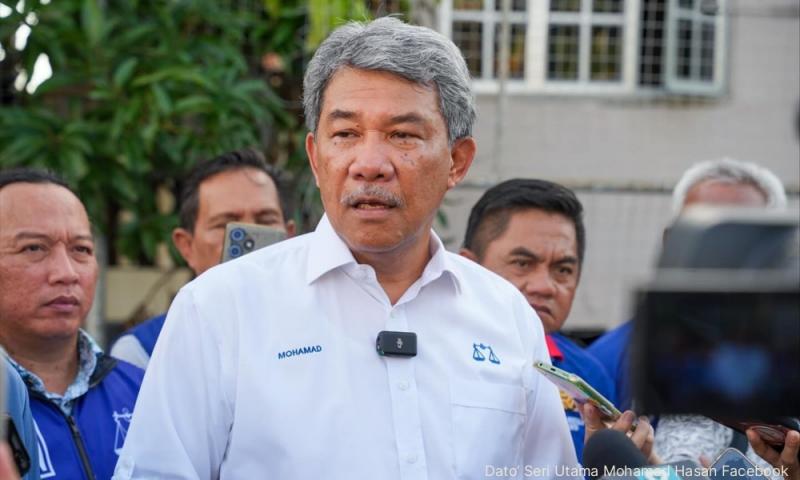
On Monday, all 14 BN assemblypersons in Negeri Sembilan - including Mohamad (above) - withdrew support from Aminuddin over the latter's handling of the spat between the state's four ruling chieftains and the Yang di-Pertuan Besar.

Following this, BN had planned to form a new state government with Perikatan Nasional.

However, the coalition appeared to have backed off from this idea, with the Umno political bureau last night resolving to support the existing state government.

No more trust in ally

DAP Youth indicated it had lost trust in BN as an ally, fearing that the latter might turn on Pakatan Harapan when given the opportunity.


PM and Pakatan Harapan chief Anwar Ibrahim


As such, the wing called on the Harapan leadership to review cooperation with BN at all levels.

"A review is no longer a choice, but a necessity," it said.

Anwar commands the support of 153 MPs in Parliament, and if Umno/BN and its 30 MPs quit, the former will still be in power with 123 MPs.

‘Just sack us then’

Meanwhile, in response to DAP Youth, Umno Youth chief Dr Akmal Saleh challenged the government to sack all Umno ministers and deputy ministers.

"We are ok (with being sacked), we want to see if you are brave or not," he said.


Umno Youth chief Dr Akmal Saleh


Akmal had previously wanted to quit both as Umno Youth chief and as a Malacca exco member due in part to his enmity towards Harapan and DAP.

However, he retracted his decision to quit as Umno Youth chief after being convinced not to by the party leadership.

His resignation as a Malacca exco member has also been rejected, and he is believed to still be carrying out his duties.