Footage Confirms Iranian Precision Strike Destroyed $500 Million U.S. ‘Flying Radar’ Aircraft: Replacement Impossible Until 2030s
Middle East , Aircraft and Anti-Aircraft
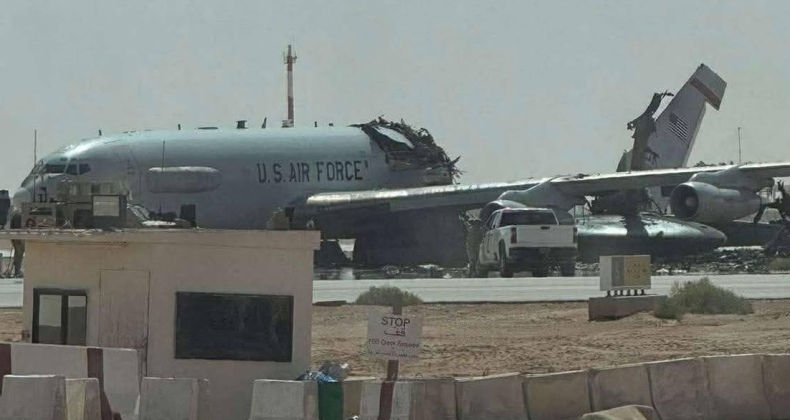
Following reports that Iranian ballistic missile and drone attacks had destroyed at least one U.S. Air Force E-3 Sentry airborne warning and control system (AWACS) at Prince Sultan Air Base in Saudi Arabia, footage released from the facility has confirmed the aircraft’s destruction. Images show an E-3G from the 552nd Air Control Wing based at Tinker Air Force Base, Oklahoma, serial number 81-0005, destroyed at the key forward operating facility in the Persian Gulf. The Iranian attack appears to have precisely targeted its most critical component, the tail section, where its rotating radar dome is located, with analysts making conflicting assessments on whether a drone or ballistic missile impact was most likely to have been responsible. The E-3 is the most high value support aircraft in the U.S. Air Force, rivalled only by the E-4B Nightwatch airborne command post, with both costing close to $500 million.
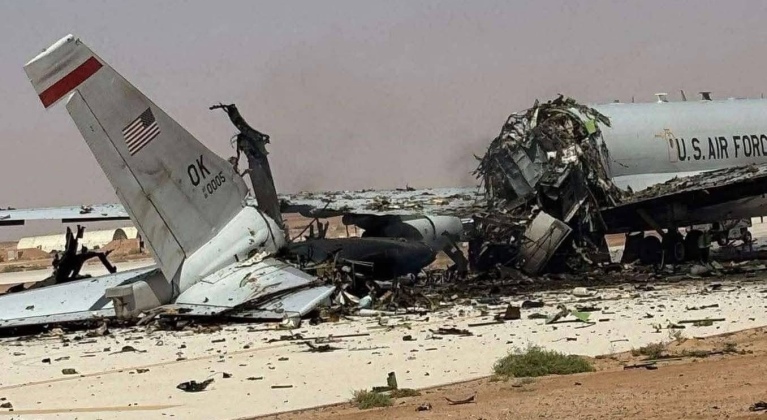
Although Iranian strikes have destroyed higher value targets, including the $1.1 billion AN/FPS-132 radar in Qatar, and two AN/TPY-2 radars valued at between $500 million and $1 billion each, the E-3 remains the most high value U.S. Armed Forces aircraft to have been destroyed so far in the war. Its destruction on March 28 marks one month since the beginning of a U.S. and Israeli air assault on Iran on February 28, with the capabilities of the U.S. and its strategic partners to intercept Iranian strikes having rapidly diminished due to both the raid destruction of their radar networks, and the depletion of their inventories of anti-missile interceptors. The E-3 will be particularly challenging to replace, with funding to produce the Air Force’s first post-Cold War airborne early warning systems, E-7 Wedgetails, having only been approved in early March, while a long queue remains to receive the aircraft.
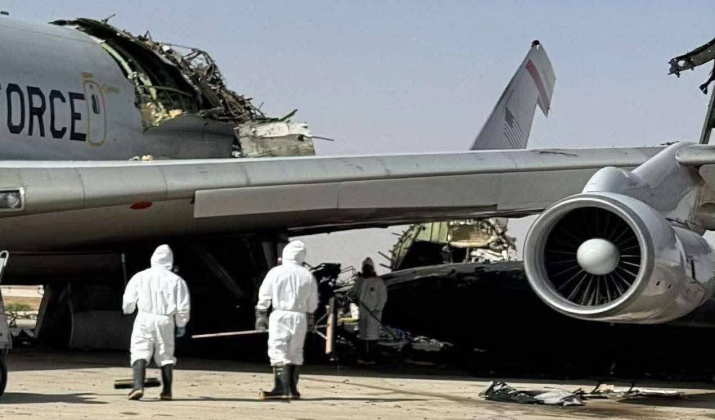
Alongside the E-3, Iranian attacks on Prince Sultan Air Base are reported to have destroyed at least three KC-135 Stratotanker airborne refuelling aircraft, which cost approximately $53 million each. The attack is reported to have caused at least ten casualties. This follows a prior Iranian missile strike on Prince Sultan Air Base which damaged at least five KC-135s in the second week of March, and the destruction of one KC-135 and damage of another over Iraq which were reportedly the results of air defence operations by local militias. The U.S. Air Force’s aerial refuelling fleet has faced growing strain, as Iranian strikes on military bases across the Middle East have limited the service’s ability to conduct fighter operations, forcing attacks to be launched from air bases further afield that require much greater support from tankers. The age of the KC-135 fleet and its resulting higher maintenance needs, combined with major issues with the limited numbers of new KC-46 tankers, have left the Air Force vulnerable in this regard.


As of March 2026, the U.S. Air Force had 16 E-3 Sentry Airborne Warning and Control System (AWACS) aircraft in its fleet.
ReplyDeleteThe Hill
These aging aircraft have been facing maintenance challenges, and recent reports indicate that at least one E-3 Sentry was damaged in a strike on Prince Sultan Air Base in Saudi Arabia. The U.S. is in the process of replacing this fleet with the modern E-7A Wedgetail.