Murray Hunter
He Knows Who Built That Silence
KL Pundit
May 21, 2026

Khairy Jamaluddin says Malaysia’s historians are cowards. He should read a journal sometimes.
The Charge
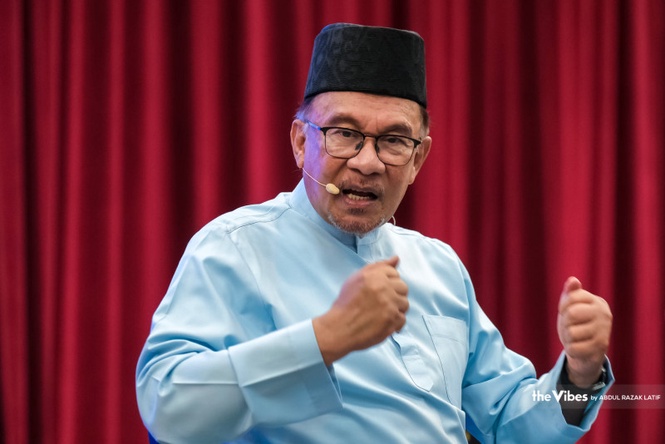
In a recent episode of his podcast Keluar Sekejap, Khairy Jamaluddin, former Minister of Health, former Umno Youth chief, and current political brand in reconstruction, called Malaysia’s publicly funded history professors cowards. Ivory tower inhabitants. Silent while misinformation spreads. He said his history podcast, Sejarah Kita, cannot find willing academic guests, which is why an Associate Professor of Arabic language from the International Islamic University Malaysia (IIUM) named Solehah Yaacob, who claimed ancient Romans learned shipbuilding techniques from Malay seafarers, has become, by his telling, Malaysia’s de facto number one history expert.
Here is what he got wrong.
The Media-Illiteracy Charge
Malaysian historians are not silent. They publish in peer-reviewed journals, write monographs, present at regional and international conferences, and produce working papers through university research centers: the kind of output that accumulates in databases Khairy has apparently never opened. The scholarship exists. It has existed for decades.
What they are not doing is appearing on Khairy’s podcast.
He has confused his platform with the republic of knowledge. The absence of academic historians from Sejarah Kita is not evidence of professional cowardice. It is evidence that academics publish through academic channels, that peer review does not run through Spotify, and that a politician with a microphone does not automatically command the attention of people who spent years acquiring methodological training he has not.
If Khairy has not read what Malaysian historians have written, that is a reading problem, not a courage problem.
The other question is what Khairy wants. He says he wants historians on his podcast to correct the record. However, “the record” in this context means his record: his platform, his audience, his framing. Academic historians who appear on political podcasts do not walk in as neutral truth-dispensers. They walk in as guests of the host. The host sets the editorial frame before recording starts; the host controls the 90 seconds that are clipped and promoted. If the academic says something inconvenient (say, that the historical roots of Malaysian nationalist mythology are more complicated than any party wants to acknowledge), the host decides what goes to air. Academics know this. That they decline is not cowardice. It is a professional judgment about what “engagement” costs.
The gap between academic output and public reception is not mysterious. Work published in SCOPUS or ISI-indexed journals, the standard markers of peer-reviewed scholarship, is evaluated for methodological rigor, factual accuracy, and contribution to existing knowledge before it ever reaches a reader. That standard is precisely why it does not reach most readers: it is written for specialists, reviewed by specialists, and archived in databases that require institutional subscriptions to access. Alongside this runs a parallel universe of non-indexed publications, government-commissioned reports, and conference proceedings produced specifically to serve political, ethnic, or religious prerogatives rather than to advance knowledge. These circulate freely. They get shared. They find audiences. The gap between what Malaysian historians produce and what the Malaysian public reads is not a failure of historian courage. It is a predictable consequence of an academic environment in which public universities are under pressure to generate outputs that shore up the government’s support base rather than interrogate it. Nobody in Malaysia is making any serious attempt to bridge this gap. Khairy is certainly not.
The historians who do engage publicly, and there are several, often get burned for it. They get accused of political bias. They get hauled before university administrators. They are selectively quoted and misrepresented on social media. The institutional incentives for public engagement in Malaysia are, to put it plainly, terrible. University promotion criteria reward journal output, not podcast appearances. Public commentary on race or religion, the topics Khairy claims historians should address, carries professional risk that a former minister with a political safety net does not face. That is not cowardice. That is a rational response to a hostile environment.
An environment, incidentally, that Khairy’s party helped construct.
Who Built the System
The Biro Tatanegara (BTN, the National Civics Bureau) traces its origins to 1974, when it was established as the Youth Research Unit under the Youth Ministry. It was renamed and transferred to the Prime Minister’s Department in 1981. It operated continuously under BN governments until August 2018, when Pakatan Harapan (PH) won the general election, and the incoming Youth and Sports Minister, Syed Saddiq Syed Abdul Rahman, announced its abolition. For decades, it ran mandatory indoctrination camps for civil servants, scholarship recipients, and university students: camps that participants and former attendees have described as promoting Ketuanan Melayu (Malay supremacy), instilling racial hierarchy, and suppressing questioning of state ideology.
Khairy Jamaluddin served as Minister of Youth and Sports from 2013 to 2018, and as Umno Youth chief from 2008 to 2018, the entire final decade of BTN’s operation. He did not control BTN directly: it sat under the PM’s Department, not his ministry. The charge against him is not personal ministerial control. The charge is collective: he was a cabinet minister and a senior party leader in a government that ran this bureau, defended this bureau, and never once moved to dismantle it while in power.
He never publicly opposed BTN while he held office.
What BTN produced was not a generation of critical thinkers equipped to evaluate historical claims. It produced a generation trained to receive nationalist narratives rather than to interrogate them. It produced the exact epistemic conditions in which Solehah Yaacob’s claims find an audience.
Khairy now complains about the audience.
Solehah Is Not the Problem
Solehah Yaacob is not an anomaly who escaped from somewhere. She is a product. She holds an academic position at a public university. She attracts an audience. She is an Arabic-language specialist arguing that the Romans learned shipbuilding from the Malays. That is not accidental noise in a system where audiences can tell the difference. It is what you get when the institutions responsible for historical literacy are run for decades as vehicles for ideological formation rather than intellectual development.
She did not appear from nowhere. She appeared from a system.
May 21, 2026

Khairy Jamaluddin says Malaysia’s historians are cowards. He should read a journal sometimes.
The Charge
In a recent episode of his podcast Keluar Sekejap, Khairy Jamaluddin, former Minister of Health, former Umno Youth chief, and current political brand in reconstruction, called Malaysia’s publicly funded history professors cowards. Ivory tower inhabitants. Silent while misinformation spreads. He said his history podcast, Sejarah Kita, cannot find willing academic guests, which is why an Associate Professor of Arabic language from the International Islamic University Malaysia (IIUM) named Solehah Yaacob, who claimed ancient Romans learned shipbuilding techniques from Malay seafarers, has become, by his telling, Malaysia’s de facto number one history expert.
Here is what he got wrong.
The Media-Illiteracy Charge
Malaysian historians are not silent. They publish in peer-reviewed journals, write monographs, present at regional and international conferences, and produce working papers through university research centers: the kind of output that accumulates in databases Khairy has apparently never opened. The scholarship exists. It has existed for decades.
What they are not doing is appearing on Khairy’s podcast.
He has confused his platform with the republic of knowledge. The absence of academic historians from Sejarah Kita is not evidence of professional cowardice. It is evidence that academics publish through academic channels, that peer review does not run through Spotify, and that a politician with a microphone does not automatically command the attention of people who spent years acquiring methodological training he has not.
If Khairy has not read what Malaysian historians have written, that is a reading problem, not a courage problem.
The other question is what Khairy wants. He says he wants historians on his podcast to correct the record. However, “the record” in this context means his record: his platform, his audience, his framing. Academic historians who appear on political podcasts do not walk in as neutral truth-dispensers. They walk in as guests of the host. The host sets the editorial frame before recording starts; the host controls the 90 seconds that are clipped and promoted. If the academic says something inconvenient (say, that the historical roots of Malaysian nationalist mythology are more complicated than any party wants to acknowledge), the host decides what goes to air. Academics know this. That they decline is not cowardice. It is a professional judgment about what “engagement” costs.
The gap between academic output and public reception is not mysterious. Work published in SCOPUS or ISI-indexed journals, the standard markers of peer-reviewed scholarship, is evaluated for methodological rigor, factual accuracy, and contribution to existing knowledge before it ever reaches a reader. That standard is precisely why it does not reach most readers: it is written for specialists, reviewed by specialists, and archived in databases that require institutional subscriptions to access. Alongside this runs a parallel universe of non-indexed publications, government-commissioned reports, and conference proceedings produced specifically to serve political, ethnic, or religious prerogatives rather than to advance knowledge. These circulate freely. They get shared. They find audiences. The gap between what Malaysian historians produce and what the Malaysian public reads is not a failure of historian courage. It is a predictable consequence of an academic environment in which public universities are under pressure to generate outputs that shore up the government’s support base rather than interrogate it. Nobody in Malaysia is making any serious attempt to bridge this gap. Khairy is certainly not.
The historians who do engage publicly, and there are several, often get burned for it. They get accused of political bias. They get hauled before university administrators. They are selectively quoted and misrepresented on social media. The institutional incentives for public engagement in Malaysia are, to put it plainly, terrible. University promotion criteria reward journal output, not podcast appearances. Public commentary on race or religion, the topics Khairy claims historians should address, carries professional risk that a former minister with a political safety net does not face. That is not cowardice. That is a rational response to a hostile environment.
An environment, incidentally, that Khairy’s party helped construct.
Who Built the System
The Biro Tatanegara (BTN, the National Civics Bureau) traces its origins to 1974, when it was established as the Youth Research Unit under the Youth Ministry. It was renamed and transferred to the Prime Minister’s Department in 1981. It operated continuously under BN governments until August 2018, when Pakatan Harapan (PH) won the general election, and the incoming Youth and Sports Minister, Syed Saddiq Syed Abdul Rahman, announced its abolition. For decades, it ran mandatory indoctrination camps for civil servants, scholarship recipients, and university students: camps that participants and former attendees have described as promoting Ketuanan Melayu (Malay supremacy), instilling racial hierarchy, and suppressing questioning of state ideology.
Khairy Jamaluddin served as Minister of Youth and Sports from 2013 to 2018, and as Umno Youth chief from 2008 to 2018, the entire final decade of BTN’s operation. He did not control BTN directly: it sat under the PM’s Department, not his ministry. The charge against him is not personal ministerial control. The charge is collective: he was a cabinet minister and a senior party leader in a government that ran this bureau, defended this bureau, and never once moved to dismantle it while in power.
He never publicly opposed BTN while he held office.
What BTN produced was not a generation of critical thinkers equipped to evaluate historical claims. It produced a generation trained to receive nationalist narratives rather than to interrogate them. It produced the exact epistemic conditions in which Solehah Yaacob’s claims find an audience.
Khairy now complains about the audience.
Solehah Is Not the Problem
Solehah Yaacob is not an anomaly who escaped from somewhere. She is a product. She holds an academic position at a public university. She attracts an audience. She is an Arabic-language specialist arguing that the Romans learned shipbuilding from the Malays. That is not accidental noise in a system where audiences can tell the difference. It is what you get when the institutions responsible for historical literacy are run for decades as vehicles for ideological formation rather than intellectual development.
She did not appear from nowhere. She appeared from a system.

The testimony of BTN alums is on record. A medical graduate who attended a BTN pre-employment induction camp in 2008 described to The Nut Graph a group exercise in which participants were asked how to divide a hypothetical inheritance among three families of different sizes. The facilitator made clear that the correct answer tracked the racial proportions of Malaysia’s population. When she offered a different answer, the facilitator told her he was “worried” about her. The written syllabus drilled participants on the definition of bumiputera under Article 160 of the Federal Constitution and the basis of hak istimewa orang Melayu (Malay special rights). The lesson, she recalled, was that non-Malays should be grateful they were allowed to stay. Other alumni have described being told that Chinese Malaysians were “the Jews of Asia,” that Malays were “God’s chosen few,” and that changing the government would bring conditions comparable to the Khmer Rouge. This was not one rogue facilitator. It was the curriculum, documented in BTN’s own slides and confirmed by multiple independent accounts spanning decades.

The question worth asking is not why Solehah exists. The question is: why are the institutions that should have produced her critics instead producing her audience?
Moreover, Khairy’s framing collapses entirely here. He presents the problem as historians failing to enter the public arena. The actual problem is an audience that was never equipped to evaluate competing claims in the first place: an audience that went through a school system where the history syllabus was written to produce national loyalty, through university orientations where BTN set the ideological frame, and into a media environment where state broadcasters and loyalist newspapers spent decades amplifying the same nationalist narrative. You do not fix that by getting a historian onto a podcast. You fix it by not building the system that way. That option was available forty-four years ago. No one in Barisan Nasional took it.
The Rehabilitation Read
Khairy lost his seat in GE15. His own party bumped him from Rembau, the constituency he had held for three terms, and sent him to contest Umno-hostile Sungai Buloh instead. He is building something new now: the public intellectual brand, the podcast network, the man brave enough to say what others will not. Calling out cowardly professors fits that brand perfectly. It positions him as the honest outsider willing to name the problem.
He is not an outsider. He spent a decade as Umno Youth chief and held three cabinet portfolios.
The problem he is naming is one his party spent four decades building. He knows this. The silence he is complaining about did not arrive from nowhere. The epistemic decay, the institutional rot, the universities that cannot produce credible public historians: all of it was built, funded, and defended by the coalition he served.
He knows who built that silence.
KL Pundit is a scholar based in Malaysia. He writes on contemporary affairs, history, and politics.