Tuesday, June 02, 2026

JAIS forbids “no pork, no lard” signage, netizens say challenge accepted


JAIS forbids “no pork, no lard” signage, netizens say challenge accepted


By CS Ming
12 minutes ago


IN MALAYSIA, food is serious business. Add religion, regulations and signboards into the recipe and what emerges is often less a discussion and more a nationwide seasoning of outrage.


So when Jabatan Agama Islam Selangor (JAIS) issued its latest reminder on halal-related terminology, the internet immediately prepared its favourite dish — hot takes served piping hot.


According to JAIS, businesses lacking halal certification cannot use the phrases “Muslim-friendly” or “no pork, no lard”.

In a video shared earlier this month, JAIS said such descriptions could create the impression that products or services comply with halal requirements.

The department stressed that without official Malaysian Halal Certification, consumers have no assurance that halal standards are fully observed.


JAIS said halal compliance involves more than just ingredients, covering areas such as sourcing of raw materials, preparation processes and cleanliness standards.

It also pointed out that the Trade Descriptions Act 2011 prohibits businesses from using labels or claims that may mislead consumers.

JAIS explained that the phrase “no pork, no lard” only indicates the absence of pork, but does not address other concerns such as alcohol, cross-contamination, or non-halal gelatin.

Netizens were quick to respond to this new ruling, as seen in the comment section on a post by says.com which carried the news.

“What’s wrong with that? Some Chinese don’t eat pork and they need to know. This is getting out of hand,” said Alex KY Tee while Daniel Mester sarcastically remarked that soon people need halal blood to apply for the certs.

A good number of netizens have since come up with alternatives to bypass the ruling which many deem as ridiculous.

Cks Gary said people can just put up a “Non-halal, No pork no lard,” sign. Then there was Alwin Cheng who made light of the situation by suggesting the sign, “No Peppa & Its Fat.”


Perhaps the winning comment goes to Kecey Heong and this was what he said:


The news has since opened a can of worms with Shahril Azmir pointing out the fact that cigarettes are haram too, but the majority of smokers in Malaysia are Malays.

Also, it has prompted JC Cesar to ask JAIS to speed up and make halal certification for businesses easier.


Cyril Augustine Yee Kelvin further remarked that JAIS cannot punish the non Muslims.


Away from the comment section and under Paragraph 4(1) of the Trade Descriptions (Halal Certification and Marking) Order 2011, it is an offence to mislead consumers about the halal status of food or services.

The order states, “Any person who supplies or offers to supply any food through any representation or act which is likely to mislead or confuse any person that the food is halal or can be consumed by a Muslim commits an offence.” —June 2, 2026


***


If a restaurant implies the food served within is 'halal' (without an official HALAL certificate) then it's illegal; and may be subjected to prosecution for misrepresentation of the prepared food to Muslims.

But if the eateries just state that 'no pork, no lard', then HTF can JAIS interfere, as there is no misrepresentation the food is OK for Muslims - it's akin to saying 'no sugar, no salt' in the iced water. The notice of 'no pork, no lard' may be required information for non-Muslims who may not want to take pork and pork lard.

Next, JAIS will be demanding the cooks of non-Muslim eateries must be 'sunat-ised', wakakaka.

Frigg off JAIS, don't intrude into non-Muslim domain.


Australian beef will soon be hit by 55% tariff in China, ministry says


SCMP:


Australian beef will soon be hit by 55% tariff in China, ministry says

China’s imports of Australian beef are about to surpass a quota introduced by Beijing to protect domestic farmers


Farmers look at cattle at a weekly livestock sale in New South Wales, Australia. China is a major export market for Australian beef producers. Photo: AFP
He Huifengin Guangdong

Australian beef will soon be subject to an additional 55 per cent import duty in China, with shipments of the meat about to surpass an annual quota set by Beijing, China’s Ministry of Commerce confirmed on Tuesday.

Imports of Australian beef have already reached 90 per cent of this year’s quota, meaning that a tariff adjustment will soon be triggered, the ministry announced via an alert.

Until recently, most imports of Australian beef were subject to low or even zero tariffs in China under a bilateral free-trade agreement. But that changed in January, when Beijing introduced a three-year beef tariff scheme to protect China’s domestic farmers.

The policy sets an annual quota for beef imported from a string of countries – including Australia, Argentina, Brazil, New Zealand, Uruguay and the United States – with a 55 per cent levy kicking in once the quota is reached.

Under the system, 205,000 tonnes of Australian beef could be imported to China with low tariffs in 2026. Chinese authorities will begin charging the 55 per cent duty three days after the threshold is passed, the ministry said.

China’s beef industry has been hit by a downturn in demand in recent years, as falling import prices erode domestic producers’ cost advantages and dampen processors’ appetite for local meat, according to a report released by market information provider Sublime China Information (SCI) last week.

In 2023, domestic beef was selling for about 77 yuan (US$11.40) per kilogram on average in China, but that fell to 71.3 yuan in December and just 66.38 yuan in late May, data from SCI showed.

Imports of Australian beef have accelerated in recent weeks. In mid-May, around 80 per cent of the quota had been used, but now the level has already risen to 90 per cent, suggesting the ceiling could be reached within weeks.

Brazil is China’s top beef supplier, followed by Australia and the United States. This year’s quota for Brazilian beef is 1.1 million tonnes, while the limit for American beef is 164,000 tonnes.
China renewed import licences for hundreds of US beef plants during US President Donald Trump’s visit to Beijing last month. Before that, US beef exports to China had been severely affected amid rising trade tensions between the two countries.

“What the f*** are you doing?”: Trump blasts Netanyahu in call over Lebanon strikes, says report


Malaysia's #1 Content Aggregator


“What the f*** are you doing?”: Trump blasts Netanyahu in call over Lebanon strikes, says report


2 Jun 2026 • 9:24 AM MYT


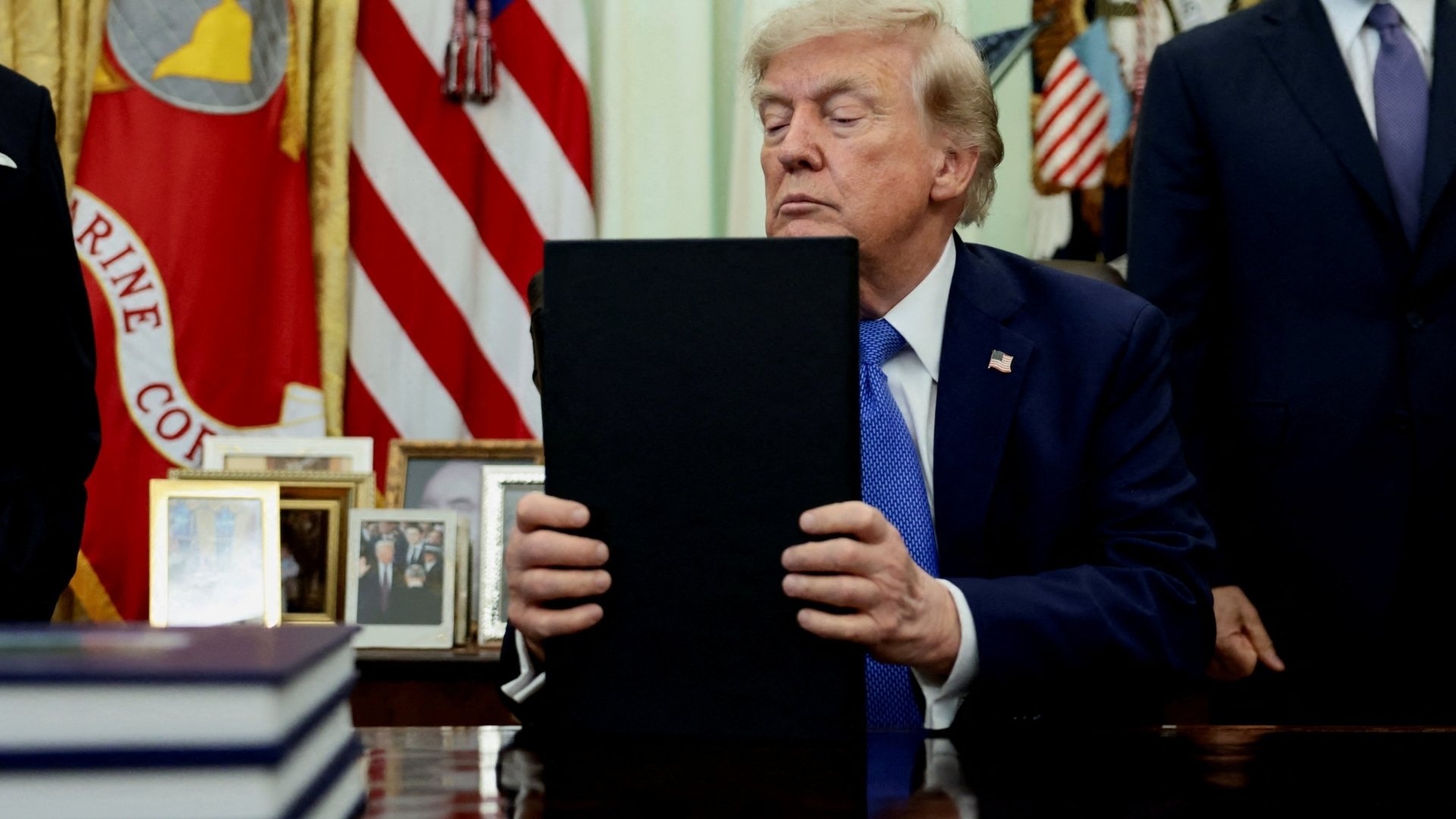
Washington, DC [US], June 2 (ANI): US President Donald Trump lashed out at Prime Minister Benjamin Netanyahu during a heated telephone conversation on Monday, holding the Israeli leader responsible for generating global animosity towards his nation, Axios reported.

The confrontation was triggered after Iran issued a warning earlier that day, threatening to halt diplomatic engagements with Washington over ongoing military actions in Lebanon. This prompted an aggressive intervention from the US President, who at one point yelled at Netanyahu, “What the f*** are you doing?"

According to a US official cited by Axios, Trump expressed immense frustration over what he perceived as a disproportionate military response to Hezbollah’s strikes on Israel.

The report noted that the US President strongly objected to the destruction of entire buildings to target an individual Hezbollah commander, whilst also taking issue with Tel Aviv’s escalating threats against Beirut.


Another source privy to the discussion summarised part of Trump’s comments as “everybody hates you now. Everybody hates Israel because of this," Axios reported.

Following the volatile exchange, Netanyahu’s office released a statement asserting that Israel’s position “remains the same".

However, a US official told Axios that Trump had actually “steamrolled" the Israeli Prime Minister during the call.

Axios quoted the official as saying, “Bibi said, ‘OK, OK, just make sure everything is taken care of.'"


An additional administration official remarked that the interaction stood out as one of Trump’s worst calls with Netanyahu since the commencement of his second presidential term.

In the wake of the diplomatic showdown, Trump took to social media to outline the immediate fallout of his intervention.


In a post on Truth Social, the US President announced that Netanyahu had “turned his Troops around" after he explicitly asked the Israeli leader “not to go into a major raid of Beirut".

Demonstrating his intent to keep the broader Middle East diplomatic track alive despite the friction, Trump wrote in a subsequent post that talks were continuing “at a rapid pace" with Iran. (ANI)


(This content is sourced from a syndicated feed and is published as received. The Tribune assumes no responsibility or liability for its accuracy, completeness, or content.)


Johor state election: Will it be a test run or pre-empt a full GE?


Johor state election: Will it be a test run or pre-empt a full GE?


The logic here would be for all the parties to test out their election strategies in Johor and Melaka and then move on to the big game with a full general election at a later time

Updated 3 hours ago
Published on 02 Jun 2026 11:51AM


Umno will catch Datuk Seri Rafizi Ramli and his Bersama party totally unprepared for an election. - June 2, 2026


By Murray Hunter


AS expected, Johor Menteri Besar Datuk Onn Hafiz Ghazi announced on June 1 that the Johor Regent Tunku Ismail Sultan Ibrahim had consented to dissolve the state assembly, with an election due within 60 days.

This had followed rumblings about the above action, which will no doubt pre-empt the dissolution of the Melaka State Assembly before September (automatically dissolved on December 27, 2026).

Both Johor and Melaka are Umno strongholds. In Johor, the Barisan Nasional (BN) holds 40 of the 56 seats in the state assembly.

Pakatan Harapan (PH) hold 12 seats, with Perikatan Nasional (PN) holding 3 seats, and Muda holding one seat.

In Melaka, the BN holds 21 seats in the 28-seat state assembly, with Bersatu holding 2 seats. The DAP holds 4 seats in the Melaka state assembly, which is considered one of the party’s strongholds. Amanah holds one seat.

It's not hard to assume that within the next few days, the Melaka state assembly will also be dissolved, bringing on what one could describe as a ‘mini GE’, or GE curtain raiser.

The logic here would be for all the parties to test out their election strategies in Johor and Melaka and then move on to the big game with a full general election at a later time.


This would be optimal for the ‘unity government’.

However, Umno, reading the current political play on the peninsula, may be attempting to push for a full general election, knowing that Pakatan Harapan is in a weak position, and Perikatan Nasional has its own issues to sort out with Bersatu in strife and the unreadiness of former Bersatu deputy president Datuk Seri Hamzah Zainudin with his own party.

Most importantly, Umno will catch Datuk Seri Rafizi Ramli and his Bersama party totally unprepared for an election.

There are very few candidates ready, and the party has no grassroots organisation to run an effective campaign.

Any general election playing out with such conditions could see Umno winning seats all the way up the peninsula to Kedah and across to Pahang.

Prime Minister Datuk Seri Anwar Ibrahim is being pressured to capitulate and call a general election.

The ‘pig farming issue’ in Selangor has potentially damaged the DAP’s ability to retain the loyalty of its traditional supporters, and Anwar was made to appear weak by the whole saga.

A conspiracy theorist would think this was all engineered.


Umno has now played its hand. There will be two state elections over the next few months. They will be in Umno’s strongholds.

Any delay in calling a general election would allow Rafizi’s group to become more organised and Bersatu to reorganise itself.

If Anwar advises the YDPA for a general election, his own party, PKR, will be in a precarious position, where every seat they stand in will be an extremely difficult fight. However, Bersatu could be decimated, and Bersama would not be given much chance to get organised.

In addition, there could be an economic downturn later in the year due to the shortages in the petroleum supply from the Middle East. Calling the election now would make sense.

The prime minister has been forced by Umno to make a very important strategic decision, which could gravely affect PKR.

That is to go now or wait until the government has served its full term. – June 2, 2026


US intelligence objectives: Destabilising the Malaysian political scene?


Murray Hunter
Jun 02, 2026


Malaysia


While many point to internal factors such as patronage politics, feudal cabals, and deep-state machinations within Malaysia itself, we must also examine the role of external actors


My latest column in The Vibes


WITH the recent political destabilisation that has led to war within the Gulf states and Iran, it’s time to examine the possibilities of external influence upon the Malaysian political scene.

Malaysia’s political landscape has been a theatre of perpetual drama for decades.

From the Sheraton Putsch that toppled a democratically elected government in 2020, to endless party-hopping, coalition fractures, ethnic and religious polarisation, and the revolving door of prime ministers, instability seems baked into the system.

While many point to internal factors such as patronage politics, feudal cabals, and deep-state machinations within Malaysia itself, we must also examine the role of external actors.

Great power competition in Southeast Asia is intensifying, and the United States, through its intelligence apparatus and allied networks, has clear strategic objectives in the region that can sometimes exacerbate or exploit domestic fault lines.


Strategic Importance of Malaysia to Washington

Malaysia sits astride the Strait of Malacca, one of the world’s most critical chokepoints for global trade and energy flows.

It is also a key player in semiconductor supply chains and a moderate Muslim-majority democracy that Washington has long viewed as a potential bulwark against Chinese influence.

In the context of the former US President Obama’s “pivot to Asia” back in 2009. Malaysia is not just a partner for the United States, but it is a geopolitical chess piece in the paradigm we are observing geopolitics today.

US intelligence objectives here are multifaceted: monitoring Chinese activities in the South China Sea, securing defence cooperation, promoting a pro-US alignment in foreign policy, and ensuring that no government becomes too cosy with Beijing. US President Trump’s visit to Malaysia last year for the ASEAN Summit manifested this.

Publicly, this evolves through defence agreements, joint exercises, and diplomatic engagement.

Behind the scenes, intelligence gathering, funding of NGOs and political parties in civil society, and subtle political signalling play supporting roles.


Historical Precedents and Patterns of Influence

The United States has a long track record of engagement in Malaysian affairs.

During the Cold War, it supported anti-communist elements.

In more recent times, declassified information and public statements reveal sustained interest.

The US embassy in Kuala Lumpur houses significant intelligence capabilities, with additional networks across the country.

The National Endowment for Democracy (NED) and its affiliates, along with USAID, have channelled substantial funding into Malaysian NGOs, media outlets, academics, journalists, and election-related analytics firms.

Critics argue this is not neutral “democracy promotion” but a tool for regime change or influence operations.

For instance, funding flowed to pro-reform and opposition-linked groups in the lead-up to the 2018 election that ended BN’s long dominance.

IRI officials have even publicly claimed credit for aspects of that shift.

Such activities create narratives, amplify voices, and build capacities that can destabilise incumbents perceived as insufficiently aligned with US interests. When combined with diplomatic pressure. This can be seen through human rights, governance, and 1MDB-related cases pursued by the US DOJ.

It can be argued that these activities contribute to a climate of uncertainty.


Current Dynamics: Anwar, Hedging, and Hybrid Influence

Under the current Unity Government led by Datuk Seri Anwar Ibrahim, Malaysia continues its classic hedging strategy, balancing relations with the US and China. Washington pushes for stronger alignment through defence pacts and trade deals, while Beijing offers economic carrots.

US intelligence would naturally seek to tilt this balance.

Allegations persist in Malaysian circles about US support for certain reformist or liberal elements, think tanks, and media that challenge the status quo.

Operations like joint intelligence activities in the South China Sea, such as references to Ops Hadir.

These activities show close cooperation with Malaysian agencies.

Destabilisation doesn’t require orchestrating coups.

It can be achieved through amplifying ethnic and religious divisions via funded narratives, supporting opposition or reform movements at opportune moments, leaking or highlighting corruption scandals selectively, and building long-term influence networks within academia, civil society, and younger politicians.

Foreign funding is channelled to multiple and divergent activities.

This hybrid approach using soft power coupled with intelligence keeps the political scene fluid, preventing any single force from consolidating power in ways that might threaten US strategic goals.

This, from this point of view, a fragmented political system as we are seeing today, benefits outside sources.


Counterarguments and the Primacy of Internal Factors

To be fair, Malaysia’s volatility is overwhelmingly homegrown.

The systems of elite patronage networks, “deep state” elements within the bureaucracy and security apparatus, money politics, and identity-based mobilisation explain most crises.

This doesn’t mean that foreign actors won’t attempt to leverage these aspects of Malaysia today.

China’s United Front activities, Saudi religious influence, and even other players engage in their own games. Attributing everything to the CIA is a classic over-simplification that absolves Malaysian leaders of responsibility.


Why This Matters: A Clear and Present Danger

Foreign intelligence objectives that prioritise external agendas over Malaysian stability undermine sovereignty.

They erode public trust, fuel conspiracy narratives, and distract from necessary domestic reforms.

Whether through NED grants, embassy networks, or covert signalling, external meddling adds fuel to an already flammable political scene.

Malaysia must enhance transparency around foreign funding, strengthen institutions against party-hopping and corruption, and pursue a genuinely independent foreign policy.

Vigilance against all external interference, whether from the US, China, Saudi Arabia, or other sources, is essential.

Accepting foreign funding has been one of Malaysia’s greatest weaknesses.

The question isn’t whether US intelligence has objectives in Malaysia.

It does. The real question is how much these objectives contribute to the destabilisation that we observe, and what Malaysians are prepared to do about reclaiming agency over their own destiny. This subject today is often ignored. – May 31, 2026


Pamela Ling’s disappearance, Durian Tunggal shooting, corporate mafia; MP demands answers


Pamela Ling’s disappearance, Durian Tunggal shooting, corporate mafia; MP demands answers


Despite numerous demands by Members of Parliament from both sides and even Digital Minister Gobind Singh Deo recently, the Home Ministry remains silent, and no one has been charged in court


Updated 1 hour ago · Published on 02 Jun 2026 1:43PM


Legislation alone may not be enough; the unity government has to address these issues quickly, said Rayer. - June 2, 2026.


by Ian McIntyre


THE MADANI national unity government should be praised for undertaking reforms on the legislative end, such as the abolition of the mandatory death penalty, the decriminalisation of attempted suicide, and the implementation of the 'Esha Clause' to tackle cyberbullying.


Jelutong Member of Parliament RSN Rayer said that access to legal representation under the recently passed Legal Aid & Public Defence Act 2026 and the attempt to limit the tenure of the Prime Minister to only two (five-year) terms were among the efforts geared towards reforms.

However, these sincere efforts in attempting to bring about national legal reforms have been overshadowed by misfeasance in the public office, said Rayer.

The following are a few examples, Rayer cited.

i) The Pamela Ling case, where a Malaysian woman who was on her way to the Malaysian Anti-Corruption headquarters in Putrajaya went missing in broad daylight, and her whereabouts until today remain a mystery.

ii) The Durian Tunggal, Melaka shooting incident, where three Malaysians were shot dead in cold blood by the police.

Despite numerous demands by Members of Parliament from both sides and even Digital Minister Gobind Singh Deo recently, the Home Ministry remains silent, and no one has been charged in court.

iii) Failure to abolish the archaic Sedition Act 1948 left behind by British colonists.

iv) The corporate mafia scandal. What's next?

v) Deaths in military, police and cadet training camps caused by bullying and inhumane cruelty.

The most recent involving private Muhammad Amirul Raziq Rosafindi, who died following a brutal physical assault by a corporal over a poorly cleaned weapon store at the Royal Malay Regiment Camp in Bentong, Pahang.

vi) The failure to locate, arrest and charge Tamim Dahri, who mocked and defiled the Hindu religion by stepping on the 'trisul', in Langkawi, Kedah.

Despite repeated demands for swift action, the Inspector General of Police and the home minister have failed to give a convincing explanation as to why Tamim Dahri remains at large.

Tamim Dahri continues to mock the police and ridicule them by occasionally posting comments on his Facebook page.

vii) The recent National Human Rights Commission (Suhakam)'s findings on the circumstances surrounding the death of Gan Chin Eng, an inmate detained in Taiping prison.

The medical report tendered during the Suhakam inquiry showed abdominal injury due to blunt trauma and coronary atherosclerosis caused when he was assaulted during the incident.

Many other inmates also suffered serious injuries, such as broken rib cages and eardrums, as a result of assaults inflicted upon them by prison officers during the same incident. No one has been charged until today.

Rayer said that unless the Home Ministry under the present government dares to take the bold step of charging every single individual responsible for all the misfeasance mentioned above, the 'deep state' will always prevail and derail any sincere attempts to bring about legal reforms.

Legislation alone may not be enough; the unity government has to address these issues quickly, said Rayer. - June 2, 2026.