
Killing Toy Shops – How Trump’s Tariffs Stole Christmas
December 15th, 2025 by financetwitter
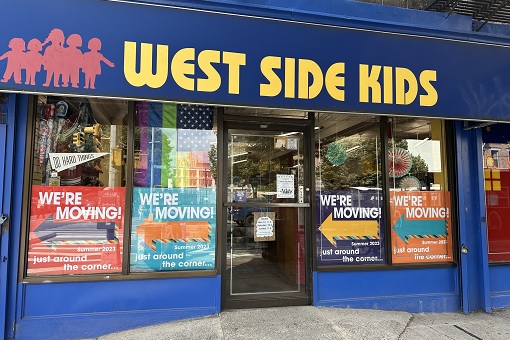
Jennifer Bergman sat up in bed one morning in June 2025 and opened her laptop to the month’s bills. It was five months into America’s latest tariff war, and the numbers no longer added up. Rent was due in two weeks, and her suppliers wanted payment now. She called her landlord, saying – “I can’t do this any more.”
Her toy store, West Side Kids, was a beloved Manhattan shop that her mother had started in 1981 and a neighbourhood fixture where children still pressed their noses against the window each December. Her nightmare, just like many small businesses, was about to begin thanks to the President of the United States.
When the Trump administration announced a 10% tariff on Chinese imports in March 2025, she was at Toy Fair, an annual industry conference. Phones buzzed across the convention floor as buyers and manufacturers tried to make sense of what the new tax would mean. “Don’t worry,” suppliers told her. “We’ve got enough stock to last the year.” They would keep prices low, they assured their customers.
By April, however, that promise had vanished. Tariffs on Chinese goods climbed to 145% – a newly announced 125% plus a 20% tariff aimed at curbing the flow of fentanyl precursors into the US. This “fentanyl” tariff has been halved to 10%, at least temporarily, following US-China talks in October.
Each night, long after the last customer drifted out, Ms Bergman paced the aisles with a pricing gun. She peeled off tags and pressed on new ones as suppliers upped their prices. She had been negotiating to sell the business, hoping someone else might carry it forward. But after the tariff increase, two potential buyers vanished.
When no relief turned up, she began skipping her own pay cheques to cover her staff salaries. By June, she was at breaking point. “I realised I couldn’t pay my July rent,” she said. On July 31, she brought in pizza and said goodbye to her staff. Then she turned off the lights and let the silence swallow the store she had grown up with.

{ A Christmas Economy Split }
China remains the world’s largest producer and exporter of children’s products and toys, accounting for nearly 80% of global supply. No other country comes close to matching its scale or efficiency. When tariffs on Chinese goods soared above 100% in spring 2025, the shockwaves rippled through every corner of the market, from the factories of Guangdong to the shelves of small-town toy shops in Georgia.
Americans buy roughly three billion toys a year, supporting an industry that employs nearly 700,000 people, according to The Toy Association. Small businesses make up 96% of that ecosystem. But big-box retailers hold over 50% of the industry’s market share, and the tariffs did not hit all retailers equally. The bikes and scooters that line the toy aisles at retail giants Walmart and Target, for instance, are on sale for as little as US$14.
“Big-box stores have really deep pockets, hence they can plan much further ahead. They can store more than we can,” – said Ms Bergman, adding that small businesses also don’t get the tax breaks or lobbying power of the big industry retailers. In an April survey of more than 400 Toy Association member companies, nearly half of small and mid-sized toy makers said the tariffs were severe enough to threaten their survival.
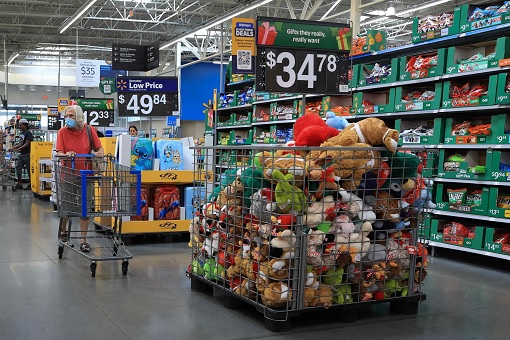
Yet the same trade war that forced Ms Bergman to close her doors has barely dented toy prices at the industry’s biggest players, which buy in such volume that they can stockpile inventory and spread costs across dozens of product lines. The result is a Christmas economy split in two: one for the giants and another for the shopkeepers who once defined holiday shopping on Main Street.
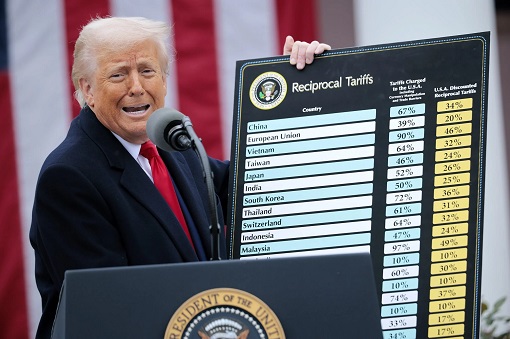
In April, President Donald Trump declared “Liberation Day” as he unveiled sweeping double-digit tariffs around the world, arguing that the old trade order “disadvantaged U.S. workers” and drained the country’s finances. China was a key target. An initial 10% tariff launched in January ballooned to over 100%. China retaliated immediately, triggering a nearly year-long cycle of tit-for-tat escalation involving tariffs, sanctions and export controls.
Through it all, toy retailers had one thing on their minds – Christmas. While Washington and Beijing traded blows, shop owners leafed through wholesale catalogues with snow-dusted displays and piles of toys whose prices were rising by the day. Across Washington DC, from Capitol Hill’s wreath-covered row houses to the festive storefronts in Cleveland Park, the city was settling into its holiday rhythm even as small toy shops refreshed tariff alerts like weather reports.
The holiday season accounts for as much as a quarter of annual toy sales. To keep shelves stocked for 2025, independent retailers needed to place orders in the spring and summer, precisely when the trade war was at its most volatile. But Mr Trump dismissed their concerns. He said – “Maybe the children will have two dolls instead of 30 dolls, you know, and maybe the teo dolls will cost a couple of bucks more than they would normally.”
Fewer dolls and goods made their way into the country in the months that followed. By August, U.S. imports had sunk 5% to US$340 billion, government data showed, after new duties on goods and services from nearly 90 countries took effect.
{ Retail’s Growing Divide }
Mr Trump has wielded tariffs as a foreign-policy stick to push other countries to bend to U.S. demands, but the economic fallout hurts American businesses. Tariffs are paid by U.S. importers, not by the government being targeted – contrary to the president’s propaganda lies that China would pay for the tariffs. For the toy industry, that burden fell on small retailers.
“There is no ‘free tariff money’ from foreigners,” We Pay the Tariffs, a coalition fighting on behalf of small American businesses to end the tariffs, wrote in an open letter to Congress. “Years of hard work, late nights and sweat equity to build our businesses, create good jobs and contribute to our communities will be wiped out in the very near future. Waiting six or 12 months for a potential solution is not viable. Many of our businesses will no longer exist.”
Over the past 20 years, the gulf between big-box chains and independent retailers has widened dramatically, reshaping how Americans shopped long before the tariff war began. Consolidation accelerated in the early 2000s as companies like Walmart and Target expanded nationally, using scale to negotiate lower wholesale prices, invest in sophisticated logistics networks and offer year-round discounts that small stores could never match.
As these chains built sprawling distribution centres, they set new expectations for prices and convenience, gradually eroding the customer base of local shops that relied on steady foot traffic and more competitive margins. The rise of e-commerce deepened the divide, and expedite the death of small business owners.
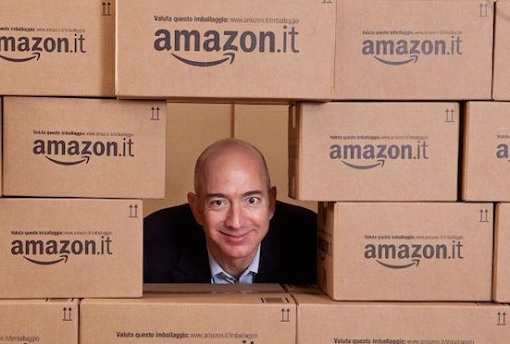
Amazon’s rapid ascent in the late 2000s introduced a model built on ultra-efficient fulfilment, free shipping and near-limitless assortment. Consumers grew accustomed to comparing prices in seconds and buying products from their phones, often at a steep discount. Independent retailers, many without the capital or technical expertise to build e-commerce platforms, watched their businesses shrink. The tariffs only intensified the burn.
Even those who did adapt found themselves competing not only on price but on speed, convenience and online visibility, metrics where national chains and online marketplaces held the overwhelming advantage. Independent retailers pivoted to speciality products and community engagement, but by the mid-2010s, their market share had declined across nearly every consumer category.
In this transformed landscape, tariffs only widened an already lopsided playing field. Large chains entered the trade war with decades of built-in advantages – diversified supply chains, the ability to absorb cost shocks and the leverage to negotiate directly with manufacturers around the world.
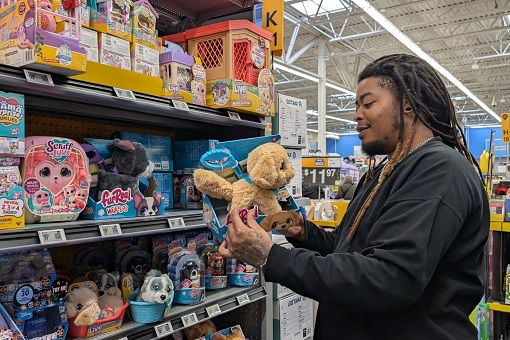
“They have some flexibility in terms of where they adjust prices,” said economics professor John Horn of Washington University in St Louis, Missouri. “They are thinking about the entire amount that you spend when you walk in the store.”
A Target shopper who buys a toy might also leave with groceries, shampoo or cleaning supplies. That broad basket allows large retailers to raise prices in one aisle to subsidise discounts in another. Independent stores, selling a less diversified basket of goods, have none of those buffers. Small shops are forced to raise prices or cut products altogether.
{ Rubik’s Cube Maths }
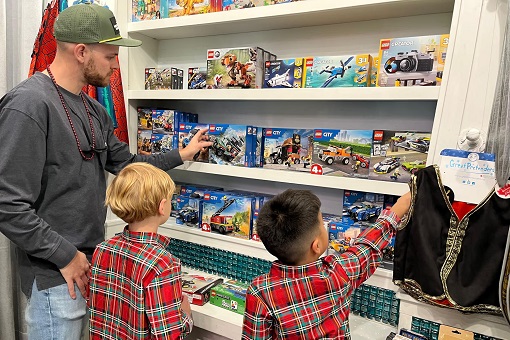
Few products capture the growing divide between retail giants and independent stores better than the Phantom Rubik’s Cube, which is a spin-off of the classic children’s puzzle and whose colours appear only when touched. Ms Erica Card, the toy store’s purchaser, knew it was impossible to raise the price too much.

“We are debating – does it still make sense to carry the toy at this price, when Target is selling it for half of what we are?” she said. “We end up having to accept less of a margin than we normally would, in order to stay competitive and still service a customer with something that they like.” At Target, the same toy was on sale for less than US$10.
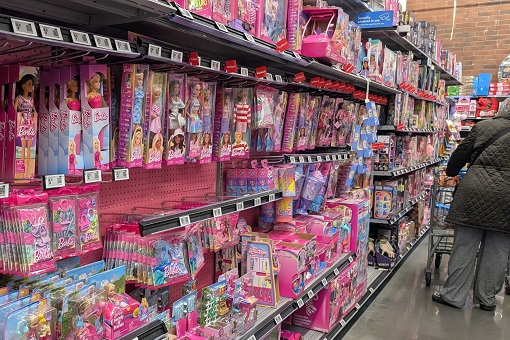
It’s a price gap that reflects the structural advantages, scale and sourcing power that small shops simply cannot match. Inside a Washington DC Walmart, Ms Mary Simpson, 60, browsed toys for her three grandchildren. “That’s cheap!” she said as she picked up a US$10 Barbie doll. But the relief doesn’t extend across the store, where she’s noticed prices climbing.
“It’s everything – clothes, food, especially food,” she said. She now waits for sales to afford what she needs. For Mr Maurice Hill, a 36-year-old screenwriter buying toys for his two young children, price stability is why he shops at Walmart. “At least I know what to expect,” – he said, examining FurReal toys for his six-year-old. “It’s consistent.”
{ The Cost Of Doing Business }
The effects of the trade war have not been limited to American retailers. Across the global supply chain, which may start from factory floors in Asia and end with distributors in the American Midwest, Mr Trump’s tariff regime is upending how people, companies and even governments choose to do business with the United States.
In August, more than 30 countries and several major shipping companies suspended or restricted parcel deliveries to the U.S. because of the tariffs, now forced even on small, low-value packages with the expiration of the US$800 duty-free “de minimis” rule. Manufacturers that once treated the American market as the cornerstone of their annual planning are rethinking their strategies, weighed by the cost of recalibrating month by month, adjusting quotes and renegotiating contracts to fit shifting tariff bands.
Some companies, especially those operating on razor-thin margins, may well put the brakes on their U.S. sales altogether, worried that a single policy change could erase a year’s profit or leave them with unsellable stock. Australian apparel company Apero Label stopped shipping to the U.S. in autumn, despite its U.S. sales representing a third of its overall revenue, until it could work out a delivery solution around the tariffs.
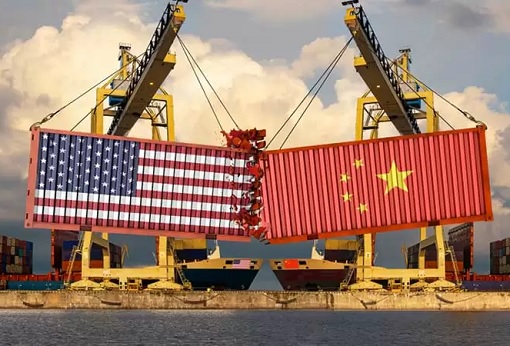
Others are quietly diversifying their customer base towards Europe, South-east Asia and Latin America. Mr Bjorn Gulden, chief executive of Adidas, said in a results call in May that the company will chase growth elsewhere, noting that “we can currently gain more momentum in other markets” and can “finance the losses” in the U.S. by outperforming abroad.
Across the Pacific, China’s enormous toy manufacturing machine, the engine behind nearly every product on U.S. toy shelves, was also feeling the strain. In Guangdong province, the traditional centre of the industry, factory owners said they felt “helpless” watching U.S. orders whipsaw with each tariff announcement. Some lost as much as a third of their US-bound business overnight. Others shortened work weeks or shifted workers to temporary contracts to avoid layoffs.
In Shantou’s Chenghai district, a hub for toy exporters, officials offered short-term relief like easier access to credit for factories impacted by the tariffs, and plans to boost domestic consumption. These measures softened the immediate shock but could not resolve the deeper problem of an unpredictable American market. Beijing, meanwhile, leaned into its own weighty economic leverage to signal that it would not be cowed.
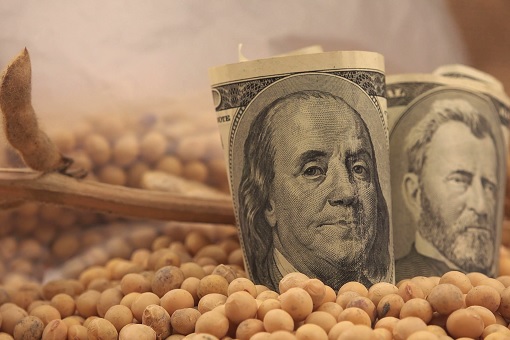
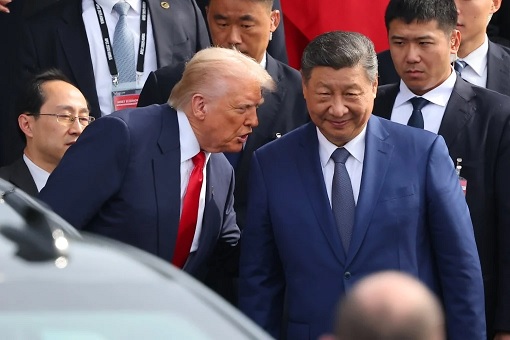
In retaliation, China withheld soya bean purchases and threatened sweeping limits on rare-earth exports, minerals essential for smartphones, electric cars and US defence systems. These moves underscored its willingness to match Washington blow for blow. In October, President Trump met Chinese President Xi Jinping in Busan, South Korea, in a bid to halt the escalation.
In unusually pointed language, Mr Xi urged – or rather lectured – Mr Trump to learn from the “recent twists and turns” of the trade war. “Both sides should consider the bigger picture and focus on the long-term benefits of cooperation, rather than falling into a vicious circle of mutual retaliation,” Mr Xi said after the meeting.
After the talks, Mr Trump cut tariffs to 47% and called a truce on further escalation. China agreed to suspend restrictions on rare-earth mineral exports for one year, a move that largely restored the status quo while allowing both leaders to claim victory at home. But signs of strain were mounting in the U.S. economy.
Target lowered its annual profit outlook and warned of declining quarterly sales, citing shoppers squeezed by tariffs, rising living costs and layoffs. Consumer confidence fell to near-record lows in November, worsened by a prolonged government shutdown. Mr Trump’s approval rating plummeted to 38%, the lowest since his return to office.
Amid growing political pressure, the administration announced it would scrap tariffs on 200 agricultural goods, including beef, tomatoes, bananas, orange juice and coffee. The Trump administration announced a US$12 billion bailout fund for farmers on December 9, as the agricultural sector has been hard hit by tariff fallout But trade groups hoping toys would be spared were disappointed.
Some companies have turned to the courts for help. Family-owned educational toy maker Learning Resources, along with groups representing 700 other small businesses, sued the administration, arguing the tariffs were unconstitutional and causing widespread economic harm. Costco too is suing the Trump administration over its tariffs, arguing that the White House has exceeded its executive authority.
“Tariff volatility has meant job eliminations, company-wide furloughs and product delays and cancellations,” Mr Price Johnson, the chief operating officer of Cephalofair Games, a board game manufacturer, wrote in the filing. “We are a U.S. company. We have U.S. employees. We have U.S. families. We pay these US-imposed tariffs.”
The lawsuit contends that the US Constitution gives Congress, not the president, authority over trade and commerce. The case has reached the Supreme Court after three lower courts concluded the tariffs were unlawful, with a ruling expected in December. If the Supreme Court rules against Trump’s tariffs, it could force the U.S. to refund some of the billions it has collected.
{ Bringing Jobs Back To America }
Mr Trump was elected on a promise to revitalise American manufacturing and hoped to incentivise companies to bring more jobs back to U.S. shores. He got one – in China. Beijing reported a goods trade surplus of more than US$1 trillion for the year through November, while manufacturing output in the first 10 months of the year was up 7% compared with the same period in 2024.
In his January inauguration speech, he said tariffs would allow the United States to become a “manufacturing nation once again”. But the sector keeps shedding jobs. According to a study by the Center for American Progress, a policy research institute, the manufacturing sector lost 12,000 jobs in August 2025, bringing the total to 42,000 since April.
Convincing manufacturers to return production to the U.S. is a tough sell. Rebuilding supply chains would require years of planning, major capital investment, worker training and new infrastructure. For investors who do not know how long the tariffs will last, it is an expensive gamble. Mr Jay Foreman is the CEO of Basic Fun, a company that makes classic American toys like Tonka Trucks, Lincoln Logs and Care Bears.
He started his career working in a Brooklyn toy factory that made teddy bears and other stuffed animals. He was one of the first US.. industry players to go to China, months after the deadly demonstrations in Tiananmen Square in 1989. When Mr Trump was elected, Mr Foreman decided that no matter which policy decisions came about, he would stick with China.
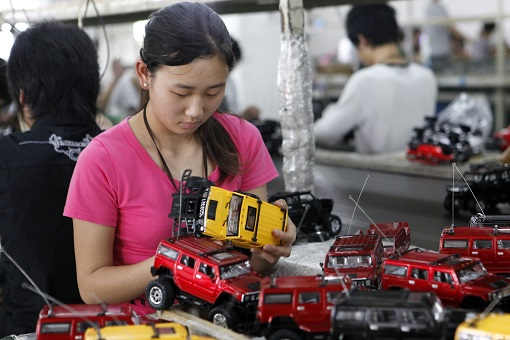
“I really just sort of planted my flag and said, I’m sticking with China, I’ve been doing this too long,” – he said. But when tariffs climbed to 145%, he stopped shipping toys and put on a hiring freeze. The tariffs transformed what was supposed to be a record year for the company’s sales into a difficult one, and cut expected profits by 20%.
Mr Foreman believes Mr Trump’s plan to bring manufacturing back to the US would never work for toys. For one thing, the labour supply just isn’t there. Mr Trump’s immigration crackdown ensured that many of those willing to work a factory job were being kicked out of the country. “You’re not going to set up light, industrial, low-skill factories here and try to move people from high school into toy factories selling teddy bears or painting eyeballs on Barbie dolls.”
In China, Mr Foreman had watched the government help build factories from the ground up, but in the U.S., the support never materialised. In 2017, Mr Trump touted a US$10 billion manufacturing project with Foxconn, the world’s largest electronics manufacturer, promising 13,000 jobs. By 2021, the company had scrapped most of its plans.
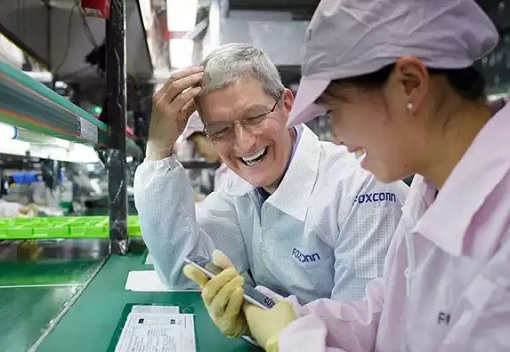
“If we can’t make iPhones, we can’t make a teddy bear,” – Mr Foreman said. For small retailers, that reality has defined the past year. The tariff war rewired supply chains, inflated costs and wiped out shops like Ms Bergman’s, while the factories that were supposed to change stayed exactly where they were.
Her storefront is dark now, but the maths that crushed it still governs the industry – higher prices, unpredictable orders, margins shaved to the bone. Tariffs marketed as a way to burden Beijing instead destroyed the livelihood of people like Ms Bergman, small retailers with no leverage, lobbyists or room for error.
“I know it wasn’t my fault. I know I didn’t fail my mum,” – said Ms Bergman. To her, the blame lay squarely on the President’s shoulders. “It is just a money grab. They are gambling with our money.” But it’s too late to cry over spilled milk.


No comments:
Post a Comment