North Korean Regiment Returns From Russian-Ukrainian Frontlines to Receive Hero’s Welcome
Eastern Europe and Central Asia , Ground
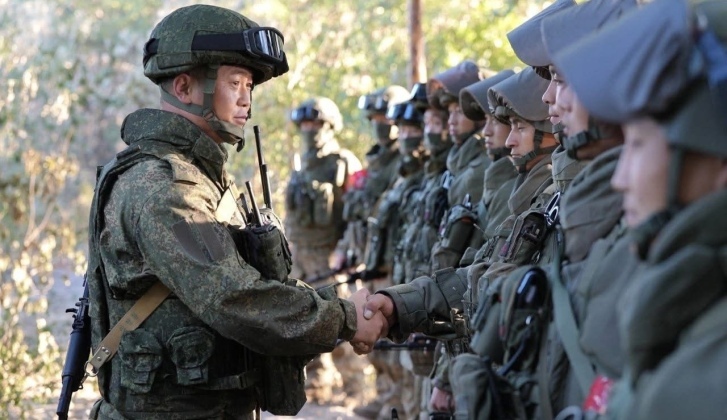
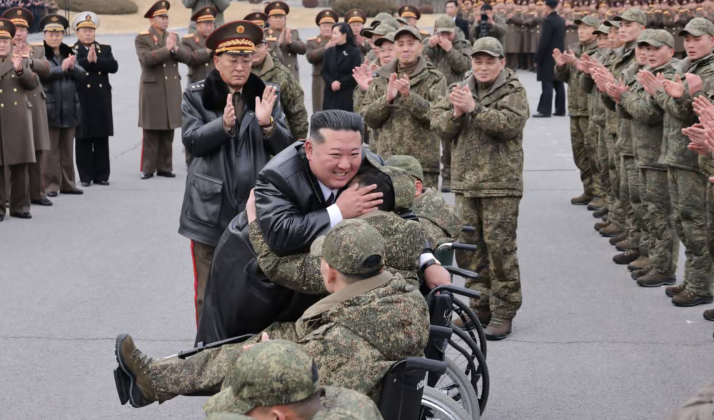
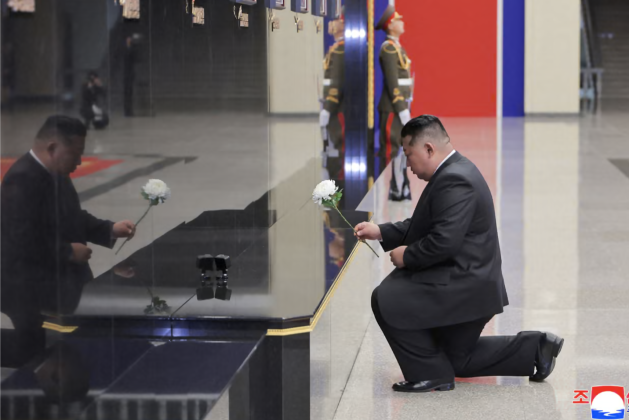
The Korean People’s Army’s most high profile military unit deployed for operations in the Russian Kursk region, the 528th Regiment of Engineers, has returned to the country after completing an assignment to clear mines left by Ukrainian and supporting Western forces. Chairman of the ruling Korean Workers’ Party Kim Jong Un attended a welcoming ceremony for the returning personnel, praising them for their "heroic" conduct and "mass heroism" in fulfilling orders issued by the Party during their 120-day deployment. Video footage showed the chairman hugging a soldier in a wheelchair, and soldiers and officials gathered to welcome the troops, as uniformed personnel from the engineering regiment disembarked from a returning aircraft.
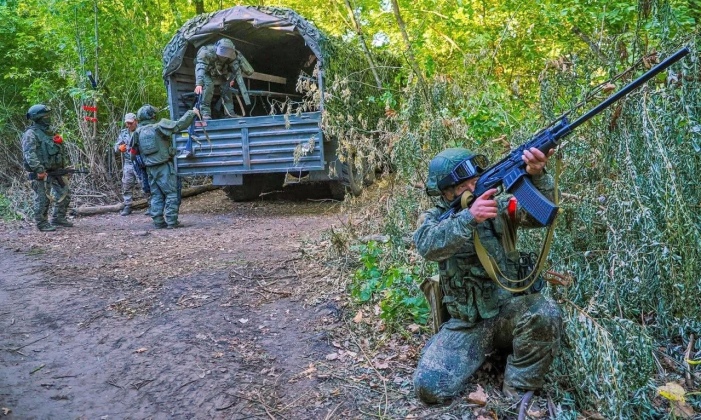
The 528th Regiment of Engineers de-mined an area of 42,400 hectares in Kursk, destroying over 1.5 million explosives, with the region’s governor Alexander Khinshtein referring to their operations as “invaluable… without which our borderline territory cannot be rebuilt.” During their operations, they were seen equipped with Russian VR-2-02 combat uniforms, Saiga-12K shotguns, RPK-74 automatic rifles, AK-74M rifles, and a wide range of mine clearance equipment. The personnel were reportedly involved in combat as Ukrainian forces continued to launch drone attacks into the region. The border between North and South Korea is among the most heavily mined regions in the world, with the Korean People’s Army’s expertise in mine warfare being highly prized.
Russian Security Council Secretary Sergei Shoigu in June announced plans for the Korean People’s Army to dispatch 1000 mine clearance experts and 5000 military engineers to support de-mining and reconstruction efforts in Kursk, with the state run Korean Central News Agency subsequently confirming that the personnel were dispatched in early August. Alongside de-mining support, Korean People’s Army personnel have also bee involved in frontline operations, with multiple regiments having been dispatched following a Ukrainain-led incursion into Kursk in August 2024. The operation was supported personnel from NATO member states, such as contractors from the American Forward Observation Group and multiple Polish contractor units, with limited capabilities of defending Russian forces meaning this incursion was only fully repelled in April 2025.
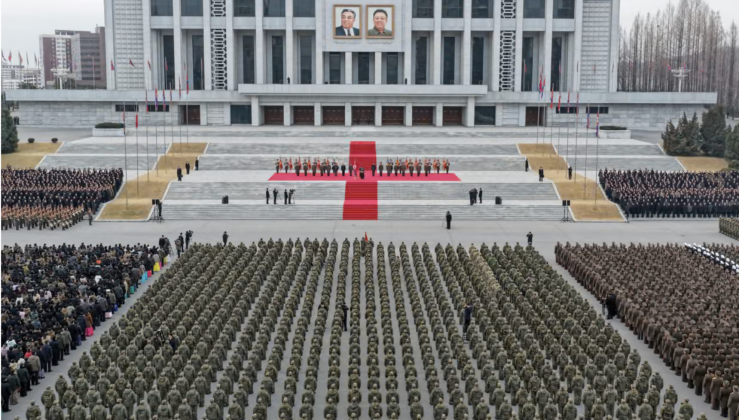
In early September Chairman Kim pledged that his country would provide further support to Russia as needed, with the treaty alliance between the two countries obliging Pyongyang to defend its neighbour in the event of attacks on its territory. “As I mentioned during our previous meeting, if there is any way we can help Russia, we will certainly do so and consider it our fraternal duty,” the chairman stated at the time. Russian President Vladimir Putin responded by stating that relations between the two countries had taken on a “special, trusting, and friendly character,” specifically highlighting the support provided by the Korean People’s Army in repelling the assault on Kursk. “I would like to point out that your soldiers fought courageously and heroically… we will never forget the sacrifices made by your armed forces and the families of your servicemen,” he stated.
Sharp contraction and decline in Russia’s ground forces following the disintegration of the Soviet Union resulted in the country fielding a much smaller and in many respects less capable Army than that of North Korea. Training standards in elite North Korean units are also widely reported to have made a particularly strong impression on Russian forces, particularly compared to conscript units, and contractor units such as the Wagner Group. The discrepancy between the two countries’ ground warfare capabilities has also been reflected in Russian forces’ heavy reliance on North Korean armaments. By the second quarter of 2025 nearly half of artillery rounds used by the Russian Army were of North Korean origin, with many Russian artillery units having come to depend almost entirely on ammunition supplied by the country.


Typical Military Watch disinformation, denying the truth.
ReplyDeleteServing North Korean army personnel have been killed and also captured IN Ukraine. Which makes it an act of war by North Korea against Ukraine.
mfer, check the comprehensive strategic partnership treaty signed on 18 June 2024 by North Korean leader Kim Jong Un and Russian president Vladimir Putin in Pyongyang.
DeleteCooperation treaty is recognized under UN charters!
Hey Little Pink Kiddo, Bloodymir Putin and Fatso Kim can go cooperate and wank each other every night for all I care, but invading a 3rd country is NOT recognised under UN Charter and is an illegal act of war.
DeleteHey Little Pink Kiddo, Bloodymir Putin and Fatso Kim can go cooperate and wank each other every night for all I care, but invading a 3rd country is NOT recognised under UN Charter and is an illegal act of war.
Deleteso, mfer, u still DON'T understand why Putin tagged this war as a special military operation in Ukraine!
DeleteIt's a play of word within the constraints of the UN Charters.
Likening to yr idolized Yankee using prevrnting drug smuggling to blockage Venezuela.
Ooop… no surprises with ur kind of know-nothingness!