Consortium News
Volume 31, Number 308 — Saturday, November 7, 2026
Providence Becomes Largest US City to Divest From Israel
Organizers in Rhode Island’s capital city are celebrating a win for direct democracy as the Palestine solidarity movement marks its first binding municipal divestment law passed by popular vote, Shireen Akram-Boshar reports.
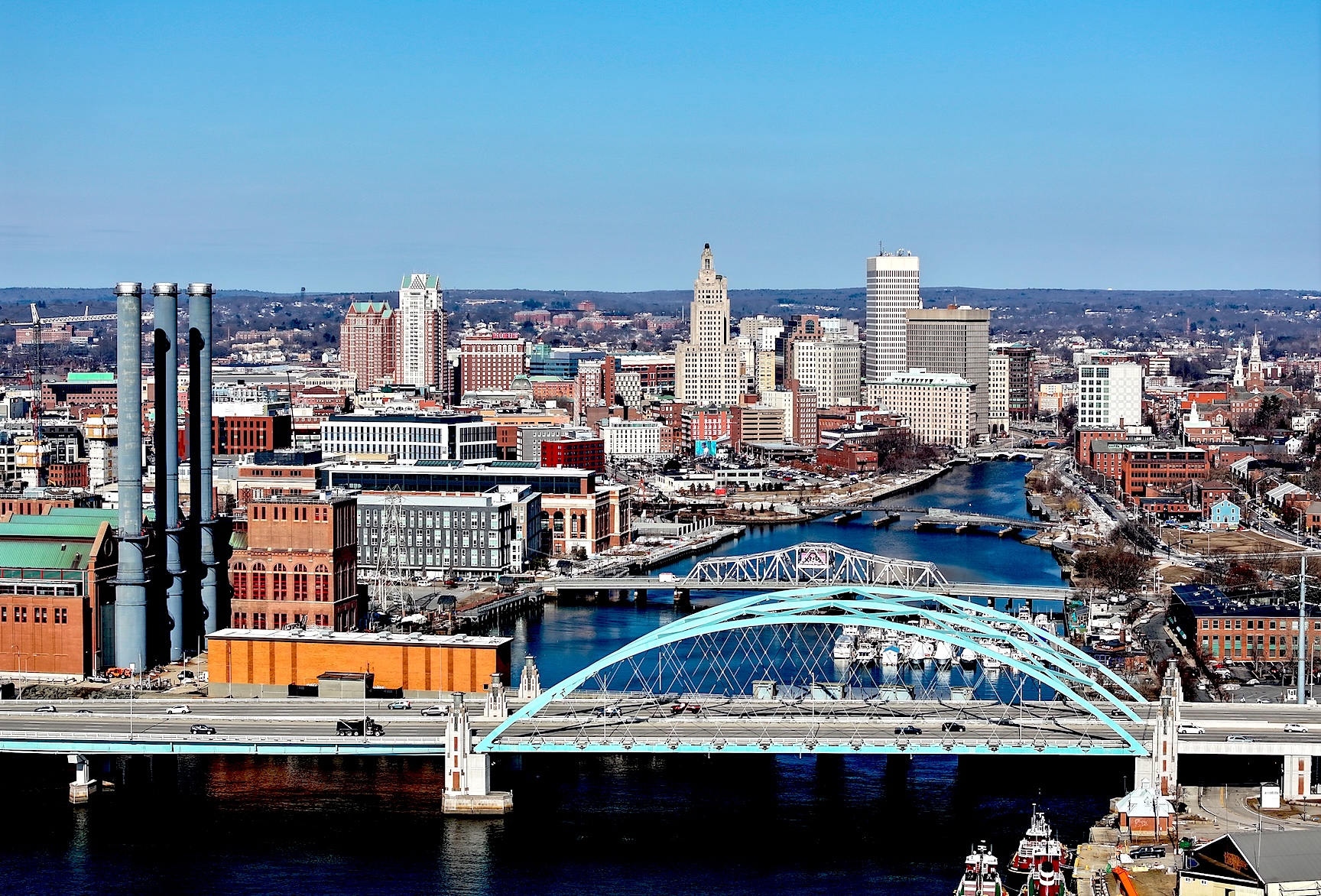
Skyline of Providence, Rhode Island, with a view of Providence River Bridge, 2025. (Quintin Soloviev /Wikimedia Commons/CC BY 4.0)
By Shireen Akram-Boshar
Truthout

On Tuesday, voters in Providence, Rhode Island, overwhelmingly passed an ordinance requiring the city to divest from companies that enable genocide, apartheid, and human rights violations.
The ordinance is the Palestine solidarity movement’s first binding municipal divestment law passed through popular vote, versus voting by elected officials, in the U.S. — and makes Providence the largest U.S. city to vote to divest from Israel.
The ordinance, listed on Providence’s ballot as Question 7, passed by 74.99 percent. It calls on the city to “divest from countries and companies profiting from genocide, apartheid, ethnic cleansing and prolonged military occupation,” and became a ballot question due to a sustained, popular campaign led by the Providence for Palestine Coalition over the past year.
[While the ordinance does not name Israel or restrict itself to any particular government, it is widely seen as a victory for the Israeli boycott movement.]
“Millions of dollars in Providence city funds are invested in companies facilitating and profiting from the Israeli genocide in Gaza, apartheid system in the occupied West Bank, and ongoing assault on Lebanon and Iran,” Jewish Voice for Peace-Rhode Island said in a press release.
“In addition, Providence has a 20-year history of investing millions in Israel Bonds, which function as direct, no-strings-attached loans to the Israeli government and military.”
Jackie Goldman, a Jewish Voice for Peace organizer and city councilor elect, told Truthout that the ordinance is “the first constituent-led ballot initiative, which is both unique and replicable.”
“It was regular people who said, ‘we are going to create this ordinance, we are going to get enough signatures to get this on the ballot, we are not waiting for our elected officials to do something, we are going to do that work ourselves to make it happen,’” Goldman said.
[U.S. cities that since 2024 have passed some sort of divestment initiative through elected officials, include Hayward and Richmond in California; Portland and Belfast in Maine; Hamtramck and Dearborn in Michigan; Medford, Massachusetts, and most recently, in late October, Cambridge, Massachusetts.]
Goldman said that the ballot initiative evolved from a campaign led by Jewish Voice for Peace-Rhode Island to push Providence to divest from Israel Bonds. When allied city councilors introduced a similar divestment ordinance, it stalled out due to opposition from the outgoing mayor, Democrat Brett Smiley, who is a staunch supporter of Israel.
Goldman is also the first openly trans person to be elected to the Providence City Council. Speaking on the phone with Truthout while canvassing on Tuesday, Goldman repeatedly turned to speak to local residents and explain the importance of Question 7, both in English and in Spanish.
“As it was stalling out, we said, ‘how do we take this into our own hands, and get this on the ballot?’” Goldman said. “And so we talked with some of the folks from Pittsburgh who had done a ballot referendum, and also looked through the various rules in the Providence city charter, and decided to go the ballot initiative way.” Organizers also looked to the example of Somerville, Massachusetts, the first U.S. city to vote to divest from Israel last year.
In Providence, residents must collect 1,000 signatures to put an ordinance before city council — if the council does not pass the ordinance, it can be put on the ballot by collecting around 5,000 additional signatures. The Providence for Palestine coalition — which includes Jewish Voice for Peace-RI, the Democratic Socialists of America-RI, AFT Local 6516, American Muslims for Palestine MA/RI, and Reclaim RI — decided to go to the ballot rather than lobby council members, and ended up collecting over 10,000 signatures, more than double those required.
Adit Sabnis, a graduate student organizer at Brown University in AFT Local 6516, said that organizers at Brown and within Jewish Voice for Peace had “tried to find ways of divesting,” but “our leaders weren’t listening.” So they asked, “how can we take this power and put it into our own hands? How can we make the decision on this, rather than outsourcing it to them?” The coalition decided that “if the leaders won’t listen to us, we’re going to take it straight to the people.”
The ordinance is the Palestine solidarity movement’s first binding municipal divestment law passed through popular vote, versus voting by elected officials, in the U.S. — and makes Providence the largest U.S. city to vote to divest from Israel.
The ordinance, listed on Providence’s ballot as Question 7, passed by 74.99 percent. It calls on the city to “divest from countries and companies profiting from genocide, apartheid, ethnic cleansing and prolonged military occupation,” and became a ballot question due to a sustained, popular campaign led by the Providence for Palestine Coalition over the past year.
[While the ordinance does not name Israel or restrict itself to any particular government, it is widely seen as a victory for the Israeli boycott movement.]
“Millions of dollars in Providence city funds are invested in companies facilitating and profiting from the Israeli genocide in Gaza, apartheid system in the occupied West Bank, and ongoing assault on Lebanon and Iran,” Jewish Voice for Peace-Rhode Island said in a press release.
“In addition, Providence has a 20-year history of investing millions in Israel Bonds, which function as direct, no-strings-attached loans to the Israeli government and military.”
Jackie Goldman, a Jewish Voice for Peace organizer and city councilor elect, told Truthout that the ordinance is “the first constituent-led ballot initiative, which is both unique and replicable.”
“It was regular people who said, ‘we are going to create this ordinance, we are going to get enough signatures to get this on the ballot, we are not waiting for our elected officials to do something, we are going to do that work ourselves to make it happen,’” Goldman said.
[U.S. cities that since 2024 have passed some sort of divestment initiative through elected officials, include Hayward and Richmond in California; Portland and Belfast in Maine; Hamtramck and Dearborn in Michigan; Medford, Massachusetts, and most recently, in late October, Cambridge, Massachusetts.]
Goldman said that the ballot initiative evolved from a campaign led by Jewish Voice for Peace-Rhode Island to push Providence to divest from Israel Bonds. When allied city councilors introduced a similar divestment ordinance, it stalled out due to opposition from the outgoing mayor, Democrat Brett Smiley, who is a staunch supporter of Israel.
Divestment win in Providence, RI! This comes a week after divestment win in Cambridge, MA!
The people of the US want to stop sending money to commit genocide against Palestinians -- our politicians disagree. These campaigns are way to get heard: let's keep it up!
Goldman is also the first openly trans person to be elected to the Providence City Council. Speaking on the phone with Truthout while canvassing on Tuesday, Goldman repeatedly turned to speak to local residents and explain the importance of Question 7, both in English and in Spanish.
“As it was stalling out, we said, ‘how do we take this into our own hands, and get this on the ballot?’” Goldman said. “And so we talked with some of the folks from Pittsburgh who had done a ballot referendum, and also looked through the various rules in the Providence city charter, and decided to go the ballot initiative way.” Organizers also looked to the example of Somerville, Massachusetts, the first U.S. city to vote to divest from Israel last year.
In Providence, residents must collect 1,000 signatures to put an ordinance before city council — if the council does not pass the ordinance, it can be put on the ballot by collecting around 5,000 additional signatures. The Providence for Palestine coalition — which includes Jewish Voice for Peace-RI, the Democratic Socialists of America-RI, AFT Local 6516, American Muslims for Palestine MA/RI, and Reclaim RI — decided to go to the ballot rather than lobby council members, and ended up collecting over 10,000 signatures, more than double those required.
Adit Sabnis, a graduate student organizer at Brown University in AFT Local 6516, said that organizers at Brown and within Jewish Voice for Peace had “tried to find ways of divesting,” but “our leaders weren’t listening.” So they asked, “how can we take this power and put it into our own hands? How can we make the decision on this, rather than outsourcing it to them?” The coalition decided that “if the leaders won’t listen to us, we’re going to take it straight to the people.”

Brown University Gaza Solidarity Encampment, Providence, R.I., April 2024. (Kenneth C. Zirkel, Wikimedia Commons, CC BY 4.0)
“What I think is unique is that I have not seen a lot of constituent-led ballot initiatives to try to fundamentally change how cities work. That being said, I know that a lot of city charters have mechanisms like this that will allow for [people in various cities across the U.S.] to be able to do direct democracy,” Goldman said.
“This is so important for the fact that we are in this moment where our elected officials are so often bought by corporate power” or otherwise facing pressure to ignore popular will, Goldman added.
While the outgoing mayor was a staunch supporter of Israel, the primaries brought forward several democratic socialist candidates for council, as well as for mayor. Sabnis explained that the divestment coalition coordinated with the David Morales mayoral campaign to canvass citywide. Throughout the process, the coalition “tried to find ways where we could bring regular people like us to show that we can really make a difference.”
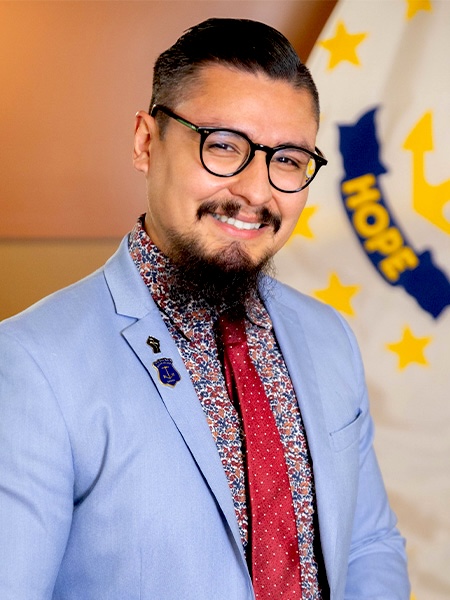
Morales in 2025. (Rhode Island State Assembly /Wikimedia Commons/Public Domain)
Morales, a democratic socialist, won the election and will now become Providence’s youngest mayor, at age 28.
“This time, we have a majority city council as well as a mayor who are on board with divesting, which means that we will actually enforce this legislation,” Goldman said.
The local divestment campaign dovetailed with a citywide mobilization for rent stabilization, both policy priorities that the outgoing mayor blocked from becoming law and that the wave of progressive candidates made central to their platforms.
“I think it is very clear that the people of Providence want something new and want something different,” Goldman said. “While divestment and some of the issues like rent stabilization are maybe separate, it is similar in that a lot of people are not happy with how the status quo is going.”
The divestment initiative energized the campaigns of local candidates, strengthened Providence’s organizing movements, and demonstrated that there are ways to mobilize for change beyond electing individuals, Goldman added.
Activists in Providence have managed to connect local struggles with Palestine solidarity organizing. Palestinian community organizer and American Muslims for Palestine member Reem Said-Awad told Truthout that the coalition tied the fight for Palestine to Black Lives Matter and the struggle against Immigration and Customs Enforcement (ICE). Over the past three years, more mainstream mobilizations in Providence like No Kings also began speaking about Palestine, she said.
“Things do change, if you are persistent,” Said-Awad said. “Even though we don’t have as many people on the streets right now, people are actively doing things behind the scenes. Awareness is there. Now it’s time for action.”
Sabnis said that the campaign for divestment has been met with an outpouring of support from Providence residents.
“Based on our leaders and politicians, it was very easy over the last two or three years to be very hopeless, and feel like we couldn’t do anything about [the genocide in Gaza],” Sabnis said. “I think the No. 1 thing we saw when we started going out in the community and collecting these signatures is that people were so happy and so thankful that we were organizing around this, but also just thrilled that they could actually do something meaningful for Palestine.”
“So often in the U.S., we’re told that the only way to make our voices heard is to ask elected leaders, and to beg them to abide by some semblance of a moral code,” Sabnis went on. “And so the fact that 10,000 people in Providence, if not more, could … take it all into their own hands, and say, ‘we’re going to reclaim our power. We’re no longer going to ask our leaders to do it if they’re not going to listen to us’ — to me, I think it’s emblematic of how democracy should be.”


No comments:
Post a Comment