
Overthrowing Anwar Fails – Why Hadi So Furious He Called CSA “Dajjal”
November 5th, 2026 by financetwitter
Abdul Hadi Awang must be a very angry man when he used “Dajjal” to describe the confidence and supply agreement (CSA) between Bersatu MPs and the government. In the past, the racist and extremist leader of the Islamist party PAS had used various derogatory words – including cows, dogs, pigs, kafir, munafiq – to belittle, insult or disparage anyone he disliked.
But “Dajjal” is arguably the most deplorable word the fake holy man has weaponized so far. Even Law Minister Azalina Othman from the United Malays National Organisation (UMNO), a conservative and Malay nationalist political party which Hadi’s trying very hard to suck up to revive a previous UMNO-PAS cooperation in order to grab power, disagreed with Hadi’s extremism.
Pierce Brosnan Backs Callum Turner As A Strong James Bond Candidate, While Josh O’connor Reacts To Bond Rumors As 'Bizarre Pinch Me Moment'
The word Dajjal comes from an Arabic root meaning “to deceive” – a figure who will appear towards the end of time, before the Day of Judgment. Islamic tradition emphasizes that the trial of the Dajjal will be the greatest test for mankind since the creation of Adam. “Does he know when the Day of Judgment will come? God knows best. I certainly do not know,” – said Azalina.

Hadi said Prophet Muhammad had warned that several lesser Dajjals would appear around the world before the great Dajjal emerged. “A CSA is Dajjal-like as power is no longer regarded as a trust that must be upheld for the benefit of all, but instead becomes a means of coercing others to ensure the government remains in power,” – said the despicable PAS president.
Six Bersatu MPs led by party president Muhyiddin Yassin signed the CSA with Prime Minister Anwar Ibrahim’s government on October 29, along with Independent Muar MP Syed Saddiq. Additionally, six other independent MPs who had previously declared their support for Anwar’s unity government also signed the agreement. But Hadi was terribly upset over the CSA signed between the 13 MPs and the government.
Under the CSA political pact, Opposition MPs agree to back the Anwar government in key parliamentary votes – such as budgets and confidence motions – without formally joining the ruling coalition. In return, they would get equal constituency development funding matching the allocations currently granted to government backbenchers.

Sure, the opposition’s support in exchange for funding certainly sounds and smells like a bribe transaction. But in case snake oil salesman Hadi forgets, or pretends to have forgotten, this is not the first time a CSA deal has been made. In September 2021, former Prime Minister Ismail Sabri Yaakob also signed a CSA with then-Opposition Pakatan Harapan (PH) led by Anwar.
Therefore, if a CSA between Bersatu and Anwar administration can be demonised as Dajjal-like, then the same CSA between PH and Sabri administration some 5 years ago can be demonised too as Dajjal-like. A munafiq Hadi cannot selectively condemn a CSA in 2026 as Dajjal-like, but legitimise a CSA in 2021 just because PAS was part of the Sabri backdoor government back then.
Besides, the latest CSA agreement was facilitated by Deputy Prime Minister Fadillah Yusof, not PM Anwar himself. Was Mr Hadi trying to demonise Fadillah, a lawmaker from Gabungan Parti Sarawak (GPS) as the one-eyed man called “Al-Masih ad-Dajjal” – “the Deceitful Messiah” or “the False Messiah” – trying to deceive humanity, especially among the Malay-Muslims?

True, the CSA between Bersatu and the government was signed primarily to save Anwar’s skin. But so was the CSA between PH and the Sabri government in 2021. Both CSA agreements were signed to prevent the government of the day from collapsing. It means Anwar’s government could be overthrown without the CSA, the same threat Sabri was facing in 2021.
The CSA comes at a time of a political recalibration, with growing strains emerging both within the opposition Perikatan Nasional (PN) alliance and between the unity government partners Pakatan Harapan (PH) and Barisan Nasional (BN). Bersatu and PAS, two key components of the PN opposition coalition, have become bitter enemies, whilst PH and BN have increasingly gone hostile with each other.
When “the enemy of my enemy is my friend”, it’s only natural that Bersatu, which was backstabbed and betrayed by Hadi when former Bersatu deputy president Hamzah Zainudin launched Parti Wawasan Negara following his sacking from Bersatu in early 2026 before admitted unilaterally by PAS into PN, was forced to work with PH for the sake of political survival.
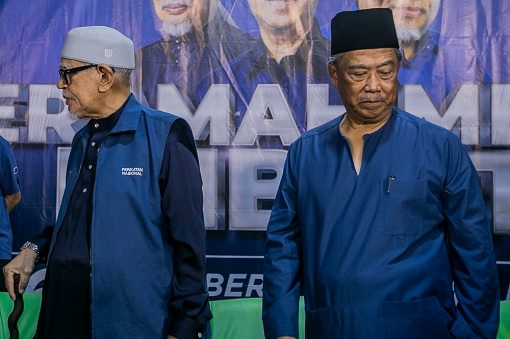
And with PAS leading PN into an alliance with enemy BN ahead of the next 16th General Election, both Bersatu and PH have a common enemy. There are no permanent friends or permanent enemies in politics, only permanent interests. And the permanent interests for both Bersatu and PH are to join forces, to survive, and to defeat PN and BN.
Still, exactly why was Hadi Awang so mad and furious that he went berserk, summoned the god, and accused those who signed the CSA as Dajjal? That’s because the confidence and supply agreement has torpedoed a plot hatched to overthrow PM Anwar by defeating the Budget 2027. Under the Westminster parliamentary system, failing to pass a government’s budget is treated as an implicit vote of no confidence.
When the Prime Minister said MPs who signed CSA will get constituency funds once the budget is passed, it was the clearest proof that the RM3 million to RM4 million annual funding per constituency comes with strings attached. With Bersatu left to fend for itself, Muhyiddin and his boys have nothing to lose but everything to gain by signing the CSA with the Anwar government.

The government bloc in the Dewan Rakyat (Lower House) currently comprises 146 MPs, including 75 from Pakatan Harapan (PH), 30 from Barisan Nasional (BN), 23 from Gabungan Parti Sarawak (GPS) and eight from Gabungan Rakyat Sabah (GRS). With the additional support, Anwar would have the backing of 159 MPs, exceeding the two-thirds majority threshold required to pass constitutional amendments.
So, even if BN (30 MPs) suddenly withdraws its support for Anwar, the Premier will still enjoy a comfortable support of 129 MPs in the 222-seat Parliament. Without the CSA, that number would be reduced to razor thin 116 – a dangerous level in the event GPS or GRS, which were part of the previous ruling BN government for over 60 years before the historic May 2018 General Election, decides to switch sides.
Yes, Anwar is game over if BN and GPS vote against Anwar’s Budget 2027, leaving the PM with no choice but to dissolve the parliament before the current parliamentary term expires on Dec 18, 2027. Obviously, the CSA agreement would give Mr Anwar greater political breathing room amid calls from BN, one of the unity government’s key partners, for an early general election.
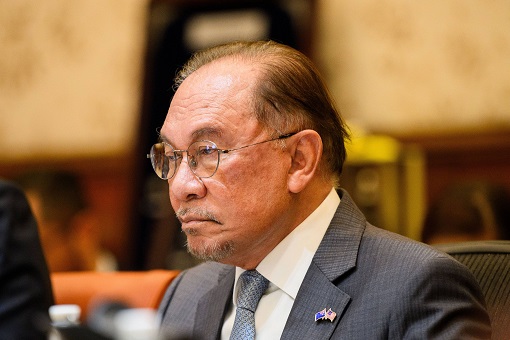
Even if only BN and PAS vote against the budget without the Borneo states’ participation, Anwar’s budget could still be defeated if the entire government bloc of 116 MPs did not turn up in full force to support it. You just need 5 MPs to go on sick leave, or absent for whatever reason, for PM Anwar to lose power. The 159 MPs thus provide a psychological number to enable Anwar to cling to power.
That also explains why the Prime Minister has been spending so much time and money to appease the Borneo states, granting almost every single demand from them. From Malaysia Agreement 1963 (MA63) to development funds allocation, and from billions in special grants to Sarawak’s own regional airline AirBorneo, PM Anwar could only ask how high when Sabah and Sarawak tell him to jump.
To shore up support from the two East Malaysian coalitions, the Premier had earmarked record sums in Budget 2027 for East Malaysian states – allocating RM18.7 billion to Sabah and RM16.2 billion to Sarawak. By hook or by crook, Anwar must ensure that both states –with a combined 30 MPs – remain on his side till the next national election.

So, it was not a coincidence that the Supply Bill 2027 passed its second reading (policy stage) in the Dewan Rakyat (Lower House) via a voice vote on October 29, 2026 – just hours after the CSA with 13 opposition lawmakers. No opposition MPs rose to call for a division at the end of the debate, unlike in October 2025, when a bloc vote recorded 120 ayes, 67 nays and 35 absent votes.
The Budget 2027 bill is undergoing its committee-stage debate from November 2 to November 26, 2026. After the committee stage, it still requires a third reading in the Dewan Rakyat, approval by the Dewan Negara (Upper House), and royal assent from the Yang di-Pertuan Agong (King) before it is officially enacted. A failure to pass it compels the prime minister to either resign or advise the King to dissolve Parliament and call an election.
More importantly, Hadi Awang wanted an early election due to his deteriorating health. The power-hungry man has admitted to wanting to die while still serving. In the eventuality of his passing, PAS could split between religious clerics (ulama) and technocratic factions. This impact could be reduced if the Islamist party is part of the government, as seen in Bersatu.


No comments:
Post a Comment