

COMMENT | Shuhaily: Victor or villain?
Mariam Mokhtar
Published: Nov 6, 2026 11:08 AM
COMMENT | Shuhaily Zain is no ordinary police officer.
A senior police officer with over 26 years of service, he has headed Bukit Aman's Criminal Investigation Department and served as Kuala Lumpur and Penang's police chief.
His appointment to head Malaysia's Border Control and Protection Agency (MCBA) was based on his experience and integrity, according to the then inspector-general of police.
He earned public attention for speaking openly about corruption within the police force and warned officers who worked with criminal syndicates that they had to change, or face consequences.
Eight months after his appointment, Shuhaily found himself facing two charges of voluntarily causing hurt following an alleged confrontation with two junior Special Branch officers at the Kuala Lumpur International Airport (KLIA) on Sept 28.
He has pleaded not guilty.
Bigger story to be examined?
So, is this simply a case of a senior officer losing his temper and crossing the line? Or is there a much bigger story that Malaysians should be examining?
Many people are unaware that in an unusually candid interview with The Star on Feb 7, 2026, Shuhaily spoke about what he had inherited at MCBA.
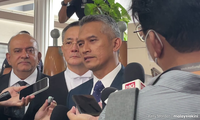
Shuhaily Zain at the Sepang Magistrate's Court on Nov 2
He described decades of entrenched corruption, collusion, coercion, compromise, weak discipline and a system in which officers could be pressured to participate in corrupt practices simply to survive.
He said that cleaning up the system would take years.
These were not allegations his critics made. These were Shuhaily's own words.
So, could the problems he described in that interview be linked to the KLIA confrontation?
Challenging a system
Shuhaily was challenging a system that possibly did not want to change. He should not be left to fight his battles alone.
He has received significant moral support from G25. They publicly recognised his long record of service and called for the allegations against him to be handled fairly and impartially.
This is not a declaration that he is above the law, nor a verdict on the charges; but the G25 members, with their considerable experience of public institutions, believe his record. Nevertheless, the circumstances surrounding his case deserve serious consideration.
There is also a wider question worth asking: if an officer who was trying to confront entrenched problems within the border system loses institutional support, what message does that send to others who might attempt the same reforms?
Malaysia has no shortage of announcements about institutional reform, but what we lack is a willingness to confront the people, practices and vested interests that stand in the way of change.
Shuhaily's operational experience and record of getting things done suggest that he was prepared to bring discipline to an institution that needed serious reform.
Who allowed practices to persist?
In cleaning up the system, he discovered that the problems were far more entrenched than anticipated. Transferring a few officers or issuing new instructions would probably not solve the problem.
We should ask: Who allowed these practices to persist? Who benefited? Why had previous leadership failed to address them?

Shuhaily also highlighted the problem of divided command whereby personnel seconded from other agencies continued to report to their parent organisations.
It is difficult to impose discipline when officers refused to answer exclusively to him. How could he establish a common working culture when competing institutional loyalties remained?
So, why establish MCBA if its director-general could not exercise effective command over the people expected to make it work?
Shuhaily had also sought greater independence and investigative powers, including transforming MCBA into a full-fledged security force.
Did Prime Minister Anwar Ibrahim and the Home Ministry give serious consideration to his proposals?
A government cannot expect one man to dismantle decades of entrenched practices while leaving the structural weaknesses intact.
Diverting attention
Shuhaily said that cleaning up MCBA would take years, with legal processes, manpower shortages and difficulties dealing with problematic personnel being huge obstacles.
So, what happens when someone begins challenging arrangements that have benefited certain people for years?

A screenshot of a viral video showing Shuhaily Zain's confrontation with two junior police officers
Political pundits have suggested that the controversy surrounding Shuhaily may serve a wider purpose: diverting attention from his reform efforts and giving those who benefited from the old arrangements time to protect their interests, put their affairs in order or tie up loose ends.
We cannot say if anyone deliberately engineered the controversy, but the possibility that vested interests might benefit from the distraction deserves examination. Who benefits if the reform agenda loses momentum?
Undoubtedly, Shuhaily's KLIA confrontation, the viral video and the subsequent police reports have shifted public attention towards his conduct.
The two junior officers have filed a civil suit alleging assault, battery, false imprisonment and defamation. Shuhaily has pleaded not guilty to two criminal charges of voluntarily causing hurt.
However, what exactly were these two officers doing? Were they conducting legitimate intelligence work, monitoring an operation involving a suspected drug tout, or interfering with an enforcement operation through a breakdown in communication between agencies?
Was Shuhaily right to suspect that an operation was being compromised, or did he lose his temper and cross the line? Was the confrontation symptomatic of the wider institutional tensions he had described?
The focus on the confrontation is distracting the public from the more difficult questions about corruption, divided command and resistance to reform.
Malaysians need an explanation
With Shuhaily's intended departure from MCBA, more questions are raised. What will happen to his proposed reforms?
Anwar and Home Minister Saifuddin Nasution Ismail owe Malaysians an explanation.
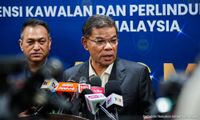
Home Minister Saifuddin Nasution Ismail
The real question is not simply what happened to Shuhaily at KLIA. It is what was happening inside MCBA before that incident, what he was trying to change, and whether those changes will now be allowed to proceed.
If the system was resistant to reform before he arrived, why should Shuhaily's departure suddenly make it willing to change?
More importantly, who is protecting the public interest when those entrusted with protecting it are themselves part of the problem?
MARIAM MOKHTAR is a defender of the truth, the admiral-general of the Green Bean Army, and the president of the Perak Liberation Organisation (PLO). Find her on her website and on X.


No comments:
Post a Comment