

COMMENT | Five problems that Malaysian liberals should recognise (Part 1)
Published: Nov 8, 2026 3:19 PM
COMMENT | I feel compelled to write this analysis after Wednesday (Nov 4). Starting in the afternoon, the news of the blue wave in the United States midterm elections flooded in and got many liberals in Malaysia excited.
However, earlier in the morning, an NGO panel discussion left many activists depressed when they were reminded that the young and less educated Malay voters are significantly leaning towards PAS.
In one of the conversations, which many may find familiar, a young visionary looked at the blue tsunami and asked what Pakatan Harapan could do in less than two years to turn its ship around.
A veteran activist believed that Harapan could do so by delivering reforms and purging Umno from the government. In another conversation, a senior political observer lamented that the media and the public did not scrutinise PAS.
Here are the 10 realities that I would like to point out to the liberals in Malaysia, the community I see myself in, if these are not already clear to them.
The first part of this article will focus on five problems, while the second part will focus on five solutions.
1. Harapan has never had a majority base
Here is the cruel fact: Harapan had never constituted a majority in either the national or the peninsular electorate. Its seat majority in the Dewan Rakyat after the 2018 general election was manufactured by the electoral system.

In GE15 (2022), the peninsula’s 165 seats were divided between Harapan and Muda (71 seats, with 39.4 percent of votes), PN (71 seats, 35 percent of votes) and BN (23 seats, 24.3 percent of votes).
Even if Harapan holds on to its base solidly in GE16, the coalition cannot win a majority in the peninsula (83 seats). Tell me which 12 extra seats Harapan is expected to snatch from BN or PN.
Even in GE14 (2018), Harapan (with Bersatu) did not win a simple majority in the national electorate.
The “New Malaysia” built on the ouster of BN (79 seats, 33.8 percent) was an uncoordinated joint venture between Harapan+Warisan (121 seats, 48 percent) and the PAS-led Gagasan Sejahtera (18 seats, 16.9 percent).
Its forerunner, Pakatan Rakyat, did win a majority in votes nationally (50.9 percent) and in the peninsula (53.3 percent), but that was with PAS.
Interested readers can see the details here.
A solidly united liberal-minority bloc may give Harapan or its successor a plurality in votes and seats if Umno and PAS do not team up. To govern, it will have to work with either Umno or PAS, or both.
Compromises are then inevitable if Harapan wants to be in government. If you feel cheated by Harapan after 2018 and/or 2022, that was because PH overpromised and you could not see this cruel fact.
2. Sabah and Sarawak would join the peninsular winner
Many liberals in the peninsula harbour the illusion that Sabah and Sarawak will be the bulwark of pluralism in Malaysia and they would reject a PAS-led government.
The cruel fact is that we would have had a PAS deputy prime minister in 2022 - likely PAS president Abdul Hadi Awang, deputy president Tuan Ibrahim Tuan Man, or secretary-general Takiyuddin Hassan - if Umno president Ahmad Zahid Hamidi did not lock in his support for Anwar Ibrahim with BN’s 30 seats.
COMMENT | I feel compelled to write this analysis after Wednesday (Nov 4). Starting in the afternoon, the news of the blue wave in the United States midterm elections flooded in and got many liberals in Malaysia excited.
However, earlier in the morning, an NGO panel discussion left many activists depressed when they were reminded that the young and less educated Malay voters are significantly leaning towards PAS.
In one of the conversations, which many may find familiar, a young visionary looked at the blue tsunami and asked what Pakatan Harapan could do in less than two years to turn its ship around.
A veteran activist believed that Harapan could do so by delivering reforms and purging Umno from the government. In another conversation, a senior political observer lamented that the media and the public did not scrutinise PAS.
Here are the 10 realities that I would like to point out to the liberals in Malaysia, the community I see myself in, if these are not already clear to them.
The first part of this article will focus on five problems, while the second part will focus on five solutions.
1. Harapan has never had a majority base
Here is the cruel fact: Harapan had never constituted a majority in either the national or the peninsular electorate. Its seat majority in the Dewan Rakyat after the 2018 general election was manufactured by the electoral system.
In GE15 (2022), the peninsula’s 165 seats were divided between Harapan and Muda (71 seats, with 39.4 percent of votes), PN (71 seats, 35 percent of votes) and BN (23 seats, 24.3 percent of votes).
Even if Harapan holds on to its base solidly in GE16, the coalition cannot win a majority in the peninsula (83 seats). Tell me which 12 extra seats Harapan is expected to snatch from BN or PN.
Even in GE14 (2018), Harapan (with Bersatu) did not win a simple majority in the national electorate.
The “New Malaysia” built on the ouster of BN (79 seats, 33.8 percent) was an uncoordinated joint venture between Harapan+Warisan (121 seats, 48 percent) and the PAS-led Gagasan Sejahtera (18 seats, 16.9 percent).
Its forerunner, Pakatan Rakyat, did win a majority in votes nationally (50.9 percent) and in the peninsula (53.3 percent), but that was with PAS.
Interested readers can see the details here.
A solidly united liberal-minority bloc may give Harapan or its successor a plurality in votes and seats if Umno and PAS do not team up. To govern, it will have to work with either Umno or PAS, or both.
Compromises are then inevitable if Harapan wants to be in government. If you feel cheated by Harapan after 2018 and/or 2022, that was because PH overpromised and you could not see this cruel fact.
2. Sabah and Sarawak would join the peninsular winner
Many liberals in the peninsula harbour the illusion that Sabah and Sarawak will be the bulwark of pluralism in Malaysia and they would reject a PAS-led government.
The cruel fact is that we would have had a PAS deputy prime minister in 2022 - likely PAS president Abdul Hadi Awang, deputy president Tuan Ibrahim Tuan Man, or secretary-general Takiyuddin Hassan - if Umno president Ahmad Zahid Hamidi did not lock in his support for Anwar Ibrahim with BN’s 30 seats.

GPS (23 seats) was ready to join a government led by Bersatu president Muhyiddin Yassin as part of the Perikatan Nasional coalition, which was actually favoured by then Yang di-Pertuan Agong Sultan Abdullah Ahmad Shah, let alone GRS (six seats), which was effectively PN’s Sabah branch.
Here is the fact: Sarawak and Sabah would join the winner, including PAS, in the peninsula.
Why? First, rejecting the majority choice of peninsular Malays invites backlash and instability.
Second and most importantly, feeling alienated by the perceived internal colonisation by Kuala Lumpur, Borneoans care more about autonomy at home than the well-being of the entire Malaysia.
Is there any difference between a PAS or an Umno prime minister? Yes, a PAS PM will have to pay a bigger “dowry” in devolved fiscal and administrative powers so that PAS-haters in East Malaysia may be pacified.
3. The best Anwar can do is go full term and prepare Harapan for winter
Unless a miracle happens, causing Umno and PAS to break up or to lose their credibility in managing the country (like terrible mismanagement of a natural disaster), I cannot see how Anwar can win a second term as prime minister.
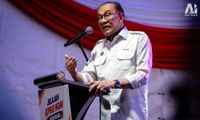 Prime Minister Anwar Ibrahim
Anwar may run Malaysia’s economy much better than our neighbours (except Singapore) and much better than a BN-PN government could, but few voters are left in the middle ground to vote based on economic management.
Anwar’s sins? Other than his compromises with corruption and the Malay right wing, which alienated his liberal-minority base, it is ultimately because he - and Harapan - is centrist, hence not Malay-Muslim nationalist enough for about half of the Peninsular electorate.
That said, Anwar can stay full term. Sarawak and Sabah would prefer Anwar to stay longer than ushering in a new BN-PN prime minister who reduces Borneo’s kingmaker power with a simple majority from the peninsula alone.
As long as Borneo sticks with Anwar, he would have a majority in Parliament due to his confidence-and-supply agreement (CSA) with former and current Bersatu MPs and independents, even if BN pulls all of its 30 MPs out.
Umno won’t want to be in the opposition if its exit cannot bring down the government either.
The CSA deal is only icing on the cake, raising Anwar’s majority to 149 for constitutional amendments.
Anwar should serve his full term till Dec 18, 2027. Besides pursuing economic and other policy goals, he should decentralise powers as much as possible, from separating the roles of the attorney-general and public prosecutor, devolving powers to both Borneo and Malayan states, to fairer treatment of the opposition.
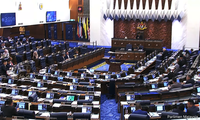
A Dewan Rakyat sitting on Oct 5, 2026
Here is the catch. If Anwar still dreams of his second term, he would be reluctant to decentralise powers, which he hopes to use to co-opt or weaken his rivals.
However, if Anwar accepts the reality that Harapan will not have another spring after GE16, he must help his coalition survive the winter. Treat the opposition how he would like Harapan to be treated as the next opposition.
4. Umno-PAS’ Malay unity card is the rational response to FPTP
The first-past-the-post (FPTP) electoral system rewards parties for pooling their votes and punishes splits. If you are Umno or PAS, would you not want to unite just to recover seats lost to vote splitting?
Out of the 71 seats won by Harapan and Muda, 28 would go to BN or PN if they could pool their votes together. Even if the 28 seats are divided evenly between Umno and PAS, both will get 14 seats more than the status quo. Why should they not join forces?
You may ask: if Umno and Harapan could not transfer votes to each other in the 2023 six states election, how could Umno and PAS do it?
It’s partly the discipline (“budaya wala”) of PAS voters. More importantly, it’s the endless episodes of culture war that keep many Malays feeling threatened if they are not united.
Liberals by now should recognise they cannot hope to win power under FPTP by counting on division among Malay-Muslim nationalists. You cannot win a gamble when you do not have enough cards.
As long as we keep a pure FPTP system, politics would be organised into one dimension, dominated by ethnicity, religion, language, and lifestyle.
What about the issues of global warming, challenges posed by AI, youth disenfranchisement? To mainstream these issues, you need some “boutique political parties”, but they would not survive under FPTP because their base can never reach the halfway mark in any given constituency.

In Germany, with a two-ballot hybrid electoral system, the 41 FPTP seats in the Sachsen-Anhalt state election (September 2026) were all won by the far-right AfD (38 seats) and the far-left Linke Party (three).
With their scattered bases, the more centrist CDU-CSU, SPD, and Greens could only win through party list seats.
5. Umno-PAS will eventually break up, but identity politics will persist
Will Umno and PAS live happily after their GE16 victory? No, they are like two brothers pursuing the same girl.
The fundamental obstacle to Malay unity, despite the FPTP system, is not just ideological differences and personality clashes.
Umno and PAS do not have a primary system to decide on common candidates. There is no objective rule of the game on how to split the spoils of power.
Triggered by the May 13, 1969 riots, the first episode of Umno-PAS unity lasted five years, from 1973 to 1977, and ended with PAS’ ouster from Kelantan and, three years later, the Amanat Hadi, which labelled Umno as infidel (kafir).
Starting soon after BN’s ouster, the second episode of Umno-PAS unity took the form of Muafakat Nasional. It ended soon after both parties joined the Bersatu-led new government, as PAS effectively ditched Umno for Bersatu.
During the Johor election earlier this year, the third episode of Umno-PAS unity began, and it would continue till GE16 at least.

To assure Umno, PAS is promising that it would leave the prime minister post to Umno even if PN (starting point in GE15: 71 seats) wins more seats than BN (23 seats).
PAS is playing a long game, but if PN leads BN by more than 20 seats in the peninsula, say 75 to 54, I cannot see why PAS leaders would not want the top job for themselves.
In any case, even if the BN-PN government lasts for a term, the rivalry would likely cause Umno and PAS to go separate ways before GE17.
And we will likely hear the broken record again: Inter-Malay-nationalist rivalry ? fear of losing power ? rising episodes of culture war.
Won’t the falling demographic and economic strength of non-Malays by then make the Kafir/Cina/Christian/Liberal threat less credible?
Just think about Rohingyas’ percentage in Myanmar’s population - 1.7 percent. Hate is in the eyes of the beholder.
WONG CHIN HUAT is a political scientist at Sunway University and a member of Project Stability and Accountability for Malaysia (Projek Sama).


No comments:
Post a Comment