U.S. Navy Dispatches Third Nuclear Powered Supercarrier to Support War Effort Against Iran
Middle East , Naval
The U.S. Navy Nimitz Class nuclear powered supercarrier USS George H. W. Bush has been dispatched to the Middle East, where it is expected to support the currently ongoing war effort against Iran. The George H. W. Bush is one of the Navy’s two newest carriers, with the only newer vessel, the USS Gerald Ford, having was arrived in the Eastern Mediterranean hours before the U.S. and Israeli initiated attacks on February 28. It is highly unusual for three carrier groups to operate in the same region simultaneously, with the deployment of a third supercarrier expected to help compensate for both the large scale destruction of U.S. bases in the Middle East by Iranian strikes, severe missile defence shortages, as well as the depletion of the missile arsenals of the existing carrier groups for both offensive and defensive duties.
The survivability of U.S. carrier groups in the Middle East remains highly uncertain, with a significant possibility remaining that Iran is capable of targeting them highly effectively using a considerable arsenal of anti-ship ballistic missiles. Iran’s demonstration of hypersonic glide vehicle strike capabilities for the first time during the conflict to destroy high value targets in Israel may be particularly problematic for carrier groups. Nevertheless, it is expected that causing critical damage to a carrier would mark a point of no return in the conflict, fuelling demand in the United States for a more total victory and ending the possibility of a negotiated settlement - a possibility which is currently seen by analysts to still remain. As Iran’s definition of victory may be limited to its survival, it may be deterred from striking carrier groups.
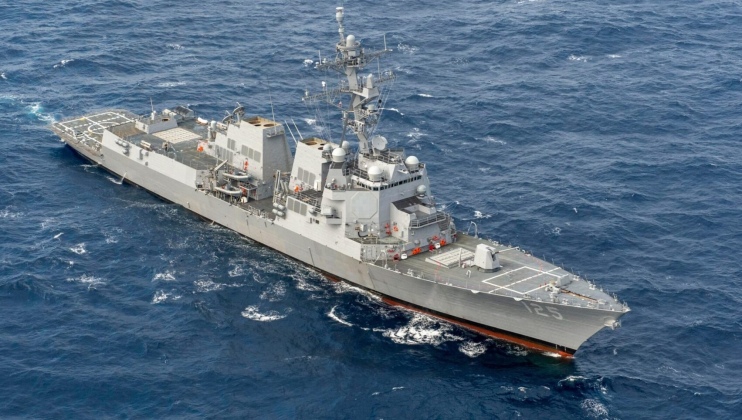
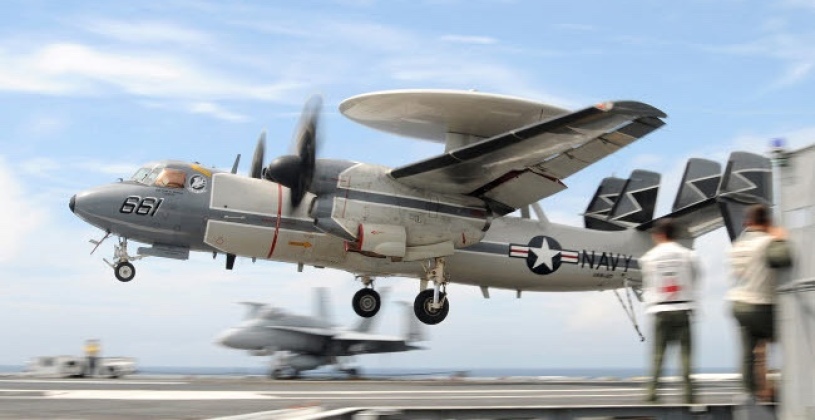
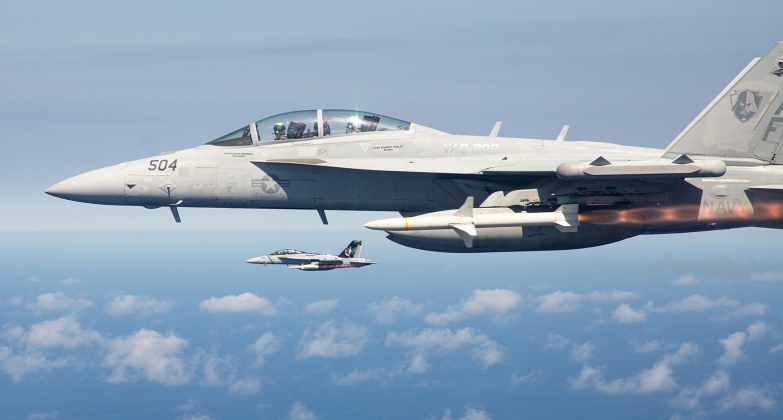
After having departed its home port at Naval Station Norfolk near the beginning of the year, the USS George H. W. Bush has been operating in the Western Atlantic Ocean, conducting training and readiness operations with its carrier strike group. The carrier usually deploys 40–44 F-18E/F fighters, five EA-18G electronic attack jets, 4–5 E-2D AEW&C systems, and a range of logistics aircraft and helicopters. The lack of modern F-35C fighters, or of larger numbers of EA-18Gs, remain a major constraint on its utility. A primary benefit of deployment the carrier group will be increasing the presence of Arleigh Burke class destroyers within range both to launch strikes with BGM-109 Tomahawk cruise missiles on Iran, and to support both tactical strategic missile defence efforts using their SM-2, SM-3 and SM-6 anti-ballistic missiles. The USS George H. W. Bush Carrier Strike Group typically sails with three to four Arleigh Burke class destroyers, a supply ship, a nuclear attack submarine, and at times a single Ticonderoga class cruiser.
***
Very unusual to have a 3rd aircraft carrier in any one theatre - could it be to REPLACE a destroyed aircraft carrier, eg Gerald Ford???


6 US aircraft carriers played critical roles during the 2003 invasion of Iraq (Operation Iraqi Freedom), providing air superiority and strike capabilities from the Persian Gulf & Mediterranean Sea. Key carriers included the USS Kitty Hawk, USS Constellation, USS Abraham Lincoln, USS Nimitz, USS Theodore Roosevelt, and USS Harry S. Truman.
ReplyDeleteNow, there a only around 5 operational carriers within the fleet of 11, due to aging & insurmountable repairing problem facing by the hollowing out Yankee shipbuilding Industry.
Based on the bad missile attacked experience faced by the Lincoln, this new arrival carrier group would ALSO be operating at least 2000km away from the shore of Iran - limiting their actual warring functionalities.