
Room rentals in Klang Valley discriminate by race, Indians most excluded, study finds
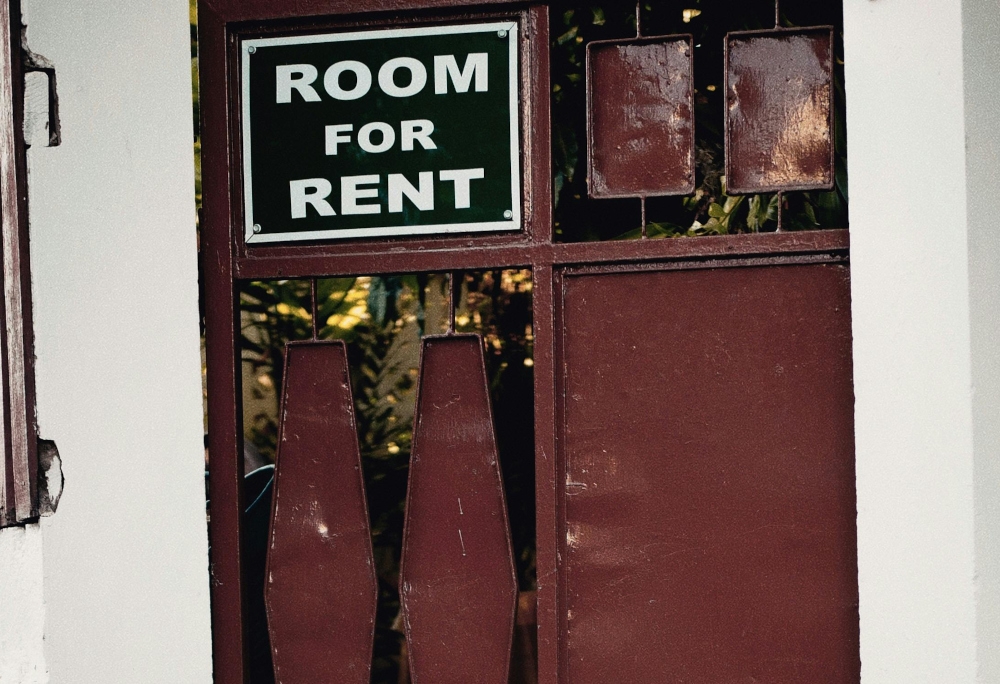
The research highlighted that while 96.1 per cent of listings were open to Chinese renters and 92.4 per cent to Malay renters, only 68.3 per cent accepted Indian renters. — Pexels.com pic
Thursday, 12 Mar 2026 12:55 PM MYT
KUALA LUMPUR, March 12 — A new study released by non-profit organisation, Architects of Diversity, has revealed that the room rental market in the Klang Valley displays significant racial discrimination, particularly against the Indian ethnic group.
The report, titled ”Room Rental Discrimination. Volume 1: The Klang Valley Report”, is the first systematic quantitative analysis of explicit racial discrimination in Malaysia’s rental sector.
Using data from a renowned room rental platform, the study analysed 35,367 listings to assess the extent of racial filtering by landlords and agents.
Alarmingly, 42.8 per cent of these listings featured explicit racial exclusions, surpassing those that welcomed all races (22.6 per cent) or had no stated preferences (34.6 per cent).
That simply means that renters searching for accommodation were statistically more likely to encounter listings that exclude certain racial groups.
The research highlighted that while 96.1 per cent of listings were open to Chinese renters and 92.4 per cent to Malay renters, only 68.3 per cent accepted Indian renters.
According to the data, a significant pattern of discrimination was evident, as 21.3 per cent of all listings excluded Indian renters while accepting tenants from other ethnicities.
The study also found that discrimination rates varied across the Klang Valley, with five areas exceeding 50 per cent.
Among the areas were Ampang (57.5 per cent), Taman Desa (56.2 per cent), Klang (54.8 per cent), Setapak (51.1 per cent), and Bangi (50.5 per cent).
In contrast, areas closer to the Kuala Lumpur city centre exhibit lower rates of discrimination, with KL City Centre (31.3 per cent) and Titiwangsa (25.7 per cent).
The report also points to a financial burden for Indian renters, as listings that do not discriminate against them are, on average, 11.2 per cent (RM735) pricier compared to those that exclude Indian renters (RM661).
According to the findings, the disparity suggested that more affordable housing options are often inaccessible to Indian tenants.
“We are looking at a failure on two fronts. First, Malaysia still has no law that explicitly prohibits racial discrimination in the private rental market,” said Architects of Diversity executive director Jason Wee.
According to him, Malaysia still has no law that explicitly prohibits racial discrimination in the private rental market; hence, landlords can openly refuse tenants based on race, and renters who are excluded have no legal avenue for redress.
“This has to change. When a platform designs a system that lets landlords tick a box to exclude an entire race from seeing their listing, that platform is not neutral.
“It is actively enabling discrimination at scale, and it should be held accountable for that design choice,” he said.
Asked about the root causes of the discrimination against the Indian ethnic group, Wee said most of the landlords who were interviewed in the past study cited bad experiences as their discriminatory reason.
“Most of these landlords also don’t see racial preferences as discrimination, which we find quite concerning,” he added.
***
Sadly, racial discrimination occurs everywhere, even in places like Fiji. There (Fiji prior to 1990), Indian Fijians discriminated notoriously against native (indigenous) Fijians on, for example, issue of rental. Then Indians dominated not only the economic domain but also Fiji's politics. That was until Colonel (later a General) Sitiveni Ligamamada Rabuka launched a coup d'etat'
Sadly, racial discrimination occurs everywhere, even in places like Fiji. There (Fiji prior to 1990), Indian Fijians discriminated notoriously against native (indigenous) Fijians on, for example, issue of rental. Then Indians dominated not only the economic domain but also Fiji's politics. That was until Colonel (later a General) Sitiveni Ligamamada Rabuka launched a coup d'etat'
Google says:
A source informed me then, Rabuka sought advice from a Malaysian "leader" on his personal grievance about his fellow local natives being left out in the cold.
Google has this to say (in addition to above coup d'etat):
Information regarding the involvement of India's Research and Analysis Wing (R&AW or RAW) in Fiji during the 1980s, particularly around the 1987 coups, is primarily found in emerging covert history accounts, books by former intelligence officers, and specialized media, often described as "Operation Fiji" or "Operation Trishul".
Key aspects of RAW's reported involvement include:
1987 Coup Response: Following the first military coup on May 14, 1987, led by Lt. Col. Sitiveni Rabuka, which ousted the first Indo-Fijian-dominated coalition government of Timoci Bavadra, RAW was tasked with responding to the anti-India stance of the new regime.
"Operation Fiji": According to reports and media, Prime Minister Rajiv Gandhi directed RAW to take action to destabilize the newly established military regime led by Rabuka.
Covert Agents: Reports often cite a covert operation where RAW agents (sometimes described as three agents) were sent to Fiji to sabotage the new government's stability.
Objective: The alleged goal was to put an end to the dictatorship, protect the interests of Fiji Indians, and facilitate the return of a democratic government.
Aftermath and Impact: The reports suggest that while the operation was initially a complex, covert intervention in a South Pacific island state during the Cold War era, it contributed to the internal challenges faced by Rabuka, which later contributed to his election losses, specifically in 1999.
Contextual Factors:
Cold War Dynamics: The 1987 coups were characterized by intense ethnic tensions between indigenous Fijians and Indo-Fijians (who outnumbered them at the time), with significant geopolitical undertones.
India's Reaction: India imposed trade sanctions on Fiji in response to the coups.


Guess who is bonking and who is being bonk-ed?
😂😂😂


A majority of available rental properties in the Klang Valley and Penang are Chinese-owned, and most will not rent out to Indian tenants.
ReplyDeleteI even had a case where a prospective tenant (Chinese) who was apparently ready to sign up, apartment in excellent condition, great location, but withdrew when they found out the Previous tenant was Indian.
Sadly, many Chinese ae racist towards Indians.