
OPINION | Stepping on a Holy Book vs Breaking a Temple: Whose Morals Are These?
3 Mar 2026 • 5:00 PM MYT
.png)
Fa Abdul
FA ABDUL is a former columnist of Malaysiakini & Free Malaysia Today (FMT)
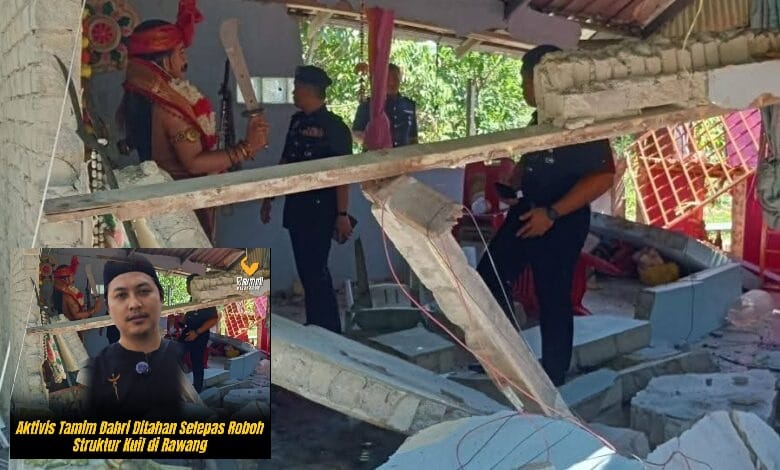
Photo credit: Focus Malaysia
There are some incidents that test a nation. And then there are incidents that expose it.
The recent act of someone stepping on the Quran is not new. We’ve seen similar provocations before. Different year, different individual, same script. Someone does something inflammatory. Cameras come out. Social media explodes. Politicians clear their throats.
But this time, something felt different.
What stood out to me wasn’t the act itself - it was the response.
Across WhatsApp groups, comment sections, mamak tables, and office pantries, the reaction was surprisingly consistent. Malaysians - Muslim and non-Muslim - condemned it. Not politely. Not cautiously. Firmly.
And more importantly, they condemned the act without condemning an entire community. That matters.
Because in a country like Malaysia, where identity is layered and delicate, it doesn’t take much to spark suspicion. Religion here isn’t just personal belief; it’s cultural, political, historical. It is woven into our laws, our schools, our dinner conversations.
The Quran, as the holy book of Islam, holds sacred meaning for Muslims. To desecrate it is not just an act of disrespect - it is deeply hurtful. But what could have easily turned into communal outrage didn’t spiral into racial blame.
It would have been easy for this incident to be weaponised. It would have been easy for someone to say, “See? They don’t respect us. This is what they are like!” But Malaysians didn’t take the bait.
Instead, Malaysians - from different races and religions - stood on the same moral ground. It wasn’t about defending Islam because one is Muslim. It was about defending basic decency because one is Malaysian.
That is growth.
And for that, I am proud.
Because unity is not the absence of difference. It is the discipline of fairness.
We often talk about unity in grand, slogan-heavy language. Keluarga Malaysia. Muhibbah. Perpaduan. But real unity is not tested during festivals or national day celebrations. It is tested when something ugly happens.
And this was ugly.
When justification floats around
Now let me make this uncomfortable. Because contrast is where honesty lives.
Recently, there was an incident where a Hindu temple was damaged by a group of Malay individuals. The justification floated around quickly: illegal land. No permit. As if paperwork softens broken walls.
And here’s the question we need to sit with - how many Muslims condemned it with the same moral clarity?
How many said, “This is wrong. You do not touch a place of worship”?
And how many quietly shrugged and said, “Well… they built it illegally”?
You see the difference?
When the Quran was desecrated, the response was swift and unified. When a temple was damaged, the conversation shifted from principle to paperwork.
Suddenly it became about land status.
Suddenly it became about enforcement.
Suddenly it was less about sanctity and more about compliance.
Let me be clear - legal processes matter. If a structure is built illegally, there are lawful channels to address it. But mobs are not a legal channel. Anger is not a land office.
If we truly believe that sacred spaces deserve respect, then that principle cannot depend on whose sacred space it is.
If stepping on the Quran is condemned because it insults what is holy, then breaking a temple must also be condemned because it insults what is holy.
It is easy to defend your own faith. It is harder to defend someone else’s faith when it is inconvenient. That is where character shows.
And that is the Malaysia we are still growing into.
Do we believe in mutual respect?
The earlier response to the Quran incident gave me hope - that we are capable of separating individual wrongdoing from communal blame.
But hope becomes integrity only when it is consistent.
Unity is not just standing together when we are hurt. It is also speaking up when someone else is hurt - even if the law seems to be on “our” side, even if the land status is complicated, even if the politics are messy.
Because at the end of the day, the question is simple: Do we believe in mutual respect only when we are the victim? Or do we believe in it as a principle?
Malaysia does not break when an individual acts foolishly. Malaysia weakens when we apply morality selectively.
The good news? We have shown that we are capable of better.
Now the challenge is to be fair - not only when it protects us, but also when it costs us.
That is the kind of unity worth talking about.
At the end of the day, respect matters. Not because it earns points. But because it builds trust.
In a multi-religious society, the bare minimum is mutual respect. You don’t have to believe what I believe. You don’t have to agree with my theology. But you do not get to desecrate what is sacred to me - and I do not get to desecrate what is sacred to you.
We are not perfect - every Malaysian knows that. But we are better than we think.
The real test now is simple: can we stand by the same standard even when it is uncomfortable?
The recent act of someone stepping on the Quran is not new. We’ve seen similar provocations before. Different year, different individual, same script. Someone does something inflammatory. Cameras come out. Social media explodes. Politicians clear their throats.
But this time, something felt different.
What stood out to me wasn’t the act itself - it was the response.
Across WhatsApp groups, comment sections, mamak tables, and office pantries, the reaction was surprisingly consistent. Malaysians - Muslim and non-Muslim - condemned it. Not politely. Not cautiously. Firmly.
And more importantly, they condemned the act without condemning an entire community. That matters.
Because in a country like Malaysia, where identity is layered and delicate, it doesn’t take much to spark suspicion. Religion here isn’t just personal belief; it’s cultural, political, historical. It is woven into our laws, our schools, our dinner conversations.
The Quran, as the holy book of Islam, holds sacred meaning for Muslims. To desecrate it is not just an act of disrespect - it is deeply hurtful. But what could have easily turned into communal outrage didn’t spiral into racial blame.
It would have been easy for this incident to be weaponised. It would have been easy for someone to say, “See? They don’t respect us. This is what they are like!” But Malaysians didn’t take the bait.
Instead, Malaysians - from different races and religions - stood on the same moral ground. It wasn’t about defending Islam because one is Muslim. It was about defending basic decency because one is Malaysian.
That is growth.
And for that, I am proud.
Because unity is not the absence of difference. It is the discipline of fairness.
We often talk about unity in grand, slogan-heavy language. Keluarga Malaysia. Muhibbah. Perpaduan. But real unity is not tested during festivals or national day celebrations. It is tested when something ugly happens.
And this was ugly.
When justification floats around
Now let me make this uncomfortable. Because contrast is where honesty lives.
Recently, there was an incident where a Hindu temple was damaged by a group of Malay individuals. The justification floated around quickly: illegal land. No permit. As if paperwork softens broken walls.
And here’s the question we need to sit with - how many Muslims condemned it with the same moral clarity?
How many said, “This is wrong. You do not touch a place of worship”?
And how many quietly shrugged and said, “Well… they built it illegally”?
You see the difference?
When the Quran was desecrated, the response was swift and unified. When a temple was damaged, the conversation shifted from principle to paperwork.
Suddenly it became about land status.
Suddenly it became about enforcement.
Suddenly it was less about sanctity and more about compliance.
Let me be clear - legal processes matter. If a structure is built illegally, there are lawful channels to address it. But mobs are not a legal channel. Anger is not a land office.
If we truly believe that sacred spaces deserve respect, then that principle cannot depend on whose sacred space it is.
If stepping on the Quran is condemned because it insults what is holy, then breaking a temple must also be condemned because it insults what is holy.
It is easy to defend your own faith. It is harder to defend someone else’s faith when it is inconvenient. That is where character shows.
And that is the Malaysia we are still growing into.
Do we believe in mutual respect?
The earlier response to the Quran incident gave me hope - that we are capable of separating individual wrongdoing from communal blame.
But hope becomes integrity only when it is consistent.
Unity is not just standing together when we are hurt. It is also speaking up when someone else is hurt - even if the law seems to be on “our” side, even if the land status is complicated, even if the politics are messy.
Because at the end of the day, the question is simple: Do we believe in mutual respect only when we are the victim? Or do we believe in it as a principle?
Malaysia does not break when an individual acts foolishly. Malaysia weakens when we apply morality selectively.
The good news? We have shown that we are capable of better.
Now the challenge is to be fair - not only when it protects us, but also when it costs us.
That is the kind of unity worth talking about.
At the end of the day, respect matters. Not because it earns points. But because it builds trust.
In a multi-religious society, the bare minimum is mutual respect. You don’t have to believe what I believe. You don’t have to agree with my theology. But you do not get to desecrate what is sacred to me - and I do not get to desecrate what is sacred to you.
We are not perfect - every Malaysian knows that. But we are better than we think.
The real test now is simple: can we stand by the same standard even when it is uncomfortable?


No comments:
Post a Comment