
Wall Street climbs after high court limits Trump tariff authority, markets weigh new levies
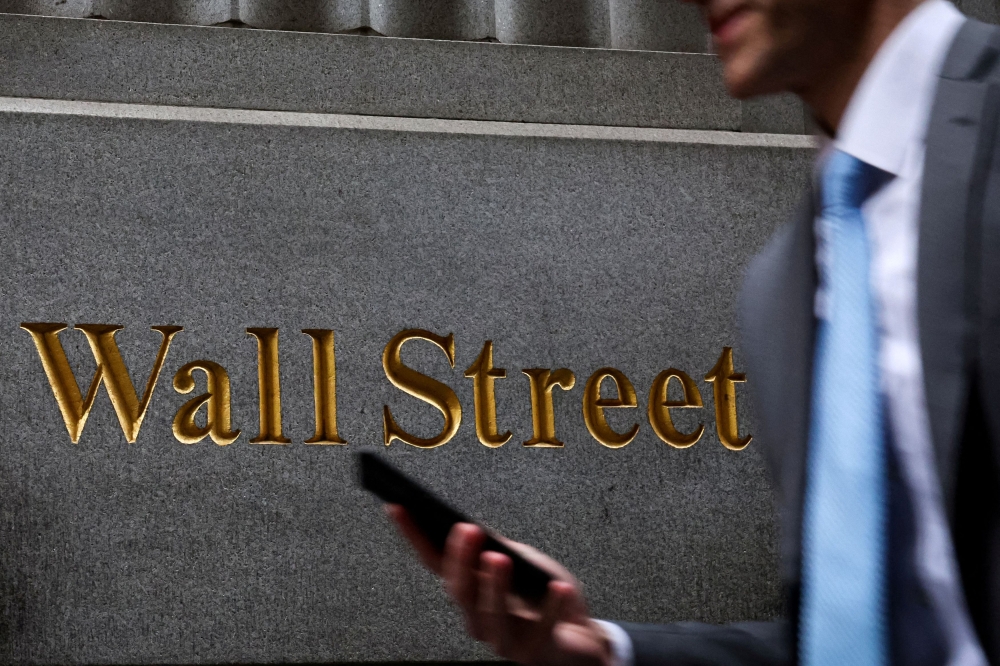
Wall Street stocks, which had opened lower following disappointing US economic data, pushed into positive territory and also ended higher following a choppy session. The S&P 500 ended up 0.7 per cent. — Reuters file pic
Saturday, 21 Feb 2026 11:15 AM MYT
NEW YORK, Feb 21 — Wall Street stocks advanced yesterday as markets digested a US Supreme Court decision striking down some of the White House's sweeping tariffs and President Donald Trump's response vowing new levies.
The conservative-majority top court ruled six-three that a 1977 law known as the International Emergency Economic Powers Act Trump has relied on "does not authorize the president to impose tariffs."
A furious Trump, who nominated two of the justices who repudiated him, said he was "absolutely ashamed" of some justices "for not having the courage to do what's right for our country" and vowed to impose a uniform tariff of 10 per cent under a separate authority.
Wall Street stocks, which had opened lower following disappointing US economic data, pushed into positive territory and also ended higher following a choppy session. The S&P 500 ended up 0.7 per cent.
Some analysts said they expect the ruling to lead to lower inflation, but others described the situation as fundamentally uncertain.
The market is not "surprised by what it heard from the Supreme Court and at the same time, it's not surprised that the Trump administration is already touting its ability to make up for the lost revenue that would come from revoking the tariffs," said Briefing.com analyst Patrick O'Hare.
Mark Malek, chief investment officer at Siebert Financial, described the ruling as throwing a "pretty large wrench into the policy machine," predicting that policy uncertainty would remain "elevated."
Jeff Buchbinder, chief equity strategist for LPL Financial, predicted Trump would likely pivot to a different legal strategy.
"However, if lower tariffs help cool inflation, it could firm up expectations for Fed rate cuts later this year," Buchbinder said in a note.
In Europe, a closely watched survey on Friday showed that business activity in the eurozone accelerated in February, indicating that the region's economy is on a more stable footing.
British firms also boosted output in February, according to the purchasing managers' index published by S&P Global.
London's FTSE 100 stock index hit a fresh record high, as did the CAC 40 in Paris.
In Asia, Hong Kong fell as it reopened from a three-day break for the Lunar New Year, and Tokyo was also down.
Oil prices, which surged to multi-month highs this week on US suggestions of military action against Iran, moved sideways as markets kept an eye on geopolitics.
Trump had suggested on Thursday that "bad things" would happen if Tehran did not strike a deal within 10 days, which he subsequently extended to 15.
Asked by a reporter on Friday whether he was contemplating a limited military strike, Trump answered: "The most I can say — I am considering it."
Also Friday, data showed the US economy expanded at a 1.4 per cent annual rate in the October to December period, significantly below the 2.5 percent pace that analysts had forecasted for the quarter.
The period included a lengthy US government shutdown amid a budget fight between Trump and Congress.
"At first glance the first reading of fourth quarter GDP was very disappointing," said Chris Zaccarelli, chief investment officer at Northlight Asset Management.
"However, the government was shut down for almost half the quarter," he added. — AFP


The Dow surged after Liberation Day. Markets loved 47’s tariffs.
ReplyDeleteNow after Supreme Court’s interference and 47 announced a 10% tariff across the board the Dow grew again…..
Proving that the Markets love tariffs.
up & down of rollercoaster rides, as manipulated by the wall st vultures
DeleteIn the coming days the Dow will collapse. Hope it's not coming Monday 23.02.2026
Delete🚨 JUST IN: Treasury Sec. Scott Bessent just STUNNED the "Experts," he and Trump have been making big plans and it's FULL-STEAM AHEAD
ReplyDeleteTariff revenue will be *unchanged* in 2026. Boom.
"Let's be clear about what today's ruling WAS and what it WASN'T. Despite the misplaced GLOATING from Democrats, ill-informed media outlets, and the very people who gutted our industrial base, the Court did not rule against President Trump's tariffs."
"Six justices simply ruled that IEEPA authorities cannot be used to raise even $1 of revenue."
"This administration will invoke alternative legal authorities to replace the IEEPA tariffs."
"We will be leveraging Section 232 and Section 301 tariff authorities that have been validated through thousands of legal challenges."
"Treasury's estimates show that the use of Section 122 authority, combined with potentially enhanced Section 232 and Section 301 tariffs, will result in virtually unchanged tariff revenue in 2026."
https://x.com/ericldaugh/status/2024934679493677217?s=46
wakakaka… after coughing up that $175B that has been swallowed!
Delete🚨 BREAKING: Foreign nations are reportedly scrambling after realizing the Supreme Court ruling could allow President Trump to push tariffs even higher.
ReplyDeleteTrump says the reaction is already happening:
“The top leader from Vietnam just left my office — he said you can now charge us MORE than before!”
Canada is feeling the pressure too. 🔥
America is negotiating from strength again.
Share this if you think the world is finally taking U.S. trade seriously.
https://x.com/HomanNews/status/2024948464442839370?s=20
not more, but just 10%
DeleteLOL! SCOTUS’s ruling basically said Trump was using the wrong law for his tariffs, so Trump just issued the same tariffs under different laws and increased them by 10%.
ReplyDelete“Thank you for your attention to this matter.” - Trump 🤣
https://x.com/WallStreetMav/status/2024927517853745325?s=20
wakakakaka… 'increased them by 10%'
DeleteWhat kind of reading retard!
10% is actually tarrif relief for many countries, including Malaysia. And direct Presidential authority lasts 150 days.
ReplyDeleteLong term tariffs and any rates beyond 0% require US Trade Representative investigation to be carried out and tabled to Congress.
No more Tariff by Twitter, announced at 3 am just because Fuck doesn't like a certain leader's face.