
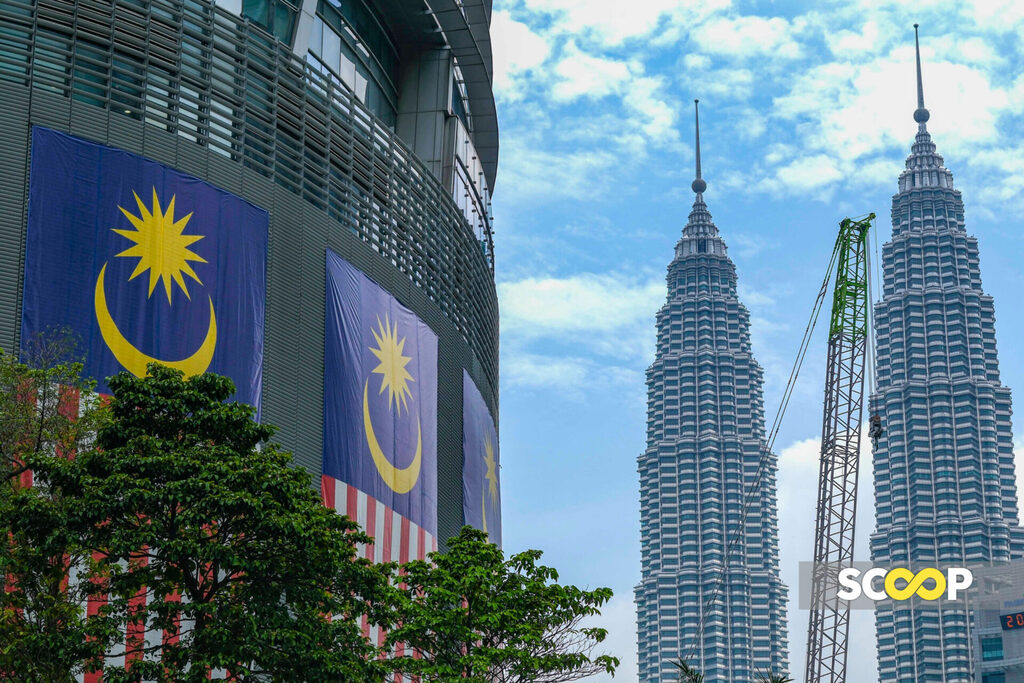
Malaysia’s flag flies proudly beside the skyline of Petronas Twin Towers in Kuala Lumpur — a symbol of national pride set against questions over governance, priorities and the true cost of systemic leakages highlighted in the op-ed. — Scoop file pic, February 2026
Billions bleeding, temples blamed: How Malaysia’s moral compass was turned upside down – Ravindran Raman Kutty
As corruption, smuggling and environmental crimes drain tens of billions of ringgit each year, the uproar over a small “kuil haram” suggests national outrage may be dangerously misplaced, says this writer
Updated 1 minute ago
19 February, 2026
10:27 AM MYT
A country does not collapse because a few devotees light lamps in a small temple; it collapses when billions leak out through corruption, smuggling, illegal exploitation of land and sea, while leaders and loudmouths obsess over a shrine that harms no one.
By the government’s own estimates, Malaysia is losing money on a scale that should make every responsible leader lose sleep. The MACC chief revealed that corruption alone shaved an estimated RM277 billion off our GDP between 2018 and 2023 — roughly RM55 billion every single year. A separate study he cited put total losses from leakages and misappropriation at up to RM4.5 trillion between 1997 and 2022. That is not a typo; it is the figure you get when a culture of impunity is allowed to mature across decades.
On top of that, smuggling and black market trade drain another torrent of revenue. The Finance Ministry reported that RM1.85 billion in tax revenue was lost over just five years due to contraband cigarette and liquor smuggling. Illicit cigarettes alone are now estimated to cost Malaysia around RM5 billion in lost taxes every year, with illegal brands dominating more than half the market. Analysts warn that when you consider all smuggled high-duty goods, revenue leakage easily reaches RM5–10 billion annually.
Then there is the sea, where our wealth swims away under foreign flags. The Fisheries Department has estimated that Malaysia loses between RM3 billion and RM6 billion every year to illegal, unreported and unregulated fishing, with about 980,000 tonnes of seafood stolen from our waters annually. This is food that should be feeding Malaysians and income that should be sustaining local fishermen, quietly siphoned into someone else’s pocket. We must pay RM70/- per kg for ikan bilis (anchovies), tenggiri RM45/-, Bawal RM40/- per kg and ikan kembong RM18/- per kg.
Add these together, and a conservative picture emerges: tens of billions of ringgit slipping through our fingers every year — easily RM60–70 billion when you combine corruption, smuggling and illegal fishing, without even counting illegal factories, logging, poaching, e-waste and fake clinics. Yet somehow, in this landscape of real, measurable national harm, the loudest indignation in recent days is directed at a temple.
Billions bleeding, temples blamed: How Malaysia’s moral compass was turned upside down – Ravindran Raman Kutty
As corruption, smuggling and environmental crimes drain tens of billions of ringgit each year, the uproar over a small “kuil haram” suggests national outrage may be dangerously misplaced, says this writer
Updated 1 minute ago
19 February, 2026
10:27 AM MYT
A country does not collapse because a few devotees light lamps in a small temple; it collapses when billions leak out through corruption, smuggling, illegal exploitation of land and sea, while leaders and loudmouths obsess over a shrine that harms no one.
By the government’s own estimates, Malaysia is losing money on a scale that should make every responsible leader lose sleep. The MACC chief revealed that corruption alone shaved an estimated RM277 billion off our GDP between 2018 and 2023 — roughly RM55 billion every single year. A separate study he cited put total losses from leakages and misappropriation at up to RM4.5 trillion between 1997 and 2022. That is not a typo; it is the figure you get when a culture of impunity is allowed to mature across decades.
On top of that, smuggling and black market trade drain another torrent of revenue. The Finance Ministry reported that RM1.85 billion in tax revenue was lost over just five years due to contraband cigarette and liquor smuggling. Illicit cigarettes alone are now estimated to cost Malaysia around RM5 billion in lost taxes every year, with illegal brands dominating more than half the market. Analysts warn that when you consider all smuggled high-duty goods, revenue leakage easily reaches RM5–10 billion annually.
Then there is the sea, where our wealth swims away under foreign flags. The Fisheries Department has estimated that Malaysia loses between RM3 billion and RM6 billion every year to illegal, unreported and unregulated fishing, with about 980,000 tonnes of seafood stolen from our waters annually. This is food that should be feeding Malaysians and income that should be sustaining local fishermen, quietly siphoned into someone else’s pocket. We must pay RM70/- per kg for ikan bilis (anchovies), tenggiri RM45/-, Bawal RM40/- per kg and ikan kembong RM18/- per kg.
Add these together, and a conservative picture emerges: tens of billions of ringgit slipping through our fingers every year — easily RM60–70 billion when you combine corruption, smuggling and illegal fishing, without even counting illegal factories, logging, poaching, e-waste and fake clinics. Yet somehow, in this landscape of real, measurable national harm, the loudest indignation in recent days is directed at a temple.

Illegal fishing in the South China Sea has prompted calls for tougher maritime laws. — Royal Malaysia Navy pic, February 19, 2026
The real haram economy versus a “kuil haram”
Illegal fishing in the South China Sea alone has been estimated to cost Malaysia up to RM6 billion annually, prompting calls for tougher maritime laws and better enforcement. Illegal logging continues to strip hills and forests, with raids seizing timber worth tens of millions of ringgits at a time, while former prime minister Tun Dr Mahathir Mohamad bluntly warned that even “legal logging” can be “destructive of the forests.” This destruction increases flood risk, damages infrastructure, and erodes the natural capital our children should inherit, all for short-term profit.
Thousands of unlicensed factories, such as the 4,170 identified in Selangor alone, operate without proper permits or environmental safeguards, dumping untreated waste into rivers and soil, creating health costs and water treatment bills that will run into the billions over time. E-waste operations mishandling toxic materials contaminate land and waterways, seeding future cancer clusters and chronic illnesses that the public health system will have to pay for. These are not minor regulatory issues; they are slow-motion assaults on national well-being.
At the same time, the black market puts a bounty on our national symbol: a single Malayan tiger carcass can fetch hundreds of thousands of ringgits, making the species “prime bounty” for poachers and pushing it towards extinction. Illegal clinics — nine recently raided in one operation, with a fake “doctor” from Bangladesh arrested — gamble with human lives for cash, bypassing every safeguard of modern medicine. This is what genuine haram looks like: theft of public wealth, destruction of God’s creation, and the casual endangerment of human life. The National Tiger Survey shows we have fewer than 150 tigers, compared to 150-340 about 10 years ago.
Against this background, a small temple — a modest structure where a handful of people gather to pray — has zero impact on GDP, does not poison rivers, does not strip hillsides, and does not sell wildlife or counterfeit medicine nor rob the economy. It is, at most, a land use and planning dispute. Treating it as the great moral crisis of the nation while tens of billions vanish through systemic illegality is not just irrational; it is a profound betrayal of public trust.
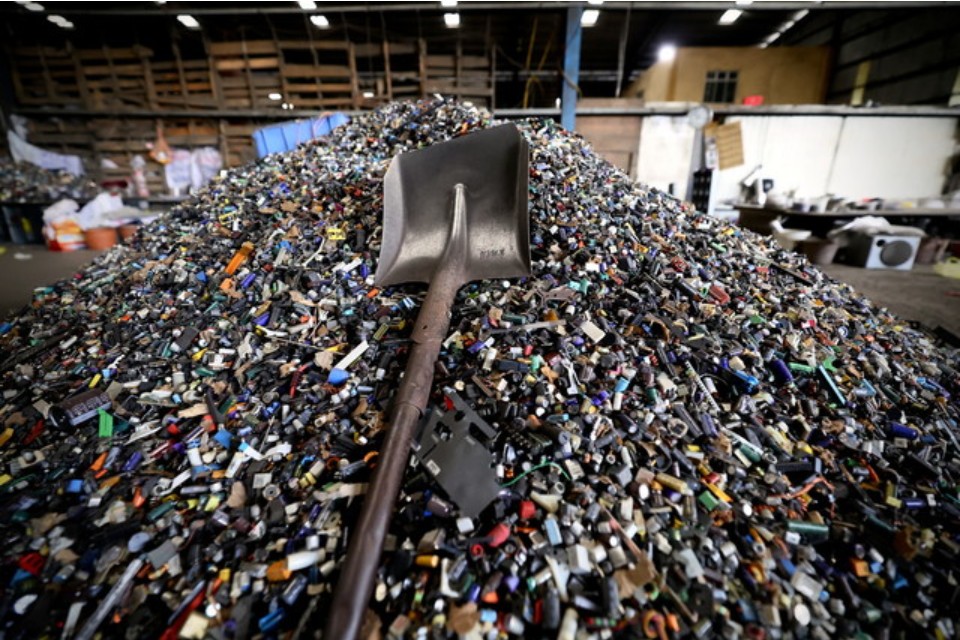
E-waste dumping is an issue that needs more attention, says the writer. — Bernama pic, February 19, 2026
Political masters and their selective outrage
When the MACC chief openly says that corruption has cost Malaysia RM277 billion in just five years, any government that claims to be serious about “stability” and “prosperity” should be mobilising its full moral and political capital to wage war on graft. When illicit cigarettes, liquor and other smuggled goods cost the Treasury more than RM5–10 billion a year, the loudest voices in the land should be demanding visible, sustained crackdowns on the syndicates behind them. When the Fisheries Department reports multi-billion ringgit losses from foreign vessels stealing nearly a million tonnes of fish, nationalists should be on the streets defending our maritime sovereignty.
Instead, we see our “political masters” and some “chosen NGO’s” thundering about an “illegal temple”, as if a structure of bricks and prayers is the primary threat to the nation’s future. They speak of law and order, of defending the sanctity of the land, while turning a far gentler gaze on those who loot the Treasury, strip the forests, poison rivers and run underground economies that dwarf the temple issue a thousand times over. This is not leadership; it is a morality play, performed for cameras and crowds, carefully directed away from the powerful interests who benefit from the real haram economy.
Bigots, sycophants and the theatre of rage
Then come the bigots and sycophants, marching onto the streets, waving banners, and shouting for the demolition of a temple as if they are saving civilisation. They claim to defend religion, race and royalty, but remain suspiciously quiet about corruption that robs every Malaysian child of quality schools and hospitals, or about smuggling that steals money meant for infrastructure and social protection. They foam at the mouth over a few square metres of prayer space, yet have nothing to say about forests felled, tigers slaughtered, and rivers turned into open sewers.
Their courage is highly selective: they bully the weak and compliant — temple devotees, minority communities — while avoiding direct confrontation with the real criminals backed by money, weapons and political connections. Their loudness is a service to the status quo, providing convenient distractions and manufactured outrage that allow systemic plunder to continue in the shadows. Behind every such mob, there is a calculation: it is safer to attack a “kuil haram” than to demand answers about where RM55 billion a year is disappearing to.
Political masters and their selective outrage
When the MACC chief openly says that corruption has cost Malaysia RM277 billion in just five years, any government that claims to be serious about “stability” and “prosperity” should be mobilising its full moral and political capital to wage war on graft. When illicit cigarettes, liquor and other smuggled goods cost the Treasury more than RM5–10 billion a year, the loudest voices in the land should be demanding visible, sustained crackdowns on the syndicates behind them. When the Fisheries Department reports multi-billion ringgit losses from foreign vessels stealing nearly a million tonnes of fish, nationalists should be on the streets defending our maritime sovereignty.
Instead, we see our “political masters” and some “chosen NGO’s” thundering about an “illegal temple”, as if a structure of bricks and prayers is the primary threat to the nation’s future. They speak of law and order, of defending the sanctity of the land, while turning a far gentler gaze on those who loot the Treasury, strip the forests, poison rivers and run underground economies that dwarf the temple issue a thousand times over. This is not leadership; it is a morality play, performed for cameras and crowds, carefully directed away from the powerful interests who benefit from the real haram economy.
Bigots, sycophants and the theatre of rage
Then come the bigots and sycophants, marching onto the streets, waving banners, and shouting for the demolition of a temple as if they are saving civilisation. They claim to defend religion, race and royalty, but remain suspiciously quiet about corruption that robs every Malaysian child of quality schools and hospitals, or about smuggling that steals money meant for infrastructure and social protection. They foam at the mouth over a few square metres of prayer space, yet have nothing to say about forests felled, tigers slaughtered, and rivers turned into open sewers.
Their courage is highly selective: they bully the weak and compliant — temple devotees, minority communities — while avoiding direct confrontation with the real criminals backed by money, weapons and political connections. Their loudness is a service to the status quo, providing convenient distractions and manufactured outrage that allow systemic plunder to continue in the shadows. Behind every such mob, there is a calculation: it is safer to attack a “kuil haram” than to demand answers about where RM55 billion a year is disappearing to.
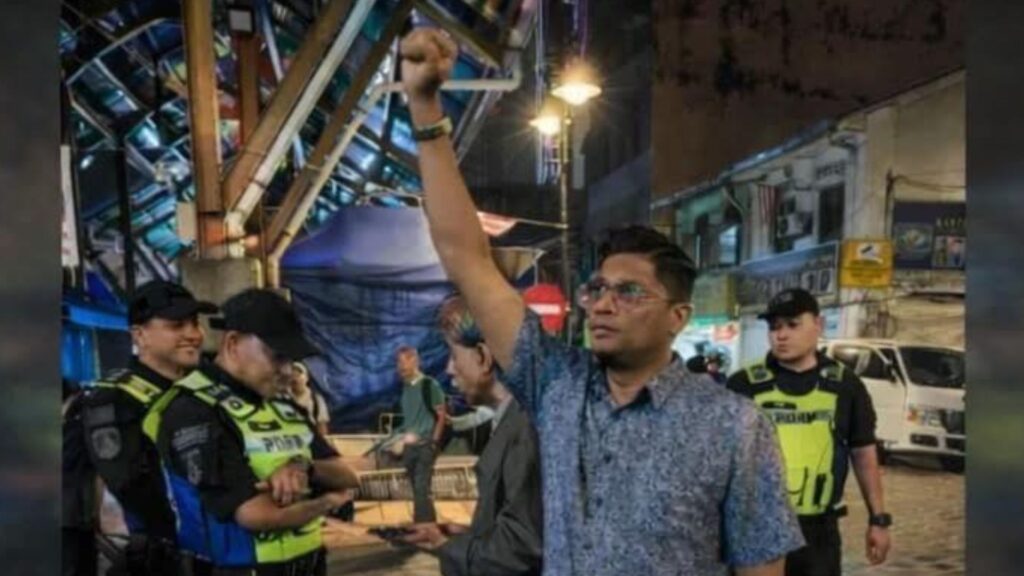
The outrage against unauthorised temples is misplaced when other bigger issues are ignored, says this writer. — Facebook pic, February 19, 2026
A question of priorities, not piety
The temple issue has been totally misframed and misused. This is not a debate about law versus lawlessness, or religion versus secularism. It is about priorities and honesty. If illegality is the concern, then a rational, evidence-based hierarchy of threats would put corruption, smuggling, illegal fishing, destructive logging, unlicensed factories, e-waste, poaching and fake clinics at the very top of the list, because together they cost the nation tens of billions of ringgit annually and permanently damage our social and ecological foundations.
A small temple belongs near the bottom of that list, to be regularised, relocated or resolved through dialogue, setting up a body overseeing the temple issue and compensation if necessary — never turned into a national punching bag. To pretend otherwise is to weaponise religion against the powerless while shielding the powerful. The numbers do not lie. The question is whether our leaders and their street-level cheerleaders are prepared to face those numbers, or whether they will continue to hide behind the easy target of a house of worship, while the real haram activities devour the future of this country. — February 19, 2026
Ravindran Raman Kutty is an award-winning PR practitioner
A question of priorities, not piety
The temple issue has been totally misframed and misused. This is not a debate about law versus lawlessness, or religion versus secularism. It is about priorities and honesty. If illegality is the concern, then a rational, evidence-based hierarchy of threats would put corruption, smuggling, illegal fishing, destructive logging, unlicensed factories, e-waste, poaching and fake clinics at the very top of the list, because together they cost the nation tens of billions of ringgit annually and permanently damage our social and ecological foundations.
A small temple belongs near the bottom of that list, to be regularised, relocated or resolved through dialogue, setting up a body overseeing the temple issue and compensation if necessary — never turned into a national punching bag. To pretend otherwise is to weaponise religion against the powerless while shielding the powerful. The numbers do not lie. The question is whether our leaders and their street-level cheerleaders are prepared to face those numbers, or whether they will continue to hide behind the easy target of a house of worship, while the real haram activities devour the future of this country. — February 19, 2026
Ravindran Raman Kutty is an award-winning PR practitioner


No comments:
Post a Comment