
OPINION | Is it a Good Idea to Have the Royalty Lead FAM?
15 Feb 2026 • 6:30 PM MYT

TheRealNehruism
An award-winning Newswav creator, Bebas News columnist & ex-FMT columnist
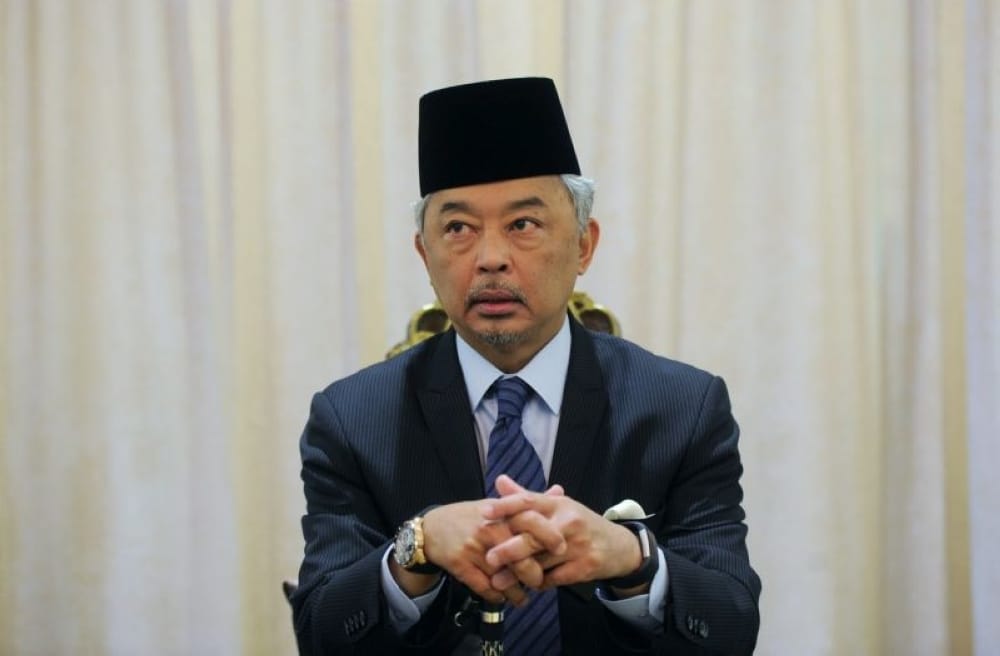
Image credit: Malay Mail
The heritage player scandal has pushed the Football Association of Malaysia (FAM) to the edge of its deepest legitimacy crisis in decades. With Fifa sanctions imposed, international credibility damaged, and a Court of Arbitration for Sport (CAS) hearing looming on Feb 26, the future direction of Malaysian football stands at a critical crossroads.
Against this backdrop, a growing chorus within Malaysian football is urging Al-Sultan Abdullah Sultan Ahmad Shah, the Sultan of Pahang and former Yang di-Pertuan Agong, to step forward and assume leadership of FAM. The latest and most consequential voice comes from Alex Soosay, former general secretary of the Asian Football Confederation (AFC), whose endorsement adds institutional gravity to earlier public appeals by Lim Teong Kim.
Soosay’s argument is rooted not in nostalgia, but in reform. Having spent more than two decades inside the AFC and Fifa ecosystem, he argues that FAM has lost stature and credibility, and that only leadership of unquestionable authority can restore trust. He points to Al-Sultan Abdullah’s long record — from introducing professional football in Malaysia in 1989, to his work on the Fifa council and role in major international tournaments — as proof that the Sultan understands football from grassroots to global governance.
Few would dispute the Sultan’s credentials. Yet the deeper question remains: is it wise, or even healthy, for royalty to lead a body as politically charged, emotionally volatile, and publicly contentious as FAM?
Royalty, Power, and the 3R Red Line
In Malaysia, royalty occupies a unique constitutional and symbolic position. It forms part of what is often referred to as the 3R framework — race, religion, and royalty — domains so sensitive that transgressions routinely invite swift legal and political action.
Royalty, by design, is meant to exist above daily political turbulence. Its authority derives not merely from constitutional provisions, but from moral distance — the ability to remain insulated from everyday conflict, partisan struggle, and public recrimination.
Football, however, is the very opposite of this domain.
It is emotional, tribal, volatile, and deeply polarising. Victories bring adulation. Defeats invite rage. Decisions are scrutinised, motives questioned, and leadership relentlessly attacked. Social media magnifies these dynamics, transforming every tactical error, administrative slip, or refereeing controversy into viral outrage.
To place royalty directly at the centre of such a storm is to subject an institution designed to be beyond reproach into an arena where reproach is constant, natural, and unavoidable.
The heritage player scandal has pushed the Football Association of Malaysia (FAM) to the edge of its deepest legitimacy crisis in decades. With Fifa sanctions imposed, international credibility damaged, and a Court of Arbitration for Sport (CAS) hearing looming on Feb 26, the future direction of Malaysian football stands at a critical crossroads.
Against this backdrop, a growing chorus within Malaysian football is urging Al-Sultan Abdullah Sultan Ahmad Shah, the Sultan of Pahang and former Yang di-Pertuan Agong, to step forward and assume leadership of FAM. The latest and most consequential voice comes from Alex Soosay, former general secretary of the Asian Football Confederation (AFC), whose endorsement adds institutional gravity to earlier public appeals by Lim Teong Kim.
Soosay’s argument is rooted not in nostalgia, but in reform. Having spent more than two decades inside the AFC and Fifa ecosystem, he argues that FAM has lost stature and credibility, and that only leadership of unquestionable authority can restore trust. He points to Al-Sultan Abdullah’s long record — from introducing professional football in Malaysia in 1989, to his work on the Fifa council and role in major international tournaments — as proof that the Sultan understands football from grassroots to global governance.
Few would dispute the Sultan’s credentials. Yet the deeper question remains: is it wise, or even healthy, for royalty to lead a body as politically charged, emotionally volatile, and publicly contentious as FAM?
Royalty, Power, and the 3R Red Line
In Malaysia, royalty occupies a unique constitutional and symbolic position. It forms part of what is often referred to as the 3R framework — race, religion, and royalty — domains so sensitive that transgressions routinely invite swift legal and political action.
Royalty, by design, is meant to exist above daily political turbulence. Its authority derives not merely from constitutional provisions, but from moral distance — the ability to remain insulated from everyday conflict, partisan struggle, and public recrimination.
Football, however, is the very opposite of this domain.
It is emotional, tribal, volatile, and deeply polarising. Victories bring adulation. Defeats invite rage. Decisions are scrutinised, motives questioned, and leadership relentlessly attacked. Social media magnifies these dynamics, transforming every tactical error, administrative slip, or refereeing controversy into viral outrage.
To place royalty directly at the centre of such a storm is to subject an institution designed to be beyond reproach into an arena where reproach is constant, natural, and unavoidable.
The Heritage Player Scandal and the Shadow of Palace Involvement
The current crisis itself illustrates the danger.
The heritage player scandal — involving seven players whose documentation failed Fifa’s eligibility standards — has already produced an uncomfortable proximity between royalty and controversy. While FAM bore the formal sanction, public reporting revealed that the initiative had been conceived within Johor’s football ecosystem, with Johor Crown Prince Tunku Ismail Sultan Ibrahim (TMJ) described by project CEO Rob Friend as the “visionary” behind the programme.
Though TMJ was not operationally involved, his public social media statements — announcing the identification of heritage players and urging government agencies to expedite their documentation — blurred the line between inspiration and direction. Inevitably, public anger did not remain confined to Wisma FAM. Royalty itself became entangled in public debate, criticism, and speculation.
This episode should serve as a cautionary tale.
Football governance is not merely about vision. It is about bureaucracy, compliance, legal precision, and administrative discipline. When failure occurs, it demands accountability. But accountability becomes constitutionally and socially complex when the leadership enjoys royal immunity and symbolic sanctity.
Passion, Rage, and the Modern Football Arena
Football is uniquely combustible. Its emotional economy is driven by hope, identity, pride, and grievance. In times of defeat, public reaction often turns harsh, irrational, and deeply personal.
In an earlier era, when mainstream media was tightly regulated, damage could be contained. Today, social media ensures that anger moves faster than facts, and emotion travels further than reason.
What happens if the national team enters a prolonged losing streak under royal leadership? What if supporters, players, or officials lash out — as they inevitably will — at FAM’s leadership? What happens when criticism, mockery, or abuse crosses into the symbolic domain of royalty?
Do we prosecute fans? Silence criticism? Tighten censorship?
Each option deepens the problem.
By embedding royalty within football administration, the system risks weaponising the 3R framework against what are fundamentally sporting grievances. That is neither healthy for democracy, nor fair to citizens, nor dignified for the monarchy.
Structural Problems Cannot Be Solved Symbolically
The demand for royal leadership reflects a deeper despair — the belief that only prestige, authority, and symbolism can rescue Malaysian football from institutional decay.
Yet football crises are rarely solved by symbolism alone.
The heritage scandal exposed structural weaknesses: weak governance, blurred accountability, informal power networks, political patronage, and institutional fragility. These problems require professional reform, not constitutional elevation.
Technocratic leadership, transparent governance, regulatory independence, and strict compliance mechanisms may lack glamour, but they are precisely what football institutions require.
When credibility is restored through structure, professionalism, and accountability, legitimacy follows naturally — without invoking royalty.
Protecting the Dignity of the Monarchy
Perhaps the greatest argument against royal involvement is this: the monarchy itself must be protected.
The dignity of royalty lies in its moral altitude, its distance from daily political and social quarrels, and its ability to unify across divisions. Football, by contrast, thrives on rivalry, antagonism, and emotional extremity.
To draw royalty into this arena risks lowering the throne into the mud of public conflict — not because royalty lacks integrity, but because football inevitably produces contention.
Some problems are best solved not after they occur, but by preventing their emergence altogether.
Keeping royalty above and beyond football administration is one such preventative measure.
Reform Without Royal Exposure
None of this negates the sincerity of voices like Alex Soosay or Lim Teong Kim. Their call reflects deep concern for Malaysian football’s future, and recognition of Al-Sultan Abdullah’s unmatched experience.
Yet the path forward should not depend on royal intervention, but on institutional reform.
What Malaysian football needs is not a monarch-president, but a professionalised governance structure, free from political interference, elite patronage, and personality-driven decision-making.
Royalty can remain a patron, a symbol, and a moral compass — without becoming an administrator.
In preserving that distance, we do not weaken the monarchy. We strengthen it.
And in doing so, we may also finally give Malaysian football the institutional maturity it has long lacked.


It makes it very difficult to express constructive criticism of the performance and administration of the sports body.
ReplyDeleteCriticism then becomes construed as a disrespect for the Royal person, which can cause serious legal problems for any ordinary Malaysian.