
OPINION | Must Read for Indians: Understanding the Root Cause of Our Decline in Malaysia
20 Feb 2026 • 5:00 PM MYT

TheRealNehruism
An award-winning Newswav creator, Bebas News columnist & ex-FMT columnist
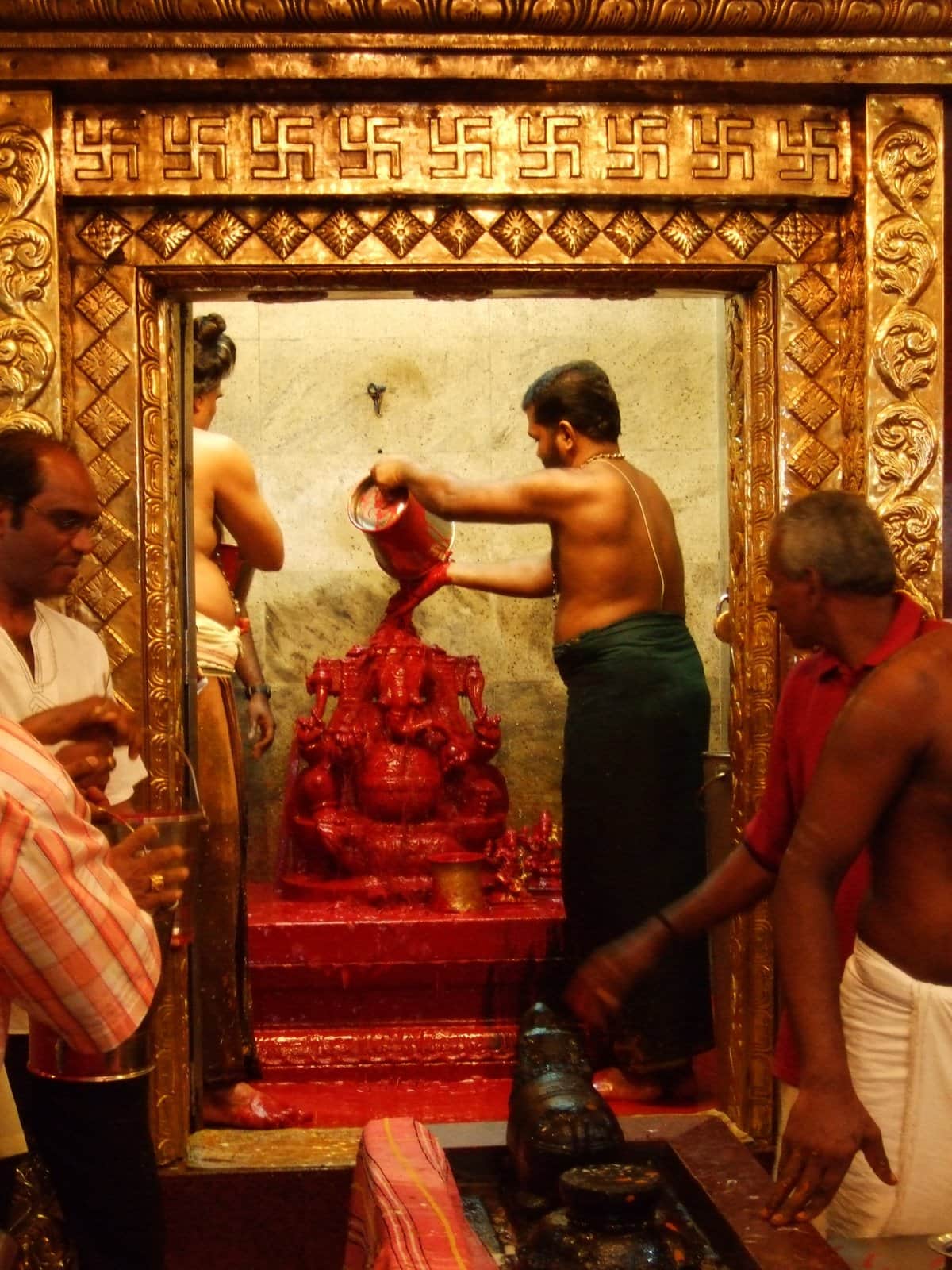
Image credit: Mystical Temples of Malaysia
In a previous article of mine, where I talked about how the troubles afflicting our temples are a sign that the Indian race in Malaysia is heading towards extinction, some Indians commented that, other than losing temples, the problems that require immediate attention are low enrolment in Tamil schools, casteism, the fragmentation of the Indian identity into subgroups (Tamil, Telugu, Malayalee, Kannadiga, etc.), high numbers of our youths involved in gangsterism, and the lack of political leadership.
These problems, however, in my humble opinion, are merely symptoms of what truly ails the Indian community. While we must address the symptoms of a disease to a certain extent, the more important task is to address the root cause. Until the root cause is addressed, the symptoms will keep appearing, no matter how many times we attempt to deal with them.
And what is the root cause of all the problems facing the Indian community?
Our core problem is weakness.
Weakness in what sense?
Weakness in the sense that the Indian community is currently so weak that we are unable to provide a pathway for a large number of our people to pursue success or happiness in life.
Let me explain further.
Imagine that Peninsular Malaysia is composed of 60 percent Muslims, 30 percent Chinese, and 10 percent Indians.
Ideally, in this scenario, Indians should receive around 10 percent of the resources, opportunities, access and platforms that the Peninsular has, in order to provide members of our community with a feasible pathway to pursue success in their life. If our members could pursue success, then the likelihood that they be able to pursue happiness and inner peace will also increase.
If we received 10 percent and still had problems such as gangsterism, loss of temples, fragmentation, and so on, then we would be entirely to blame for these problems.
But the problem is that we are not getting that 10 percent.
Why?
Because we are weak.
No group will ever be satisfied with what it has. Everybody will always try to obtain more than they already possess.
For that reason, we cannot blame the Chinese or the Muslims, who make up 90 percent of the non-Indian population in the Peninsular, for trying to increase their share of resources, wealth, and access in a manner that exceeds their population share.
We cannot blame them, because if we were in their shoes, that is exactly what we would do too.
The problem is that in the competition to secure a greater share for one’s group, it is usually the bigger groups that have the advantage. Size itself is a factor of strength. The smallest group tends to be the weakest, and when you are the weakest, you are often the one that must suffer losses in order to satisfy the desires and ambitions of the bigger groups.
Being the bigger identity groups, suppose the Muslims and the Chinese are able to leverage their advantage to add two percent more resources, positions, opportunities, and access to their communities. This would mean that the Chinese and Muslims would now have 32 percent and 62 percent respectively.
This is good for them, but it is bad for us, because in all likelihood their gain would come at our expense.
For them to each gain an additional two percent, the Indians would lose four percent. That would mean that 10 percent of us will now only have access to 6 percent of the nation’s resources, opportunities, and platforms.
When we only have 6 percent but our population is 10 percent, the first thing that happens is that we will lose confidence to compete externally. Losing our confidence, we will then begin to focus on competing internally in order to find success in life.
As a rule, when the amount of resources and opportunities you have is commensurate with or larger than your population, you will cooperate with your own people in order to compete with external identity groups, in order pursue and find success in life.
But when what you have is noticeably smaller than your population, you begin competing with your own people in order to survive or pursue success in life.
And when you compete rather than cooperate with your own people, the competition often turns nasty and vicious, because there is a sense of betrayal and ingratitude underlying it.
This explains why there is a widespread belief that Indians are the most violent or aggressive identity group in the Peninsular. Indians are not intrinsically criminal, aggressive or subject to such negative habits as alcoholism or violence. We likely only became so because 10 percent of us are competing among ourselves for 6 percent. If 60 percent of Muslims had to compete for only 40 percent of the Peninsular’s resources and opportunities, or if 30 percent of Chinese had to compete for only 20 percent of its platforms and access, they too might become as more criminal, aggressive, addicted and violent.
Other than increased aggression, often directed at our own people, another consequence of having fewer resources than our population share is that cooperation becomes difficult.
When we find it difficult to cooperate with each other while finding ourselves pushed to compete in a more and more desperate and vicious fashion amongst ourselves, we will drive ourselves to become even weaker, and thus make it even easier for other groups to take even the little that we have left.
The most damning sign that our weakness has reached a crisis point is that our sacred identity markers have now become vulnerable.
Indians have already largely lost our political parties and meaningful representation. Today, we do not have strong Indian leaders, parties, or ministers representing us.
We have mostly lost the estates and plantations, which once formed both our economic base and our communal home.
We used to be highly represented in respected professions such as medicine and law, but that too is no longer the case.
If you call a call center today, you will likely only have options to choose English, Malay or Mandarin as your language of preference. Tamil used to be one of the options, but today, it no longer is.
Now to to top it all, we might even be in a state where we are in danger of losing our sacred identity markers, or temples. At this juncture, if we still don't wake up, we are going to find ourselves crossing the point of no return within one or two more generation.
Remember, once we have lost our ability to pursue success, the more it will affect our ability to pursue happiness.
Indians were not always an angry, bitter, violent, or suspicious people. The so-called “Indian crab mentality” is not an intrinsic feature of our identity. These qualities are emerging because prolonged failure in achieving success has deeply affected our collective pursuit of happiness.
Identity groups do not exist in and of themselves. They exist because conditions allow them to exist.
An identity group will only survive and thrive to the extent that it is able to provide a meaningful pathway towards success and happiness for its members.
When it weakens to the point where most of its members are structurally unable to find success, and its population have become so unhappy, that anger, violence, self-loathnig or addiction becomes their defining features, then that identity group is in an existential crisis.
If its weakness extends to the point where even its sacred markers — such as temples — become vulnerable, then it is certainly on the path to extinction.
It is on this basis that I am saying that the fact that the continuous existence of many of of our temples is now being called to question, is a clear sign that our identity is on a path toward extinction.
I am not merely going to diagnose the problem, by the way. I also have suggestions on how we can move forward — either to prevent our extinction, or at least, ensure that we head to extinction in a dignified fashion.
I will put forward these ideas in future articles.
After I put it forward, eI hope you will pay some mind to it.
On of the problem that exacerbates our decline and deterioration is that we do not build a comprehensive understanding of our condition. We only react to it emotionally, when such events like the demolition or relocation of a temple occur.
These firefighting responses may provide emotional relief. They allow us to lash out and temporarily release existential frustration. But sustainable, long-term solutions can only come through rational responses, not emotional ones.
To do that, we must first take time to rationally and objectively increase our awareness of what is truly happening — what are the causes and origins, which are the symptoms and which are root causes, what our limitations are, what we must be willing to sacrifice, what we must change, what we must preserve and what we must act upon and what we must accept as inevitable.
Remember, it is the mind that moves first before the world can be moved.
So first, let us prepare our minds.
Let us increase our awareness, come to a common understanding, and be on the same page.
I will do my part to raise awareness by pointing to what I believe ails us. I hope you will also do your part to examine it and discuss it in a rational and objective manner, so that more light can be shed upon it and we can eventually agree on how to move forward.
In a previous article of mine, where I talked about how the troubles afflicting our temples are a sign that the Indian race in Malaysia is heading towards extinction, some Indians commented that, other than losing temples, the problems that require immediate attention are low enrolment in Tamil schools, casteism, the fragmentation of the Indian identity into subgroups (Tamil, Telugu, Malayalee, Kannadiga, etc.), high numbers of our youths involved in gangsterism, and the lack of political leadership.
These problems, however, in my humble opinion, are merely symptoms of what truly ails the Indian community. While we must address the symptoms of a disease to a certain extent, the more important task is to address the root cause. Until the root cause is addressed, the symptoms will keep appearing, no matter how many times we attempt to deal with them.
And what is the root cause of all the problems facing the Indian community?
Our core problem is weakness.
Weakness in what sense?
Weakness in the sense that the Indian community is currently so weak that we are unable to provide a pathway for a large number of our people to pursue success or happiness in life.
Let me explain further.
Imagine that Peninsular Malaysia is composed of 60 percent Muslims, 30 percent Chinese, and 10 percent Indians.
Ideally, in this scenario, Indians should receive around 10 percent of the resources, opportunities, access and platforms that the Peninsular has, in order to provide members of our community with a feasible pathway to pursue success in their life. If our members could pursue success, then the likelihood that they be able to pursue happiness and inner peace will also increase.
If we received 10 percent and still had problems such as gangsterism, loss of temples, fragmentation, and so on, then we would be entirely to blame for these problems.
But the problem is that we are not getting that 10 percent.
Why?
Because we are weak.
No group will ever be satisfied with what it has. Everybody will always try to obtain more than they already possess.
For that reason, we cannot blame the Chinese or the Muslims, who make up 90 percent of the non-Indian population in the Peninsular, for trying to increase their share of resources, wealth, and access in a manner that exceeds their population share.
We cannot blame them, because if we were in their shoes, that is exactly what we would do too.
The problem is that in the competition to secure a greater share for one’s group, it is usually the bigger groups that have the advantage. Size itself is a factor of strength. The smallest group tends to be the weakest, and when you are the weakest, you are often the one that must suffer losses in order to satisfy the desires and ambitions of the bigger groups.
Being the bigger identity groups, suppose the Muslims and the Chinese are able to leverage their advantage to add two percent more resources, positions, opportunities, and access to their communities. This would mean that the Chinese and Muslims would now have 32 percent and 62 percent respectively.
This is good for them, but it is bad for us, because in all likelihood their gain would come at our expense.
For them to each gain an additional two percent, the Indians would lose four percent. That would mean that 10 percent of us will now only have access to 6 percent of the nation’s resources, opportunities, and platforms.
When we only have 6 percent but our population is 10 percent, the first thing that happens is that we will lose confidence to compete externally. Losing our confidence, we will then begin to focus on competing internally in order to find success in life.
As a rule, when the amount of resources and opportunities you have is commensurate with or larger than your population, you will cooperate with your own people in order to compete with external identity groups, in order pursue and find success in life.
But when what you have is noticeably smaller than your population, you begin competing with your own people in order to survive or pursue success in life.
And when you compete rather than cooperate with your own people, the competition often turns nasty and vicious, because there is a sense of betrayal and ingratitude underlying it.
This explains why there is a widespread belief that Indians are the most violent or aggressive identity group in the Peninsular. Indians are not intrinsically criminal, aggressive or subject to such negative habits as alcoholism or violence. We likely only became so because 10 percent of us are competing among ourselves for 6 percent. If 60 percent of Muslims had to compete for only 40 percent of the Peninsular’s resources and opportunities, or if 30 percent of Chinese had to compete for only 20 percent of its platforms and access, they too might become as more criminal, aggressive, addicted and violent.
Other than increased aggression, often directed at our own people, another consequence of having fewer resources than our population share is that cooperation becomes difficult.
When we find it difficult to cooperate with each other while finding ourselves pushed to compete in a more and more desperate and vicious fashion amongst ourselves, we will drive ourselves to become even weaker, and thus make it even easier for other groups to take even the little that we have left.
The most damning sign that our weakness has reached a crisis point is that our sacred identity markers have now become vulnerable.
Indians have already largely lost our political parties and meaningful representation. Today, we do not have strong Indian leaders, parties, or ministers representing us.
We have mostly lost the estates and plantations, which once formed both our economic base and our communal home.
We used to be highly represented in respected professions such as medicine and law, but that too is no longer the case.
If you call a call center today, you will likely only have options to choose English, Malay or Mandarin as your language of preference. Tamil used to be one of the options, but today, it no longer is.
Now to to top it all, we might even be in a state where we are in danger of losing our sacred identity markers, or temples. At this juncture, if we still don't wake up, we are going to find ourselves crossing the point of no return within one or two more generation.
Remember, once we have lost our ability to pursue success, the more it will affect our ability to pursue happiness.
Indians were not always an angry, bitter, violent, or suspicious people. The so-called “Indian crab mentality” is not an intrinsic feature of our identity. These qualities are emerging because prolonged failure in achieving success has deeply affected our collective pursuit of happiness.
Identity groups do not exist in and of themselves. They exist because conditions allow them to exist.
An identity group will only survive and thrive to the extent that it is able to provide a meaningful pathway towards success and happiness for its members.
When it weakens to the point where most of its members are structurally unable to find success, and its population have become so unhappy, that anger, violence, self-loathnig or addiction becomes their defining features, then that identity group is in an existential crisis.
If its weakness extends to the point where even its sacred markers — such as temples — become vulnerable, then it is certainly on the path to extinction.
It is on this basis that I am saying that the fact that the continuous existence of many of of our temples is now being called to question, is a clear sign that our identity is on a path toward extinction.
I am not merely going to diagnose the problem, by the way. I also have suggestions on how we can move forward — either to prevent our extinction, or at least, ensure that we head to extinction in a dignified fashion.
I will put forward these ideas in future articles.
After I put it forward, eI hope you will pay some mind to it.
On of the problem that exacerbates our decline and deterioration is that we do not build a comprehensive understanding of our condition. We only react to it emotionally, when such events like the demolition or relocation of a temple occur.
These firefighting responses may provide emotional relief. They allow us to lash out and temporarily release existential frustration. But sustainable, long-term solutions can only come through rational responses, not emotional ones.
To do that, we must first take time to rationally and objectively increase our awareness of what is truly happening — what are the causes and origins, which are the symptoms and which are root causes, what our limitations are, what we must be willing to sacrifice, what we must change, what we must preserve and what we must act upon and what we must accept as inevitable.
Remember, it is the mind that moves first before the world can be moved.
So first, let us prepare our minds.
Let us increase our awareness, come to a common understanding, and be on the same page.
I will do my part to raise awareness by pointing to what I believe ails us. I hope you will also do your part to examine it and discuss it in a rational and objective manner, so that more light can be shed upon it and we can eventually agree on how to move forward.
***
Nehru matey, allow me to voice my humble opinion:
Malay poor will be taken care of by the Government;
Chinese poor will in general be taken care of by some Chinese philanthropists (admittedly not a perfect system but philanthropy in Chinese society has long (centuries old) been a tradition) or even the Chinese society herself;
Indian poor ...???
From my observation Indian philanthropy is minimal matey, minimal - your society needs to develop this.


No comments:
Post a Comment