
OPINION | Either Bersatu Sinks or throws Muhyiddin Overboard
15 Feb 2026 • 10:00 AM MYT

TheRealNehruism
An award-winning Newswav creator, Bebas News columnist & ex-FMT columnist
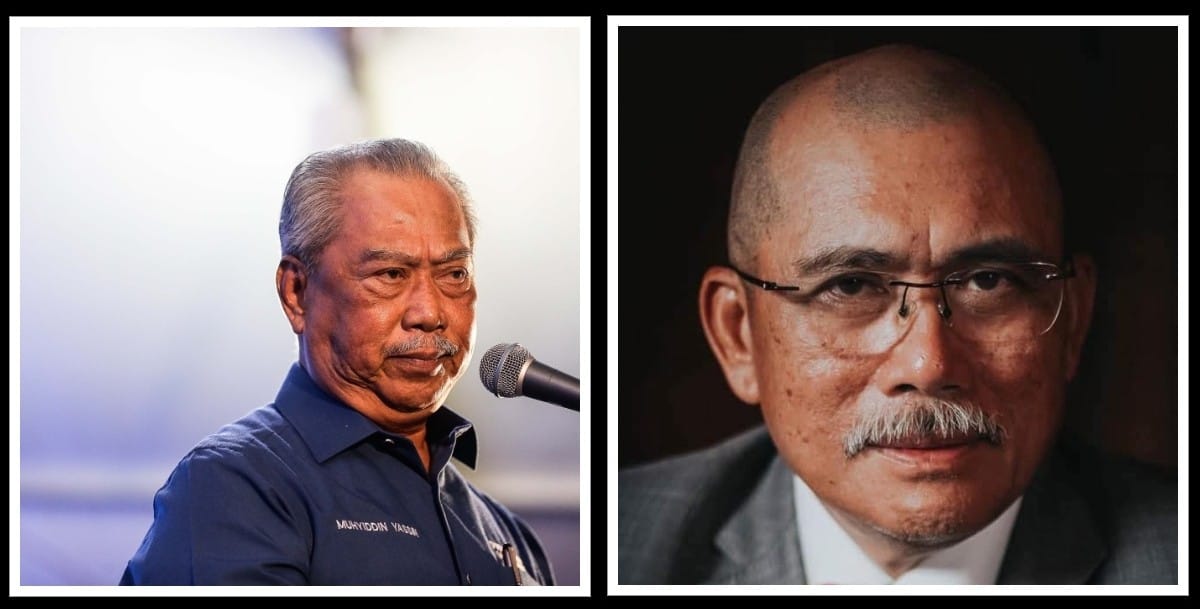
Image credit: Malay Mail / Ronald Kiandee FB
I have been saying for years that Muhyiddin Yassin is woefully inadequate to lead an opposition coalition.
Yes, Muhyiddin has vast experience in politics. But almost all of that experience was accumulated while leading or operating within parties accustomed to winning. His role was never to build momentum from weakness, but to manage advantage — to administer victory, not to engineer it.
Leading a dominant party and leading a struggling opposition are fundamentally different political tasks. The former requires maintenance; the latter requires transformation. The former is about consolidation; the latter is about disruption. And here is where Muhyiddin is completely out of his depth.
A leader of the opposition must know how to fight from a position of disadvantage, how to inspire belief amid defeat, and how to construct pathways from irrelevance to relevance, and from relevance to power. Muhyiddin has no experience doing this. Worse, he shows no instinct for it.
The opposition installed Muhyiddin because of his stature and experience. But stature and experience are not virtues in themselves. They are only valuable if they translate into electoral success. Without victory — or at least credible progress toward it — his status becomes meaningless, his experience worthless.
Not only has Muhyiddin failed to lead the opposition to victory, he has repeatedly managed to snatch defeat from the jaws of opportunity. Time and again, when momentum seemed to be building, his leadership choices neutralised it. When clarity was needed, he produced confusion. When boldness was required, he delivered timidity.
That this frustration took three years to boil over speaks volumes about the patience of Bersatu and PAS. They endured stagnation, miscalculations, strategic drift, and repeated failures with remarkable restraint. But even the most tolerant organisations have limits.
Now, the dam has broken.
Today, Ronald Kiandee becomes the first senior leader to call for Muhyiddin Yassin’s resignation as Bersatu president, accusing him of failing to handle the party’s internal crisis.
With that, Ronald Kiandee, Bersatu vice-president, has joined a growing chorus of division leaders, PAS figures, and most probably, Hamzah Zainuddin — Bersatu’s own number two — in calling for Muhyiddin to step aside.
This is not rebellion. It is institutional despair.
After years of hoping that Muhyiddin is a sleeping dragon that just needs a little more time to awaken , the opposition have finally accepted a brutal truth: there is no point being lions if you are led by a sheep. And so, even if they cannot find a lion to lead them, they would now settle for a cheetah, or at least a leopard — anything better than continued stagnation under Muhyiddin.
So how has Muhyiddin responded to this collapse of confidence?
Well, instead of being shamed that his peers and compatriots have completely lost faith in his ability to win, and arouse himself to battle with their opponent , so as to regain their confidence, he is instead choosing to maneuver around and hammer his own allies and friends, to force them to accept his leadership, despite them having completely lost faith in him
Rather than re-earning trust through performance, he is attempting to impose authority through party mechanisms — disciplinary boards, procedural manoeuvres, and internal threats.
Why ?
Well because if a hammer is the only tool you have , you will hammer the wall, even if your job is to paint it .
Muhyiddin's decades in politics have trained him not in electoral warfare, but in bureaucratic control. He knows how to manage hierarchy, silence dissent, and enforce compliance. He does not know how to inspire momentum, capture imagination, or reshape political narratives.
That is why when is is forced to step down due to his inability to win, rather than show that he can win, his first reaction was to theatrically offered to resign, while clearly expecting to be begged to stay , by engineering a situation where the opposition was unable to produce any other other leader than him.
When that failed, he turned to disciplinary measures, suppressing critics rather than confronting the substance of their arguments.
Muhyiddin, in other words, is demanding status, position and loyalty without delivering hope or confidence. He wants obedience without offering a path to victory.
Why?
Because desperation changes psychology.
Like desperate gamblers queueing at lottery outlets every weekend, praying for a miracle that will transform their lives, Muhyiddin is now placing his political survival entirely in the hands of luck. He is gambling that if he can just hold on long enough, an election will be called, fortune will intervene, and he will somehow stumble back into Putrajaya — at which point all will be forgiven.
Other than that, he is probably clutching on to his position simply because he wouldn't know who he is without his position. Being a party leader is likely all that muhyiddin knows - attending meetings, giving speeches, making press statement , going around the country to meet party members and receiving party leaders, is likely the only thing that Muhyiddin knows to in life. Take that away from him, and not only his wife and kids, even Muhyiddin wouldn't be able to recognize himself. Leadership, in other words, is not merely his role — it is his identity. To strip it from him would likely feel like a form of death, and so Muhyiddin resists with the raw, instinctive desperation of a drowning man clawing for air.
The problem however is that leadership can be an identity only in an organisation that is used to winning. In an organisation that must fight to win, leadership can only exist as a function.
For Muhyiddin to want want to retain his leadership for the sake of his identity, despite being unable to function as one, is simply not going to be tolerable for the opposition in the situation that they are in.
The tragedy that is Muhyiddin is that he is a captain that has only sailed his ship in calm waters.
When he faces a storm, it is inevitable that he will not be able to navigate through it, and thus force the crew to either preserve the captain’s pride or save the ship.
So far, Muhyiddin appears prepared to sink the ship rather than surrender the wheel.
Which leaves the crew only one remaining option: throw the captain overboard.
Judging by current momentum, that if Muhyiddin doesn't surrender the wheel in the very near future, he is going to find himself thrown overboard.
Let's see how the cookies crumble.
Yes, Muhyiddin has vast experience in politics. But almost all of that experience was accumulated while leading or operating within parties accustomed to winning. His role was never to build momentum from weakness, but to manage advantage — to administer victory, not to engineer it.
Leading a dominant party and leading a struggling opposition are fundamentally different political tasks. The former requires maintenance; the latter requires transformation. The former is about consolidation; the latter is about disruption. And here is where Muhyiddin is completely out of his depth.
A leader of the opposition must know how to fight from a position of disadvantage, how to inspire belief amid defeat, and how to construct pathways from irrelevance to relevance, and from relevance to power. Muhyiddin has no experience doing this. Worse, he shows no instinct for it.
The opposition installed Muhyiddin because of his stature and experience. But stature and experience are not virtues in themselves. They are only valuable if they translate into electoral success. Without victory — or at least credible progress toward it — his status becomes meaningless, his experience worthless.
Not only has Muhyiddin failed to lead the opposition to victory, he has repeatedly managed to snatch defeat from the jaws of opportunity. Time and again, when momentum seemed to be building, his leadership choices neutralised it. When clarity was needed, he produced confusion. When boldness was required, he delivered timidity.
That this frustration took three years to boil over speaks volumes about the patience of Bersatu and PAS. They endured stagnation, miscalculations, strategic drift, and repeated failures with remarkable restraint. But even the most tolerant organisations have limits.
Now, the dam has broken.
Today, Ronald Kiandee becomes the first senior leader to call for Muhyiddin Yassin’s resignation as Bersatu president, accusing him of failing to handle the party’s internal crisis.
With that, Ronald Kiandee, Bersatu vice-president, has joined a growing chorus of division leaders, PAS figures, and most probably, Hamzah Zainuddin — Bersatu’s own number two — in calling for Muhyiddin to step aside.
This is not rebellion. It is institutional despair.
After years of hoping that Muhyiddin is a sleeping dragon that just needs a little more time to awaken , the opposition have finally accepted a brutal truth: there is no point being lions if you are led by a sheep. And so, even if they cannot find a lion to lead them, they would now settle for a cheetah, or at least a leopard — anything better than continued stagnation under Muhyiddin.
So how has Muhyiddin responded to this collapse of confidence?
Well, instead of being shamed that his peers and compatriots have completely lost faith in his ability to win, and arouse himself to battle with their opponent , so as to regain their confidence, he is instead choosing to maneuver around and hammer his own allies and friends, to force them to accept his leadership, despite them having completely lost faith in him
Rather than re-earning trust through performance, he is attempting to impose authority through party mechanisms — disciplinary boards, procedural manoeuvres, and internal threats.
Why ?
Well because if a hammer is the only tool you have , you will hammer the wall, even if your job is to paint it .
Muhyiddin's decades in politics have trained him not in electoral warfare, but in bureaucratic control. He knows how to manage hierarchy, silence dissent, and enforce compliance. He does not know how to inspire momentum, capture imagination, or reshape political narratives.
That is why when is is forced to step down due to his inability to win, rather than show that he can win, his first reaction was to theatrically offered to resign, while clearly expecting to be begged to stay , by engineering a situation where the opposition was unable to produce any other other leader than him.
When that failed, he turned to disciplinary measures, suppressing critics rather than confronting the substance of their arguments.
Muhyiddin, in other words, is demanding status, position and loyalty without delivering hope or confidence. He wants obedience without offering a path to victory.
Why?
Because desperation changes psychology.
Like desperate gamblers queueing at lottery outlets every weekend, praying for a miracle that will transform their lives, Muhyiddin is now placing his political survival entirely in the hands of luck. He is gambling that if he can just hold on long enough, an election will be called, fortune will intervene, and he will somehow stumble back into Putrajaya — at which point all will be forgiven.
Other than that, he is probably clutching on to his position simply because he wouldn't know who he is without his position. Being a party leader is likely all that muhyiddin knows - attending meetings, giving speeches, making press statement , going around the country to meet party members and receiving party leaders, is likely the only thing that Muhyiddin knows to in life. Take that away from him, and not only his wife and kids, even Muhyiddin wouldn't be able to recognize himself. Leadership, in other words, is not merely his role — it is his identity. To strip it from him would likely feel like a form of death, and so Muhyiddin resists with the raw, instinctive desperation of a drowning man clawing for air.
The problem however is that leadership can be an identity only in an organisation that is used to winning. In an organisation that must fight to win, leadership can only exist as a function.
For Muhyiddin to want want to retain his leadership for the sake of his identity, despite being unable to function as one, is simply not going to be tolerable for the opposition in the situation that they are in.
The tragedy that is Muhyiddin is that he is a captain that has only sailed his ship in calm waters.
When he faces a storm, it is inevitable that he will not be able to navigate through it, and thus force the crew to either preserve the captain’s pride or save the ship.
So far, Muhyiddin appears prepared to sink the ship rather than surrender the wheel.
Which leaves the crew only one remaining option: throw the captain overboard.
Judging by current momentum, that if Muhyiddin doesn't surrender the wheel in the very near future, he is going to find himself thrown overboard.
Let's see how the cookies crumble.


Behind Moo is Azmin manipulating to ensure he gets to succeed.
ReplyDeleteSembur it
ReplyDelete