
Malaysia's #1 Content Aggregator
OPINION | From Khalwat to Wedding Bells: Why Are We Obsessed With Politicians' Private Lives?
28 Oct 2026 • 3:30 PM MYT


(Image source: Newswav)
Malaysians are an interesting lot. We can argue about race, religion, politics, who gets what and who insulted whom. We can fight over nasi lemak, argue about which state has the best food, and turn a simple conversation into a national issue.
But there is one thing we seem to enjoy even more: other people's private lives.
Who is sleeping with whom? Who is cheating on their spouse? Who is secretly gay? Who has a secret lover? Who is meeting whom behind closed doors?
Give us a scandal and suddenly, everyone becomes an investigator. The aunties have questions, the uncles have theories, the WhatsApp groups are on fire, and the social media detectives are working overtime. Even people who have never met the person involved somehow know exactly what happened.
Malaysia Boleh!
The recent case involving Nik Nazmi Nik Ahmad has once again shown us how interested we are in the private lives of our politicians. Following his detention by the Selangor Islamic Religious Department over a suspected khalwat offence, people began talking not just about the case, but also about his marriage, his character and his future in politics.
Nik Nazmi acknowledged that he was alone with a woman when religious officers arrived. He apologised to his wife, family and party, and said he would cooperate with the legal process. He has maintained that nothing improper took place.
But while the authorities deal with the case, I have a question for the rest of us. Why are we so interested in what other people do in their private lives?
I am not saying that anyone should be above the law. Nobody should be. But must every personal mistake, failed relationship or family disagreement become public entertainment?
Not everything that happens in somebody else's bedroom is our business.
If a married politician cheats on his wife, it affects his marriage and the people involved. But do we need to know every detail? Must we discuss it over our morning kopi, share it in the family WhatsApp group and keep bringing it up long after everyone else has moved on?
If a politician abandons his parents, do we immediately call him an ungrateful son? We do not know the full story. Perhaps he is selfish. Perhaps his parents have not treated him well. We simply do not know.
Even if a politician is secretly gay, why is that a scandal? How short a female politician’s hair is, how she dresses or who she is attracted to should not automatically become public news.
Yet, we are quick to judge. We hear one story, make a few assumptions and suddenly think we know everything about a person. By lunchtime, we have become judge, jury and executioner. By dinner, the whole taman has a verdict.
Social media makes it worse. One post, a few screenshots and some forwarded messages later, everybody has an opinion. Some people may not even know the full story, but that has never stopped them from commenting.
We tell ourselves that we are standing up for morality. But sometimes, we are simply enjoying somebody else's embarrassment.
Of course, there are times when a politician's private behaviour becomes a public concern. If a politician abuses public money, uses their position to benefit a lover, exploits someone under their care or lies about something related to their job, we have every right to ask questions.
If there is evidence of wrongdoing, investigate it. If the law has been broken, let the courts deal with it.
But we must learn to separate what makes us uncomfortable from what actually affects the public.
Does a person's love life tell us whether they can manage the economy? Does their relationship with their parents tell us whether they can make good policies? Does someone's sexuality determine whether they can be a good leader?
Unless there is a clear connection to their work, why are we using these things to judge their ability to serve the public?
What I find interesting is that we can spend days talking about a politician's private life but show much less interest in what they actually do at work.
Are our public services improving? Are public projects worth what we pay for them? Are our politicians keeping their promises? Are they doing what they were elected to do?
These are the questions that affect our lives. Yet a politician's private meeting can attract more attention than a public contract. Somebody else's marriage can become more exciting than the problems in our schools and hospitals. A personal scandal can make bigger headlines than questions about where public money has gone.
Perhaps it is because gossip is easy. Understanding public policy takes effort. Checking facts takes time. Holding politicians accountable requires patience. But judging somebody else's private life? That one takes no effort at all. Just open Facebook and start typing.
And it is not just scandals that attract us. Sometimes, we turn politicians' love lives into fairy tales, too.
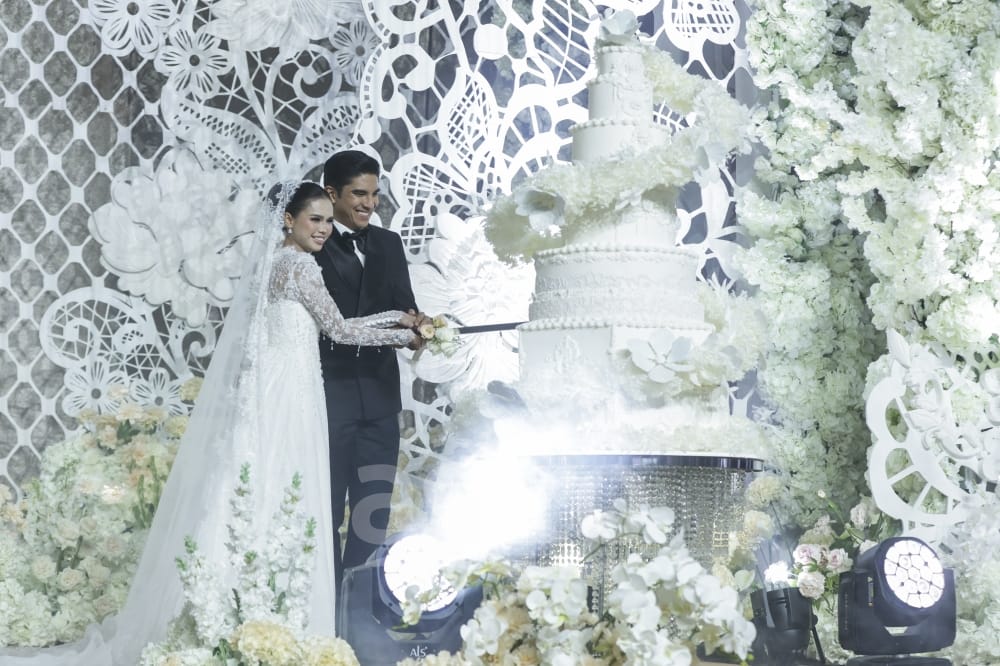
(Image source: Malay Mail)
Take Syed Saddiq and the public excitement over his love story and wedding to Bella Astillah. There is nothing wrong with being happy for someone. If he has found love, good for him. If he is building a life with a woman who already has two children, that is their personal story. We can wish them well and leave it at that.
But can we please separate the love story from the politics?
A man marrying a woman with two children does not automatically make him a better leader. It does not automatically make him more caring, more responsible or more qualified to serve the public.
It tells us something about his personal life, not whether he can make good policies, manage public money or deal with the rising cost of living. Romance is lovely, but it does not come with a certificate in good governance.
The same goes for Nik Nazmi. A personal controversy does not, by itself, tell us everything about his ability to do his job.
We seem to enjoy turning politicians into characters in a drama. We have the hero, the villain, the romantic lead and the bad guy. When their love stories make us happy, we celebrate them. When their personal lives disappoint us, we condemn them.
We treat politics like a TV3 drama, complete with plot twists, gossip and people picking sides. Only this time, the characters are real people, and the consequences can follow them long after the public has found a new scandal to discuss.
But politics is not a love story. And leadership is not about giving us warm, fuzzy feelings.
Let Syed Saddiq enjoy his love story without expecting it to prove that he is a good leader. Let Nik Nazmi's case be dealt with according to the law, without turning it into an excuse to humiliate him endlessly.
A fairy-tale wedding does not make someone a great leader. A personal scandal does not tell us everything about someone's ability to lead.
We can expect politicians to behave responsibly without expecting them to be saints. We can disagree with their personal choices without demanding to know every detail of their lives.
There are enough problems in this country that deserve our attention. Perhaps we should spend less time looking into other people's bedrooms and more time looking into the corridors of power.
After all, the people in those corridors are paid with public money to answer to us.
The people in someone else's bedroom are not.


No comments:
Post a Comment