
Malaysia's #1 Content Aggregator
Malaysia, the Philippines and the 2026 continental shelf dispute
26 Oct 2026 • 7:22 AM MYT

Twentytwo13
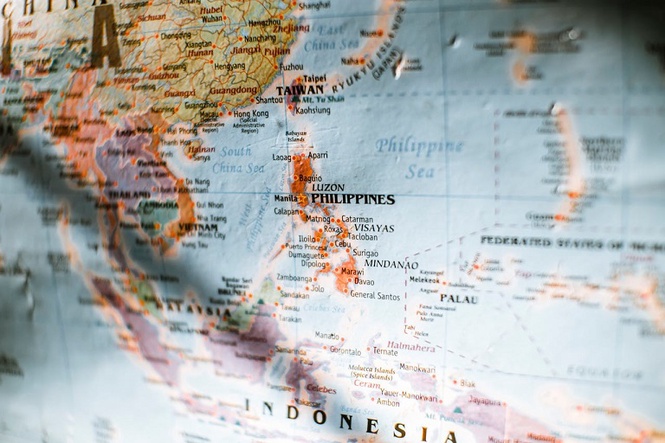
For more than six decades, the Sabah dispute has strained relations between Malaysia and the Philippines. In 2026, it has gained fresh strategic significance as a Philippine continental shelf submission, Malaysian objections and military developments in Palawan converge in the South China Sea.
Manila bases its claim on an 1878 agreement between the Sultan of Sulu and British interests represented by Gustavus Baron de Overbeck and Alfred Dent, whose interests later formed the British North Borneo Company. Malaysia regards Sabah as an integral part of the federation. Despite the unresolved claim, both countries have largely prevented the dispute from derailing their wider relationship.
Malaysia must protect its legal position, strengthen maritime enforcement and maintain credible defence capabilities without exaggerating the threat from Manila or underestimating the risks posed by an unresolved dispute amid changing military deployments.
From the Sultan of Sulu to the Continental Shelf
The Philippines treats the 1878 agreement as a lease, while Malaysia regards it as a cession. Sabah became part of Malaysia on Sept 16, 1963, following the Cobbold Commission’s assessment of local opinion on the proposed federation. Manila has never accepted that this extinguished its claim.
For decades, both governments generally kept the dispute from derailing wider ties, recognising the importance of trade, maritime security, cooperation against cross-border crime and the Mindanao peace process.
The latest controversy centres on a process under the United Nations Convention on the Law of the Sea (UNCLOS). On June 14, 2024, the Philippines submitted information to the Commission on the Limits of the Continental Shelf (CLCS) concerning an extended continental shelf in the West Palawan region under Article 76.
Malaysia lodged an initial communication on June 27, 2024, followed by a further communication on July 24, 2026. On Aug 8, 2026, Foreign Minister Datuk Seri Mohamad Hasan rejected suggestions that Kuala Lumpur had remained silent on the issue.
The legal distinction matters. An extended continental shelf concerns a coastal state’s sovereign rights over the seabed and subsoil beyond 200 nautical miles, where the continental margin extends that far and the requirements of UNCLOS are met. It does not confer sovereignty over land or determine maritime boundaries. Nor does the CLCS decide competing claims to Sabah.
Malaysia must scrutinise the submission’s coordinates and implications for its continental shelf rights. Its challenge is to defend those rights without escalating the dispute.
Why 2026 Matters
A CLCS submission is a formal legal and technical step, not merely political rhetoric. Malaysia must assess its implications on their merits rather than assume that every Philippine maritime initiative targets Sabah.
China has also objected to the Philippine submission. Malaysia must base its response on its own legal rights and interpretation of UNCLOS, rather than the positions taken by other countries. This is essential to preserving its independence of judgement and avoiding the perception that Kuala Lumpur is aligning itself with Beijing.
Balabac Island is one of nine locations designated under the Philippines’ Enhanced Defence Cooperation Agreement (EDCA) arrangements with the United States. Philippine officials have pursued runway construction there and discussed naval facilities, although plans for a naval base have evolved. The runway project predates the island’s designation as an EDCA site.
Balabac’s strategic location near the South China Sea and the Sulu Sea adds to the importance of the surrounding waters. These developments reinforce the need for Malaysia to maintain effective surveillance and rapid-response capabilities. They do not, in themselves, establish an intent to threaten Malaysia.
The 2013 Lahad Datu incursion demonstrated that historical claims and cross-border networks can have serious security consequences. The legal dispute does not, by itself, constitute an imminent military threat, but Malaysia must prepare for a range of contingencies.
Philippine Modernisation
The Philippines is shifting towards external defence, acquiring anti-ship weapons, improving surveillance and strengthening strategic partnerships. It took delivery of the first batch of BrahMos coastal defence missile systems from India in April 2024, under a procurement agreement signed in 2022.
These developments are aimed primarily at China, but their implications extend beyond their intended purpose.
Malaysia must assess Philippine capabilities alongside Chinese maritime activity. The answer is not an arms race, but ensuring that the country can monitor its maritime approaches, respond to incursions, protect offshore assets and maintain an effective presence at sea.
Malaysia’s Defence Challenge
Malaysia’s challenge lies not simply in the number of platforms it possesses, but in its ability to deploy and sustain them. The Navy, the Malaysian Maritime Enforcement Agency (MMEA) and the Air Force must share intelligence, coordinate operations and respond quickly. New vessels offer limited value without reliable maintenance, weapons integration, trained personnel and logistical support.
The Littoral Combat Ship (LCS) programme illustrates the risks. In July 2026, Malaysia suspended new defence procurement from Norway after the Norwegian government cancelled an export licence for Naval Strike Missiles intended for the LCS vessels.
The episode highlights the need to account for export restrictions, supply-chain vulnerabilities, maintenance and the availability of ammunition and spare parts. Procurement must follow a clear operational concept and ensure equipment remains serviceable throughout its operational life.
Malaysia’s exposure extends beyond Sabah. Its coastline, offshore energy fields and sea lanes through the Strait of Malacca and the South China Sea demand surveillance, logistical support and response capabilities that existing resources only partly provide. Strengthening these capabilities is a national necessity, not a reaction to any single neighbour.
Cooperation with China, Malaysia’s largest trading partner, could complement these efforts through maritime safety dialogue, search-and-rescue exercises and equipment servicing. Chinese suppliers should be assessed against the same criteria as Western, South Korean and Turkish suppliers.
Such engagement must serve Malaysia’s legal rights and national interests. Strategic autonomy requires avoiding excessive dependence on any supplier and ensuring that defence partnerships do not compromise independent decision-making.
As such, what must Malaysia do?
1. Strengthen the naval and MMEA presence in Sabah and Sarawak. Review basing, maintenance, fuel supplies and spare parts, and assess Kudat as a potential forward facility. Improve coordination among enforcement, naval, air and intelligence agencies, with clear procedures for responding to incursions.
2. Prioritise readiness over acquisition. Ensure vessels have functioning sensors, communications, defensive systems and weapons, backed by trained personnel and reliable logistics. Maintain sufficient MMEA capacity for routine maritime policing, consider long-endurance unmanned systems and coastal radar, and improve vessel tracking. The objective is to make pressure on Malaysia harder to sustain and easier to detect, not to match other countries platform for platform.
3. Strengthen the legal response. Assess the Philippine submission technically, document Malaysia’s position, lodge further objections where warranted and pursue consultations with Manila. The CLCS assesses scientific and technical data to establish the outer limits of continental shelves beyond 200 nautical miles; it does not delimit maritime boundaries or decide sovereignty over Sabah. Malaysia must keep these legal issues distinct.
4. Prevent maritime incidents from escalating. Establish channels for communication, verification and consular access. Address fisheries management and traditional fishing arrangements without prejudice to either country’s legal position.
5. Sustain regional cooperation. Continue working with the Philippines on maritime safety, cross-border crime, kidnapping and search and rescue. Maintain defence ties with Australia, the United States and other partners. Continue participating in the Five Power Defence Arrangements while preserving strategic autonomy. Within Asean, promote adherence to UNCLOS and communication among claimants, and resist attempts to turn Sabah into a contest between external powers.
Three Possible Outcomes
Legal stalemate. Objections persist without agreement. As the CLCS does not resolve sovereignty disputes or delimit maritime boundaries, bilateral negotiations may eventually be needed to address outstanding issues.
Managed disagreement. Both governments maintain their positions while expanding technical consultations and maritime communication, allowing cooperation in other areas to continue.
A security-focused relationship. Military modernisation in Palawan and persistent tensions prompt Malaysia to strengthen surveillance and its maritime presence. Any response should be guided by assessed risks, not assumptions about Philippine intentions.
Malaysia should neither dismiss Manila’s actions as political theatre nor treat them as evidence of preparations for confrontation. It must respond to the established facts: a formal legal disagreement, an evolving security environment and the need for credible defence capabilities.
The priorities are clear: improve readiness, strengthen surveillance and enforcement in Sabah, protect Malaysia’s legal position, manage fishing incidents, sustain partnerships and ensure defence procurement delivers operational capabilities.
Malaysia must also avoid being drawn into a polarised regional alignment. Its objections to the Philippines must rest on its own legal rights, just as its approach to China must be guided by international law and national interests.
Sovereignty cannot be protected by diplomatic protests alone, nor by military spending without strategy.
The Sabah dispute may remain unresolved for years. Malaysia must ensure it does not become a weakness in the country’s maritime security, strategic autonomy or regional relationships.
The views expressed here are the personal opinion of the writer and do not represent those of Twentytwo13.


No comments:
Post a Comment