Murray Hunter
The Network School in Malaysia’s Forest City: Innovation Hub or Security Concern?
Murray Hunter
Jul 15, 2026
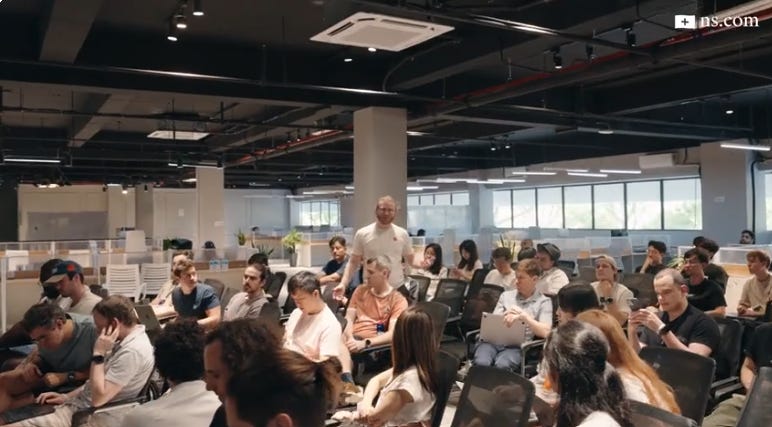
In the gleaming, yet often underpopulated, development of Forest City in Johor, Malaysia, a bold experiment in community-building is underway. The Network School (NS), launched in 2024, has quickly become a flashpoint, drawing scrutiny from Malaysian authorities over allegations of Israeli nationals using second passports, management politics, and potential competition with local interests. While critics see threats to national security and sovereignty, supporters view it as a promising innovation cluster that could benefit Malaysia’s economy, if given space to thrive.
At its core, the Network School embodies the “network state” vision popularized by its founder, Balaji Srinivasan, former CTO of Coinbase and prominent tech investor. In his writings and talks, Srinivasan argues that traditional nation-states are increasingly outdated in the digital age. Instead, communities should form first online around shared values, which include techno-optimism, entrepreneurship, self-improvement, and global connectivity, before coalescing into physical “startup societies.” These societies function like “society-as-a-service,” blending digital coordination with real-world co-living to accelerate innovation, much like how open-source software or crypto projects bootstrap ecosystems.
The Network School operationalizes this concept in Forest City, strategically located on artificial islands near Singapore. It brands itself as a “frontier community for techno-optimists,” attracting remote workers, digital nomads, content creators, founders, engineers, and self-improvers. Members live together in shared or private accommodations, with memberships starting around US$1,500 per month (with roommates). This fee covers meals, gym access, co-working spaces, and a structured program emphasizing “Learn, Burn, Earn, and Fun.”
Learn: Regular talks from high-profile figures like Vitalik Buterin (Ethereum), Bryan Johnson, and venture capitalists foster knowledge sharing and startup ideation.
Burn: Daily workouts with trainers and optimized healthy meals promote physical fitness.
Earn: Residents work remotely or collaborate on ventures while building networks.
Fun: A flexible social calendar includes events and easy access to Singapore.
The goal extends beyond personal development. NS aims to bootstrap successive “startup societies” that could eventually negotiate governance arrangements with host countries, creating parallel systems focused on innovation rather than traditional bureaucracy. Forest City’s proximity to Singapore’s tech ecosystem, affordable space, and connectivity make it an ideal testbed, echoing historical precedents like Stanford’s role in Silicon Valley.
This elite, intentional community has drawn global interest but also suspicion in Malaysia. In July 2026, Johor Chief Minister Onn Hafiz Ghazi and the Home Affairs Ministry launched probes into NS operations. Concerns include possible entry by Israeli passport holders (Malaysia bans Israeli passports without special approval due to lacking diplomatic ties), misuse of immigration facilities, and whether programs comply with education and business regulations. Authorities are examining identities, travel documents, second passports, land use, and business activities.
Critics worry about national security, foreign influence, or ideological imports conflicting with Malaysian interests. Past events, like a now-removed video featuring Israeli vlogger Nas Daily promoting the school, have fueled public concerns. Some see the cluster as a threat to vested local business interests rather than a complement to Malaysia’s entrepreneurial scene.
Yet, dismissing such clusters risks sending a chilling message to global talent. Malaysia has welcomed innovation hubs before, but cases like Grab’s regulatory battles highlight tensions between established players and agile newcomers. An innovation cluster linking international venture capital, founders, and Malaysian entrepreneurs could create jobs, knowledge transfer, and economic spillovers, which is precisely what forward-looking economies pursue. Forest City itself was envisioned as a futuristic development; populating it with builders aligns with that ambition.
The Network School remains a work in progress. Its “society-as-a-service” model tests whether high-agency individuals can self-organize more effectively than legacy institutions. Challenges include building inclusive culture amid diverse residents and delivering sustained value beyond co-living.
As investigations proceed, Malaysia faces a choice: prioritize caution amid geopolitical sensitivities or embrace the potential of network-era communities. Proving any illicit connections (such as intelligence links) would validate concerns. Absent that, heavy-handed actions could deter the very innovators needed for a competitive economy. In a world of remote work and digital borders, experiments like NS may represent the future of human organization, one Malaysia could help shape, or watch relocate elsewhere.


No comments:
Post a Comment