
Malaysia’s working poor under pressure as living costs outpace income growth, says economy minister
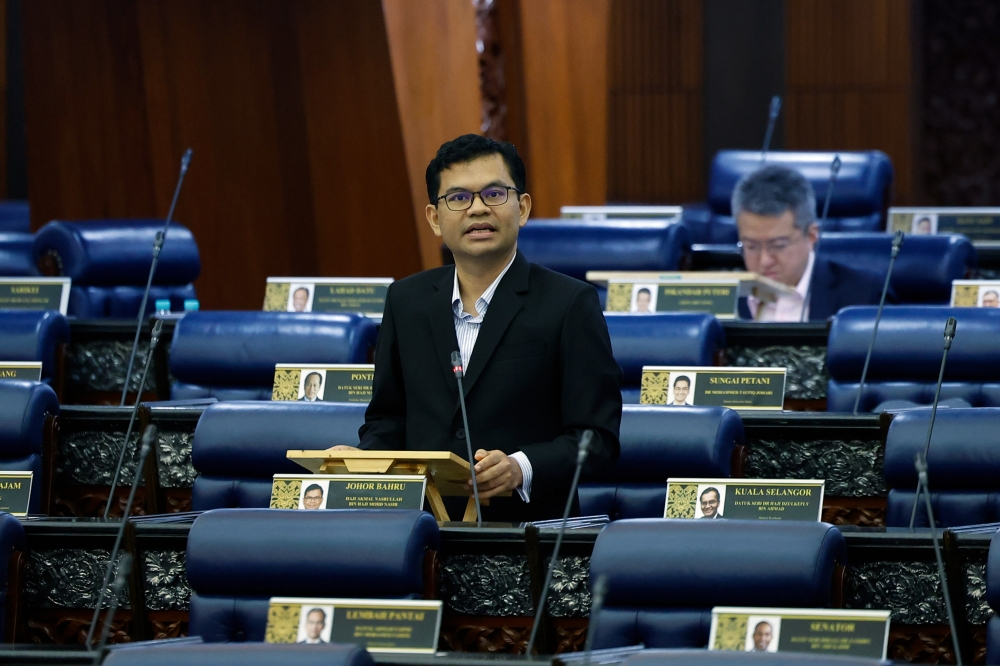
Economy Minister Akmal Nasir Nasrullah says rising living costs continue to pressure low-income households and the working poor despite higher average household income. — Bernama pic
First Published: Tuesday, 14 Jul 2026 10:28 AM MYT
KUALA LUMPUR, July 14 — Malaysia’s rising cost of living continues to put pressure on low-income households and the working poor despite an increase in average household income, Economy Minister Akmal Nasir Nasrullah said.
In a written parliamentary reply to Pengkalan Chepa MP Datuk Dr Ahmad Marzuk Shaary, Akmal Nasir said data from the Household Income and Basic Amenities Survey 2024 showed that average household income rose from RM8,479 in 2022 to RM9,155 in 2024.
This increase represents annual growth of 3.8 per cent.
“Overall, data from the Poverty Line Income (PGK), Cost of Living Expenditure (PAKW) and Household Cost of Living Index (IKSH) by the Department of Statistics Malaysia (DOSM) confirm that rising prices of essential goods and services have affected household living costs, particularly among low-income groups and the working poor.”
“The national Poverty Line Income increased from RM2,589 in 2022 to RM2,705 in 2024, reflecting higher basic living costs. Similarly, the average national PAKW rose from RM4,729 a month to RM4,846 a month,” he said.
Average monthly household expenditure also increased from RM5,150 in 2022 to RM5,566 in 2024, representing annual growth of 3.9 per cent.
Akmal Nasir said urban households required a higher PAKW of RM5,169 a month in 2024, compared with RM3,712 for rural households.
Putrajaya recorded the highest household cost of living index at 106.3 points, followed by Kuala Lumpur at 106.1 points and Selangor at 105.4 points.
Kelantan and Kedah recorded the lowest indices at 103.9 points and 104.6 points respectively.
Akmal Nasir said the ministry would continue addressing cost-of-living pressures under the 13th Malaysia Plan from 2026 to 2030 through a two-pronged strategy of raising Malaysians’ incomes and controlling increases in the cost of goods and services.
Under short-term measures announced in Budget 2026, the government will continue initiatives such as Sumbangan Tunai Rahmah and Sumbangan Asas Rahmah, with allocations exceeding RM15 billion.
Another RM3.1 billion will be allocated to welfare assistance programmes under the Social Welfare Department for vulnerable groups, including poor families, persons with disabilities and senior citizens.
Other measures include price stabilisation initiatives under the National Cost of Living Action Council, including the RM67 million Price Standardisation Programme for Sabah, Sarawak and Labuan, as well as the RM600 million Payung Rahmah initiative.
The government also plans to implement targeted subsidies for fuel and utilities using the Padu database to ensure assistance reaches vulnerable groups.
For the medium and long term, Akmal Nasir said efforts would focus on raising incomes and reducing structural costs through the creation of quality jobs, the Progressive Wage Policy, skills development, talent building, higher workforce productivity and education reforms.
He said the increase in the minimum wage from RM1,500 to RM1,700 was also part of efforts to improve workers’ incomes.


No comments:
Post a Comment