Murray Hunter
Jul 09, 2026
The Thai Government's Challenges Ahead
Anutin’s Lackluster Second Term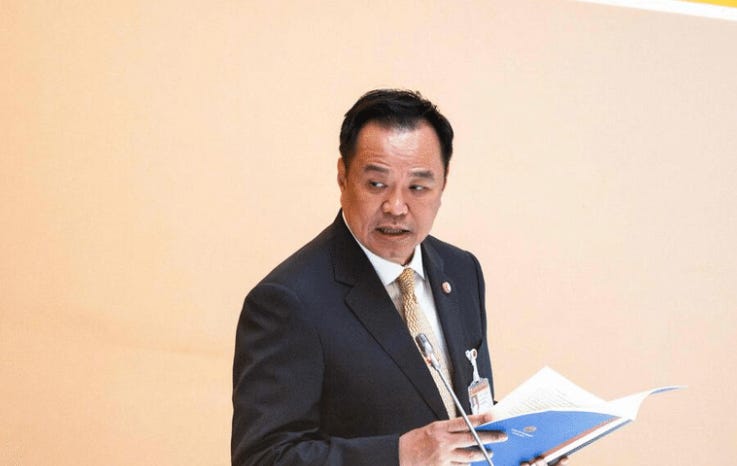
The Thai Prime Minister Anutin Charnvirakul’s second term has so far delivered one hundred days of quietude. In a country long accustomed to political drama, this calm feels almost unnatural. The Bhumjaithai Party dominates its coalition with a strong parliamentary position, friendly ties to the Senate, military, Palace, and big business. Anutin himself is neither a beloved populist nor a lightning-rod figure capable of sparking street protests. Many analysts bet this government will serve its full term as the most stable-looking elected administration in decades.
Yet stability alone does not equal effectiveness. Beneath the surface, the Anutin government appears lackluster, struggling to deliver tangible relief amid an economy that has earned Thailand the unflattering label of “sick man of Asia.” External shocks, particularly turbulence in the Gulf region disrupting energy markets and global trade, have compounded domestic woes, with anaemic growth hovering around or below 2%, high household debt, factory closures, and weakening tourism.
Ordinary Thais are feeling the pinch through stagnant wages, rising costs, and limited opportunities. This economic malaise is already eroding public support for the Bhumjaithai-led government.
Recent polling underscores the slide. The latest NIDA quarterly survey shows an almost 8% drop in support for Anutin personally and a 9% decline for Bhumjaithai. While one poll does not make a trend, the shift is notable for a party fresh off an election victory.
PR missteps have not helped with controversies over the initial response to the energy crisis, debates surrounding an AI initiative, and perceptions that several cabinet ministers are underperforming. Many appointees, including those from the so-called “lookthep faction,” lack extensive experience.
Even Commerce Minister Supajee Suthumpun, the star of Bhumjaithai’s campaign has seen her public profile diminish so sharply that her team felt compelled to reassure followers she had not “disappeared” but was simply working. Anutin himself has warned underperforming ministers risk being reshuffled, while admitting the government has failed to communicate its achievements effectively.
The opposition has not fully capitalized on the situation. The People’s Party and its leader have also seen slight dips, while Pheu Thai and the Democrats made modest gains. Voters may still prioritize stability over bold reforms in these early days. However, if economic pain persists without visible progress, tolerance will wear thin.
Bhumjaithai’s coalition remains remarkably cohesive at the inter-party level, largely because no single partner can easily topple it. Pheu Thai holds leverage with its 74 MPs, but alternatives like Kla Tham exist as potential backups.
However, real tensions simmer within Bhumjaithai itself. A notable flashpoint involves Deputy Prime Minister and Transport Minister Phiphat Ratchakitprakarn, who was unexpectedly stripped of oversight over the Eastern Economic Corridor. The move fueled speculation of rifts among key figures, though Phiphat himself has downplayed them. As a southern campaign architect crucial to the party’s success, alienating him carries risks.
Regional clans and factional heirs add another layer of complexity. The cabinet includes many younger figures from prominent local power bases, pleasing some but reportedly frustrating older-generation stalwarts. Technocratic appointments provide expertise but may sideline party insiders. These dynamics point to potential headaches during future reshuffles.
Legal and succession rumors add uncertainty. An upcoming Constitutional Court decision on emergency borrowing could force ministerial resignations. Whispers of a backup prime minister are rumored with names circulating inside of Bhumjaithai, but potential candidates have denied deals. Such talk often surfaces during headwinds, but talk of imminent collapse remains premature.
Thailand’s structural challenges run deep with a middle-income trap, over-reliance on legacy industries, and vulnerability to external shocks like Gulf instability affecting energy prices and exports. Promises of investment and stimulus sound familiar, yet delivery has been slow. The government claims stability, with a good technocratic balance, yet many citizens see little relief in daily finances.
Without decisive action on debt, competitiveness, and new growth engines, the “sick man” label will stick.
Anutin’s administration enjoys elite buy-in and institutional goodwill that could allow it to run its full course. Good relations with the Palace, military, and business provide a solid foundation. Yet goodwill erodes if the government fails to address the economic distress affecting ordinary Thais. Factional frictions, inexperienced ministers, and communication gaps compound the sense of drift.
There is not yet a crisis, but today there is a government coasting on stability rather than momentum. For a pro-establishment administration handed a dominant position, the early term feels disappointingly lackluster.
Delivering meaningful economic relief and managing internal tensions will determine whether Bhumjaithai’s tenure becomes one of quiet competence or missed opportunity. Thai voters, squeezed by flat growth and financial strain, are watching closely where their patience has limits.
Thursday, July 09, 2026
The Thai Government's Challenges Ahead Anutin’s Lackluster Second Term


Subscribe to:
Post Comments (Atom)
No comments:
Post a Comment