
Malaysia's #1 Content Aggregator
How Rohingya Have an Illegal Multi-Storey Sektor Redefined Hulu Langat’s Hinterland
14 Jun 2026 • 12:00 PM MYT

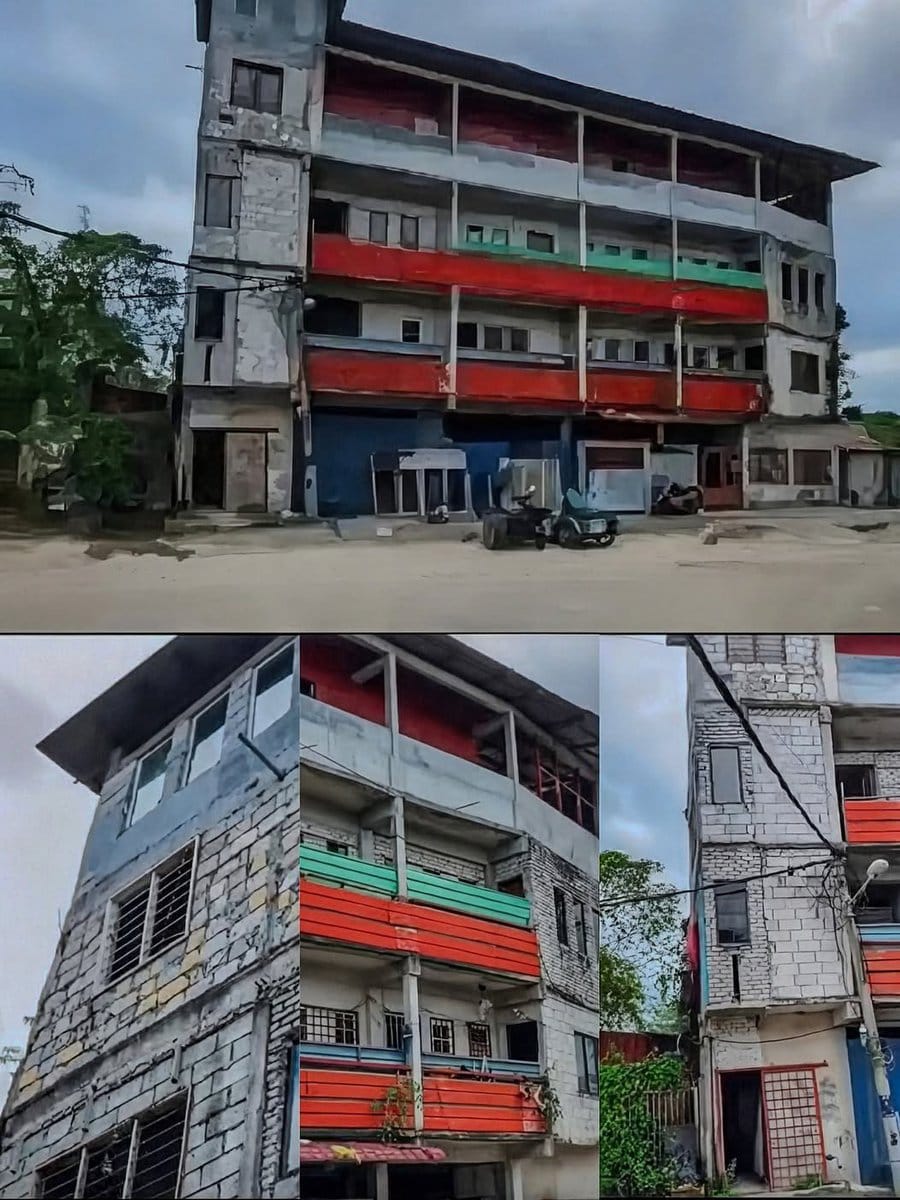
For years, the global conversation surrounding displaced populations has focused on makeshift camps, sprawling canvas tents, and temporary maritime crossings. From the sun-bleached shores of Cox’s Bazar to the volatile, porous maritime borders of Southeast Asia, refugees and undocumented migrants have long been framed as transient figures vulnerable souls floating on the periphery of statehood. Yet, a sudden structural transformation has shaken this conventional narrative. In Malaysia, where the sociological undercurrents of migration have simmered for decades under a surface of uneasy tolerance, the transient has quietly frozen into the permanent.
The physical manifestation of this shift erupted into the national consciousness following a viral video by local radio presenter Azad Jasmin, popularly known as Pak Azad, who stumbled upon a bizarre architectural anomaly tucked deep within the secluded green folds of Sungai Tekali, Hulu Langat, Selangor. What he found was not a temporary settlement of makeshift shanties, but an aggressively improvised, multi-storey flat-like structure that appeared to climb four levels into the sky. Built with exposed brick, haphazardly plastered walls, zinc sheets covering makeshift corridors, and chaotic webs of utility wiring, the building stood as an astonishing monument to unregulated urbanization.
Initial reports and public anger swiftly linked the structure to the area's growing Rohingya community. This revelation triggered immediate institutional responses, with Kajang District Police Chief Asisten Komisioner Naazron Abdul Yusof confirming that a joint enforcement operation under Ops Kutip had previously swept the very same location, detaining dozens of undocumented foreigners.
This development is not merely a localized municipal violation. It represents a profound sociological, economic, and institutional crossroads for Malaysia a sovereign nation grappling with the unintended consequences of systemic enforcement gaps, domestic collusion, and the unyielding survival instinct of a stateless diaspora.
The Anatomy of the Sungai Tekali Enclave
To understand how a four-storey architectural hazard could rise undetected in a rural enclave, one must look at the geography of Hulu Langat. Known for its lush eco-tourism spots, rivers, and weekend cycling routes, the region possesses isolated pockets that are shielded from daily municipal eyes. The structural oddity in Kampung Kenangan, Sungai Makau, within the Sungai Tekali sub-district, exposes the physical audacity of this illegal settlement.
According to analytical observations of the viral footage, the structure expands upward through a method of accretion literally piling house upon house, room upon room, without engineering blueprints or formal safety inspections. Haphazardly connected PVC water pipes run along its exterior facade, and uninsulated electrical conduits tap directly into the grid, posing extreme fire and structural collapse hazards to both occupants and the surrounding ecosystem.
The public reaction was immediate and highly volatile. Across social media platforms, ordinary Malaysians expressed intense anxiety, with users demanding that municipal authorities immediately demolish the building. The presence of the structure raises uncomfortable questions for locals who must navigate rigorous, expensive, and protracted bureaucratic processes just to secure a building permit or extend a kitchen porch on their own legal properties.
For a community of foreign nationals to erect a multi-family, multi-tier residential structure with apparent impunity challenges the rule of law. It creates a palpable sense of alienation among citizens who feel that the state's regulatory framework applies strictly to the tax-paying voter, while slipping away entirely in the dense brush of the informal sector.
The Economics of Local Collusion: The Real Landlord Issue
While public outrage naturally targets the undocumented occupants, deeper sociological analysis reveals that such structural defiance cannot exist in a vacuum. It requires domestic enablement. Dusun Tua ADUN, Datuk Johan Abd. Aziz, shattered the simple narrative of "foreign invasion" by identifying local landlords as the structural roots of the problem. Johan revealed that the primary driver behind this sprawling, unregulated settlement which is estimated to support an informal village of roughly 400 Rohingya individuals is the actions of Malaysian landowners who deliberately lease or permit their private property to be developed into illegal enclaves.
This dynamic points to a lucrative, underground economy operating within Malaysia's agricultural and suburban hinterlands. Private individuals exploit their land rights to generate high rental yields from a vulnerable, desperate population that is locked out of the formal housing market. Because undocumented migrants and UNHCR cardholders cannot legally own property or sign commercial tenancies, they rely on informal agreements with local citizens.
These landowners essentially monetize their sovereign immunity, acting as protective buffers between municipal enforcement agencies and illegal tenants. The state is then forced into a difficult position: it cannot easily seize private land without navigating lengthy legal processes under the National Land Code, yet it cannot allow private land to become an autonomous, extra-legal zone. Johan’s analysis emphasizes that enforcement strategies will continue to fail if they only target the transient occupants while ignoring the Malaysian citizens who profit off these shadow communities.
Institutional Inertia and the Cat-and-Mouse Encirclement
The institutional response to the Sungai Tekali flat illustrates a repetitive cycle of reactive enforcement rather than proactive systemic governance. Following the social media storm, police statements confirmed that the site was far from an undiscovered secret. In fact, a joint enforcement operation under Ops Kutip involving the Selangor Immigration Department and the Royal Malaysia Police (PDRM) had raided the exact location, detaining 42 undocumented foreigners including 35 men, three women, and four children under the Immigration Act 1959/63. At that time, an IMM 29 Form (Summons to Witness) was served to a local man who claimed to be the son of the landowner.
Yet, despite this massive state intervention, the physical structure remained standing. The Kajang Municipal Council (MPKj) found itself trapped within the fragmented jurisdictional boundaries that often plague Malaysian governance. While the Immigration Department handles the bodies of undocumented migrants, the local municipal council governs the physical structures, and the District Land Office oversees land-use violations.
This siloed approach allows illegal enclaves to regenerate. Once a raid is concluded and the detainees are sent to immigration depots, the physical infrastructure remains intact. New waves of migrants, driven by the same economic and social demands, quickly reoccupy the vacated rooms. This cycle transforms municipal enforcement into an expensive, repetitive game of cat-and-mouse that drains public resources without resolving the root cause.
The Geopolitical Dilemma Manifested on Local Soil
The multi-storey flat in Hulu Langat cannot be separated from the broader geopolitical realities of Southeast Asia. Malaysia is not a signatory to the 1951 Refugee Convention or its 1967 Protocol, meaning that legally, all displaced persons, including the Rohingya, are classified as undocumented or illegal migrants under domestic law. However, out of humanitarian concern, Malaysia has hosted over a hundred thousand Rohingya refugees registered under the United Nations High Commissioner for Refugees (UNHCR). This creates a profound legal paradox: the state recognizes their presence on humanitarian grounds but bars them from formal employment, public education, and legal housing.
This policy isolation forces the refugee community to build parallel, informal social systems to survive. Over time, these networks solidify into autonomous enclaves. The recent prosecution of Rohingya individuals for participating in illegal, unregistered ethnic organizations highlights how deep these community structures run.
The vertical expansion of the Sungai Tekali building mirrors this social reality. When a community cannot grow outward due to legal restrictions and shifting social dynamics, it grows upward and inward, establishing its own informal rules, economies, and infrastructure.
What do you think? I’d love to hear your opinion in the comments section.
The discovery of the Sungai Tekali enclave marks a pivotal moment in Malaysian socio-cultural relations. The long-standing, quiet compromise between the local population and displaced communities is fraying under the weight of demographic pressure and economic strain. When informal settlements begin competing with formal towns for infrastructure, water, and power, the strain can easily fuel xenophobic sentiment and erode broader social cohesion.
Resolving this crisis requires looking past simple border security narratives. The state must bridge the gaps between municipal planning, land administration, and immigration enforcement. It must enforce strict penalties against local landowners who compromise national laws for personal profit, and address the legal gray areas that allow informal communities to grow unchecked.
The four-storey structure in Hulu Langat is much more than a poorly constructed building; it is a visible warning sign of a fragmented governance framework. It serves as an urgent reminder that unless the state asserts comprehensive, unified regulatory control over both its land and its borders, the country's sovereign space will continue to be quietly reshaped by the unregulated forces of informal migration.
The sight of a makeshift multi-storey flat rising above the trees of Hulu Langat forces us to confront an uncomfortable truth about our national landscape. It challenges our assumptions about security, community responsibility, and the rule of law. It reminds us that governance is an active, daily duty, and that ignoring the cracks in our enforcement systems allows parallel realities to take root in our own backyards. As we watch the authorities step in to manage this specific flashpoint, the broader question remains: how will we choose to balance our humanitarian instincts with the absolute necessity of maintaining national sovereignty and community safety?


No comments:
Post a Comment