

Susan Loone
Published: Jun 12, 2026 11:02 AM
Updated: 3:24 PM
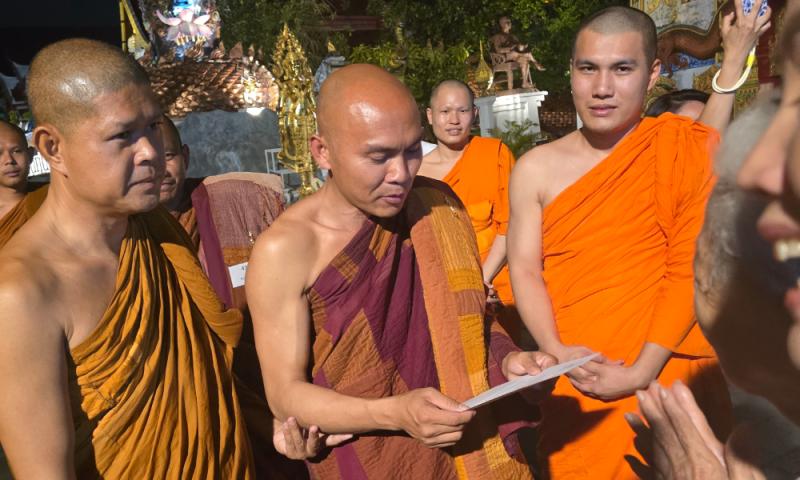
COMMENT | While attending the Walk for Peace gathering at Wat Nak Prok in Bangkok recently, I was asked by two Vietnamese journalists from the BBC - why a non-Buddhist Malaysian had travelled all the way to Thailand to attend the event.
My answer was simple.
"Peace is a universal language. Malaysia, where I come from, is multiracial and multireligious. We were raised to respect other people's faith."
Later, I had the chance to ask Bhikkhu Paññākāra, chief monk and founder of the famed Walk for Peace USA, a question that has always been on my mind.
Why had he never come to Malaysia to promote peace? His answer surprised me.
"It is not up to me whether I can walk for peace in Malaysia or not," said the Vietnamese-born Theravāda Buddhist monk, who is also known as Sư Tuệ Nhân.
"It depends on the conditions in Malaysia, whether I am allowed to walk or not. It also depends on whether the government supports this mission. It is not that I can walk everywhere."
His response left me thinking about Malaysia, and how it is sometimes perceived by foreigners.
As a diverse nation, we often preach about unity, tolerance, and harmony. Yet recent years have shown how fragile these values can be.
The lack of leadership in government towards addressing these conflicts is also a sore point.
We have witnessed racial and religious issues exploited for political gain, growing polarisation in public discourse, and an increasing tendency to view fellow Malaysians, especially the minorities, through the lens of race and faith rather than shared humanity.
Published: Jun 12, 2026 11:02 AM
Updated: 3:24 PM
COMMENT | While attending the Walk for Peace gathering at Wat Nak Prok in Bangkok recently, I was asked by two Vietnamese journalists from the BBC - why a non-Buddhist Malaysian had travelled all the way to Thailand to attend the event.
My answer was simple.
"Peace is a universal language. Malaysia, where I come from, is multiracial and multireligious. We were raised to respect other people's faith."
Later, I had the chance to ask Bhikkhu Paññākāra, chief monk and founder of the famed Walk for Peace USA, a question that has always been on my mind.
Why had he never come to Malaysia to promote peace? His answer surprised me.
"It is not up to me whether I can walk for peace in Malaysia or not," said the Vietnamese-born Theravāda Buddhist monk, who is also known as Sư Tuệ Nhân.
"It depends on the conditions in Malaysia, whether I am allowed to walk or not. It also depends on whether the government supports this mission. It is not that I can walk everywhere."
His response left me thinking about Malaysia, and how it is sometimes perceived by foreigners.
As a diverse nation, we often preach about unity, tolerance, and harmony. Yet recent years have shown how fragile these values can be.
The lack of leadership in government towards addressing these conflicts is also a sore point.
We have witnessed racial and religious issues exploited for political gain, growing polarisation in public discourse, and an increasing tendency to view fellow Malaysians, especially the minorities, through the lens of race and faith rather than shared humanity.

When asked whether he would come to Malaysia if invited, Paññākāra was careful not to make it sound like a personal decision.
"We have many things to consider, the other monks too. It is not just a decision by me," he said.
The answer reflected the collective nature of the movement, which has its base in a country known for gun crimes and war activities in several countries.
Meeting the ‘peace dog’
Walk for Peace, which spanned 2,300 miles from Texas to Washington DC last year, was not built around a single individual but around a shared commitment to non-violence, compassion, and understanding.
Meanwhile, one of the most memorable moments of my visit was meeting Aloka, the celebrated "Peace Dog" who accompanies Paññākāra on many of his journeys.
Aloka's story is remarkable. He was a stray dog in India who followed the monks on their mission in 2022. After an accident, he was rescued by Paññākāra, and now lives in the Huong Dao Vipassana Bhavana Center in Texas.
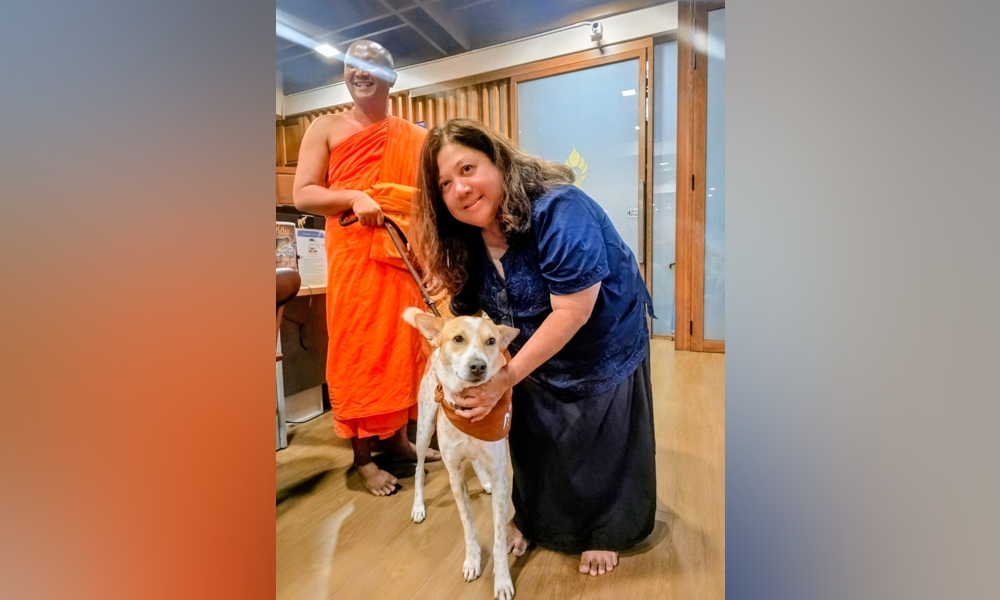
Aloka and the columnist
Devotees at the gathering were captivated by Aloka's gentle, affectionate, and remarkably calm demeanour amid the crowds.
Aloka seemed to possess an uncanny ability to bring people together. Strangers smiled at one another. Conversations began effortlessly. Barriers dissolved.
Watching him interact with people from different countries, cultures, and faiths, I began to understand why he has become such a beloved symbol of the Walk for Peace movement.
Aloka's significance goes beyond symbolism. Through the Aloka Foundation, set up in the US, the movement promotes kindness towards stray and abandoned animals, reminding us that compassion cannot be selective.
A society that values peace must also value mercy, empathy, and care for the vulnerable.
Compassion for all
Malaysian animal welfare advocate Karin Lee believes the movement could have a positive impact here, where reports of abuse and abandonment of stray animals often go viral on social media, creating a frenzy among lovers and haters of animals.
"We would very much like to invite Aloka and his companion monks to Malaysia.
"After visiting Thailand, India and Nepal, we would urge the government to work with the interfaith community to invite the delegation of peace headed by Paññākāra.
"There is much we can learn from Aloka and how this furry one has raised awareness of compassion and kindness towards stray dogs in our midst," she said, pointing to Malaysia's urgent need to enforce an effective policy on stray animals.
Devotees at the gathering were captivated by Aloka's gentle, affectionate, and remarkably calm demeanour amid the crowds.
Aloka seemed to possess an uncanny ability to bring people together. Strangers smiled at one another. Conversations began effortlessly. Barriers dissolved.
Watching him interact with people from different countries, cultures, and faiths, I began to understand why he has become such a beloved symbol of the Walk for Peace movement.
Aloka's significance goes beyond symbolism. Through the Aloka Foundation, set up in the US, the movement promotes kindness towards stray and abandoned animals, reminding us that compassion cannot be selective.
A society that values peace must also value mercy, empathy, and care for the vulnerable.
Compassion for all
Malaysian animal welfare advocate Karin Lee believes the movement could have a positive impact here, where reports of abuse and abandonment of stray animals often go viral on social media, creating a frenzy among lovers and haters of animals.
"We would very much like to invite Aloka and his companion monks to Malaysia.
"After visiting Thailand, India and Nepal, we would urge the government to work with the interfaith community to invite the delegation of peace headed by Paññākāra.
"There is much we can learn from Aloka and how this furry one has raised awareness of compassion and kindness towards stray dogs in our midst," she said, pointing to Malaysia's urgent need to enforce an effective policy on stray animals.

Karin Lee
In Thailand, Paññākāra and his team of monks received the Ashoka Pillar of Moral Leadership Award, which recognises individuals and organisations dedicated to compassion, selfless service, moral leadership, and peace.
Earlier this year, the monk was honoured with the Courage Project Award in the US, recognising his efforts to promote compassion, non-violence, and interfaith harmony through the Walk for Peace movement.
And yet, perhaps his most profound observation came when I asked whether he saw himself as a messenger of peace for countries like Malaysia, where tensions occasionally arise between different communities.
In Thailand, Paññākāra and his team of monks received the Ashoka Pillar of Moral Leadership Award, which recognises individuals and organisations dedicated to compassion, selfless service, moral leadership, and peace.
Earlier this year, the monk was honoured with the Courage Project Award in the US, recognising his efforts to promote compassion, non-violence, and interfaith harmony through the Walk for Peace movement.
And yet, perhaps his most profound observation came when I asked whether he saw himself as a messenger of peace for countries like Malaysia, where tensions occasionally arise between different communities.
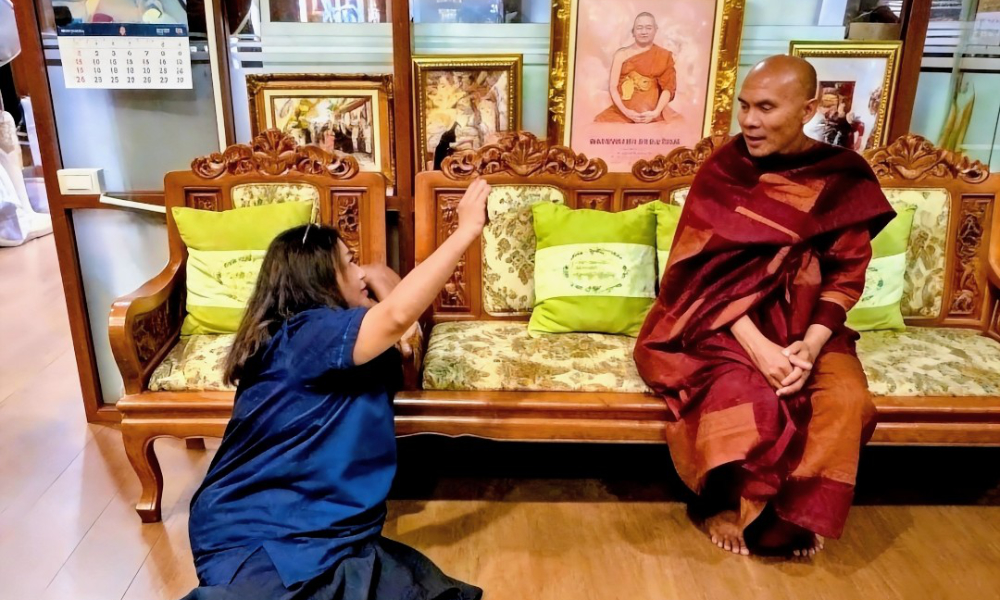
Bhikkhu Paññākāra (right)
"All the monks can deliver peace," he replied. "But whether there is peace or not, it depends on ourselves,” Paññākāra stated.
That simple statement may contain the most important lesson of all.
That simple statement may contain the most important lesson of all.
Peace must come from within
Peace cannot be imported. It cannot be imposed by governments, religious leaders, or activists. Others may inspire us, guide us and encourage us, but ultimately peace depends on how we choose to treat one another.
Perhaps, the challenge now lies with the national unity minister. If Malaysia truly believes in promoting harmony, mutual respect, and peaceful coexistence, here is an opportunity to demonstrate it.
Extending an invitation to Paññākāra and the Walk for Peace movement would send a powerful message that our commitment to unity is more than a slogan.

It would show the world that Malaysia is prepared to embrace initiatives that bring people together across racial, religious, and cultural divides.
At a time when societies everywhere seem increasingly fractured, a walk dedicated to peace, understanding, and compassion may be exactly what Malaysia needs.
Is Malaysia prepared for this challenge?
SUSAN LOONE is a member of the Malaysiakini team
***
I am proud to be a friend of Susan Loone.


No comments:
Post a Comment