
The key eastern state heads to polls this month under the shadow of a controversial revision of electoral rolls, which many say excludes Muslims disproportionately

People walk past the Nakhoda Mosque in Kolkata, capital of West Bengal state, India [File: Rupak De Chowdhuri/Reuters]

By Ritwika Mitra
Published On 16 Apr 2026
West Bengal, India – Nabijan Mondal, 73, has voted in every Indian election – national, state or local – for the past 50 years.
Suddenly, she finds her name missing from the list of voters published by the Election Commission of India (ECI) in her home state of West Bengal as it heads for a two-phase assembly election on April 23 and April 29, with votes to be counted on May 4.
Recommended Stories
In the run-up to the election, the ECI this month revised its electoral rolls through special intensive revision (SIR), a controversial exercise India’s election authorities have conducted in more than a dozen states and federally-governed territories so far.
Nabijan’s husband, three sons and a daughter, as well as their spouses, all made it to the final list. But she did not.
The reason: all these years, Nabijan and her family had not paid much attention to the fact that she went by “Nabijan”, her nickname, on the voter card, and “Nabirul” on other government documents, including her biometric ID (Aadhaar) and ration cards.

Nabijan Mondal at her home in Gobindapur village, North 24 Parganas, West Bengal [Ritwika Mitra/Al Jazeera]
Nabijan is among more than nine million people to lose voting rights in West Bengal – nearly 12 percent of the state’s 76 million voters, after the SIR process was concluded earlier this month. Almost six million of these nine million voters have been declared absentee or deceased, while the remaining three million will be unable to vote until special tribunals hear their cases.
But that seems unlikely, given that the tribunals will not be able to hear such a large volume of cases before the polling days. Approaching the tribunals would also be tedious for people as they scramble for the required documents needed to prove their voting rights. Earlier this week, the Supreme Court of India said it could not allow those whose cases were pending before the tribunals to vote in the April election. However, the court said it could allow the ECI to publish supplementary voter lists before the election.
“This time, my whole family will vote, but I won’t be able to. I do not understand things much, and did not know the names being different would bar me from voting,” Nabijan, a resident of Gobindapur village in West Bengal’s North 24 Parganas district, told Al Jazeera.
Nabijan is among more than nine million people to lose voting rights in West Bengal – nearly 12 percent of the state’s 76 million voters, after the SIR process was concluded earlier this month. Almost six million of these nine million voters have been declared absentee or deceased, while the remaining three million will be unable to vote until special tribunals hear their cases.
But that seems unlikely, given that the tribunals will not be able to hear such a large volume of cases before the polling days. Approaching the tribunals would also be tedious for people as they scramble for the required documents needed to prove their voting rights. Earlier this week, the Supreme Court of India said it could not allow those whose cases were pending before the tribunals to vote in the April election. However, the court said it could allow the ECI to publish supplementary voter lists before the election.
“This time, my whole family will vote, but I won’t be able to. I do not understand things much, and did not know the names being different would bar me from voting,” Nabijan, a resident of Gobindapur village in West Bengal’s North 24 Parganas district, told Al Jazeera.
‘I am in deep pain’
West Bengal is home to nearly 25 million Muslims, accounting for roughly 27 percent of the state’s 106 million population, according to the last census conducted in 2011 – the community’s second-largest population among Indian states after Uttar Pradesh.
It is also a state the BJP has never won. The Trinamool Congress (TMC), one of India’s key opposition parties led by Mamata Banerjee, a fiery 71-year-old Modi critic, has governed the state since 2011, ending a record 34 years of communist rule.
The analysis of voter deletions across West Bengal shows that Muslims have been disproportionately affected by the SIR exercise, mainly in districts where they constitute a high percentage of the population and could sway the election, including Murshidabad with 460,000 deletions, followed by 330,000 in North 24 Parganas and 240,000 in Malda.
Al Jazeera met nearly a dozen such Muslim families in Gobindapur, Gobra and Balki villages of North 24 Parganas. They said some names were struck off the voter list despite their documents being in place, whereas many others were struggling to find proof of their residential status, change of surnames after their marriage or remarriage of their parents, discrepancies in the spellings of their names, proof of their migrations to other states, or just their names figuring in the last SIR list published in 2002.
Like Nabijan, Sohidul Islam, 49, from Murshidabad’s Sagarpara village, had also been voting in previous elections. Now, he is not a voter any more.
“I am in deep pain. Who will I approach? I never thought my name would be deleted from the list. But now I want to focus on getting my name included. Even if I lose money and time, I have to think ahead,” Islam told Al Jazeera over the telephone.
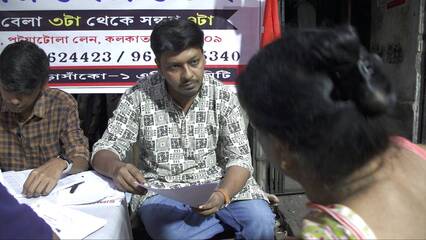
India’s voter revision triggers anxiety in communities at risk of exclusion

Israel's military kills four Lebanese paramedics in consecutive strikes

Is France making pro-Palestinian speech a crime?

Trump plans 250-foot ‘Triumphal Arch’ to mark 250 years of US independence
The ECI claims the SIR process is aimed at removing duplicate or deceased voters and adding genuine people left out of voter lists.
But the process has faced extensive controversies and legal challenges, with opposition parties and Muslim groups accusing the ECI of a systematic exercise to remove people unlikely to vote for Prime Minister Narendra Modi’s Bharatiya Janata Party (BJP) from the voter lists, especially Muslims – the prime targets of the BJP’s Hindu supremacist campaign and policies since Modi came to power in 2014.
West Bengal BJP leader Bimal Sankar Nanda told Al Jazeera that while no eligible Indian should be left out of voter lists, there should be no ineligible voters on the list either, accusing the TMC of keeping names of “dead and shifted voters” in the rolls.
“It is also true that the demographic character of the border areas [with Bangladesh] has been changing in a calculated manner. It is in public domain and TV channels have showed people who were not Indian citizens leaving the state [in border areas] after the SIR exercise started,” he said.
‘Some motive’ behind hurried SIR
Since 2014, India’s Muslims have overwhelmingly voted for a political party or coalition most likely to defeat the right-wing BJP. In West Bengal, it is the TMC, which is why Banerjee, as the state chief minister, herself moved the Supreme Court in February, accusing the ECI of being partisan towards the BJP after the SIR was launched in October last year.
“The SIR process was selectively applied in West Bengal to benefit the BJP,” she said at a campaign rally this week. “The BJP is plotting to forcefully capture votes through fraudulent means as they don’t have the guts to fight and win the elections democratically.”
The BJP says the exercise was intended to weed out millions of “illegal infiltrators” – often using “Bangladeshis” and “Rohingya” interchangeably – from West Bengal, which shares a porous 2,200km (1,367-mile) border with neighbouring Bangladesh, home to the world’s largest camp of nearly a million Rohingya refugees, most of whom fled a genocidal campaign by the Myanmar army in 2017.
The BJP has been using the bogey of Bangladeshi “infiltrators” or “illegal migrants” to appeal to its mainly Hindu support base, most recently in the northeastern state of Assam, where assembly elections were held earlier this month. The election results of Assam are expected along with those of West Bengal and some other states on May 4.

AI video of Indian minister shooting at image of Muslims sparks outrage
However, Sabir Ahamed of the Kolkata-based SABAR Institute, an independent research organisation, told Al Jazeera that while the revision of electoral rolls is a routine activity, usually conducted over one or two years, the process was hurried in high-stakes West Bengal.
“There seems to be some motive behind such a hurried activity,” he said. “Micro observers with no local knowledge were brought in from other states … The ECI process also lacked transparency, and lists were published in the middle of the night.”
The SABAR Institute analysed voter deletions in two key constituencies – Nandigram and Bhabanipur, both being contested this year by Suvendu Adhikari, the BJP’s leader of the opposition in the West Bengal Legislative Assembly, the latter against Banerjee, who had lost Nandigram to Adhikari in the 2021 vote. India allows a candidate to contest from two constituencies in regional or national polls.
The SABAR analysis found that while Muslims make up about 25 percent of Nandigram’s population, more than 95 percent of the names deleted from the list were Muslims. Similarly, Bhabanipur has 20 percent Muslims, but 40 percent of voters deleted in the constituency are Muslim.
“The preliminary findings showed that Muslims were the most mapped population. First, over five million people were put in the ASDD [absent, shifted, dead or duplicate] list. After that, they started using AI tools and found huge ‘logical discrepancy’ cases due to Urdu or Arabic words being translated into Bengali or English when it came to Muslim names,” he said.
“Our studies find that Muslims from the mapped population have been disproportionately deleted.”
Mohammad Bakibillah Molla, head of the West Bengal chapter of All India Imam Association, said his organisation has established helplines across West Bengal to help people whose names have been deleted in approaching the tribunals.
“There should be no conspiracy against any eligible Indian voter, be it Muslim or Hindu or any other community. Who will account for people who will be unable to vote?” he said.
Al Jazeera reached out to two senior ECI officials in West Bengal, but they did not respond.
‘Excessive burden’ on female voters
Swati Narayan, who teaches law, poverty and development at the National Law School of India University in the southern city of Bengaluru, told Al Jazeera that women and the poor were at a disproportionate risk of being disenfranchised, as they often lack the required documents to prove their citizenship rights.
“In case of women, they shift houses especially after marriage in a patrilocal society,” she said.
“In West Bengal, there is also the common use of nicknames, which often gets into official documents. Most women, especially Muslim women, are given different surnames before and after marriage. There can also be errors in translating names into English. What we now see is an exercise which has led to the rise of large-scale panic among residents.”
Jesmina Khatun, 31, lives in Gobindapur. She told Al Jazeera all her documents were in place with the correct spellings of her name, while her parents and grandfather figured in the 2002 list. Except for a tiny detail: her father’s name appeared as “Goffer Mondal” on her school certificate and as “Gaffar Mondal” on other documents. While her father still made it to the SIR list, Jesmina’s name was scrapped.
“I do not know what the way ahead is now. All my documents are in place. I feel so anxious these days. None of my other relatives has had to face this problem,” said Jesmina, adding that she had voted in three previous elections.

Jesmina Khatun at her home in Gobindapur village, North 24 Parganas, West Bengal [Ritwika Mitra/Al Jazeera]
Psephologist and political commentator Yogendra Yadav told Al Jazeera the SIR places an “excessive burden” on female voters.
“Men have to account for papers in the family in the location where they live, and women have to produce papers from the location they don’t live, which is their ‘maika’ [father’s home]. This differential burden of papers has led to a large number of deletions of women’s names,” he said.
“Also, in many parts of India, probably not so much in West Bengal, it is a standard practice for women to change their first names after marriage. Now, in the eyes of law, it looks like a crime or fraud. Because of this lack of sensitivity over this issue, it has led to the largest ever disenfranchisement of women voters.”
Yadav, who last year challenged the SIR exercise conducted in the neighbouring state of Bihar before the Supreme Court, said the problem lies with the Indian government, which uses its power to translate its own failures as crimes of the population.
“The problem lies with the state. It demands of people documents that it has never provided. Suddenly, you want documents of some kind; the expectation that your name must be recorded the same from a person who is probably not educated. Or say, if they are educated, the names are not recorded by themselves. The problem is the state itself writes them in different formats in different registers,” Yadav said.
Back in Murshidabad, Islam says his name was deleted despite attending two SIR hearings and submitting all the relevant documents.
“You know what is sad? If you dig this land, you can find our umbilical cords here,” he said. “I am a Muslim man … We will vote here, and we will die here.”
“Men have to account for papers in the family in the location where they live, and women have to produce papers from the location they don’t live, which is their ‘maika’ [father’s home]. This differential burden of papers has led to a large number of deletions of women’s names,” he said.
“Also, in many parts of India, probably not so much in West Bengal, it is a standard practice for women to change their first names after marriage. Now, in the eyes of law, it looks like a crime or fraud. Because of this lack of sensitivity over this issue, it has led to the largest ever disenfranchisement of women voters.”
Yadav, who last year challenged the SIR exercise conducted in the neighbouring state of Bihar before the Supreme Court, said the problem lies with the Indian government, which uses its power to translate its own failures as crimes of the population.
“The problem lies with the state. It demands of people documents that it has never provided. Suddenly, you want documents of some kind; the expectation that your name must be recorded the same from a person who is probably not educated. Or say, if they are educated, the names are not recorded by themselves. The problem is the state itself writes them in different formats in different registers,” Yadav said.
Back in Murshidabad, Islam says his name was deleted despite attending two SIR hearings and submitting all the relevant documents.
“You know what is sad? If you dig this land, you can find our umbilical cords here,” he said. “I am a Muslim man … We will vote here, and we will die here.”
***
Aiseh Sahib Modi, how can Motherland do such a wicked thing lah? Don't be like the Fatherland you so admire - they are murdering Palestinians left, right and centre daily, yesterday and tomorrow.


No comments:
Post a Comment