
Malaysia's #1 Content Aggregator
OPINION | The Strange and Unexplained Special Relationship Between Ramanan and Anwar
12 Apr 2026 • 8:30 AM MYT

TheRealNehruism
An award-winning Newswav creator, Bebas News columnist & ex-FMT columnist
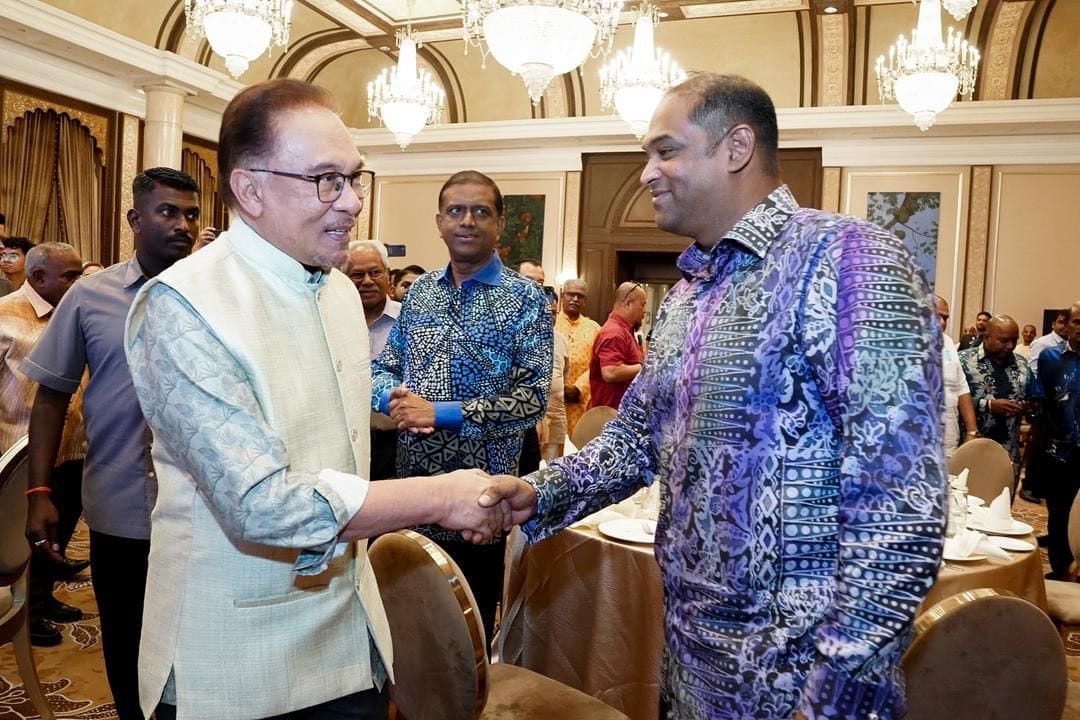
Image credit: Ramanan X
Ramanan is 45. Anwar is 78.
Ramanan is Indian. Anwar is Malay.
Ramanan only joined PKR in 2020, after the party had finished its fighting years and was entering its winning years. But despite these differences, the two have struck a “special relationship” in record time—one that has left many insiders and political watchers asking: what exactly is going on?
Their special relationship has also given Ramanan significant advantages.
From a newcomer to one of the party’s central figures, Ramanan’s trajectory has been extraordinary. By 2022, he was given the safe parliamentary seat of Sungai Buloh in GE15, despite fierce competition and concerns over his lack of political experience. Within a year, he became Deputy Minister of Entrepreneur Development and Cooperatives, and by 2025, he had risen to Vice President of PKR. By December 2025, he had been appointed a full minister in Anwar’s cabinet—a progression that many long-time party members found astonishing.
The question on everyone’s mind is: how did Ramanan rise so quickly?
Datuk Seri Rafizi Ramli, PKR’s former deputy president, recently offered a rare glimpse behind the scenes, revealing what he describes as a “special bond” between Ramanan and Anwar.
According to Rafizi, in the final days before GE15 candidate announcements, the Sungai Buloh seat was the only one without an agreement between him and Anwar. Rafizi had firmly supported Sivarasa Rasiah, the incumbent at the time, arguing that Sivarasa was stronger on all fronts. He also noted that Ramanan had refused to declare his assets—a basic requirement for candidates—while other contenders had complied.
Yet, Anwar reportedly “held my knee and pleaded” to allow Ramanan to contest. Rafizi recalls the moment vividly: “I told him he has the final say, and there was no need to plead. Anwar responded, ‘I don’t want you to make a fuss later.’” Even then, Rafizi secured what he thought was a firm “gentleman’s agreement”: Ramanan would not rise further in the party or be appointed to government positions beyond a certain point.
Those promises, however, did not hold. By the end of 2023, Ramanan was appointed deputy minister, and by December 2025, he was promoted to full minister. Rafizi commented on the shift: “I knew then there was a special relationship between Anwar and Ramanan to the point where the PM was willing to break his own promise—a promise I witnessed.”
The rapid rise of Ramanan has not been without controversy. Some within PKR argue that it illustrates the outsized influence of personal relationships over merit and seniority. Critics contend that Ramanan’s climb reflects not only political skill but also the power of proximity to leadership—where loyalty and personal trust appear to outweigh experience, track record, and formal party hierarchies.
Questions have emerged over why Ramanan has been so favored by Anwar, despite having joined PKR only in 2020 and not having had the time to demonstrate a substantial political or administrative record. Observers note that his swift ascent—from a newcomer to a minister in just five years—has happened at the expense of more seasoned party members with longer histories of service and proven performance.
Political analysts point out that Ramanan’s rise is emblematic of a broader trend in Malaysian politics, where personal bonds with party leaders often shape career trajectories. While formal party rules and internal elections exist, it is often the informal agreements, endorsements, and behind-the-scenes influence that determine who climbs the ladder—and how fast. For many, the question remains: what exactly explains Ramanan’s exceptional favoritism, and what does it signal for internal party dynamics?
More fundamentally, questions are now being asked about what exactly cements the so-called “special relationship” between Anwar and Ramanan. Observers note that there appears to be little on the surface that explains the depth and speed of their political closeness—no shared political history over the reformasi struggle, no long-standing personal bond, no comparable ideological trajectory, no age proximity, and no clear overlap in political mentorship or shared organisational struggle within PKR’s earlier years.
In the absence of such visible anchors—whether ideological alignment built over decades, shared political hardship, or even long-term working proximity—speculation has inevitably filled the vacuum. Among segments of the public and political circles, more uneasy narratives have begun circulating, with some suggesting that the strength of this political alignment may be tied to considerations that go beyond conventional party loyalty or merit-based advancement. These remain allegations and perceptions rather than established facts, but they have nevertheless gained traction in the absence of a clear explanation for the unusually rapid rise.
Adding to the scrutiny is the fact that Ramanan has already faced separate public allegations linked to claims of involvement in what has been described as a wider “corporate mafia” controversy. In reports published earlier this year, he was named in connection with accusations involving an alleged multi-million-ringgit arrangement. Ramanan has firmly denied these claims and has challenged those making the allegations to provide evidence and clarify references to an unnamed “Mr R” said to be involved in the matter.
Still, in the court of public perception, such controversies inevitably feed into broader questions about influence and access. Critics argue that when rapid political ascents coincide with unresolved allegations and opaque political relationships, it creates a climate where suspicions naturally intensify—fairly or unfairly.
Against this backdrop, political analysts caution that Ramanan’s rise has become more than just a question of internal party promotion. It has evolved into a broader discussion about transparency, accountability, and how political trust is formed at the highest levels of government. While formal party structures and elections exist, it is often informal networks and personal judgments that ultimately determine who rises—and how quickly.
For many observers, the central question remains unresolved: what exactly explains the extraordinary favour extended to Ramanan, and why has it developed with such speed in the absence of a publicly articulated basis grounded in shared political history or demonstrable long-term association?
As Rafizi bluntly put it in his remarks following the internal PKR tensions and the Johor PKR Convention, where a heated exchange involving party leaders had already drawn public attention: “If I had shared this before the PKR Johor Convention, people wouldn’t have believed it. Now, I hope the public can judge for themselves that DS Anwar is already tied down by people like Ramanan.”
From a political outsider in 2020 to a full minister five years later, Ramanan’s story is a striking illustration of how personal alliances, strategic positioning, and trust can turbocharge a political career. Whether this alliance will withstand scrutiny or influence PKR’s future leadership dynamics remains to be seen. But for now, Ramanan’s meteoric rise is a cautionary tale and a testament to the enduring influence of personal relationships in Malaysian politics.
Ramanan is 45. Anwar is 78.
Ramanan is Indian. Anwar is Malay.
Ramanan only joined PKR in 2020, after the party had finished its fighting years and was entering its winning years. But despite these differences, the two have struck a “special relationship” in record time—one that has left many insiders and political watchers asking: what exactly is going on?
Their special relationship has also given Ramanan significant advantages.
From a newcomer to one of the party’s central figures, Ramanan’s trajectory has been extraordinary. By 2022, he was given the safe parliamentary seat of Sungai Buloh in GE15, despite fierce competition and concerns over his lack of political experience. Within a year, he became Deputy Minister of Entrepreneur Development and Cooperatives, and by 2025, he had risen to Vice President of PKR. By December 2025, he had been appointed a full minister in Anwar’s cabinet—a progression that many long-time party members found astonishing.
The question on everyone’s mind is: how did Ramanan rise so quickly?
Datuk Seri Rafizi Ramli, PKR’s former deputy president, recently offered a rare glimpse behind the scenes, revealing what he describes as a “special bond” between Ramanan and Anwar.
According to Rafizi, in the final days before GE15 candidate announcements, the Sungai Buloh seat was the only one without an agreement between him and Anwar. Rafizi had firmly supported Sivarasa Rasiah, the incumbent at the time, arguing that Sivarasa was stronger on all fronts. He also noted that Ramanan had refused to declare his assets—a basic requirement for candidates—while other contenders had complied.
Yet, Anwar reportedly “held my knee and pleaded” to allow Ramanan to contest. Rafizi recalls the moment vividly: “I told him he has the final say, and there was no need to plead. Anwar responded, ‘I don’t want you to make a fuss later.’” Even then, Rafizi secured what he thought was a firm “gentleman’s agreement”: Ramanan would not rise further in the party or be appointed to government positions beyond a certain point.
Those promises, however, did not hold. By the end of 2023, Ramanan was appointed deputy minister, and by December 2025, he was promoted to full minister. Rafizi commented on the shift: “I knew then there was a special relationship between Anwar and Ramanan to the point where the PM was willing to break his own promise—a promise I witnessed.”
The rapid rise of Ramanan has not been without controversy. Some within PKR argue that it illustrates the outsized influence of personal relationships over merit and seniority. Critics contend that Ramanan’s climb reflects not only political skill but also the power of proximity to leadership—where loyalty and personal trust appear to outweigh experience, track record, and formal party hierarchies.
Questions have emerged over why Ramanan has been so favored by Anwar, despite having joined PKR only in 2020 and not having had the time to demonstrate a substantial political or administrative record. Observers note that his swift ascent—from a newcomer to a minister in just five years—has happened at the expense of more seasoned party members with longer histories of service and proven performance.
Political analysts point out that Ramanan’s rise is emblematic of a broader trend in Malaysian politics, where personal bonds with party leaders often shape career trajectories. While formal party rules and internal elections exist, it is often the informal agreements, endorsements, and behind-the-scenes influence that determine who climbs the ladder—and how fast. For many, the question remains: what exactly explains Ramanan’s exceptional favoritism, and what does it signal for internal party dynamics?
More fundamentally, questions are now being asked about what exactly cements the so-called “special relationship” between Anwar and Ramanan. Observers note that there appears to be little on the surface that explains the depth and speed of their political closeness—no shared political history over the reformasi struggle, no long-standing personal bond, no comparable ideological trajectory, no age proximity, and no clear overlap in political mentorship or shared organisational struggle within PKR’s earlier years.
In the absence of such visible anchors—whether ideological alignment built over decades, shared political hardship, or even long-term working proximity—speculation has inevitably filled the vacuum. Among segments of the public and political circles, more uneasy narratives have begun circulating, with some suggesting that the strength of this political alignment may be tied to considerations that go beyond conventional party loyalty or merit-based advancement. These remain allegations and perceptions rather than established facts, but they have nevertheless gained traction in the absence of a clear explanation for the unusually rapid rise.
Adding to the scrutiny is the fact that Ramanan has already faced separate public allegations linked to claims of involvement in what has been described as a wider “corporate mafia” controversy. In reports published earlier this year, he was named in connection with accusations involving an alleged multi-million-ringgit arrangement. Ramanan has firmly denied these claims and has challenged those making the allegations to provide evidence and clarify references to an unnamed “Mr R” said to be involved in the matter.
Still, in the court of public perception, such controversies inevitably feed into broader questions about influence and access. Critics argue that when rapid political ascents coincide with unresolved allegations and opaque political relationships, it creates a climate where suspicions naturally intensify—fairly or unfairly.
Against this backdrop, political analysts caution that Ramanan’s rise has become more than just a question of internal party promotion. It has evolved into a broader discussion about transparency, accountability, and how political trust is formed at the highest levels of government. While formal party structures and elections exist, it is often informal networks and personal judgments that ultimately determine who rises—and how quickly.
For many observers, the central question remains unresolved: what exactly explains the extraordinary favour extended to Ramanan, and why has it developed with such speed in the absence of a publicly articulated basis grounded in shared political history or demonstrable long-term association?
As Rafizi bluntly put it in his remarks following the internal PKR tensions and the Johor PKR Convention, where a heated exchange involving party leaders had already drawn public attention: “If I had shared this before the PKR Johor Convention, people wouldn’t have believed it. Now, I hope the public can judge for themselves that DS Anwar is already tied down by people like Ramanan.”
From a political outsider in 2020 to a full minister five years later, Ramanan’s story is a striking illustration of how personal alliances, strategic positioning, and trust can turbocharge a political career. Whether this alliance will withstand scrutiny or influence PKR’s future leadership dynamics remains to be seen. But for now, Ramanan’s meteoric rise is a cautionary tale and a testament to the enduring influence of personal relationships in Malaysian politics.


No comments:
Post a Comment