
Malaysia's #1 Content Aggregator
OPINION | Zahid The Next Prime Minister? Prof. Tajuddin Rasdi’s Bold GE16 Forecast That Could Reshape Malaysia
12 Apr 2026 • 9:00 AM MYT

Kpost
Operation Consultant who is a keen observer of politics and current affairs
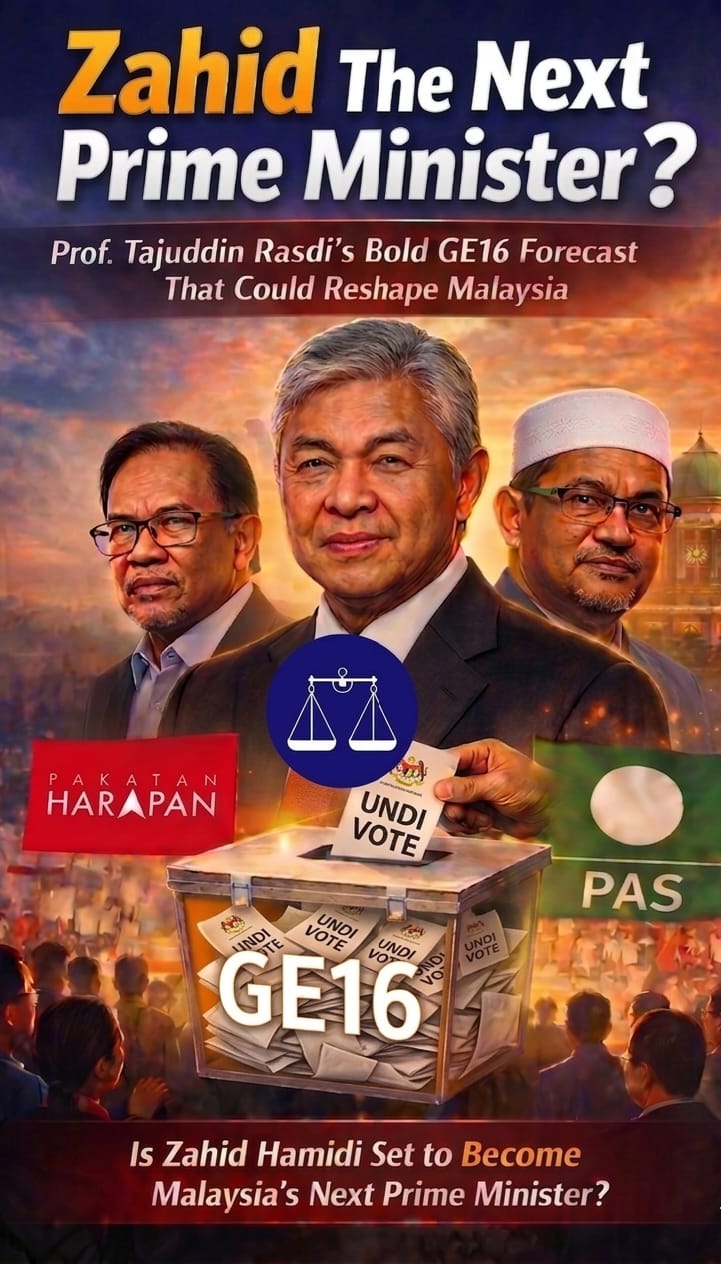
Photo Credit: Concept by Chatgpt, Edited by GeminiAi
As Malaysia inches closer to its 16th General Election (GE16), political forecasts are beginning to crystallise into stark possibilities. Among the most provocative comes from Prof.Tajuddin Rasdi, who predicts a future many may resist but cannot ignore: Ahmad Zahid Hamidi as Malaysia’s next prime minister.
According to Tajuddin, the contest for Putrajaya is narrowing to just three viable contenders - Anwar Ibrahim, Zahid, and Ahmad Samsuri Mokhtar. Notably absent are figures like Hamzah Zainudin and Muhyiddin Yassin, both sidelined by internal party fractures and shifting alliances.
A Numbers Game Tilted Toward UMNO?
Tajuddin’s argument hinges on a simple but powerful factor: voter turnout. Should a significant segment of Malaysians abstain from voting - whether out of frustration or apathy - the balance could tip decisively in favour of Barisan Nasional (BN). In such a scenario, Zahid becomes the natural choice, particularly if BN maintains cooperation with Pakatan Harapan (PH).
Even more striking is the suggestion that Zahid’s path to power remains intact regardless of political permutations. Whether UMNO aligns with PH or rekindles ties with PAS, Zahid is seen as the most acceptable compromise candidate across coalitions. His positioning within UMNO and broader Malay politics gives him leverage that few others can match.
Pakatan Harapan’s Fragile Grip
Despite currently holding a dominant bloc in Parliament, PH’s future is far from secure. Tajuddin points to growing public sentiment suggesting potential losses for PKR and Amanah, while DAP may retain seats but with reduced majorities. Such an outcome would weaken PH’s negotiating power and open the door for UMNO’s resurgence.
Ironically, internal fractures within Perikatan Nasional (PN) - especially tensions involving Bersatu - could accelerate UMNO’s revival. Disgruntled factions and shifting loyalties may redirect support back to UMNO, strengthening Zahid’s claim to leadership.
PAS Factor: Kingmaker or Bystander?
PAS remains a formidable force, but its limitations are equally clear. While it performed strongly in GE15, its appeal among non-Malay voters remains minimal. Even if PAS pushes for Samsuri as prime minister, resistance from East Malaysian blocs such as Gabungan Parti Sarawak (GPS) and Gabungan Rakyat Sabah (GRS) could derail such ambitions.
This leaves Zahid as the more palatable option: even in a hypothetical UMNO-PAS alliance. PAS may settle for influence rather than outright leadership.
Can Anwar Defy the Odds?
For Anwar, the path to a second term is not entirely closed. Malaysia’s relatively stable economic performance and the government’s cautious handling of sensitive issues - such as vernacular education - could work in his favour, particularly among non-Malay voters.
However, Tajuddin suggests that these strengths may not be enough. Political fatigue, internal dissent, and the unpredictability of voter turnout could undermine PH’s chances.
The Silent Decider: Voter Apathy
Perhaps the most critical takeaway from this prediction is the role of the electorate.
Tajuddin warns that those who choose not to vote may inadvertently shape the nation’s future more than those who do. In a tightly contested election, silence at the ballot box could translate into a decisive victory for one camp.
A Future Malaysians Must Confront?
Love him or loathe him, Zahid’s inevitability is being framed not just as a political posibility but a statistical probability. Tajuddin’s message is an eye opener: Malaysians should prepare for this outcome - not necessarily because it is desired, but because current dynamics make it increasingly plausible.
As GE16 approaches, the question is no longer just who will win, but whether Malaysians are willing to accept the consequences of their participation - or lack thereof. Therefore, voters should fulfil their duty by casting their ballots to ensure fairer electoral outcomes and to elect parties and leaders that reflect the will of the majority.
By: Kpost
As Malaysia inches closer to its 16th General Election (GE16), political forecasts are beginning to crystallise into stark possibilities. Among the most provocative comes from Prof.Tajuddin Rasdi, who predicts a future many may resist but cannot ignore: Ahmad Zahid Hamidi as Malaysia’s next prime minister.
According to Tajuddin, the contest for Putrajaya is narrowing to just three viable contenders - Anwar Ibrahim, Zahid, and Ahmad Samsuri Mokhtar. Notably absent are figures like Hamzah Zainudin and Muhyiddin Yassin, both sidelined by internal party fractures and shifting alliances.
A Numbers Game Tilted Toward UMNO?
Tajuddin’s argument hinges on a simple but powerful factor: voter turnout. Should a significant segment of Malaysians abstain from voting - whether out of frustration or apathy - the balance could tip decisively in favour of Barisan Nasional (BN). In such a scenario, Zahid becomes the natural choice, particularly if BN maintains cooperation with Pakatan Harapan (PH).
Even more striking is the suggestion that Zahid’s path to power remains intact regardless of political permutations. Whether UMNO aligns with PH or rekindles ties with PAS, Zahid is seen as the most acceptable compromise candidate across coalitions. His positioning within UMNO and broader Malay politics gives him leverage that few others can match.
Pakatan Harapan’s Fragile Grip
Despite currently holding a dominant bloc in Parliament, PH’s future is far from secure. Tajuddin points to growing public sentiment suggesting potential losses for PKR and Amanah, while DAP may retain seats but with reduced majorities. Such an outcome would weaken PH’s negotiating power and open the door for UMNO’s resurgence.
Ironically, internal fractures within Perikatan Nasional (PN) - especially tensions involving Bersatu - could accelerate UMNO’s revival. Disgruntled factions and shifting loyalties may redirect support back to UMNO, strengthening Zahid’s claim to leadership.
PAS Factor: Kingmaker or Bystander?
PAS remains a formidable force, but its limitations are equally clear. While it performed strongly in GE15, its appeal among non-Malay voters remains minimal. Even if PAS pushes for Samsuri as prime minister, resistance from East Malaysian blocs such as Gabungan Parti Sarawak (GPS) and Gabungan Rakyat Sabah (GRS) could derail such ambitions.
This leaves Zahid as the more palatable option: even in a hypothetical UMNO-PAS alliance. PAS may settle for influence rather than outright leadership.
Can Anwar Defy the Odds?
For Anwar, the path to a second term is not entirely closed. Malaysia’s relatively stable economic performance and the government’s cautious handling of sensitive issues - such as vernacular education - could work in his favour, particularly among non-Malay voters.
However, Tajuddin suggests that these strengths may not be enough. Political fatigue, internal dissent, and the unpredictability of voter turnout could undermine PH’s chances.
The Silent Decider: Voter Apathy
Perhaps the most critical takeaway from this prediction is the role of the electorate.
Tajuddin warns that those who choose not to vote may inadvertently shape the nation’s future more than those who do. In a tightly contested election, silence at the ballot box could translate into a decisive victory for one camp.
A Future Malaysians Must Confront?
Love him or loathe him, Zahid’s inevitability is being framed not just as a political posibility but a statistical probability. Tajuddin’s message is an eye opener: Malaysians should prepare for this outcome - not necessarily because it is desired, but because current dynamics make it increasingly plausible.
As GE16 approaches, the question is no longer just who will win, but whether Malaysians are willing to accept the consequences of their participation - or lack thereof. Therefore, voters should fulfil their duty by casting their ballots to ensure fairer electoral outcomes and to elect parties and leaders that reflect the will of the majority.
By: Kpost


I vote for mahjong on GE16 day.
ReplyDeleteMadani does not value our support nor values our key concerns.