
OPINION | Anwar’s Time Might Be Up: It’s Time to Ask—Who’s Next?
12 Apr 2026 • 7:30 AM MYT

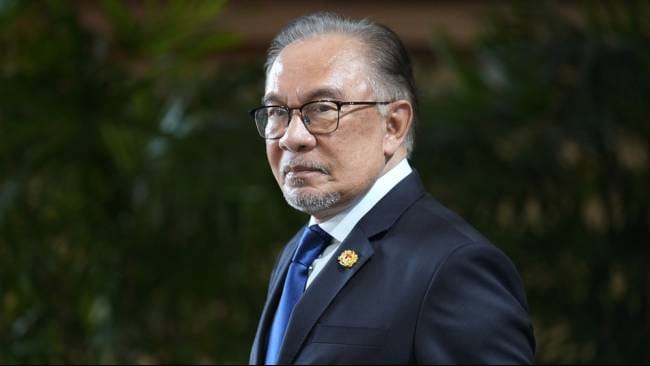
Image credit: Kompas
At his core, Anwar is seen as an old-regime politician. Not in age alone, but in instinct. He governs, like many before him, on the implicit promise of “trust me, I will take care of everything.” This governing philosophy stretches back through Tunku Abdul Rahman, Abdul Razak Hussein, Hussein Onn, and culminates most forcefully in Mahathir Mohamad.
The difference, however, is this: those leaders, for all their faults, largely delivered. They did not demand excessive trust—they simply took care of things. When they could no longer do so, they stepped aside.
The post-Mahathir era has been far less flattering. Leaders have demanded more trust while delivering less, often appearing weak, corrupt, or self-serving. Worse still, many clung to power long after losing both legitimacy and effectiveness.
Anwar once promised to break from this mould. When he split from Mahathir in the late 1990s, he positioned himself as the architect of a new Malaysia—one governed by institutions, accountability, and ethical standards, not personality and patronage.
But three years into his premiership, that promise rings hollow.
Instead of institutional governance, Anwar has reverted to the very model he once opposed: “trust me, I know best, I will take care of everything.” The irony is not lost on the rakyat.
Today, public sentiment toward Anwar can be broadly divided into two camps.
The first sees him as a political chameleon—someone who promised reform but defaulted to old habits. To them, he is a disappointment at best, a betrayer at worst. This group is politically engaged, vocal, and actively seeks his removal.
The second group is more passive, more pragmatic. They do not necessarily admire Anwar, nor do they fully trust him. But they are willing to tolerate him—as long as life functions. As long as salaries are paid, groceries are affordable, bills manageable, and some semblance of stability remains, they see no urgent need to rock the boat.
This second group is the true pillar of Anwar’s survival.
They are not loyalists; they are conditional participants in a social contract. They see Anwar as a “big man”—someone who holds power, can dispense favour, and maintain order. Their support is not ideological; it is transactional.
And that is precisely why an economic crisis is fatal.
The moment the economy falters—when jobs are lost, prices surge, and daily life becomes a struggle—this second group will not hesitate to reassess. The “big man” who once seemed capable will suddenly appear weak, ineffective, even burdensome.
Once that psychological shift happens, the first group will have little difficulty persuading the second that change is necessary.
That is when Anwar’s position becomes untenable.
His recent statement that he has no intention of calling for elections in the next one or two months is telling. Leaders do not make such declarations unless the question is already in the air. The mere need to deny it suggests that speculation is growing—and more importantly, that confidence is eroding.
Anwar may believe he still commands a comfortable parliamentary majority, and therefore controls the timing of any election. But Malaysian politics has rarely been so predictable. If ground sentiment turns decisively against him, Members of Parliament will sense it. And when they do, loyalty can evaporate overnight.
A withdrawal of support from enough MPs would force an election—whether Anwar wants one or not.
And if that election comes amid economic hardship, Anwar will not just struggle—he may not survive politically.
Even before any economic crisis fully bites, his government is already juggling multiple fault lines: internal tensions within PKR involving Rafizi Ramli, uneasy relations with coalition partners, questions over Sabah and Sarawak’s fiscal rights, and a restless electorate across ethnic lines. Meanwhile, the opposition, particularly Muhyiddin Yassin’s camp, is showing signs of renewed energy.
Any one of these issues is manageable. Two or three, perhaps. But taken together—against the backdrop of an economic crisis—they form a storm that no “trust me” leader can weather.
And that brings us to the uncomfortable question: if Anwar falls, who replaces him?
If the metric remains the same—another all-knowing, paternalistic figure promising to “take care of everything”—then there is arguably no one better than Anwar himself. But that is precisely the problem. That model of leadership may no longer be viable in today’s conditions.
In an era where crises are systemic and global, no single leader—no matter how skilled—can plausibly claim to have all the answers.
What Malaysia may need instead is a different kind of leadership altogether—one that recognises the limitations of the old “trust me, I will take care of everything” model and adapts to the realities of a more fragmented, economically stressed, and politically restless society. The country is no longer a monolith where one powerful figure can impose order simply by fiat; crises today are systemic, complex, and often transnational. A new kind of leader would approach governance not as a performance of control, but as a practice of coordination, resilience, and responsiveness.
Perhaps that leader comes from East Malaysia—Sabah or Sarawak. These states have long felt sidelined, their wealth and resources extracted while their political concerns are often treated as peripheral. A leader from East Malaysia would bring both symbolic and practical benefits. Symbolically, it signals a more inclusive federation, recognising that national unity cannot be taken for granted. Practically, such a leader might be better equipped to mediate between the federal government and the regional states, ensuring that Sabah and Sarawak remain committed to the federation in times of difficulty. In a period where even the perception of unfair treatment can trigger legal battles or secessionist sentiment, having someone who intimately understands the region’s history, politics, and economic needs could stabilise the country in ways that a “big man” from Peninsular Malaysia may not.
Another possibility lies with the younger generation of leaders—figures like Rafizi Ramli, Khairy Jamaluddin, or Nurul Izzah Anwar. These leaders are less wedded to the paternalistic, top-down archetype that has dominated Malaysian politics for decades. They think in terms of systems and institutions, rather than personal loyalty or patronage. They understand that leadership today is less about being seen as omnipotent and more about being accountable, collaborative, and innovative. Young leaders are also likely to be more attuned to the aspirations of a new Malaysia: an electorate that is socially connected, politically aware, and less willing to defer blindly to authority. By moving away from the old “big man” template, they could begin to rebuild trust not through promises of control, but through competence, transparency, and tangible results.
A third alternative might be a leader with a redistribution-focused, quasi-socialist outlook. In times of economic contraction, it is not enough to promise growth when growth is hard to come by; the more pressing issue becomes managing scarcity and ensuring that what wealth exists is shared in ways that prevent societal collapse. Such a leader would focus less on capital accumulation for the few and more on equitable access, social safety nets, and economic resilience for the majority. Malaysia’s social contract has long relied on ethnic, regional, and class balances; a redistribution-minded approach might offer a pragmatic way to stabilize society, prevent unrest, and maintain cohesion during a period when the economy cannot reliably generate wealth for everyone.
There is even an argument—however uncomfortable—for a more security-oriented leadership model, one that prioritises national resilience and preparedness in an increasingly unstable global environment.
As the economic crisis deepens and Anwar begins to lose his mandate, the political vacuum may create an opening for a new generation of leaders to emerge—figures who offer Malaysians an alternative to the long-standing, old-regime model of leadership. These are not the “trust me, I will take care of everything” types who have dominated the country for decades, promising omnipotence but delivering unevenly. Instead, these aspirants might be leaders who focus on competence over charisma, accountability over patronage, and practical solutions over grandiose assurances.
The point is not which model is correct, but that the old model is failing.
As the economic crisis deepens, and as the second group of voters begins to feel its full effects, Malaysia may find itself at an inflection point. The “trust me, I will take care of everything” era may finally run its course—not because of ideology, but because reality no longer permits it.
And when that happens, Anwar Ibrahim may not just lose an election.
He may become the last of a political species that no longer fits the world it is trying to govern.
At his core, Anwar is seen as an old-regime politician. Not in age alone, but in instinct. He governs, like many before him, on the implicit promise of “trust me, I will take care of everything.” This governing philosophy stretches back through Tunku Abdul Rahman, Abdul Razak Hussein, Hussein Onn, and culminates most forcefully in Mahathir Mohamad.
The difference, however, is this: those leaders, for all their faults, largely delivered. They did not demand excessive trust—they simply took care of things. When they could no longer do so, they stepped aside.
The post-Mahathir era has been far less flattering. Leaders have demanded more trust while delivering less, often appearing weak, corrupt, or self-serving. Worse still, many clung to power long after losing both legitimacy and effectiveness.
Anwar once promised to break from this mould. When he split from Mahathir in the late 1990s, he positioned himself as the architect of a new Malaysia—one governed by institutions, accountability, and ethical standards, not personality and patronage.
But three years into his premiership, that promise rings hollow.
Instead of institutional governance, Anwar has reverted to the very model he once opposed: “trust me, I know best, I will take care of everything.” The irony is not lost on the rakyat.
Today, public sentiment toward Anwar can be broadly divided into two camps.
The first sees him as a political chameleon—someone who promised reform but defaulted to old habits. To them, he is a disappointment at best, a betrayer at worst. This group is politically engaged, vocal, and actively seeks his removal.
The second group is more passive, more pragmatic. They do not necessarily admire Anwar, nor do they fully trust him. But they are willing to tolerate him—as long as life functions. As long as salaries are paid, groceries are affordable, bills manageable, and some semblance of stability remains, they see no urgent need to rock the boat.
This second group is the true pillar of Anwar’s survival.
They are not loyalists; they are conditional participants in a social contract. They see Anwar as a “big man”—someone who holds power, can dispense favour, and maintain order. Their support is not ideological; it is transactional.
And that is precisely why an economic crisis is fatal.
The moment the economy falters—when jobs are lost, prices surge, and daily life becomes a struggle—this second group will not hesitate to reassess. The “big man” who once seemed capable will suddenly appear weak, ineffective, even burdensome.
Once that psychological shift happens, the first group will have little difficulty persuading the second that change is necessary.
That is when Anwar’s position becomes untenable.
His recent statement that he has no intention of calling for elections in the next one or two months is telling. Leaders do not make such declarations unless the question is already in the air. The mere need to deny it suggests that speculation is growing—and more importantly, that confidence is eroding.
Anwar may believe he still commands a comfortable parliamentary majority, and therefore controls the timing of any election. But Malaysian politics has rarely been so predictable. If ground sentiment turns decisively against him, Members of Parliament will sense it. And when they do, loyalty can evaporate overnight.
A withdrawal of support from enough MPs would force an election—whether Anwar wants one or not.
And if that election comes amid economic hardship, Anwar will not just struggle—he may not survive politically.
Even before any economic crisis fully bites, his government is already juggling multiple fault lines: internal tensions within PKR involving Rafizi Ramli, uneasy relations with coalition partners, questions over Sabah and Sarawak’s fiscal rights, and a restless electorate across ethnic lines. Meanwhile, the opposition, particularly Muhyiddin Yassin’s camp, is showing signs of renewed energy.
Any one of these issues is manageable. Two or three, perhaps. But taken together—against the backdrop of an economic crisis—they form a storm that no “trust me” leader can weather.
And that brings us to the uncomfortable question: if Anwar falls, who replaces him?
If the metric remains the same—another all-knowing, paternalistic figure promising to “take care of everything”—then there is arguably no one better than Anwar himself. But that is precisely the problem. That model of leadership may no longer be viable in today’s conditions.
In an era where crises are systemic and global, no single leader—no matter how skilled—can plausibly claim to have all the answers.
What Malaysia may need instead is a different kind of leadership altogether—one that recognises the limitations of the old “trust me, I will take care of everything” model and adapts to the realities of a more fragmented, economically stressed, and politically restless society. The country is no longer a monolith where one powerful figure can impose order simply by fiat; crises today are systemic, complex, and often transnational. A new kind of leader would approach governance not as a performance of control, but as a practice of coordination, resilience, and responsiveness.
Perhaps that leader comes from East Malaysia—Sabah or Sarawak. These states have long felt sidelined, their wealth and resources extracted while their political concerns are often treated as peripheral. A leader from East Malaysia would bring both symbolic and practical benefits. Symbolically, it signals a more inclusive federation, recognising that national unity cannot be taken for granted. Practically, such a leader might be better equipped to mediate between the federal government and the regional states, ensuring that Sabah and Sarawak remain committed to the federation in times of difficulty. In a period where even the perception of unfair treatment can trigger legal battles or secessionist sentiment, having someone who intimately understands the region’s history, politics, and economic needs could stabilise the country in ways that a “big man” from Peninsular Malaysia may not.
Another possibility lies with the younger generation of leaders—figures like Rafizi Ramli, Khairy Jamaluddin, or Nurul Izzah Anwar. These leaders are less wedded to the paternalistic, top-down archetype that has dominated Malaysian politics for decades. They think in terms of systems and institutions, rather than personal loyalty or patronage. They understand that leadership today is less about being seen as omnipotent and more about being accountable, collaborative, and innovative. Young leaders are also likely to be more attuned to the aspirations of a new Malaysia: an electorate that is socially connected, politically aware, and less willing to defer blindly to authority. By moving away from the old “big man” template, they could begin to rebuild trust not through promises of control, but through competence, transparency, and tangible results.
A third alternative might be a leader with a redistribution-focused, quasi-socialist outlook. In times of economic contraction, it is not enough to promise growth when growth is hard to come by; the more pressing issue becomes managing scarcity and ensuring that what wealth exists is shared in ways that prevent societal collapse. Such a leader would focus less on capital accumulation for the few and more on equitable access, social safety nets, and economic resilience for the majority. Malaysia’s social contract has long relied on ethnic, regional, and class balances; a redistribution-minded approach might offer a pragmatic way to stabilize society, prevent unrest, and maintain cohesion during a period when the economy cannot reliably generate wealth for everyone.
There is even an argument—however uncomfortable—for a more security-oriented leadership model, one that prioritises national resilience and preparedness in an increasingly unstable global environment.
As the economic crisis deepens and Anwar begins to lose his mandate, the political vacuum may create an opening for a new generation of leaders to emerge—figures who offer Malaysians an alternative to the long-standing, old-regime model of leadership. These are not the “trust me, I will take care of everything” types who have dominated the country for decades, promising omnipotence but delivering unevenly. Instead, these aspirants might be leaders who focus on competence over charisma, accountability over patronage, and practical solutions over grandiose assurances.
The point is not which model is correct, but that the old model is failing.
As the economic crisis deepens, and as the second group of voters begins to feel its full effects, Malaysia may find itself at an inflection point. The “trust me, I will take care of everything” era may finally run its course—not because of ideology, but because reality no longer permits it.
And when that happens, Anwar Ibrahim may not just lose an election.
He may become the last of a political species that no longer fits the world it is trying to govern.


Revisiting this while chitchating with a fellow tour group on the subject of claims and narrative...kind a missed this particular teastorm.
ReplyDeletehttps://focusmalaysia.my/race-supremacy-narrative-gains-momentum-as-academics-claim-60k-y-o-malay-dna-precedes-indian-chinese/
...
I can only surmise two possible reasons for this. One, it is to alert the public that such narratives are being used to further certain agendas, especially in the current overheated climate surrounding communal relations in Malaysia.
Secondly, could these stories be re-surfacing as a diversionary tactic? Outlandish and sometimes ridiculous statements are usually brought to surface when public attention need diverting from more pressing matters on say, corruption or abuse of power.
It may be conjecture but it is worth thinking why a story from 2011 is getting traction 15 years later. – April 5, 2026
A Genetically Inferior Citizen
Ampang, Kuala Lumpur
...