Hezbollah Drone Strikes Continue to Take Heavy Toll on Israeli Armour
Middle East , Ground

The Lebanese paramilitary group Hezbollah has increased its drone strikes on Israeli Army armoured units using First Person View (FPV) drones, mirroring similar technological trends seen in the Ukrainian theatre, as part of a broader war effort to repel Israel’s invasion of Southern Lebanon. There are indications that Hezbollah has learned from Russian and Ukrainian experience in utilising fiber-optic guided drones to evade Israeli electronic interference, fuelling speculation that a sharing of experience between Hezbollah and Russian forces may have taken place. The paramilitary group operated closely alongside Russian forces in the 2010s as part of joint counterinsurgency operations in Syria, although the extent of defence ties outside the campaign or since its conclusion remain unknown.

Hezbollah has continued to release multiple videos showing FPV drones being used to attack Merkava IV main battle tanks, D9 Caterpillar armoured bulldozers, and Namer heavy infantry fighting vehicles. The Israel Defense Forces have not acknowledged the incidents, but on March 26 mentioned that several soldiers from the 7th Brigade were wounded, one of whom was killed. Fighting between Hezbollah and Israel is widely reported to be by far the most intensive in the history of the two parties’ decades long conflict. Hezbollah reported on the results of multiple ambushes launched against Israeli forces in southern Lebanon, with 21 Israeli Merkava main battle tanks reported on March 26 to have been destroyed within a 24 hour period.
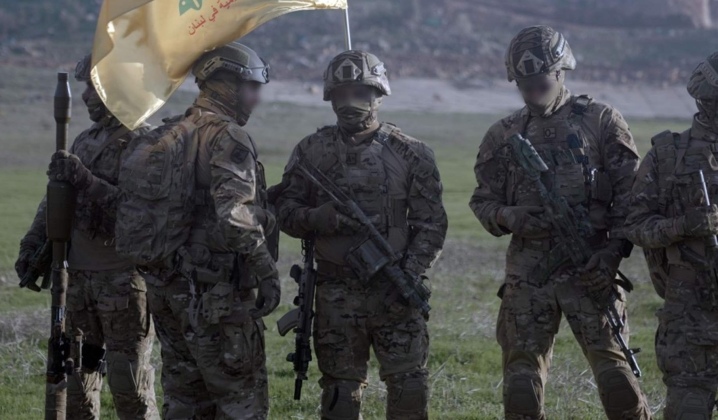
Israeli sources have widely indicated that recent ground force losses have been unprecedented since at least the 1980s, when they faced the Syrian Arab Army and local paramilitary groups in Lebanon as part of a prior war effort. Israeli tanks are heavily optimised towards engagements with non-state actors, and in addition to integrating electronic warfare equipment designed to jam drone radio signals, several have also integrated the Trophy Active Protection System, which although originally designed to intercept anti-tank missiles and rocket launchers, has anti-drone capabilities in its latest iterations. While widespread use of radio- and fiber-optic controlled FPV drones has made mobile warfare exceptionally difficult for both sides in Ukraine, Hezbollah’s tactics merge guerrilla and conventional tactics, and are closely based on North Korean defensive tactics, resulting in relatively little reliance on armour. Hezbollah’s force structure instead relies on unmanned aviation and infantry with anti-tank capabilities, as well as a wide range of artillery, rocket artillery, and ballistic missile assets which are deployed in vast networks of underground fortifications.


Péter Magyar is not the anti-Orbán. He is running on a platform that is Orbán without the corruption.
ReplyDeleteAs Orban, Magyar opposes the EU migration pact. He voted against the loan to Ukraine. He wants strong borders and has no plans to reverse Hungary’s energy ties with Russia before 2035. On every substantive question that defines the European left-right divide, Magyar sits exactly where Orbán sits.
What he promises to change is governance, not ideology. Anti-corruption reforms, rule of law, meritocratic appointments, unlocking frozen EU funds. A voter who backed Orbán for border security and national sovereignty can vote for Magyar without abandoning a single conviction. The only thing that voter has to abandon is tolerance for theft.
Orbán did not lose the argument. He lost the trust.
ReplyDelete“When The Conflict Ends”…?
Starmer and Macron will co-host a summit to safeguard shipping through the Strait of Hormuz “when the conflict ends” 🤣🤣🤣🤣
https://x.com/drelidavid/status/2043634902952816900?s=46&t=8K6fzabO3g6uaj4KxwSSjg
BREAKING: China has called for unobstructed navigation through the Strait of Hormuz, a day after US President Donald Trump threatened to blockade it.
ReplyDeleteFM spokesman Guo Jiakun said keeping the strait secure and open is in the “common interest of the international community.”
But Very Aneh, just a few days ago….
The PRC (along with Russia) vetoed a UN Security Council draft resolution (sponsored by Bahrain and backed by Gulf states) aimed at safeguarding shipping through the Strait. Hypocrisy.
So When IRGC blockade it is OK but when 47 blockades it is not?
https://x.com/ajenews/status/2043597547562754437?s=46&t=8K6fzabO3g6uaj4KxwSSjg
Wakakaka… gullible gullie of fart!
DeleteMfer, if u read the Chinese version of the speech, u would have known what's yr mfering aneh directed at
Sumud 2 is turning out to be “Love Boat”……. Ha3
ReplyDeleteUpdate from the Gaza flotilla: activists are furious that a senior organising member of the Steering Committee is having sex with people on the boats
“To have sex on the boat - while heading to a nation undergoing genocide - is a clear violation of ethics and power”
Lmfao
https://x.com/drewpavlou/status/2043552999856070992?s=46&t=8K6fzabO3g6uaj4KxwSSjg
Very Aneh. The Green Party:
ReplyDelete>says they’ll ban horse racing because it’s “cruel to animals.”
Also the Green Party:
>so terrified of upsetting Muslim voters that they refuse to condemn SLITTING AN ANIMAL’S THROAT AND WATCHING IT BLEED TO DEATH IN EXCRUCIATING PAIN.
Hypocritical cretins.
https://x.com/samanthataghoy/status/2043086686616203750?s=46&t=8K6fzabO3g6uaj4KxwSSjg
https://x.com/i/status/2043593445189837175
ReplyDeleteThe earlier report by Sunday Guardian, which originated the claim of US seeking blanket military overflight access through Indonesian airspace, appears to be confirmed in this latest Reuters report citing the Indonesian MOD.
sundayguardianlive.com/world/us-seeks…
reuters.com/world/asia-pac…
This "Hezbollah is victorious" fairy tale didn't age well.
ReplyDelete