
The pig farm dilemma is a test of Malaysia’s diversity and tolerance — Ahmad Ibrahim
Sunday, 12 Apr 2026 10:05 AM MYT
APRIL 12 — A delicate issue has recently taken centre stage in multi-religious Malaysia, with social media flaring up with theories and concerns while experts in the field appear largely absent from the debate.
The controversy surrounding the proposed centralised pig farm is more than a zoning dispute. It reflects Malaysia’s broader challenges in balancing economic development with religious sensitivities, technological progress with governance realities, and centralised planning with community trust.
To dismiss objectors as merely NIMBYs or resistant to progress is to misunderstand the deeper layers of the issue. A closer examination of the matter is necessary.
On paper, the state government’s rationale appears sound. Consolidating smaller, often informally regulated farms into a single Integrated, Modern and Large-scale (IML) facility promises improved biosecurity, easier monitoring, better waste management through centralised systems, and a more competitive livestock sector.
However, public concern is not irrational. It is rooted in experience and trust deficits. The promise of available technology carries limited weight if environmental enforcement has historically been inconsistent.
A poorly managed mega-farm could become a source of serious environmental pollution and community disruption. For some non-Muslim communities, it also represents concerns over livelihoods, while for Muslim communities in the proposed area, the proximity of a large-scale pig farming operation raises cultural and religious sensitivities.
The issue, therefore, extends beyond technical planning into questions of trust, governance, and social acceptance.
A purely top-down approach risks deepening resentment, while outright cancellation could stall necessary agricultural modernisation. The way forward, therefore, lies in transparency and partnership.
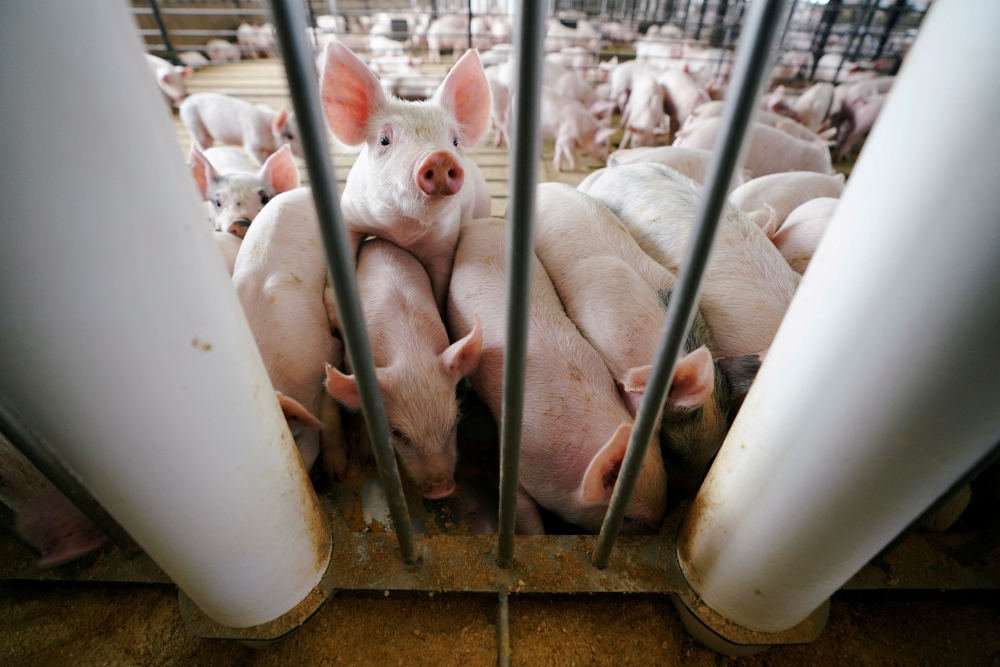
A poorly managed mega-farm could become a source of serious environmental pollution and community disruption. — Reuters file pic
First, site selection must be both scientifically and socially grounded, with careful consideration of environmental buffers and watershed impact. A multi-stakeholder committee involving environmental scientists, community representatives and agricultural experts is essential.
Second, operational plans must go beyond assurances and be translated into enforceable conditions, including closed-loop waste systems such as biogas digesters and advanced effluent treatment. Real-time environmental monitoring should be made publicly accessible.
Third, governance should be strengthened through an independent oversight body with statutory powers, comprising civil society actors, technical experts and relevant stakeholders to ensure compliance and accountability.
Finally, meaningful engagement must recognise religious sensitivities while also protecting the economic rights of affected communities, framing the issue within broader principles of social justice and national unity.
The controversy ultimately tests Malaysia’s ability to modernise while maintaining social cohesion. The objective should not be to “win” the debate, but to transform it into a model of inclusive and transparent policymaking.
Beyond the religious dimension, public understanding of pig farming science remains limited, highlighting the need for greater input from scientists to bridge information gaps and reduce misunderstanding.
*Professor Dato Dr Ahmad Ibrahim is affiliated with the Tan Sri Omar Centre for STI Policy Studies at UCSI University and is an Adjunct Professor at the Ungku Aziz Centre for Development Studies, Universiti Malaya.


No comments:
Post a Comment