
Iranian commander threatens shipping in Gulf and Red Sea if US naval blockade continues
Summary
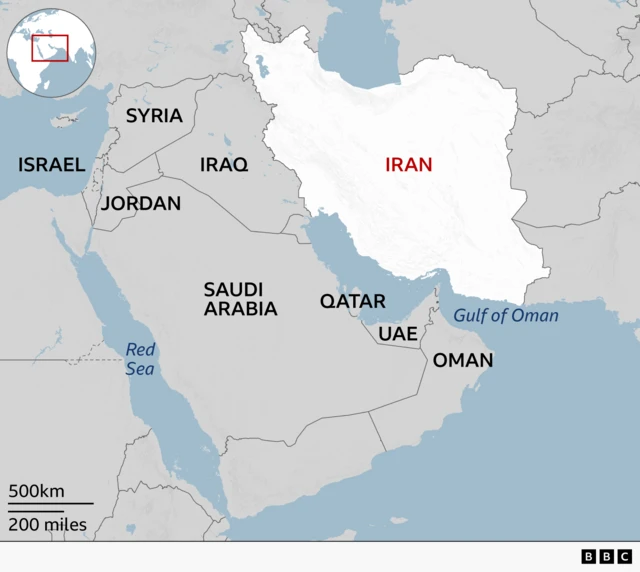
The Iranian military threatens shipping in the Gulf, the Red Sea, and the Gulf of Oman if the US naval blockade continues
The US blockade of Iranian ports began on Monday - the American military said on Wednesday that no vessels had made it through in the first 24 hours, with tracking data showing at least one ship forced to turn around
An Iranian commander says, if the blockade continues, Iran will not allow "any exports or imports to continue" in the three major waterways
Earlier, Donald Trump said US-Iran talks could restart in Pakistan "in the next two days" - but Iran is yet to comment
Meanwhile, Israel's attacks on Hezbollah targets in Lebanon continue, after it held talks with the Lebanese government in the US on Tuesday
Hezbollah has also launched around 30 strikes towards northern Israel, an Israeli official tells AFP
Iran threatens shipping in Gulf, Red Sea, and Gulf of Oman if US naval blockade continues
BreakingGhoncheh Habibiazad
Senior reporter, BBC PersianAli Abdollahi - the commander for Iran’s Khatam al-Anbiya Central Headquarters, the country’s highest operational command co-ordinating the armed forces - says that if the US continues its blockade and creates "insecurity for Iran’s commercial vessels and oil tankers", it will "constitute a prelude to a violation of the ceasefire".
Abdollahi adds that Iran’s armed forces would consequently not allow "any exports or imports to continue in the Persian Gulf, the Sea of Oman, and the Red Sea".
He did not specify which countries' exports and imports could be affected, although the bodies of water he mentions cover a vast area.
The US blockade of Iranian ports began on Monday. On Wednesday, the US military said "no ships made it past the blockade" in the first 24 hours, with six merchant vessels forced to turn around in the Gulf of Oman.
The US-Iran ceasefire, referenced by Abdollahi, was announced on 8 April after nearly six weeks of conflict between Iran and the US and Israel.
The first round of negotiations between Iran and the US failed - although Donald Trump says US-Iran talks could restart in the next two days. Iran is yet to confirm.
Gas prices will go down 'tremendously' once war is settled, says Trump
EPA/ShutterstockWe can now bring you some more lines from US President Donald Trump's interview with Maria Bartiromo on Fox Business Network, after a snippet was released earlier.
In the full interview, Trump says that if you give Iran a nuclear weapon, "the world will be blown up".
He adds that once the war with Iran has been settled, gas prices will go down "tremendously", adding that electricity prices will decrease too.
Trump describes the Iran nuclear deal, signed in 2015, as the "worst deal ever made" - and says it gave the country a "short term path" to a nuclear weapon.
He adds that if the US did not bomb Iran's nuclear facilities last year, the country would have used a nuclear weapon on Israel and its Middle East neighbours, as well as the US.
Iran has always said that its nuclear programme is entirely peaceful and that it has never sought to develop a nuclear weapon.
Trump says that after he heard reports that China was giving weapons to Iran, he wrote a letter to President Xi asking him not to.
Xi wrote Trump a letter back, "essentially" saying China isn't doing that, Trump adds.
Customers will pay for rising air freight costs, trade body says
Jemma Crew
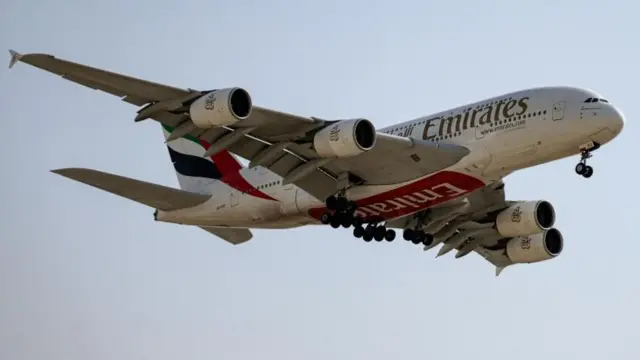
Business reporterEPABrandon Fried, executive director of the Airforwarders Association - the trade body that represents hundreds of US freight forwarding companies – says disruption to cargo is "broad and on a wide scale".
Middle East carriers such as Emirates, Etihad and Qatar normally carry up to a fifth of the world’s cargo but are operating under capacity, causing congestion and delays, he tells BBC Radio 4’s Today Programme.
This is "starting to have a worldwide effect", he says, adding the rising cost of jet fuel, rerouting cargo, risk insurance and extra security measures are all significantly adding to the issue.
He says it varies but some air freight rates have risen by 20-30% in recent weeks.
"As an industry we can only absorb this for so long, sooner or later the actual customer pays for it."
Tehran's neighbourhoods unrecognisable, charity worker tells BBC
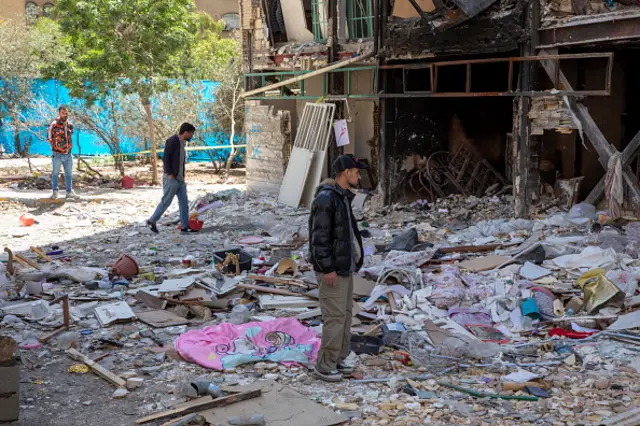
Getty ImagesPeople view the aftermath of a strike on a building that, according to Iranian authorities, was hit on 4 March
Martje van Raamsdonk has been on the ground in Iran for the Norwegian Refugee Council (NRC) - an international aid agency - since November.
The NRC is one of very few international humanitarian organisations inside Iran and Martje told the BBC's Newsday programme this morning about the extent of the damage she has witnessed in the country's capital Tehran.
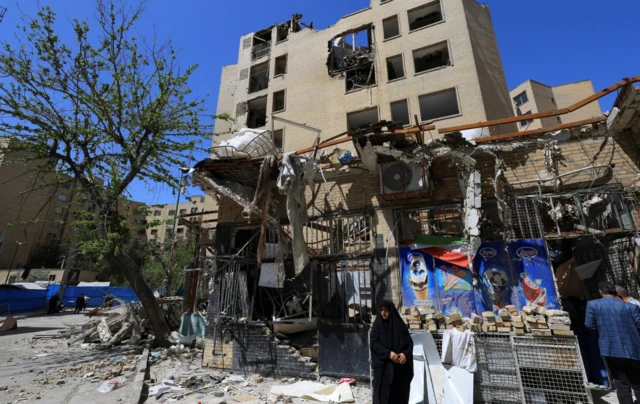
"They bombed almost daily in densely populated areas so here in Tehran, which is a huge city of over ten million people, many buildings have been destroyed and neighbourhoods are unrecognisable with buildings gone," Martje says.
"My colleagues also are sharing very horrific stories. They live across Tehran and also in cities like Isfahan they have been very close to attacks, to missiles falling. Hearing those sounds having their roofs and windows shaken and a huge impact with only a few blocks away."
ReutersA woman stands next to debris in front of a residential building damaged by a strike in Tehran on 4 March, image taken on 14 April
Israeli military says it is operating with 'significant force' in part of southern Lebanon
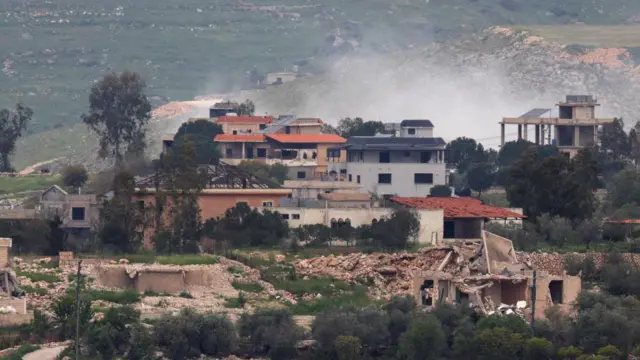
ReutersSmoke rises behind buildings following an Israeli strike in Lebanon, near the border with Israel
The Israel Defense Forces (IDF) have issued a fresh evacuation order for parts of southern Lebanon where it says "air strikes are ongoing".
The IDF says they are operating with "significant force" in the area south of the Zahrani River, and people should evacuate immediately and head north.
"Anyone present near Hezbollah elements, their facilities, or their combat vehicles endangers their life," the statement adds.
Any attempts to force Iran to surrender are destined to fail, president says
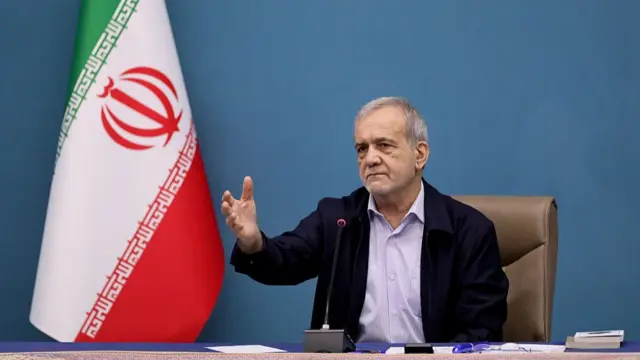
Iranian Presidency handout via Getty ImagesIranian President Masoud Pezeshkian says any attempts by the US or Israel to force Iran to "surrender" are "destined to fail and the Iranian nation will never accept such an approach".
Speaking at a meeting with Tehran's emergency service officials on Wednesday, Pezeshkian says Tehran is not looking for war or instability.
Instead, the president says "[Iran] has always stressed the need for constructive talks and interactions with various countries".
His remarks, reported by Iranian media, come after Trump said US-Iran talks could restart in Pakistan "in the next two days", but Tehran is yet to comment.




No comments:
Post a Comment