
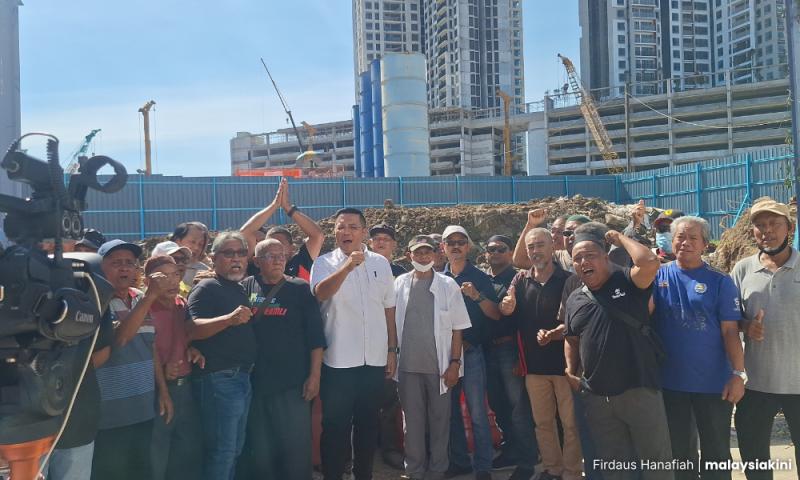

Taman Dato Harun residents protest construction of Hindu temple
Ayesha Sheik Mazrul
Published: Feb 10, 2026 2:59 PM
Updated: 6:51 PM
Residents of Taman Dato Harun, Petaling Jaya, protested against the construction of a Hindu temple in the area today, citing the neighbourhood’s demographic makeup and traffic concerns as grounds for rejection.
A resident, who wished to be known only as Roslan, said locals were not given any prior notice and only became aware of the development yesterday after several residents spotted a notice put up at the site.
Roslan, who had been residing in Taman Dato Harun for over 50 years, said that a temple would not fit into the area’s Malay-Muslim majority.
“We gather here to express our dissatisfaction and to question why this (temple) is being built here.
“If they want to build something, go ahead, we are not objecting to anything, but this is an area where 95 percent of the residents are Malay.
“We are only asking why no representatives were sent to consult with us. We did not know about this and only heard about it from other parties. Even our assemblyperson was not informed, and neither were the villagers,” he told Malaysiakini.
According to a notice put up by the Petaling Land Office at the construction site, the lot was slated for the relocation of the Sri Maha Mariamman Desa Perangsang temple, originally located in PJS 4.
Roslan claimed that the temple had to relocate as it had been constructed on land owned by the Selangor Islamic Religious Council, which was reclaimed to expand funerary management facilities in the area.
In addition, the 57-year-old resident also raised traffic concerns, saying the temple would be situated in a dense commercial area with limited parking, while the main road is frequently used for Maulidur Rasul processions by the community.
Published: Feb 10, 2026 2:59 PM
Updated: 6:51 PM
Residents of Taman Dato Harun, Petaling Jaya, protested against the construction of a Hindu temple in the area today, citing the neighbourhood’s demographic makeup and traffic concerns as grounds for rejection.
A resident, who wished to be known only as Roslan, said locals were not given any prior notice and only became aware of the development yesterday after several residents spotted a notice put up at the site.
Roslan, who had been residing in Taman Dato Harun for over 50 years, said that a temple would not fit into the area’s Malay-Muslim majority.
“We gather here to express our dissatisfaction and to question why this (temple) is being built here.
“If they want to build something, go ahead, we are not objecting to anything, but this is an area where 95 percent of the residents are Malay.
“We are only asking why no representatives were sent to consult with us. We did not know about this and only heard about it from other parties. Even our assemblyperson was not informed, and neither were the villagers,” he told Malaysiakini.
According to a notice put up by the Petaling Land Office at the construction site, the lot was slated for the relocation of the Sri Maha Mariamman Desa Perangsang temple, originally located in PJS 4.
Roslan claimed that the temple had to relocate as it had been constructed on land owned by the Selangor Islamic Religious Council, which was reclaimed to expand funerary management facilities in the area.
In addition, the 57-year-old resident also raised traffic concerns, saying the temple would be situated in a dense commercial area with limited parking, while the main road is frequently used for Maulidur Rasul processions by the community.
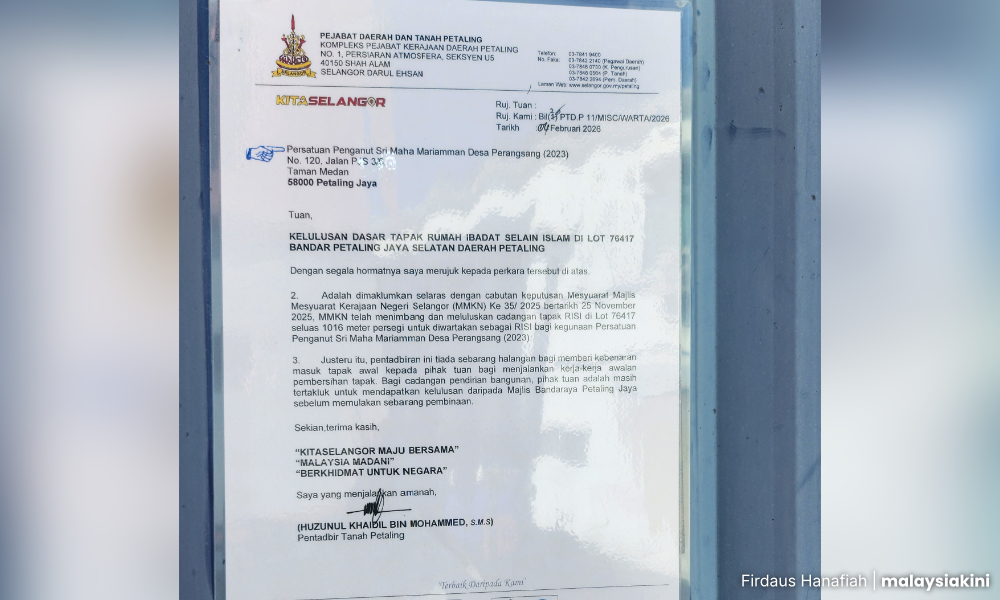
The approval letter
Malaysiakini’s observation found that the temple site has a single, narrow access road, directly opposite a wedding banquet hall and several restaurants.
Assemblyperson steps in
Earlier, concerned residents gathered in front of the construction site, with the crowd swelling to more than 70 people by 10.30am.
Locals were seen discussing the ongoing situation among themselves, sharing concerns as they waited for Taman Medan assemblyperson Dr Afif Bahardin to arrive at the scene to address the issues raised by residents.
Shortly after, the assemblyperson made his appearance and addressed those gathered, acknowledging their concerns and outlining the steps he would take to raise the matter with the Selangor state government.
“We do not oppose the existence of places of worship for other communities. However, the location, as well as sensitivities, must be respected to maintain harmony.
“This should be taken into consideration by the state government when carrying out a relocation process,” Afif said, suggesting nearby areas such as Taman Seri Manja and PJS 4, which have larger Indian communities, as more logical alternatives.
Malaysiakini’s observation found that the temple site has a single, narrow access road, directly opposite a wedding banquet hall and several restaurants.
Assemblyperson steps in
Earlier, concerned residents gathered in front of the construction site, with the crowd swelling to more than 70 people by 10.30am.
Locals were seen discussing the ongoing situation among themselves, sharing concerns as they waited for Taman Medan assemblyperson Dr Afif Bahardin to arrive at the scene to address the issues raised by residents.
Shortly after, the assemblyperson made his appearance and addressed those gathered, acknowledging their concerns and outlining the steps he would take to raise the matter with the Selangor state government.
“We do not oppose the existence of places of worship for other communities. However, the location, as well as sensitivities, must be respected to maintain harmony.
“This should be taken into consideration by the state government when carrying out a relocation process,” Afif said, suggesting nearby areas such as Taman Seri Manja and PJS 4, which have larger Indian communities, as more logical alternatives.
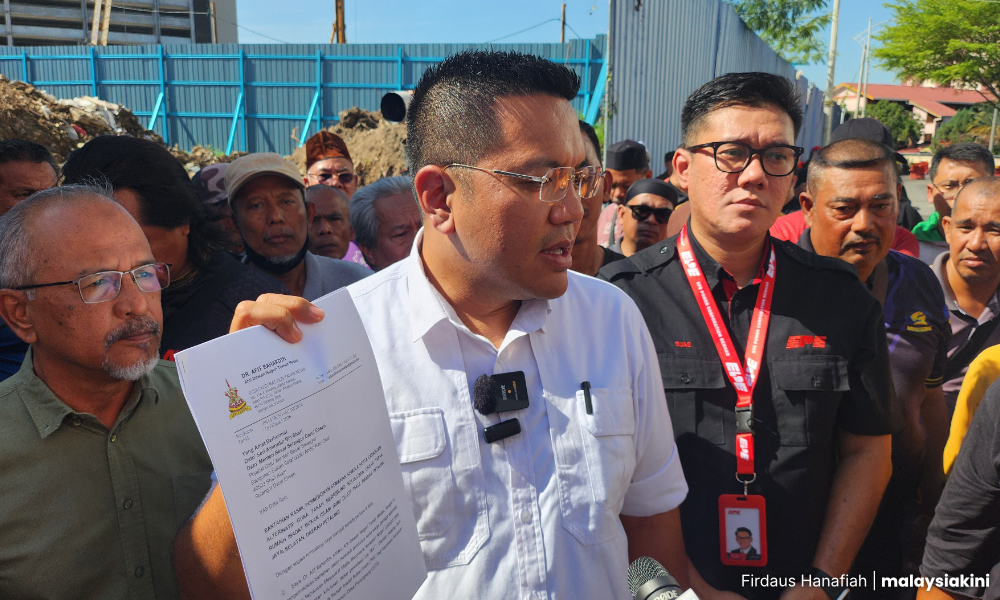
Taman Medan assemblyperson Dr Afif Bahardin
The Bersatu leader criticised the Selangor state government for lacking procedural fairness and good governance, as the approval was granted without any formal dialogue with the residents, local business owners, or elected representatives.
Afif added that he has reached out to Selangor Menteri Besar Amirudin Shari and will be handing in a letter today, calling for an immediate suspension or cancellation of the project.
He also called for a proper community engagement to be held and urged the state government to identify a more suitable site for the Sri Maha Mariamman Desa Perangsang temple.
The Bersatu leader criticised the Selangor state government for lacking procedural fairness and good governance, as the approval was granted without any formal dialogue with the residents, local business owners, or elected representatives.
Afif added that he has reached out to Selangor Menteri Besar Amirudin Shari and will be handing in a letter today, calling for an immediate suspension or cancellation of the project.
He also called for a proper community engagement to be held and urged the state government to identify a more suitable site for the Sri Maha Mariamman Desa Perangsang temple.
‘Turn land into green space’
As a counterproposal, Afif urged that the plot of land be converted into a public green space or recreational park for all residents in the area instead.
“The creation of new green spaces here aligns with the principles of sustainable development, urban planning, and community aspirations, helping to create a healthier and more harmonious living environment for the people,” he added.
Such pushbacks are not new to long-time residents of the neighbourhood, as the area has witnessed several instances of racial unrest over the past two decades.
In 2001, the roads of Taman Dato Harun and nearby Kampung Medan saw a racial clash that left six people dead and scores injured.
READ MORE: Remembering Kampung Medan: one year after
The tragedy, commonly known as the Kampung Medan clashes, stemmed from a misunderstanding between an Indian security guard and a Malay family in the area, which snowballed into aggravated violence that would go on for over four days.
Separately, in 2015, a protest was held in the neighbourhood where some 50 protesters gathered outside a church in Taman Medan, demanding that its cross be removed from a high vantage point as it was considered disturbing to Muslims.
No to ‘social experiments’
Drawing on this history of tension, Afif warned the Selangor state government against conducting what he called a “social experiment” by placing a non-Islamic house of worship in a predominantly Malay-Muslim area without prior consultation.
He emphasised that the community’s reaction stems from a desire to maintain a long-standing harmony that they feel is being ignored by top-down decision-making.
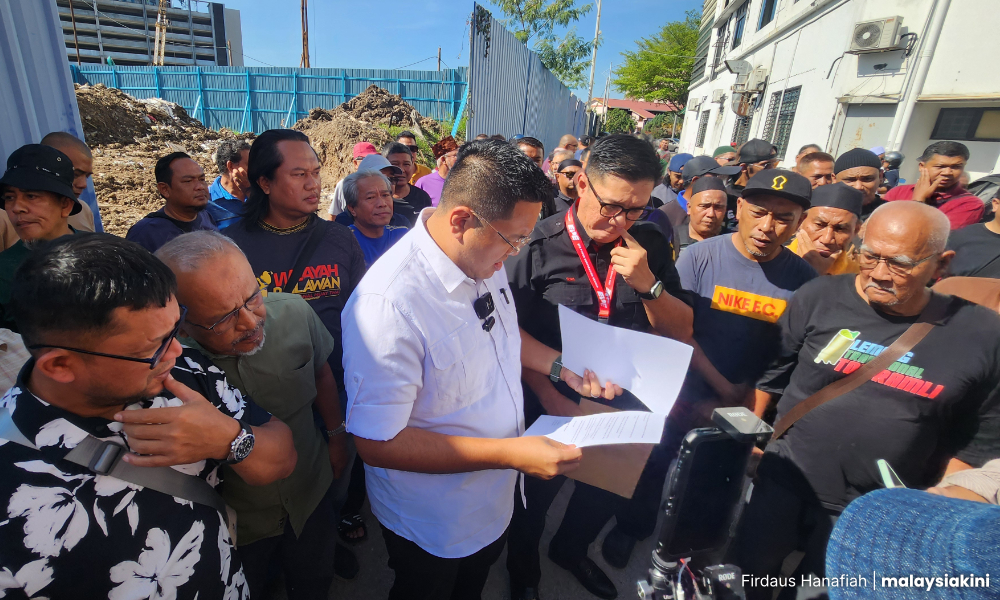
“I’ll make a simple analogy, say that there is a Chinese village opposite Sungei Way, it wouldn’t make sense to build a mosque in the middle of a non-Muslim community, right?
“Similarly, here in Taman Dato Harun, where 95 percent of the residents are Malay Muslims, which is why we are opposing this.
“It’s not that we are unfamiliar with living alongside other communities, but the harmony we have built over many years in Taman Medan, particularly in Taman Dato Harun, should be preserved.
“We hope the state government does not treat this as a social experiment by implementing projects like this here,” he said.


In Malaysia, Islam has a severe phobia against other religions.
ReplyDelete