
Project Vault - Trump Copying China Critical Minerals Strategy
February 5th, 2026 by financetwitter
Forced to “kowtow” to China after Beijing retaliated to United States’ tariff war by slapping export restrictions on several rare earth elements, processing technologies, lithium battery materials, and other items, U.S. President Donald Trump reluctantly signed a trade truce with the Chinese government. It was a humiliation to the economic superpower, but Trump had no card to play.
The U.S. has to eat humble pie while re-strategizing. Now, the Trump administration thinks it has found the solution – “Project Vault”. It’s a new strategy in stockpiling more than 50 critical minerals. The lists include rare earths, lithium, uranium and copper – deemed “essential for national security, economic stability and supply chain resilience.”
Calling the initiative as a first-of-its-kind public-private partnership, Trump said during an event at the White House on Monday – “Today we’re launching what will be known as Project Vault to ensure that American businesses and workers are never harmed by any shortage“. Recalling how the U.S. was held ransom by China, Trump said – “We don’t want to ever go through what we went through a year ago.”

During trade talks last year started by Trump’s tariffs war, China stunningly retaliated by restricting the exporting of rare earths that were needed for jet engines, radar systems, electric vehicles, weapons, laptops and phones. To justify Project Vault, the U.S. president said he expected the government to make a profit from the loan being used to start the reserve.
The U.S. Export-Import Bank will provide US$10 billion in the form of a loan, with about US$2 billion coming from private capital for the project. Equipment manufacturers including GE Vernova, Western Digital and Boeing have expressed interest. But the stockpile move to build a Western supply chain to counter China’s dominance in critical minerals is nothing but a “copy” of the Chinese model.
The plan for the newly created “U.S. Strategic Critical Minerals Reserve” actually borrows from Beijing’s longstanding playbook because that is the rival Washington is trying to combat. The U.S. stockpile will source the minerals at home and abroad – suggesting dependency. China last year brandished its control of rare-earth minerals and processing to extract trade concessions from Trump.
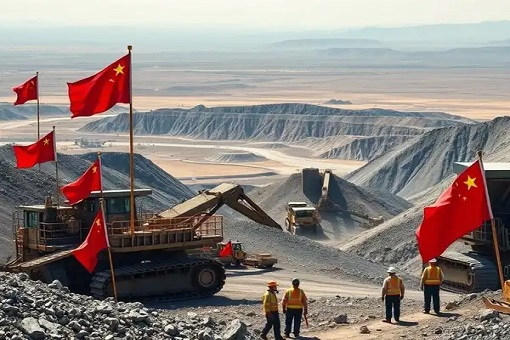
Beijing recognized years ago that supporting local mining companies would ensure a stable supply of materials for its manufacturers and give it a tool for international coercion. At the same time, state involvement doesn’t mean total state control. Many Chinese miners are in the private sector – including some listed on stock exchanges – and they compete for profits and market share.
Likewise, the U.S. government is investing in private-sector miners and bringing companies such as Boeing, General Motors and Alphabet’s Google into Project Vault. The Commerce Department last week announced plans to finance the startup critical-mineral company USA Rare Earth to the tune of US$1.6 billion in exchange for an ownership stake. The Trump administration has also taken stakes in Lithium Americas and Trilogy Metals.
Copying a Chinese-style model of state-driven capitalism, the U.S. government has made similar investments in other domestic minerals producers since last year and intervened in strategic industries. It took a 10% stake in chip maker Intel and a “golden share” in U.S. Steel when the latter was acquired by Japan’s Nippon Steel.
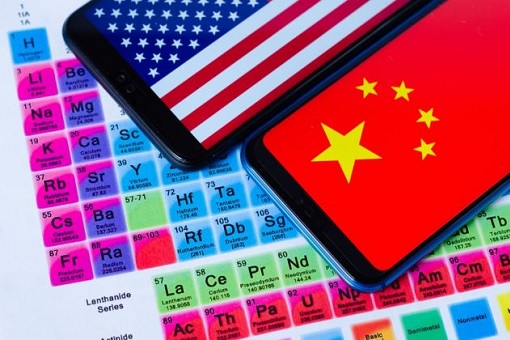
Trump didn’t give details of how the vault would operate, but it could provide a steady buyer to tide American and allied producers through the boom-bust cycle, a traditional feature of the minerals business that has often deterred private investment. John Jovanovic, the chairman of the Export-Import Bank, said the stockpile would support domestic processing of critical raw materials as well as protect U.S. manufacturers from supply shocks.
Beijing has long amassed stockpiles of metals such as copper, aluminum and zinc, and it upgraded the system in 2024 to add more types of minerals. When China, controlling about 70% of the world’s rare earths mining and 90% of global rare earths processing, slashed exports of rare-earth magnets last spring, American companies such as Ford were forced to temporarily shut down factories because of supply shortages.
Trump compared Strategic Critical Minerals Reserve to the Strategic Petroleum Reserve (SPR), a government-owned oil stockpile stored in underground salt caverns at four sites in the U.S. The petroleum stockpile was created due to a foreign supply shock – the Arab oil embargo of the 1970s. With storage capacity of 714 million barrels, it is designed to deter threats by hostile nations to interrupt supplies.
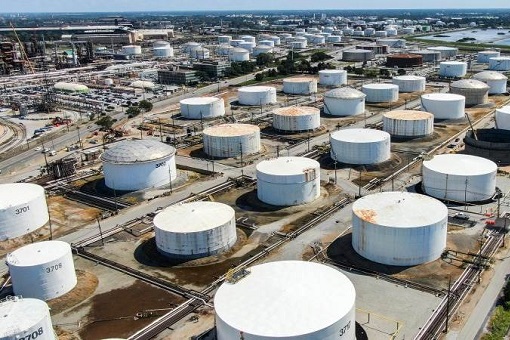
So, like petroleum, the critical mineral is being created due to a foreign supply interruption – this time, China. The mineral reserve requires crucial raw materials to be stashed in secure facilities across the country. The Export-Import Bank’s announcement said the stockpiles would be independently governed, but didn’t describe the entity that would control them.
However, experts say minerals would be trickier to stockpile than petroleum. The Strategic Petroleum Reserve includes sweet and sour crude, while there are 17 rare earths as well as dozens of other critical minerals. To make matters worse, the quantities needed change over time depending on how cars, planes and other industrial goods are manufactured.
Additionally, if the facilities are stocked with relatively unprocessed raw materials, they couldn’t be used immediately in factories during an emergency. But storing the finished version of the products, such as rare earth magnets, introduces its own issues because product specifications evolve. “There is no one-fits-all,” – said Thomas Kruemmer, a rare earths analyst based in Singapore.
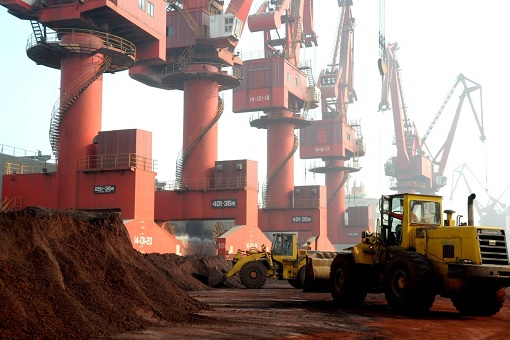
There’s a bigger problem – assuming the vault doesn’t buy from China and pretends as if it is Made-in-USA, it could take years to build a stockpile that would sufficiently shield the U.S. in an emergency. For materials such as scarce “heavy” rare earths, there is little processing capacity outside of China, and the plants now being built will likely meet only a portion of demand in the U.S. and allied nations over the next couple of years.
The Pentagon last July took stakes in the rare earths miner MP Materials, as well as providing financial backing to the companies Vulcan Elements. The administration has also taken stakes in Lithium Americas and Trilogy Metals. But even before MP Materials could sufficiently produce minerals, the Trump administration has already made a U-turn on its plans to guarantee a minimum price for U.S. critical minerals projects.
Industry executives argue China’s state-backed producers can slash prices to punish rivals, undercut projects and deter private investment. But critics of price floors now warn they could expose U.S. taxpayers to significant financial risk by forcing the government to subsidize minerals when market prices fall, potentially locking in long-term liabilities if prices remain depressed.
The fact that U.S. mining and processing companies have pushed for price floors and other government backstops to help them compete with China suggests that not only they are unable to compete without subsidies from the U.S. government, but also proves that Washington is copying Beijing’s model – despite Trump’s accusation of China’s unfairly subsidizing local companies.
***
Only 1 way - do a 'Venezuela' on China, wakakaka


Western Bully copying “secrets” from Eastern Bully…..ha3….good one.
ReplyDeleteThe Evil that the CCP has carried out against the Chinese people cannot be washed away in a Million years.
ReplyDeleteaeons of brutal feudalism and oppression washed away in less than a century - was that evil?
Delete