
OPINION | Attack on Rafizi’s Son: Six Months On, We Know Who Didn’t Do It — But Still Don’t Know Who Did
7 Feb 2026 • 1:00 PM MYT

TheRealNehruism
An award-winning Newswav creator, Bebas News columnist & ex-FMT columnist
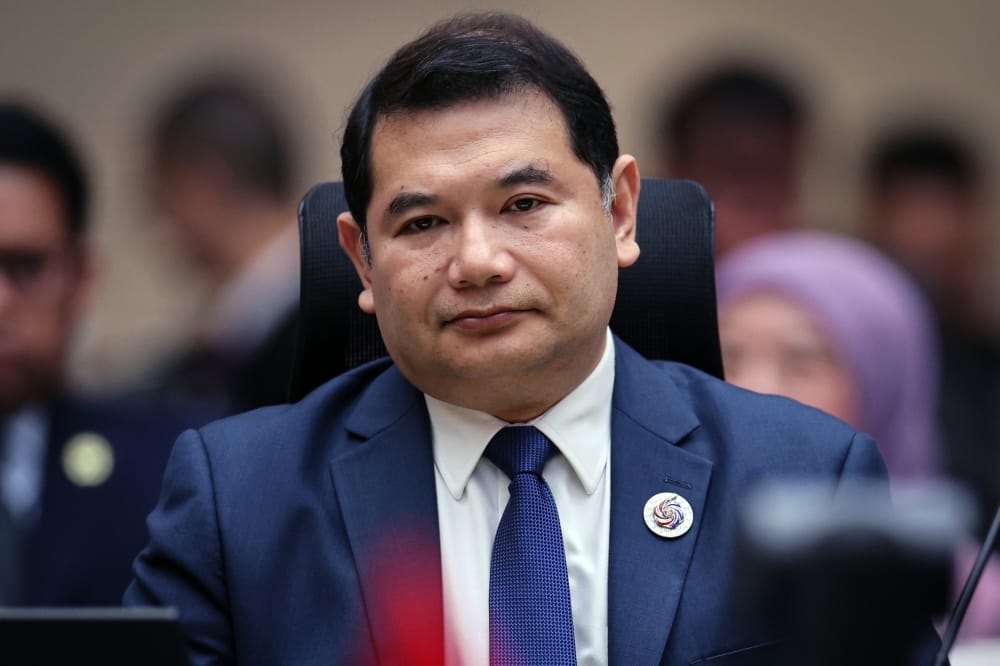
Image credit: Malay Mail
Like so many high-profile cases in Malaysia — from the disappearance of Pastor Raymond Koh and Amri Che Mat, to the unresolved deaths of Teoh Beng Hock and Altantuya Shaariibuu, to the agonising saga of Indira Gandhi’s abducted daughter, and now the more recent mystery surrounding Pamela Ling — the brazen daylight attack on Rafizi Ramli’s 12-year-old son seems destined to join a familiar national archive: cases that generate outrage, anxiety, and headlines, but never answers.
For context, on August 13 last year, Rafizi’s son was followed by two men on a motorcycle as he and his mother drove through a shopping mall in Putrajaya. The boy was dragged and stabbed with a syringe, though he fortunately did not sustain physical injuries. CCTV footage captured the attack, but the assailants fled before they could be identified or apprehended. The boy’s mother had previously received a threatening text message reading: “Be quiet. If you continue, AIDS.” The attack was widely seen as targeted, likely linked to Rafizi’s political work and investigations.
6 months after the incident, centered on a former high ranking minister's family member, occuring at the capital of the nation, which presumably has some of the tightest security in the nation, on account of of being a place that host many VIPs and often receives head of the nations, what is the development in the case?
Well, it seems that all we know so far is who didn’t do it. We know that former prime minister Ismail Sabri Yaakob did not do it — at least not in any way that investigators could legally establish. But what we still do not know, even today, is who actually did it, who planned it, who ordered it, and why. In other words, certainty exists only in the negative. The truth itself remains stubbornly absent.
On December 1, Home Minister Saifuddin Nasution Ismail personally briefed Rafizi on the progress of the investigation. Yet when Rafizi later sought public confirmation of the details shared with him, Saifuddin declined, citing the need to protect the investigation and the safety of witnesses. Officially, the public was told that revealing information could “impede the authorities’ ability to track down the suspects.” Unofficially, nothing meaningful was added to what was already known. The case remained suspended in a fog of confidentiality.
Months later, with no visible progress, Rafizi himself publicly contemplated asking the police to halt the investigation altogether. He spoke candidly about the structural reality of Malaysia’s justice system: that without power, cases like this often fade into oblivion once public attention drifts elsewhere. He did not want the prime minister to be embarrassed, he said — not because justice had been served, but because it had stalled. His prediction was bleakly familiar: that the case would eventually be classified as “No Further Action,” quietly closed, without explanation, closure, or accountability.
And that is precisely where the story now stands. While police investigations into a defamatory Facebook post linking Ismail Sabri to the case have already been NFA-ed due to an inability to identify the account owner, the central mystery — the physical assault on a child in broad daylight, complete with surveillance, planning, and intimidation — remains unresolved. We have closure only on a side narrative, not on the crime itself.
So how will this case finally be “resolved”?
Well, if you ask me, my prediction is that it will be Time that will have to finally step in to give the case a measure of closure.
Not truth. Not justice. Not accountability. Just time.
It will be swept under the carpet, crushed beneath the slow, grinding wheel of public fatigue. Malaysians will move on to the next scandal, the next outrage, the next viral crisis. And this story, like so many before it, will simply dissolve into the background noise of unfinished narratives — without a full stop, without closure, without meaning.
Not because the truth is unknowable.
But because, in Malaysia, forgetting is often the system’s most reliable outcome.
Like so many high-profile cases in Malaysia — from the disappearance of Pastor Raymond Koh and Amri Che Mat, to the unresolved deaths of Teoh Beng Hock and Altantuya Shaariibuu, to the agonising saga of Indira Gandhi’s abducted daughter, and now the more recent mystery surrounding Pamela Ling — the brazen daylight attack on Rafizi Ramli’s 12-year-old son seems destined to join a familiar national archive: cases that generate outrage, anxiety, and headlines, but never answers.
For context, on August 13 last year, Rafizi’s son was followed by two men on a motorcycle as he and his mother drove through a shopping mall in Putrajaya. The boy was dragged and stabbed with a syringe, though he fortunately did not sustain physical injuries. CCTV footage captured the attack, but the assailants fled before they could be identified or apprehended. The boy’s mother had previously received a threatening text message reading: “Be quiet. If you continue, AIDS.” The attack was widely seen as targeted, likely linked to Rafizi’s political work and investigations.
6 months after the incident, centered on a former high ranking minister's family member, occuring at the capital of the nation, which presumably has some of the tightest security in the nation, on account of of being a place that host many VIPs and often receives head of the nations, what is the development in the case?
Well, it seems that all we know so far is who didn’t do it. We know that former prime minister Ismail Sabri Yaakob did not do it — at least not in any way that investigators could legally establish. But what we still do not know, even today, is who actually did it, who planned it, who ordered it, and why. In other words, certainty exists only in the negative. The truth itself remains stubbornly absent.
On December 1, Home Minister Saifuddin Nasution Ismail personally briefed Rafizi on the progress of the investigation. Yet when Rafizi later sought public confirmation of the details shared with him, Saifuddin declined, citing the need to protect the investigation and the safety of witnesses. Officially, the public was told that revealing information could “impede the authorities’ ability to track down the suspects.” Unofficially, nothing meaningful was added to what was already known. The case remained suspended in a fog of confidentiality.
Months later, with no visible progress, Rafizi himself publicly contemplated asking the police to halt the investigation altogether. He spoke candidly about the structural reality of Malaysia’s justice system: that without power, cases like this often fade into oblivion once public attention drifts elsewhere. He did not want the prime minister to be embarrassed, he said — not because justice had been served, but because it had stalled. His prediction was bleakly familiar: that the case would eventually be classified as “No Further Action,” quietly closed, without explanation, closure, or accountability.
And that is precisely where the story now stands. While police investigations into a defamatory Facebook post linking Ismail Sabri to the case have already been NFA-ed due to an inability to identify the account owner, the central mystery — the physical assault on a child in broad daylight, complete with surveillance, planning, and intimidation — remains unresolved. We have closure only on a side narrative, not on the crime itself.
So how will this case finally be “resolved”?
Well, if you ask me, my prediction is that it will be Time that will have to finally step in to give the case a measure of closure.
Not truth. Not justice. Not accountability. Just time.
It will be swept under the carpet, crushed beneath the slow, grinding wheel of public fatigue. Malaysians will move on to the next scandal, the next outrage, the next viral crisis. And this story, like so many before it, will simply dissolve into the background noise of unfinished narratives — without a full stop, without closure, without meaning.
Not because the truth is unknowable.
But because, in Malaysia, forgetting is often the system’s most reliable outcome.


No comments:
Post a Comment