
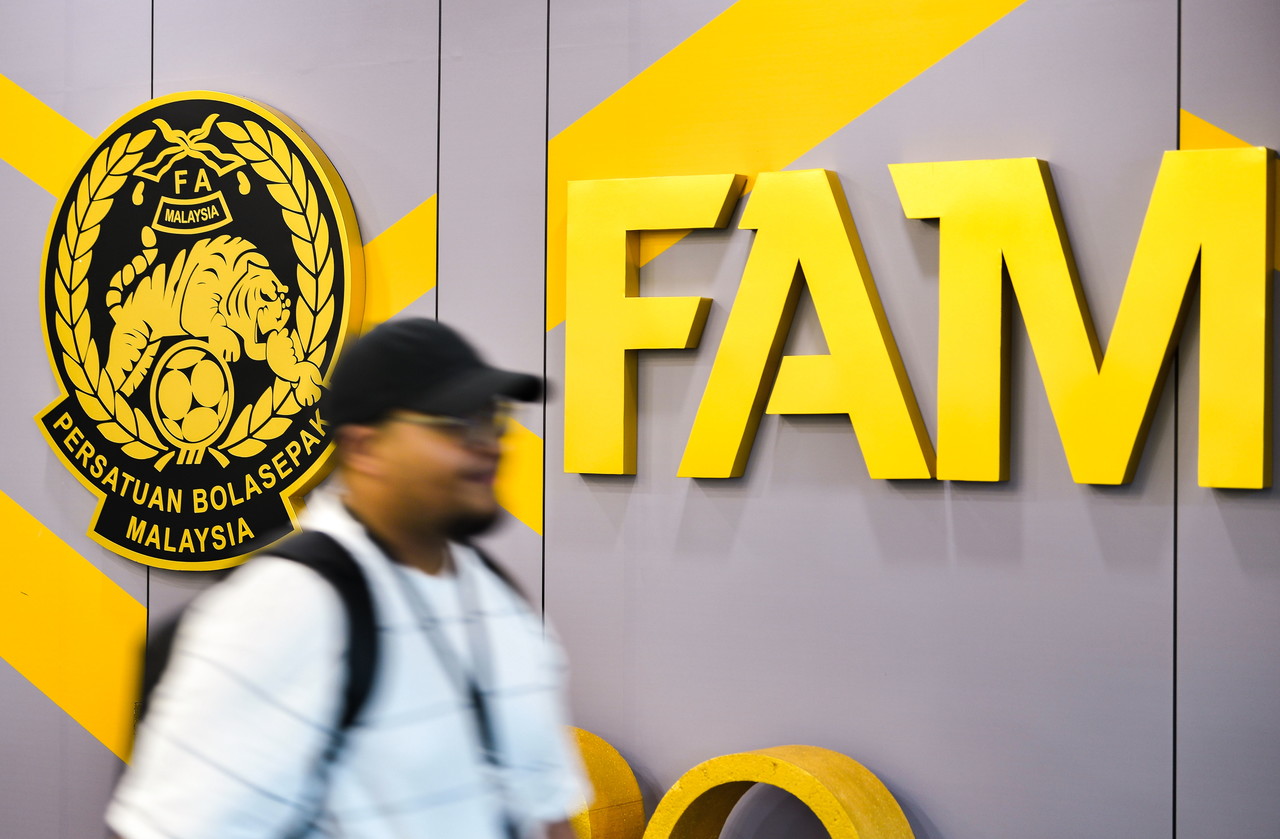
Football today is no longer just a game but an industry where broadcasting rights, sponsorships, merchandising, and youth development pathways all demand professional management with measurable outcomes. - Bernama file pic, February 22, 2026
Time for Corporate Leadership to take the helm at FAM – T. Vignesh
For Malaysian football to break free from years of stagnation, the Football Association of Malaysia must embrace corporate-style leadership — one that prioritises return on investment, strong governance, and long-term institutional stability

T. Vignesh
Updated 4 days ago
22 February, 2026
3:23 PM MYT
Malaysian football governance future of Malaysian football depends not only on what happens on the pitch but also on how the sport is managed off it. FAM has reached a crossroads where sentiment and tradition must give way to structure, accountability, and business sense.
Football today is no longer just a game. It is an industry. Broadcasting rights, sponsorships, merchandising, and youth development pathways all demand professional management with measurable outcomes.
This is why FAM should now be led by corporate figures who understand return on investment (ROI). A corporate mindset does not mean stripping football of its soul; it means ensuring every sen spent translates into development, exposure, and sustainability.
The two most important posts — President and Deputy President — should be filled by corporate leaders. These roles are not ceremonial.
They are strategic positions that determine how money is raised, spent, and accounted for. While no administration will ever be perfect, leadership rooted in corporate governance will almost certainly be more disciplined than what Malaysian football has experienced in the past.
Transparency, performance indicators, and institutional continuity are qualities football administration desperately needs.
This call for change is made even more urgent by recent events. The naturalisation controversy involving FIFA now before the Court of Arbitration for Sport has exposed deep weaknesses in governance and decision-making.
While the football community waits for CAS to deliver its verdict, the entire FAM leadership has resigned. That alone is proof that the old system has reached the end of its credibility.
What Malaysian football needs now is not a cosmetic reshuffle but a full reset. This transition period should be used to rebuild with new people, new structures, and a new mindset.
Those who have stepped aside should not be recycled back into power; the vacuum should be filled by professional managers who can restore confidence, both locally and internationally.
There will be voices calling for royalty to return and rescue the game. While such calls come from respect and nostalgia, they are neither realistic nor fair.
Royal figures have already done their part. From the Pahang and Johor royalty, Malaysian football has enjoyed the patronage of royalty at different eras.
Their involvement helped stabilise and elevate the game when it needed moral authority and influence. But expecting them to permanently shoulder administrative burdens ignores their wider responsibilities to state and nation. Leadership should now evolve with the times.
Another familiar argument is that football must be run by people who “know football.” But in this era, who truly does not? The sport is everywhere — from social media to tactical analysis shows and youth academies.
Knowledge can be hired, consulted, and structured into committees. What is harder to find is a leader who can balance budgets, attract sponsors, and enforce governance.
This is where the Badminton Association of Malaysia (BAM) provides a useful case study. Its current president, Tengku Zafrul Abdul Aziz, comes from a corporate and financial background.
He is supported by administrators and technical experts who understand badminton inside out. In this model, the president is the money man ensuring resources are secured and systems are in place, while sport specialists run the technical side.
The result is an institution that functions like an organisation rather than a personality-driven association. Much of this foundation was laid by former BAM president Tan Sri Mohamad Norza Zakaria, who planted the seeds of reform and professionalisation.
Today, regardless of wins or losses on court, which ultimately depend on athletes — BAM operates with stability. It is almost on autopilot.
If such a model works for badminton, why not football?
For FAM, the formula should be clear: the President and Deputy President must come from corporate backgrounds, while the rest of the administration should consist of people with football knowledge.
This hybrid structure allows the association to be run like a business but guided by sporting expertise. Football development then becomes a strategic investment, not a political favour or emotional gamble.
Malaysian football does not lack passion. It lacks structure. It does not lack fans. It lacks consistent direction. The game’s revival will not come from changing coaches every season or launching yet another blueprint. It will come from changing the way it is governed.
With the CAS case hanging over the association and the old leadership having resigned, FAM has been given a rare opportunity to reset itself from the ground up.
This is precisely the moment to break from past habits and bring in corporate leadership that understands governance, accountability, and long-term planning.
If FAM truly wants progress, it must stop looking backwards for saviours and start looking forward to managers. – February 22, 2026
Time for Corporate Leadership to take the helm at FAM – T. Vignesh
For Malaysian football to break free from years of stagnation, the Football Association of Malaysia must embrace corporate-style leadership — one that prioritises return on investment, strong governance, and long-term institutional stability
T. Vignesh
Updated 4 days ago
22 February, 2026
3:23 PM MYT
Malaysian football governance future of Malaysian football depends not only on what happens on the pitch but also on how the sport is managed off it. FAM has reached a crossroads where sentiment and tradition must give way to structure, accountability, and business sense.
Football today is no longer just a game. It is an industry. Broadcasting rights, sponsorships, merchandising, and youth development pathways all demand professional management with measurable outcomes.
This is why FAM should now be led by corporate figures who understand return on investment (ROI). A corporate mindset does not mean stripping football of its soul; it means ensuring every sen spent translates into development, exposure, and sustainability.
The two most important posts — President and Deputy President — should be filled by corporate leaders. These roles are not ceremonial.
They are strategic positions that determine how money is raised, spent, and accounted for. While no administration will ever be perfect, leadership rooted in corporate governance will almost certainly be more disciplined than what Malaysian football has experienced in the past.
Transparency, performance indicators, and institutional continuity are qualities football administration desperately needs.
This call for change is made even more urgent by recent events. The naturalisation controversy involving FIFA now before the Court of Arbitration for Sport has exposed deep weaknesses in governance and decision-making.
While the football community waits for CAS to deliver its verdict, the entire FAM leadership has resigned. That alone is proof that the old system has reached the end of its credibility.
What Malaysian football needs now is not a cosmetic reshuffle but a full reset. This transition period should be used to rebuild with new people, new structures, and a new mindset.
Those who have stepped aside should not be recycled back into power; the vacuum should be filled by professional managers who can restore confidence, both locally and internationally.
There will be voices calling for royalty to return and rescue the game. While such calls come from respect and nostalgia, they are neither realistic nor fair.
Royal figures have already done their part. From the Pahang and Johor royalty, Malaysian football has enjoyed the patronage of royalty at different eras.
Their involvement helped stabilise and elevate the game when it needed moral authority and influence. But expecting them to permanently shoulder administrative burdens ignores their wider responsibilities to state and nation. Leadership should now evolve with the times.
Another familiar argument is that football must be run by people who “know football.” But in this era, who truly does not? The sport is everywhere — from social media to tactical analysis shows and youth academies.
Knowledge can be hired, consulted, and structured into committees. What is harder to find is a leader who can balance budgets, attract sponsors, and enforce governance.
This is where the Badminton Association of Malaysia (BAM) provides a useful case study. Its current president, Tengku Zafrul Abdul Aziz, comes from a corporate and financial background.
He is supported by administrators and technical experts who understand badminton inside out. In this model, the president is the money man ensuring resources are secured and systems are in place, while sport specialists run the technical side.
The result is an institution that functions like an organisation rather than a personality-driven association. Much of this foundation was laid by former BAM president Tan Sri Mohamad Norza Zakaria, who planted the seeds of reform and professionalisation.
Today, regardless of wins or losses on court, which ultimately depend on athletes — BAM operates with stability. It is almost on autopilot.
If such a model works for badminton, why not football?
For FAM, the formula should be clear: the President and Deputy President must come from corporate backgrounds, while the rest of the administration should consist of people with football knowledge.
This hybrid structure allows the association to be run like a business but guided by sporting expertise. Football development then becomes a strategic investment, not a political favour or emotional gamble.
Malaysian football does not lack passion. It lacks structure. It does not lack fans. It lacks consistent direction. The game’s revival will not come from changing coaches every season or launching yet another blueprint. It will come from changing the way it is governed.
With the CAS case hanging over the association and the old leadership having resigned, FAM has been given a rare opportunity to reset itself from the ground up.
This is precisely the moment to break from past habits and bring in corporate leadership that understands governance, accountability, and long-term planning.
If FAM truly wants progress, it must stop looking backwards for saviours and start looking forward to managers. – February 22, 2026


No comments:
Post a Comment