


After PM flags 'small group' sowing discord, Charles reveals real problem

RK Anand
Published: Feb 27, 2026 12:31 PM
Updated: 3:31 PM
For Charles Santiago, the case of a student stepping on the Quran is both inexcusable and indefensible.
Yet, the former DAP lawmaker said it would be remiss of him not to highlight what appears to be a selective application of the law in matters involving race and religion.
According to Charles, this is where Prime Minister Anwar Ibrahim’s advice to ignore the “small group” stirring trouble becomes hard to accept, because within that group, some seem to be above the law.
Calling it a “glaring example”, he pointed to Muslim preacher Zamri Vinoth, who likened kavadi bearers during the Hindu Thaipusam festival to drunken individuals and was not prosecuted despite hundreds of police reports filed against him.
Charles argued that Anwar’s discomfort with the tone of social media discourse misses the central point: the anger online is not manufactured; it is policy-driven.
Published: Feb 27, 2026 12:31 PM
Updated: 3:31 PM
For Charles Santiago, the case of a student stepping on the Quran is both inexcusable and indefensible.
Yet, the former DAP lawmaker said it would be remiss of him not to highlight what appears to be a selective application of the law in matters involving race and religion.
According to Charles, this is where Prime Minister Anwar Ibrahim’s advice to ignore the “small group” stirring trouble becomes hard to accept, because within that group, some seem to be above the law.
Calling it a “glaring example”, he pointed to Muslim preacher Zamri Vinoth, who likened kavadi bearers during the Hindu Thaipusam festival to drunken individuals and was not prosecuted despite hundreds of police reports filed against him.
Charles argued that Anwar’s discomfort with the tone of social media discourse misses the central point: the anger online is not manufactured; it is policy-driven.
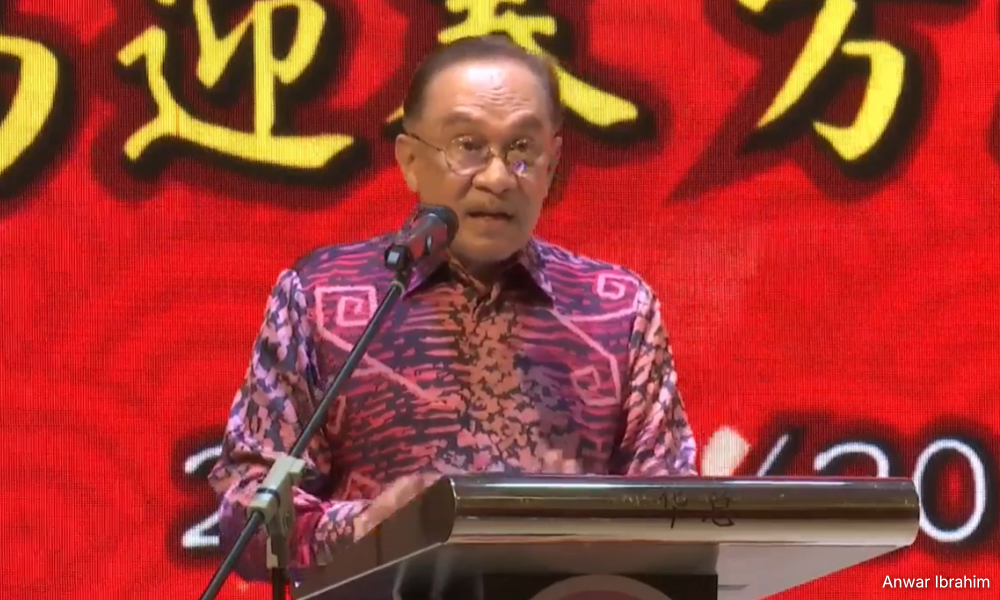
Prime Minister Anwar Ibrahim
“When citizens repeatedly file police reports against Zamri for inflammatory remarks touching on religion, and no visible, proportionate enforcement action follows, the issue is not merely about one individual. It is about the selective application of the law.
“If Malaysia is serious about upholding harmony, then enforcement must be consistent, not contingent on political alignment or ideological convenience. The deafening silence is not neutral. It is read as protection,” he told Malaysiakini.
Charles’s remarks came after Anwar’s speech at a Chinese New Year celebration, where the prime minister urged Malaysians to focus on the larger issues shaping the country’s future, rather than being drawn into divisive matters.
Anwar emphasised standing united against a “small group” who try to provoke racial tensions, noting that while this group often stirs conflict and anger, most citizens desire peace, economic growth, and respect for all cultures and religions.
MACC scandal
Charles also highlighted the shareholding controversy surrounding MACC chief commissioner Azam Baki and allegations that the commission’s officials are entangled in a “corporate mafia”, including possible cartel-like dynamics and opaque migrant labour recruitment pipelines.
“If Malaysia is serious about upholding harmony, then enforcement must be consistent, not contingent on political alignment or ideological convenience. The deafening silence is not neutral. It is read as protection,” he told Malaysiakini.
Charles’s remarks came after Anwar’s speech at a Chinese New Year celebration, where the prime minister urged Malaysians to focus on the larger issues shaping the country’s future, rather than being drawn into divisive matters.
Anwar emphasised standing united against a “small group” who try to provoke racial tensions, noting that while this group often stirs conflict and anger, most citizens desire peace, economic growth, and respect for all cultures and religions.
MACC scandal
Charles also highlighted the shareholding controversy surrounding MACC chief commissioner Azam Baki and allegations that the commission’s officials are entangled in a “corporate mafia”, including possible cartel-like dynamics and opaque migrant labour recruitment pipelines.
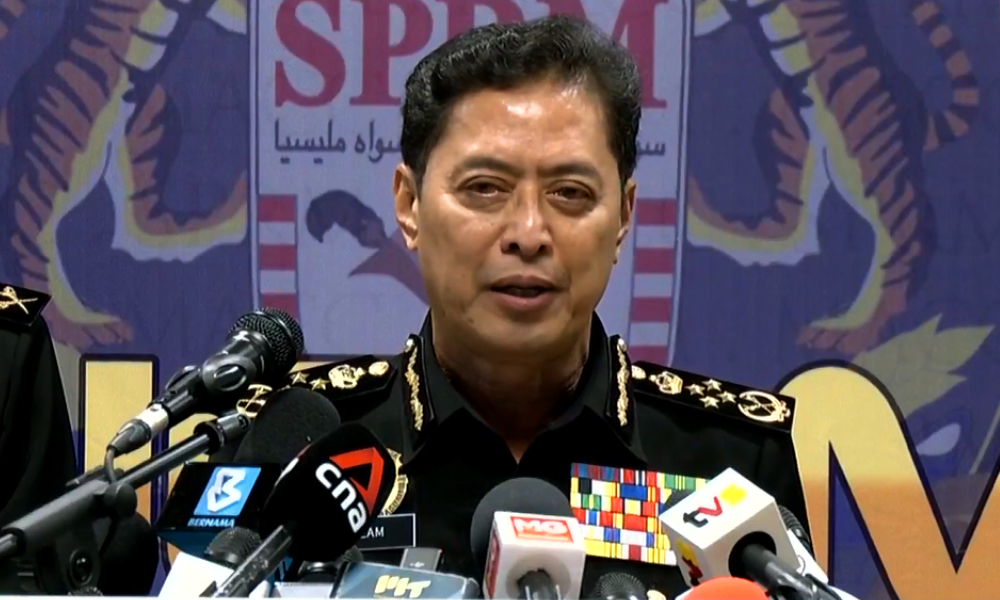
MACC chief commissioner Azam Baki
“In a country where migrant labour governance already lacks transparency, these claims demand more than defensive statements. They require independent investigation, parliamentary scrutiny, and proactive disclosure.
“Good governance is not about surviving headlines. It is about institutional integrity,” he added.
Touching on the non-renewal of pig farming licences in Selangor, Charles said that while framed as regulatory or environmental compliance issues, in a multi-ethnic society, policies affecting minority economic sectors carry communal resonance.
“If decisions disproportionately impact communities already sensitive to cultural marginalisation, then policy justification must be exceptionally clear, consultative, and transparent. Otherwise, it feeds perception, and perception is politically combustible. More so in a multi-racial country like Malaysia,” he added.
Trust deficit
While Anwar urges Malaysians to move beyond race and religion to focus on the bigger picture, Charles noted that many flashpoints fuelling frustration are precisely about how race and religion intersect with enforcement, policy choices, and political messaging.
“Good governance is not about surviving headlines. It is about institutional integrity,” he added.
Touching on the non-renewal of pig farming licences in Selangor, Charles said that while framed as regulatory or environmental compliance issues, in a multi-ethnic society, policies affecting minority economic sectors carry communal resonance.
“If decisions disproportionately impact communities already sensitive to cultural marginalisation, then policy justification must be exceptionally clear, consultative, and transparent. Otherwise, it feeds perception, and perception is politically combustible. More so in a multi-racial country like Malaysia,” he added.
Trust deficit
While Anwar urges Malaysians to move beyond race and religion to focus on the bigger picture, Charles noted that many flashpoints fuelling frustration are precisely about how race and religion intersect with enforcement, policy choices, and political messaging.
“Leadership is not rhetorical transcendence. It is equitable administration. Malaysia does not have a social media problem. It has a trust deficit, ironically self-inflicted by the government.
“When enforcement appears selective, when anti-corruption institutions face credibility questions, and when regulatory decisions intersect with communal sensitivities without sufficient transparency, citizens will speak. If not in Parliament, then online.
“A reformist government cannot demand maturity from the public while tolerating procedural murkiness within institutions,” he added.
Charles said if Anwar wants to restore confidence, the pathway is clear: consistent rule of law, independent oversight mechanisms, full transparency on MACC governance, and demonstrable impartiality in cases involving religious provocation, regardless of who is involved.
“Anything less will continue to erode the moral authority he once campaigned on,” he added.


No comments:
Post a Comment