



R Nadeswaran
Published: Feb 25, 2026 8:01 AM
Updated: 11:20 AM
COMMENT | Can a raging fire be doused with a garden hose? And what chance is there when unseen hands control the flow?
I write this as a citizen more than a journalist, having “long held my horses” when commenting on race and religious issues, because in Malaysia, “offending the sensitivities of Muslims” has no boundaries.
What many will see as fair comment can and will be used to intimidate or silence critics of the system, which obviously is in dire need of reform and improvement.
From air wells resembling crosses, to the sale of beer in convenience stores in Muslim-majority areas, to the attire of flight attendants and athletes - almost anything can be branded “sensitive”.
Not by any decree of the government or religious authority, but by some self-appointed politicians and unknown men of the cloth who claim to speak for the flock, perhaps for their two minutes of fame on national television.
The lesson was clear decades ago: in 1978, nine men stood trial in the Klang Sessions Court for killing five people who had smashed idols in a Hindu temple in Kerling, Selangor. That memory lingers, and today I fear history may repeat itself.
Published: Feb 25, 2026 8:01 AM
Updated: 11:20 AM
COMMENT | Can a raging fire be doused with a garden hose? And what chance is there when unseen hands control the flow?
I write this as a citizen more than a journalist, having “long held my horses” when commenting on race and religious issues, because in Malaysia, “offending the sensitivities of Muslims” has no boundaries.
What many will see as fair comment can and will be used to intimidate or silence critics of the system, which obviously is in dire need of reform and improvement.
From air wells resembling crosses, to the sale of beer in convenience stores in Muslim-majority areas, to the attire of flight attendants and athletes - almost anything can be branded “sensitive”.
Not by any decree of the government or religious authority, but by some self-appointed politicians and unknown men of the cloth who claim to speak for the flock, perhaps for their two minutes of fame on national television.
The lesson was clear decades ago: in 1978, nine men stood trial in the Klang Sessions Court for killing five people who had smashed idols in a Hindu temple in Kerling, Selangor. That memory lingers, and today I fear history may repeat itself.

Housing project in Langkawi, 2015
The current blaze, if left unchecked, threatens to consume the nation while those in power look away, unwilling to confront the anger of a marauding mob emboldened by each passing day.
However, over the years, I have addressed issues, including a commentary on unwarranted religious overreach, which undermines the government itself.
Ambiguity fanning the flames of vigilantism
Even Prime Minister Anwar Ibrahim’s carefully crafted speeches - eloquent but sometimes evasive, perhaps for political expediency - have done little to cool the flames.
On the contrary, he has left some of them open to misinterpretation. For example, activist Tamim Dahri, who was arrested after demolishing a temple in Rawang, Selangor, claimed that the structure was cleared following Anwar’s call to “clean up” places of worship that were erected in violation of the law.
But this action did not go unanswered. On social media, there was a direct but crude response: “Anyone step into another temple to demolish. We have no choice but to defend! Police to uphold law and order.”
The current blaze, if left unchecked, threatens to consume the nation while those in power look away, unwilling to confront the anger of a marauding mob emboldened by each passing day.
However, over the years, I have addressed issues, including a commentary on unwarranted religious overreach, which undermines the government itself.
Ambiguity fanning the flames of vigilantism
Even Prime Minister Anwar Ibrahim’s carefully crafted speeches - eloquent but sometimes evasive, perhaps for political expediency - have done little to cool the flames.
On the contrary, he has left some of them open to misinterpretation. For example, activist Tamim Dahri, who was arrested after demolishing a temple in Rawang, Selangor, claimed that the structure was cleared following Anwar’s call to “clean up” places of worship that were erected in violation of the law.
But this action did not go unanswered. On social media, there was a direct but crude response: “Anyone step into another temple to demolish. We have no choice but to defend! Police to uphold law and order.”
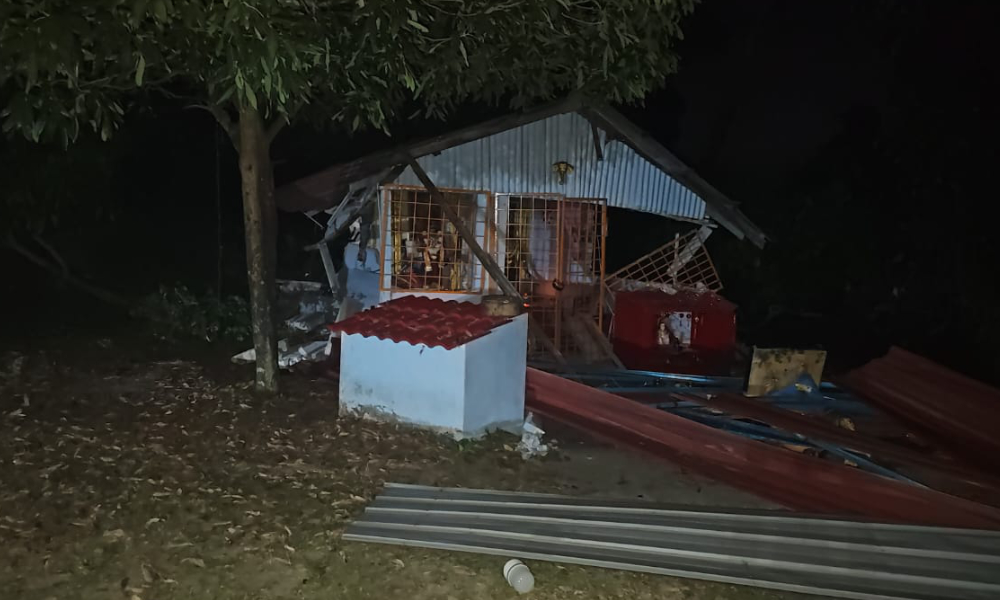
Partially demolished temple in Rawang, Selangor, February 2026
Although Anwar’s directive was to the local government authorities, the sense of vigilantism seemed to have reared its ugly head.
When will this acrimony, anger, and religious might end? Enough advice, admonishments, and warnings have already been dished out. What we need is action. But will the law be applied and enforced fairly and uniformly?
The time for platitudes has passed. Fires do not extinguish themselves, and mobs do not retreat without firm boundaries. If laws exist, they must be applied fairly, without fear or favour, and without selective enforcement that emboldens one group while silencing another.
Malaysia cannot continue to walk this dangerous tightrope where race and religion are weaponised for political gain. Each time leaders hesitate, each time enforcement is uneven, the flames grow stronger, and the mob grows bolder.
The velvet-glove treatment of some and iron-fisted punishment of others has created a climate of impunity in which opportunists thrive, and ordinary citizens lose faith in the system.
Rule of law or selective enforcement
Anwar has spoken of freedom of expression and the rule of law, but words alone are no longer enough.
The government must demonstrate that justice is blind, that no one is above the law, and that threats to peace will be met with decisive, consistent action. Otherwise, the promise of reform risks being consumed by the very fire it seeks to control.
Although Anwar’s directive was to the local government authorities, the sense of vigilantism seemed to have reared its ugly head.
When will this acrimony, anger, and religious might end? Enough advice, admonishments, and warnings have already been dished out. What we need is action. But will the law be applied and enforced fairly and uniformly?
The time for platitudes has passed. Fires do not extinguish themselves, and mobs do not retreat without firm boundaries. If laws exist, they must be applied fairly, without fear or favour, and without selective enforcement that emboldens one group while silencing another.
Malaysia cannot continue to walk this dangerous tightrope where race and religion are weaponised for political gain. Each time leaders hesitate, each time enforcement is uneven, the flames grow stronger, and the mob grows bolder.
The velvet-glove treatment of some and iron-fisted punishment of others has created a climate of impunity in which opportunists thrive, and ordinary citizens lose faith in the system.
Rule of law or selective enforcement
Anwar has spoken of freedom of expression and the rule of law, but words alone are no longer enough.
The government must demonstrate that justice is blind, that no one is above the law, and that threats to peace will be met with decisive, consistent action. Otherwise, the promise of reform risks being consumed by the very fire it seeks to control.
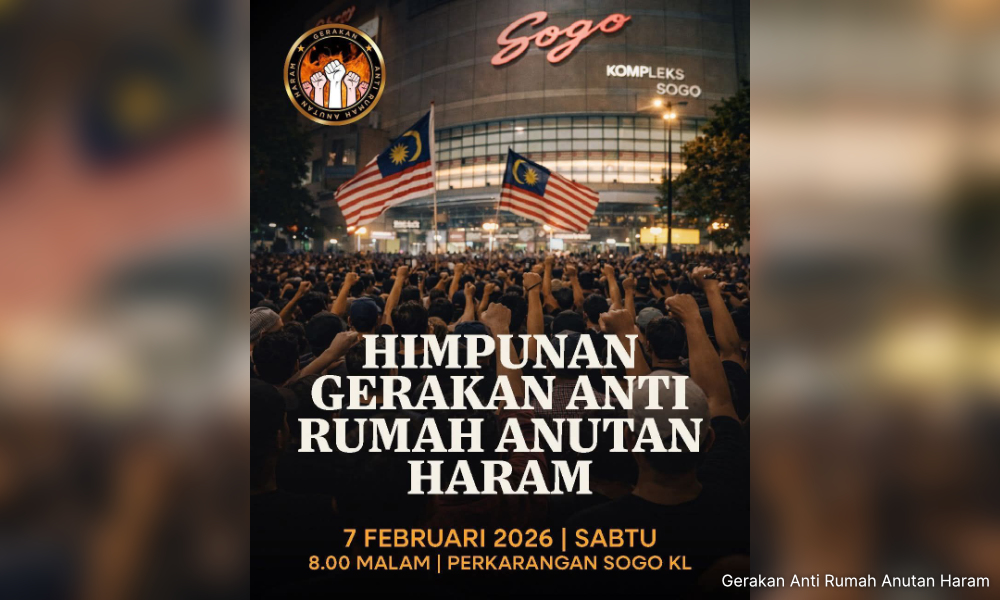
Poster for a rally against illegal houses of worship
The fight has now shifted to the volatile arena of social media, where boundaries vanish and laws, written or unwritten, seem absent.
Legally, Section 233 of the Communications and Multimedia Act (CMA) 1998 criminalises the improper use of network facilities or services, including creating or sharing content that is obscene, indecent, false, menacing, or offensive with the intent to annoy, abuse, threaten, or harass.
It carries penalties of fines up to RM50,000, imprisonment for up to one year, or both. But who is afraid of the law when it is not applied or enforced fairly?
We have seen velvet-glove treatment accorded to some, while others are met with iron-fisted action. This double standard has only fueled the rise and tempo of threats, insults, intimidation, and provocation - spreading unchecked, and exploited by opportunists eager to fan the fire.
R NADESWARAN is a veteran journalist who tries to live up to the ethos of civil rights leader John Lewis: “When you see something that is not right, not fair, not just, you have to speak up. You have to say something; you have to do something.” Comments: citizen.nades22@gmail.com
The fight has now shifted to the volatile arena of social media, where boundaries vanish and laws, written or unwritten, seem absent.
Legally, Section 233 of the Communications and Multimedia Act (CMA) 1998 criminalises the improper use of network facilities or services, including creating or sharing content that is obscene, indecent, false, menacing, or offensive with the intent to annoy, abuse, threaten, or harass.
It carries penalties of fines up to RM50,000, imprisonment for up to one year, or both. But who is afraid of the law when it is not applied or enforced fairly?
We have seen velvet-glove treatment accorded to some, while others are met with iron-fisted action. This double standard has only fueled the rise and tempo of threats, insults, intimidation, and provocation - spreading unchecked, and exploited by opportunists eager to fan the fire.
R NADESWARAN is a veteran journalist who tries to live up to the ethos of civil rights leader John Lewis: “When you see something that is not right, not fair, not just, you have to speak up. You have to say something; you have to do something.” Comments: citizen.nades22@gmail.com


Colonizing takes many forms. One effective way is via immigration and reproduction. Produce more babies than the people you want to colonize. Then when you are the majority you say “this is an Ishmael majority area, no kuils here. We might get confused”. Before you know it you are colonized. Just look at Birmingham or Whitechapel in UK. I went there for holidays recently. Might as well had gone to Lahore - much2 cheaper.
ReplyDelete