
OPINION | The Malays Don’t Really Love Najib. They Just Love Winning
17 Jan 2026 • 7:00 AM MYT

TheRealNehruism
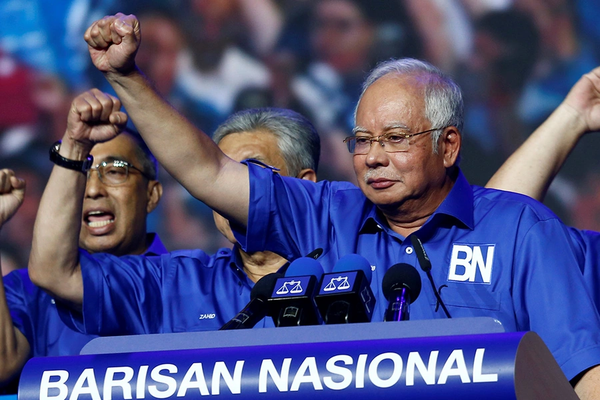
Image credit: Center of Foreign Relations
Many non-Malays are often bewildered by the support and affection Najib continues to receive from the Malay community.
To them, Najib is corrupt and criminal. He betrayed the trust placed in him by the nation. He is seen as a man without integrity or principles — someone who deserves condemnation and punishment, not appreciation, adoration, sympathy or support.
Anthony Loke, for example, appears to believe that this support stems from Malay attachment to UMNO, the party Najib once led.
“Like it or not, Najib used to lead UMNO,” Anthony said, in an attempt to rationalise why UMNO leaders continue to take offence when Najib is criticised, despite his multiple convictions in court.
This view, however, lacks insight.
It does not explain why Chinese voters have not shown similar support for Lim Guan Eng, even though Lim Guan Eng also faces legal issues and was once the leader of DAP, the dominant party among the Chinese community.
It also does not explain why Malays abandoned Najib in 2018. We often forget that Najib fell precisely because Malays turned against him and BN en masse during the 14th general election.
Nor does it explain why Najib’s political competitors — especially PAS — have been actively campaigning for his release in recent despite wanting him to be locked up in the previous years. In early 2025, PAS continued to rally in Putrajaya in support of Najib even after UMNO pulled out. PAS however, was in government when Najib was first jailed. If Anthony Loke’s explanation were correct, PAS — UMNO’s traditional rival — should have little reason to support Najib today, yet it does.
To explain this, and see the reason for the fluctuation in the relationship between Najib and the Malays, we need to recognise a more fundamental truth: all of us, at our core, love ourselves first.
If we love anything else — our family, our party, our leader, our race, or our nation — it is because we have extended our sense of self to include them. Loving them then, becomes another way for us to love ourselves.
But self-love is conditional.
We can only love ourselves when we believe we are successful, innocent, good, right, or winning. When we feel like failures — guilty, wrong, losing — we often turn against ourselves instead.
Seen in this light, Malay support for Najib today becomes easier to understand.
Many Malays today feel that they are failing and losing. Najib on the other hand, represents not only memories of past success, but also the possibility of future victory. Because they resent who they are now, but love who they were before, while having hopes that they will become who they were in the past in the future, they are have learned to appreciate and cherish Najib, for symbolizing who they once were and who they can once again be in the future.
Najib may have led UMNO to defeat in 2018, but by 2021 and 2022 he had turned things around, and led UMNO to victories in the Johor and Melaka state elections.
Among Malay leaders today, Najib is also seen by many as the one that is most capable of leading Malays back to victory and success.
If PAS, Bersatu, or UMNO had a leader capable of delivering victory today, I truly believe that Najib would still be condemned by the Malays as criminal and corrupt, just as how they condemned him back in the years leading to 2018, and be left to rot in prison as his comeuppance, without sentiment.
The reason Chinese voters have largely abandoned Lim Guan Eng is precisely because they have Anthony Loke — who they believe is capable of leading them to greater success and victory. In contrast, Lim Guan Eng is remembered as a leader who failed in 2020, when under his watch, power slipped out of their hand, in lieu of the Sheraton Move.
If Anthony Loke were to quit politics tomorrow however, and Lim Guan Eng is the only one that DAP and the Chinese community could depend on to bring them success and victory, I wouldn't be surprised if DAP and Chinese supporters rally by the thousands outside court during Guan Eng's court appearances too, just as how the Malays are doing for Najib today.
That Malays are supporting Najib today is also an indictment of Anwar Ibrahim, in the sense that many Malays do not see Anwar as “one of them.” As a result, they do not internalize Anwar’s victories as their own.
When politicians like Yeo Bee Yin, Tony Pua, or Wong Chen celebrate Najib’s defeats, they are likely doing so because they are seeing themselves as Malaysians who are celebrating justice for all Malaysians. But many Malays don't see the likes of Tony Pua, Yeo Bee Yin or Wong Chen as Malaysians. Instead of seeing them as Malaysians, the Malays are likely just seeing them as Chinese politicians who are celebrating the Malay's failure and setbacks.
The diametrically opposed views of Najib among Malays and non-Malays are symptomatic of a deeper psychosis in Malaysia’s racial relationships.
In Malaysia, the winning race tend to feel cooperative with the other races, while the losing races tend to feel competitive.
When a race feels like it is winning or has won, it will expand its identity and adopt the “Malaysian” identity, in order to be able to calls for cooperation with the other races, to consolidate and expand its winnings. When it is losing, on the other hand, it will retreat into racial identity, to stop itself from suffering further losses and defeats.
DAP politicians, let us not forget, were more openly “Chinese” when they they were losing. They only began adopting a more “Malaysian” posture when they believed they could win — and after they did.
Similarly, many Malays opposed Najib when UMNO was dominant and Malays felt secure. At that time, Malays could afford to think as Malaysians, and opposing Najib felt like they were doing their duty as Malaysian to protect Malaysia.
After Najib and BN fell in 2018 however, the non-Malays increasingly adopted the Malaysian identity after they rose following the fall of Najib an BN, which in turn caused the Malays to no longer feel “Malaysian” . Feeling that they were losing grounds to the non-Malays, many Malays then discarded the Malaysian identity they had briefly embraced to bring down Najib, and returned again to a more explicitly Malay one.
Once this happened, Najib ceased to be seen as a Malaysian villain and began to appear instead as a Malay hero — someone capable of leading Malays back to victory.
The tragedy of race relations in Malaysia is that the races here tend to compete with one another while imagining that their r relationship is based on cooperation.
This leaves us in an absurd situation where we will ask those we wish to defeat to cooperate with us — so that we may defeat them.
Once we understand how absurd it is to ask those who we wish to defeat to cooperate with us, the persistent and never-ending tension in Malaysia’s racial relationships becomes far less mysterious.
Many non-Malays are often bewildered by the support and affection Najib continues to receive from the Malay community.
To them, Najib is corrupt and criminal. He betrayed the trust placed in him by the nation. He is seen as a man without integrity or principles — someone who deserves condemnation and punishment, not appreciation, adoration, sympathy or support.
Anthony Loke, for example, appears to believe that this support stems from Malay attachment to UMNO, the party Najib once led.
“Like it or not, Najib used to lead UMNO,” Anthony said, in an attempt to rationalise why UMNO leaders continue to take offence when Najib is criticised, despite his multiple convictions in court.
This view, however, lacks insight.
It does not explain why Chinese voters have not shown similar support for Lim Guan Eng, even though Lim Guan Eng also faces legal issues and was once the leader of DAP, the dominant party among the Chinese community.
It also does not explain why Malays abandoned Najib in 2018. We often forget that Najib fell precisely because Malays turned against him and BN en masse during the 14th general election.
Nor does it explain why Najib’s political competitors — especially PAS — have been actively campaigning for his release in recent despite wanting him to be locked up in the previous years. In early 2025, PAS continued to rally in Putrajaya in support of Najib even after UMNO pulled out. PAS however, was in government when Najib was first jailed. If Anthony Loke’s explanation were correct, PAS — UMNO’s traditional rival — should have little reason to support Najib today, yet it does.
To explain this, and see the reason for the fluctuation in the relationship between Najib and the Malays, we need to recognise a more fundamental truth: all of us, at our core, love ourselves first.
If we love anything else — our family, our party, our leader, our race, or our nation — it is because we have extended our sense of self to include them. Loving them then, becomes another way for us to love ourselves.
But self-love is conditional.
We can only love ourselves when we believe we are successful, innocent, good, right, or winning. When we feel like failures — guilty, wrong, losing — we often turn against ourselves instead.
Seen in this light, Malay support for Najib today becomes easier to understand.
Many Malays today feel that they are failing and losing. Najib on the other hand, represents not only memories of past success, but also the possibility of future victory. Because they resent who they are now, but love who they were before, while having hopes that they will become who they were in the past in the future, they are have learned to appreciate and cherish Najib, for symbolizing who they once were and who they can once again be in the future.
Najib may have led UMNO to defeat in 2018, but by 2021 and 2022 he had turned things around, and led UMNO to victories in the Johor and Melaka state elections.
Among Malay leaders today, Najib is also seen by many as the one that is most capable of leading Malays back to victory and success.
If PAS, Bersatu, or UMNO had a leader capable of delivering victory today, I truly believe that Najib would still be condemned by the Malays as criminal and corrupt, just as how they condemned him back in the years leading to 2018, and be left to rot in prison as his comeuppance, without sentiment.
The reason Chinese voters have largely abandoned Lim Guan Eng is precisely because they have Anthony Loke — who they believe is capable of leading them to greater success and victory. In contrast, Lim Guan Eng is remembered as a leader who failed in 2020, when under his watch, power slipped out of their hand, in lieu of the Sheraton Move.
If Anthony Loke were to quit politics tomorrow however, and Lim Guan Eng is the only one that DAP and the Chinese community could depend on to bring them success and victory, I wouldn't be surprised if DAP and Chinese supporters rally by the thousands outside court during Guan Eng's court appearances too, just as how the Malays are doing for Najib today.
That Malays are supporting Najib today is also an indictment of Anwar Ibrahim, in the sense that many Malays do not see Anwar as “one of them.” As a result, they do not internalize Anwar’s victories as their own.
When politicians like Yeo Bee Yin, Tony Pua, or Wong Chen celebrate Najib’s defeats, they are likely doing so because they are seeing themselves as Malaysians who are celebrating justice for all Malaysians. But many Malays don't see the likes of Tony Pua, Yeo Bee Yin or Wong Chen as Malaysians. Instead of seeing them as Malaysians, the Malays are likely just seeing them as Chinese politicians who are celebrating the Malay's failure and setbacks.
The diametrically opposed views of Najib among Malays and non-Malays are symptomatic of a deeper psychosis in Malaysia’s racial relationships.
In Malaysia, the winning race tend to feel cooperative with the other races, while the losing races tend to feel competitive.
When a race feels like it is winning or has won, it will expand its identity and adopt the “Malaysian” identity, in order to be able to calls for cooperation with the other races, to consolidate and expand its winnings. When it is losing, on the other hand, it will retreat into racial identity, to stop itself from suffering further losses and defeats.
DAP politicians, let us not forget, were more openly “Chinese” when they they were losing. They only began adopting a more “Malaysian” posture when they believed they could win — and after they did.
Similarly, many Malays opposed Najib when UMNO was dominant and Malays felt secure. At that time, Malays could afford to think as Malaysians, and opposing Najib felt like they were doing their duty as Malaysian to protect Malaysia.
After Najib and BN fell in 2018 however, the non-Malays increasingly adopted the Malaysian identity after they rose following the fall of Najib an BN, which in turn caused the Malays to no longer feel “Malaysian” . Feeling that they were losing grounds to the non-Malays, many Malays then discarded the Malaysian identity they had briefly embraced to bring down Najib, and returned again to a more explicitly Malay one.
Once this happened, Najib ceased to be seen as a Malaysian villain and began to appear instead as a Malay hero — someone capable of leading Malays back to victory.
The tragedy of race relations in Malaysia is that the races here tend to compete with one another while imagining that their r relationship is based on cooperation.
This leaves us in an absurd situation where we will ask those we wish to defeat to cooperate with us — so that we may defeat them.
Once we understand how absurd it is to ask those who we wish to defeat to cooperate with us, the persistent and never-ending tension in Malaysia’s racial relationships becomes far less mysterious.
***
Nehru matey tends to be philosophical in his writings, wakakaka


No comments:
Post a Comment