


Hanipa Maidin
Published: Jan 25, 2026 12:34 PM
Updated: 3:34 PM
COMMENT | US President Donald Trump’s insatiable desire for occupying sovereign states has been running wild.
Having illegally captured (read kidnapped) an elected president of Venezuela, his fixation on acquiring Greenland - an autonomous territory of Nato member, Denmark - has escalated into a new transatlantic imbroglio.
So far, Trump has come up with threats of sweeping new tariffs and even taking Greenland by military force. No doubt such threats have rattled the stock market.
Since both the US and Denmark are members of Nato, Article 5 of the Nato charter has been haunting Trump in accomplishing his unhinged mission.
Collective defence is a Nato’s hallmark principle and Article 5 enacts that “an armed attack against one Nato member shall be considered an attack against them all”.
Article 5 is supposed to protect a sovereign territory belonging to Denmark from being invaded by its enemies, not by its own ally.
So, is America obligated to assist Denmark when Greenland is to be invaded by America?
Published: Jan 25, 2026 12:34 PM
Updated: 3:34 PM
COMMENT | US President Donald Trump’s insatiable desire for occupying sovereign states has been running wild.
Having illegally captured (read kidnapped) an elected president of Venezuela, his fixation on acquiring Greenland - an autonomous territory of Nato member, Denmark - has escalated into a new transatlantic imbroglio.
So far, Trump has come up with threats of sweeping new tariffs and even taking Greenland by military force. No doubt such threats have rattled the stock market.
Since both the US and Denmark are members of Nato, Article 5 of the Nato charter has been haunting Trump in accomplishing his unhinged mission.
Collective defence is a Nato’s hallmark principle and Article 5 enacts that “an armed attack against one Nato member shall be considered an attack against them all”.
Article 5 is supposed to protect a sovereign territory belonging to Denmark from being invaded by its enemies, not by its own ally.
So, is America obligated to assist Denmark when Greenland is to be invaded by America?
Since 1949, the unwavering pledge has bound together all members of Nato. The UK and Danish Prime Ministers Keir Starmer and Mette Frederiksen, respectively, have recently agreed that security in the Arctic region was a “matter for the entire Nato alliance”.
A basic truism about Greenland must be overlooked, namely, the Greenland Icecap possesses considerable strategic and economic value not only to the controlling power but to the entire free world.
Strategic location
For the last 50 years, climatic changes in its coastal waters have resulted in a rapid development of fisheries utilised by several major powers. It was reported that some significant mining activity had also been undertaken.
The strategic location of the ice continent renders such possession by friendly powers imperative if the western alliance is to remain in undisputed control of the "North Atlantic Life Line”.
Needless to say, other facets such as the fur trade and the importance of its location for meteorological studies have added to Greenland’s significance.
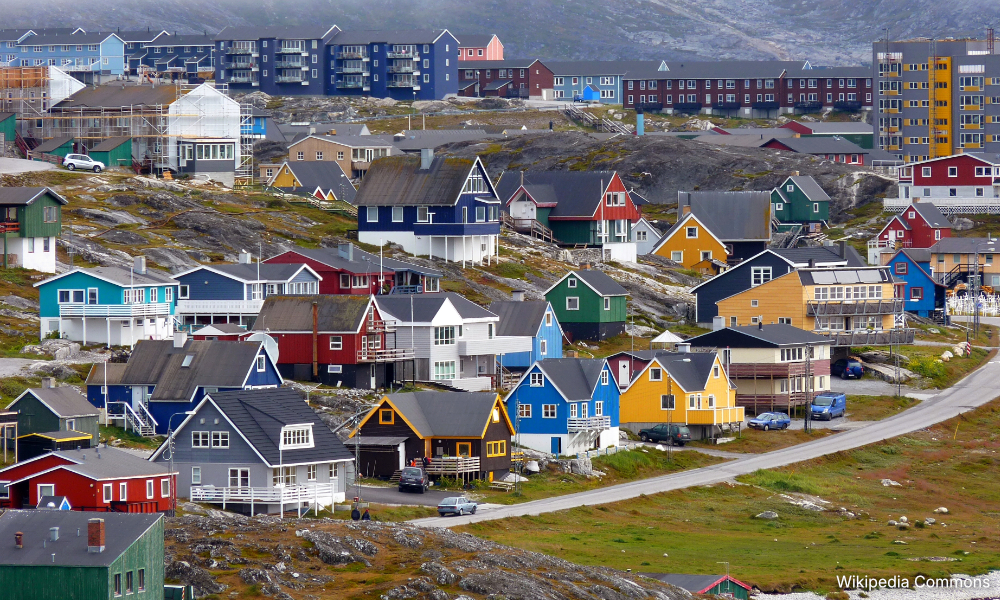
Regardless, international law has duly recognised Denmark's legal right to Greenland. In 1933, the Permanent Court of International Justice (PCIJ) ruled in favour of Denmark in its claim against Norway on its sovereignty over all of Greenland, including the disputed eastern part that Norway claimed.
The upshot of PCIJ's decision was that Denmark holds both legal sovereignty and corpus possessionis - physical possession/control - of Greenland.
By the way, PCIJ was the precursor of the International Court of Justice (ICJ).
It is instructive to note that one piece of cogent evidence Denmark used against Norway in PCIJ was a declaration on behalf of the Norwegian government by its then-foreign minister that Norway would not make any difficulty in the settlement of the question of Greenland sovereignty.
The issue in the court then was whether a country was bound by the reply given on its behalf by its foreign minister. The PCIJ answered it in the affirmative.
Batu Puteh case
Such smoking gun evidence reminds me of the Batu Puteh/Pedra Branca case at the ICJ.
One crucial piece of evidence, which Singapore heavily relied upon, was a 1953 letter from the acting state secretary of Johor in responding to Singapore's query about the island's status.
READ MORE: How did Malaysia lose sovereignty of Pulau Batu Puteh?
Singapore forcefully argued that the letter was a form of admission that Johor allegedly relinquished ownership claim of Batu Puteh - indicating Johor's lack of sovereignty claim at the time.
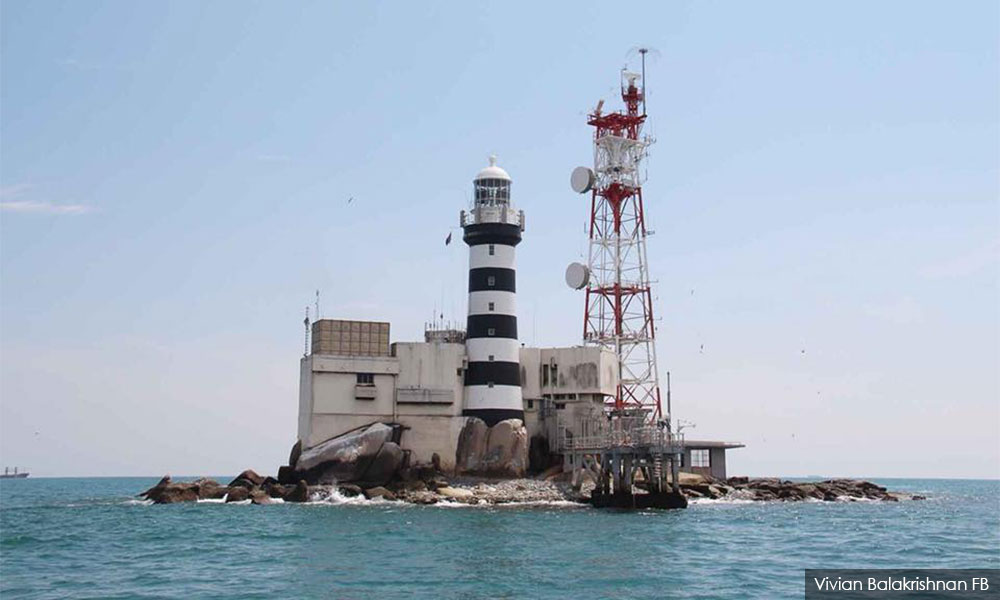
Pulau Batu Puteh
Even though Malaysia subsequently argued that such a damning letter was purportedly unauthorised and ineffective, the ICJ nonetheless found it significant in determining the issue of the actual sovereignty of the island.
Be that as it may, a good lesson to be learned here is that a response by the diplomatic representative of a foreign power would be binding upon the country the minister represents. So, be careful.
Even though Malaysia subsequently argued that such a damning letter was purportedly unauthorised and ineffective, the ICJ nonetheless found it significant in determining the issue of the actual sovereignty of the island.
Be that as it may, a good lesson to be learned here is that a response by the diplomatic representative of a foreign power would be binding upon the country the minister represents. So, be careful.
HANIPA MAIDIN is a former deputy minister of law.


47’s “predicament” is nothing compared to BullyXi’s…..I’ve lost count of how many Top Generals he has sacked.
ReplyDeleteXi Jinping just purged General Zhang Youxia, China's Central Military Commission (CMC) Vice Chairman, one of the most powerful figures in the PLA.
In CCP China, whoever controls the military controls the country.
The CMC has become more ridiculous from 1 chairman 1 vice chairman 2 members to 1 chairman 1 member 😂😂😂
https://x.com/stoa1984/status/2014969887886553452?s=46&t=8K6fzabO3g6uaj4KxwSSjg
wakakakaka… before i fart about the in& out of Chinese military structure, get a reliable 台毒 to enlighten u, who ACTUALLY controls the military command!
DeleteReason for Zhang Youxia’s arrest: leaking China’s nuclear weapons secrets to the United States, according to WSJ.
ReplyDeleteThe implication is extremely grave.
By publicly floating “leaking nuclear secrets to the U.S.”, the CCP is nuking Zhang Youxia’s reputation beyond recovery and justifying any punishment internally. This is the heaviest possible political charge short of treason.
Either:
Xi’s inner circle is catastrophically compromised, or
The regime is fabricating the most extreme accusations to rationalize a purge driven by fear.
Both scenarios point to the same conclusion:
The problem is no longer factions or corruption. It’s that proximity to Xi itself has become a huge liability.
A regime obsessed with “absolute loyalty” somehow can’t find a single loyal general.
When everyone around you is a traitor, maybe the problem isn’t leaks,
it’s paranoia masquerading as governance.
https://x.com/Ken_LoveTW/status/2015078423253897470?s=20
wakakakaka…many versions of the arrest stories.
DeleteYet, u buy this least likely one!
Mfer, Zhang Youxia has NO access to any nuclear armament infos of substance, despite he being the 2nd man in the Central Military Commission.