FMT:
No tantrums, just exposing UEC politicisation, says ex-task force chairman
11 hours ago
Mikha Chan
Eddin Khoo says the committee culture he established, while helming the task force, was capable of bringing together disparate views
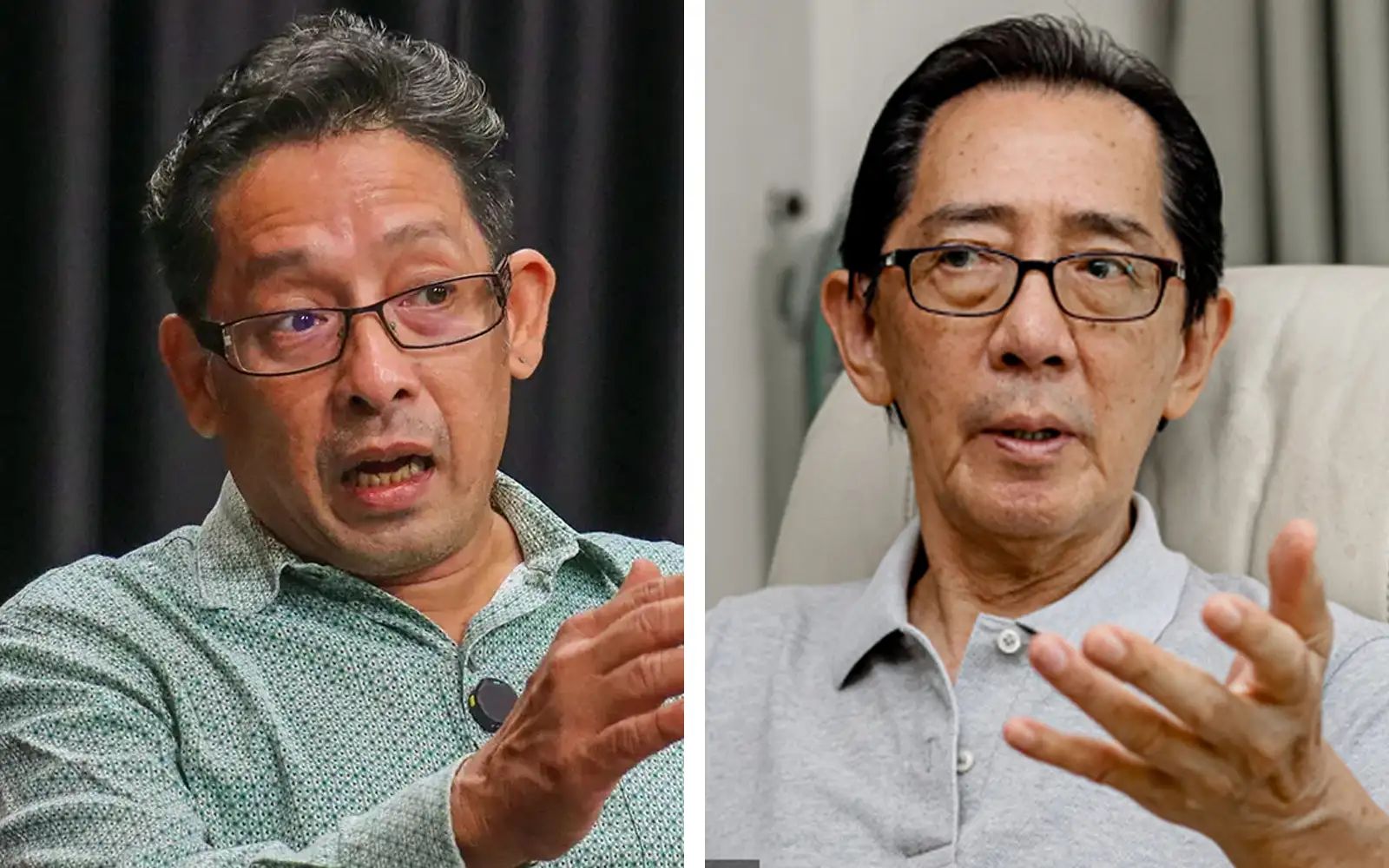
Eddin Khoo says he and Kua Kia Soong share the same stance on the UEC issue, but differ in their approach.
PETALING JAYA: Former task force chairman Eddin Khoo has defended his remarks about ex-deputy education minister Teo Nie Ching, stressing they were not a “tantrum” or “tirade” but an attempt to highlight how politicised the debate over recognising the Unified Examination Certificate (UEC) has become.
In a letter published by FMT on Thursday, former MP and Suaram director Kua Kia Soong argued that Khoo’s criticism of Teo was misplaced.
Kua said Khoo should have directed his frustrations at the government, not a junior minister, for “burying” the task force’s report and withholding its findings.
Khoo objected, saying he was simply pointing out where politicisation lay in the issue.
“What really frustrated me at the time was that the deputy minister seemed to have no respect for the committee. A deputy education minister is not merely a ‘junior minister’,” he told FMT.
Khoo, who led the task force formed by the Pakatan Harapan (PH) government in 2019, had earlier claimed in a podcast that the issue continues to be politicised “because of people like Teo”, whom he described as “provocateurs”.
He accused Teo of “stoking flames” by making one statement to the Chinese press and another to the Malay media, calling her “exploitative” and “manipulative”, and alleging she did not want an actual solution to the issue.
Teo later rejected Khoo’s accusations as baseless, saying she had never hidden her advocacy for UEC recognition or “tailored my principles to suit the room”.
She repeated her belief that the UEC was “good for Malaysia” and that it would bolster the education ecosystem and support talent development without tarnishing national identity.
Khoo, however, said he had evidence to support his claims, having confronted Teo in text messages dating back to 2020.
“Of course, she said it was a misunderstanding. Kua may think it is trivial and regard the deputy minister as a small factor, but such tactics prolong things and create a lot of bad faith. Surely, that’s not unimportant,” he said.
Same stance, different approaches
Khoo emphasised that he and Kua share the same stance on the UEC issue but differ in their approach. He noted that Kua had previously been invited to join the task force but refused to “dignify” it with his participation.
“I think that was the word he used. He chose not to ‘dignify’ or acknowledge the committee’s role. I don’t disagree with any of the questions he raises. I may not raise them as ferociously as he does… but they have constantly been raised,” Khoo said.
He added that his objective with the task force was not merely to review the UEC issue but to establish a credible and “highly interactive” committee culture that could bring together and negotiate disparate views.
Khoo criticised the current committee culture, which he said largely consists of “three or five people sitting in a room and making decisions”.
“We brought together people and groups who were diametrically opposed to each other. Dong Zong and Ikatan Muslimin Malaysia sat down in one room and had a very open discussion. We brought young people from various groups like the Federation of Peninsular Malay Students to have a discussion with UEC graduates.
“This is precisely why I conducted the task force’s activities the way I did. At the very least, if we can create a credible and serious committee culture, which we don’t have at the moment, that is enough for me,” he said.
In a letter published by FMT on Thursday, former MP and Suaram director Kua Kia Soong argued that Khoo’s criticism of Teo was misplaced.
Kua said Khoo should have directed his frustrations at the government, not a junior minister, for “burying” the task force’s report and withholding its findings.
Khoo objected, saying he was simply pointing out where politicisation lay in the issue.
“What really frustrated me at the time was that the deputy minister seemed to have no respect for the committee. A deputy education minister is not merely a ‘junior minister’,” he told FMT.
Khoo, who led the task force formed by the Pakatan Harapan (PH) government in 2019, had earlier claimed in a podcast that the issue continues to be politicised “because of people like Teo”, whom he described as “provocateurs”.
He accused Teo of “stoking flames” by making one statement to the Chinese press and another to the Malay media, calling her “exploitative” and “manipulative”, and alleging she did not want an actual solution to the issue.
Teo later rejected Khoo’s accusations as baseless, saying she had never hidden her advocacy for UEC recognition or “tailored my principles to suit the room”.
She repeated her belief that the UEC was “good for Malaysia” and that it would bolster the education ecosystem and support talent development without tarnishing national identity.
Khoo, however, said he had evidence to support his claims, having confronted Teo in text messages dating back to 2020.
“Of course, she said it was a misunderstanding. Kua may think it is trivial and regard the deputy minister as a small factor, but such tactics prolong things and create a lot of bad faith. Surely, that’s not unimportant,” he said.
Same stance, different approaches
Khoo emphasised that he and Kua share the same stance on the UEC issue but differ in their approach. He noted that Kua had previously been invited to join the task force but refused to “dignify” it with his participation.
“I think that was the word he used. He chose not to ‘dignify’ or acknowledge the committee’s role. I don’t disagree with any of the questions he raises. I may not raise them as ferociously as he does… but they have constantly been raised,” Khoo said.
He added that his objective with the task force was not merely to review the UEC issue but to establish a credible and “highly interactive” committee culture that could bring together and negotiate disparate views.
Khoo criticised the current committee culture, which he said largely consists of “three or five people sitting in a room and making decisions”.
“We brought together people and groups who were diametrically opposed to each other. Dong Zong and Ikatan Muslimin Malaysia sat down in one room and had a very open discussion. We brought young people from various groups like the Federation of Peninsular Malay Students to have a discussion with UEC graduates.
“This is precisely why I conducted the task force’s activities the way I did. At the very least, if we can create a credible and serious committee culture, which we don’t have at the moment, that is enough for me,” he said.


No comments:
Post a Comment