
Wednesday, January 14, 2026
Japan Secretly Building Nukes, Could Go Nuclear Overnight Under Takaichi’s Policy Shift, Chinese Report Claims
By Nitin J Ticku
-January 14, 2026

Japan has one of the strongest positions on nuclear weapons. Japan signed the Nuclear Nonproliferation Treaty (NPT) in February 1970, one month before it entered into force.
Japan also adheres to the Three Non-Nuclear Principles. First articulated by Prime Minister Eisaku Satō in 1967, and formally adopted as a parliamentary resolution in 1971, the three principles are (i) not to possess nuclear weapons, (ii) not to produce nuclear weapons, and (iii) not to permit the introduction of nuclear weapons into Japanese territory.
As the only nation to have suffered nuclear attacks, it was a bold decision to commit to not developing, possessing, or introducing nuclear weapons.
However, amid increasing threats from a nuclear-armed North Korea, a dangerously militarizing China, which is also expanding its nuclear arsenal at the fastest pace in the world, and Russia’s war in Ukraine, Japan has been reviewing many of its post World War-II defense and security policies.
For instance, in 2014, Japan reinterpreted its constitution to allow Tokyo to exercise the right to collective self-defense in certain situations, specifically when an armed attack on a close ally threatens Japan’s own survival.
Recently, Prime Minister Sanae Takaichi said that an armed attack on Taiwan by China could constitute an “existential threat” to Japan, thereby opening the possibility of a Japanese military response in such a scenario.
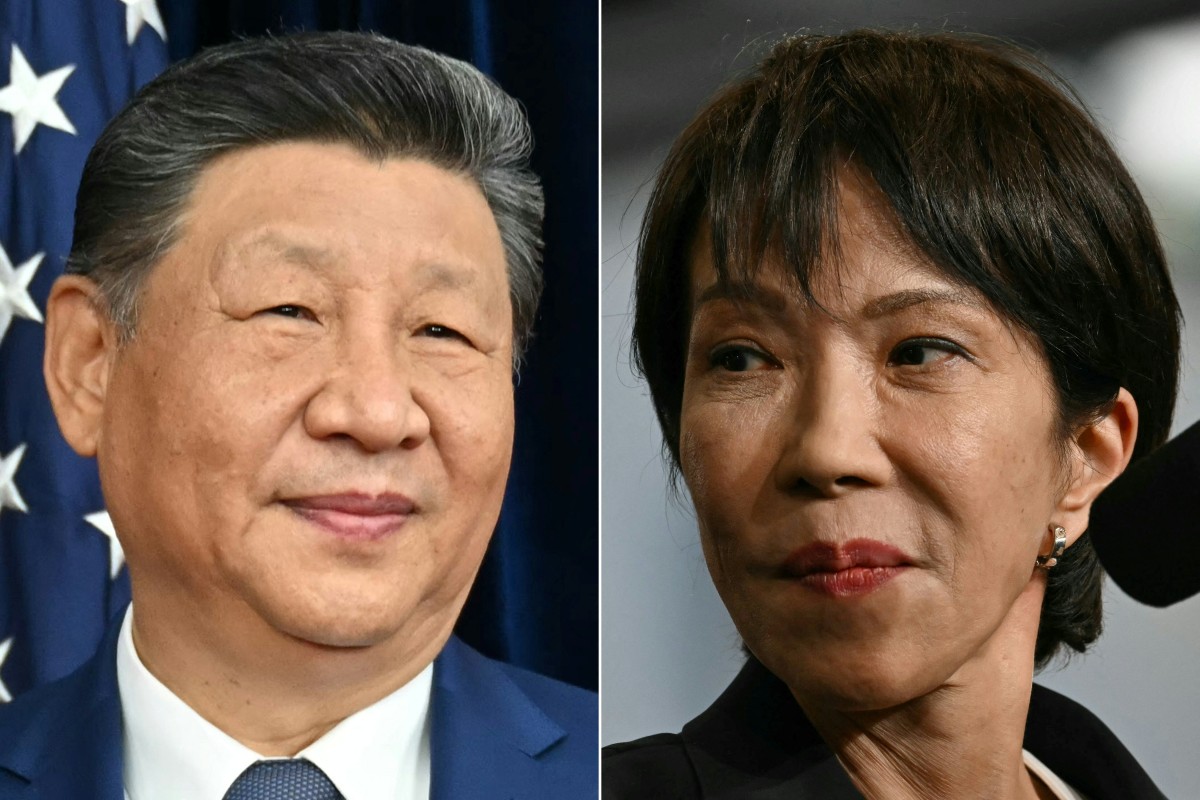
(COMBO) This combination of pictures created on October 31, 2025 shows (L) China’s President Xi Jinping during a meeting at Gimhae Air Base in Busan on October 30, 2025, and (R) Japan’s Prime Minister Sanae Takaichi speaking in front of US Navy personnel on board the US Navy’s USS George Washington aircraft carrier at the US naval base in Yokosuka on October 28, 2025. (Photo by ANDREW CABALLERO-REYNOLDS / AFP)
Similarly, Japan has eased its self-imposed restrictions on the export of lethal weapons to foreign countries.
Again, in 2022, under the National Defense Strategy, Japan eased the self-imposed restrictions on acquiring long-range strike capabilities, paving the way for the development of long-range missiles.
Furthermore, in December last year, Japan passed a record USD 58 billion defense budget, with a plan to increase defense spending to more than 2% of GDP by next year.
However, is Japan secretly also reviewing its commitments under the NPT and the Three Non-Nuclear Principles, and striving to develop nuclear weapons?
China seems to think so.
Similarly, Japan has eased its self-imposed restrictions on the export of lethal weapons to foreign countries.
Again, in 2022, under the National Defense Strategy, Japan eased the self-imposed restrictions on acquiring long-range strike capabilities, paving the way for the development of long-range missiles.
Furthermore, in December last year, Japan passed a record USD 58 billion defense budget, with a plan to increase defense spending to more than 2% of GDP by next year.
However, is Japan secretly also reviewing its commitments under the NPT and the Three Non-Nuclear Principles, and striving to develop nuclear weapons?
China seems to think so.
Japan Is Building Nukes, China Warns
Earlier this week, Beijing released a 30-page report that included a call for the international community to ‘take concrete and strong measures’ against Japan’s nuclear ambitions.
“Japan may already have produced weapons-grade plutonium in secret and has the technological and economic capabilities to achieve nuclear armament in a short period of time,” the report said.
It also cited a remark made by former US President Joe Biden that Japan had the capacity to have nuclear weapons “virtually overnight”.
Biden first gave the information in an interview with the American public broadcaster PBS in June 2016.
“What happens if Japan, who could tomorrow, could go nuclear tomorrow? They have the capacity to do it virtually overnight,” Biden said when recalling a conversation he had with Xi.
The 30-page report titled “Nuclear Ambitions of Japan’s Right-Wing Forces: A Serious Threat to World Peace” was released in Beijing earlier this week.
The report was produced jointly by the China Arms Control and Disarmament Association (CACDA) and the Nuclear Strategic Planning Research Institute, a think tank affiliated with the China National Nuclear Corporation.
Notably, the report claimed that, notwithstanding Japan’s international commitments under the NPT treaty, Japan had secretly pursued the research and development of nuclear weapons since the Second World War.
“(Japan) has since established a comprehensive nuclear fuel cycle system and possesses robust nuclear industrial capabilities,” the report said.
The report highlighted that Japan possessed the capability to produce weapons-grade plutonium, a critical material for making nuclear bombs.
The report said Japan was the only non-nuclear state under the NPT with spent nuclear fuel reprocessing technology and the ability to extract weapons-grade plutonium, which is recovered from uranium fuel irradiated for only two to three months in a plutonium production reactor.
“According to publicly available information from the Japan Atomic Energy Agency, Japan reprocessed spent fuel from the experimental fast reactor Joyo in 1984 to recover plutonium. The reactor’s initial core design included a breeding zone, and from its operation beginning in 1978 until the core design was changed in 1994, it technically had the potential to produce weapons-grade plutonium,” Hong Kong-based South China Morning Post reported, quoting the paper.
“US experts have analysed that Japan likely used the Joyo experimental fast reactor to produce approximately 40kg [88lbs] of weapons-grade plutonium before the core design was modified,” it said, citing a 1994 Greenpeace study.
It highlighted that Japan had stockpiled plutonium far exceeding its needs for civilian nuclear power.
Furthermore, the report said, Japan maintained operational platforms with nuclear weapons delivery capabilities and had the technological foundation to develop nuclear-powered submarines and aircraft carriers.
At the launch of the report, Dai Huaicheng, the CACDA’s secretary general, said that “for some time now, Japanese Prime Minister Sanae Takaichi has hinted at revising the three non-nuclear principles, with senior Japanese officials even going so far as to claim that Japan should possess nuclear weapons”.
Dai added that such remarks revealed Japan’s ambitions “to break free from the constraints of the international order and accelerate the revival of militarism and remilitarisation”.
Some Chinese experts believe that not only does Japan have the weapons-grade plutonium and the technological capability to produce nuclear weapons, but Tokyo might already have two nuclear bombs in its possession.
“If they dare to pursue nuclear weapons, that number could grow to three or four. And nowadays, the yield of just one tactical nuclear weapon is 10 times that of the two bombs they once received,” a China-based security expert said, referring to the bombing of Hiroshima and Nagasaki in World War II.
Meanwhile, Chinese foreign ministry spokeswoman Mao Ning said, “Since the new Japanese government took office, it has not hesitated to reveal the nuclear ambitions of right-wing forces. Prime Minister Sanae Takaichi and other senior officials sought to revise the three non-nuclear principles, implied the introduction of nuclear-powered submarines, called for boosting ‘extended deterrence’ that Japan receives, and openly claimed that “Japan should have nuclear weapons.”
Notably, Japanese Prime Minister Sanae Takaichi and former Prime Minister Shinzo Abe have indeed suggested revisiting Japan’s nuclear policy.
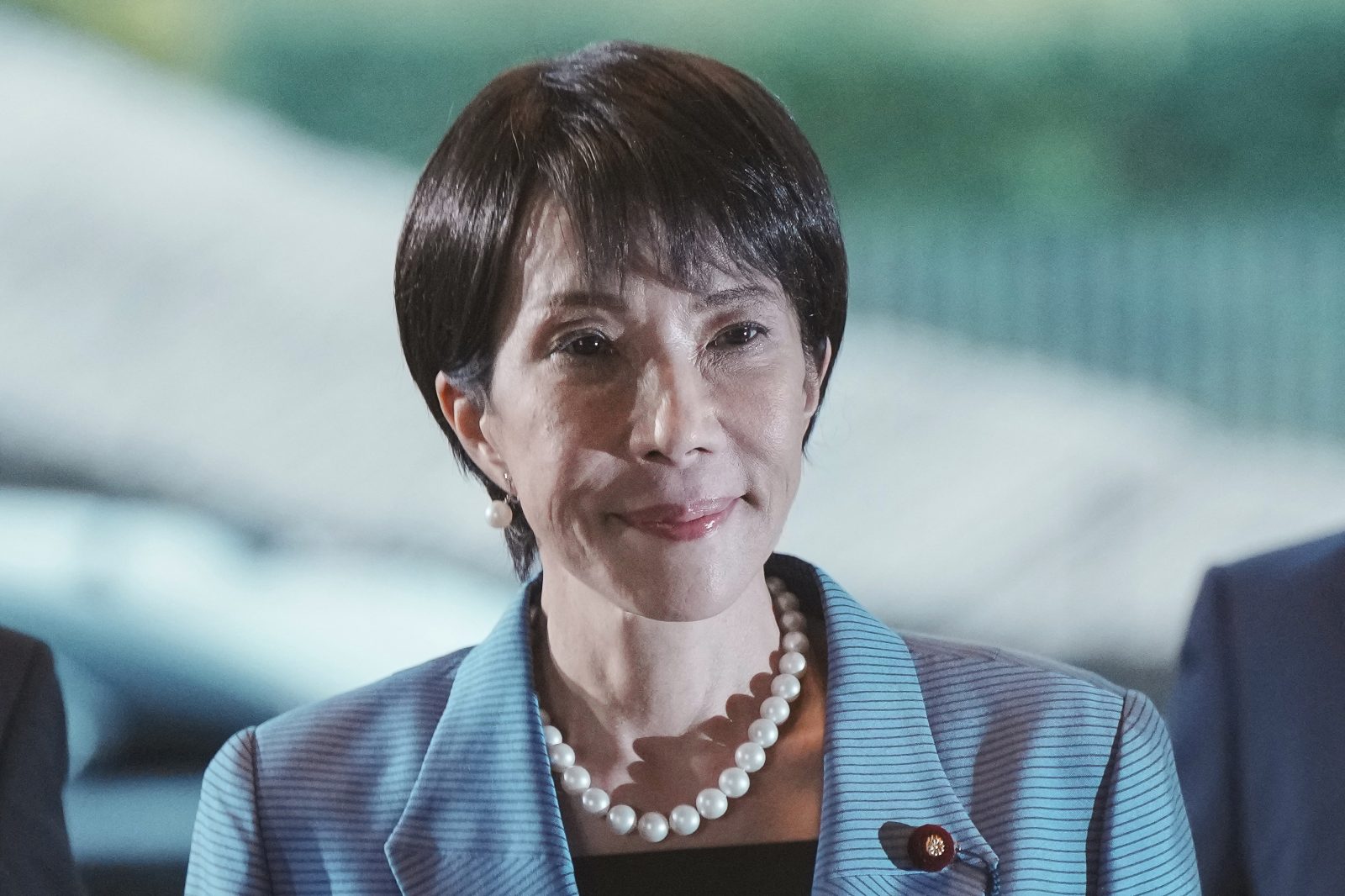
Japan’s new Prime Minister Sanae Takaichi arrives at the prime minister’s office after being appointed by the parliament, in Tokyo on October 21, 2025. (Photo by Kazuhiro NOGI / AFP)
Prime Minister Takaichi has previously suggested in her writings that Japan’s reliance on the U.S. nuclear umbrella makes the principle of prohibiting nuclear weapons on Japanese soil increasingly unrealistic.
Similarly, in 2022, former Prime Minister Shinzo Abe suggested that Tokyo should share nuclear weapons with the US.
Japan has enjoyed the protection of the United States’ nuclear umbrella for more than 60 years. However, Tokyo’s self-imposed restrictions on the introduction of nuclear weapons on Japanese territory do create practical problems in enforcing this protective nuclear umbrella in an effective manner.
Takaichi has also shown her openness to acquiring nuclear-powered submarines.
In an interview with the Yomiuri Shimbun, Takaichi addressed the introduction of nuclear-powered submarines, saying, “We will not rule out any options and will review measures to enhance deterrence and response capabilities.”
While cabinet officials have previously expressed intentions to acquire nuclear-powered submarines, this was the first time Takaichi officially mentioned it.
Earlier, following U.S. President Donald Trump’s approval of South Korea’s development of nuclear-powered submarines, Defense Minister Shinjiro Koizumi had stated that “South Korea and Australia will possess them, and the U.S. and China already have them.”
Additionally, in December last year, a senior official in charge of security at the Prime Minister’s Office was reported to have told reporters on condition of non-attribution, “Ultimately, one’s own country is defended by oneself. Japan should also possess nuclear weapons.”
However, it must be noted that these remarks signalling Tokyo’s openness to revisiting its nuclear policy have faced strong opposition within Japan.
While China is exaggerating the nuclear danger emanating from Japan for obvious reasons, these remarks from senior Japanese politicians, including serving and former prime ministers, do suggest that Tokyo’s nuclear policy is, indeed, undergoing a churning, and as security risks escalate, Japan can also revisit its commitments under the Three Nuclear Principles.
Nitin is the Editor of the EurAsian Times and holds a double Master’s degree in Journalism and Business Management. He has nearly 20 years of global experience in the ‘Digital World’.


No comments:
Post a Comment