Dennis Ignatius
~ Provoking discussion, dissent & debate on politics, diplomacy, human rights & civil society.

Anwar, Zahid And The Betrayal Of Reformasi
12MondayJan 2026
Tags
Anwar Ibrahim, corruption, DNAA, MACC, Reformasi, UMNO, Zahid Hamidi
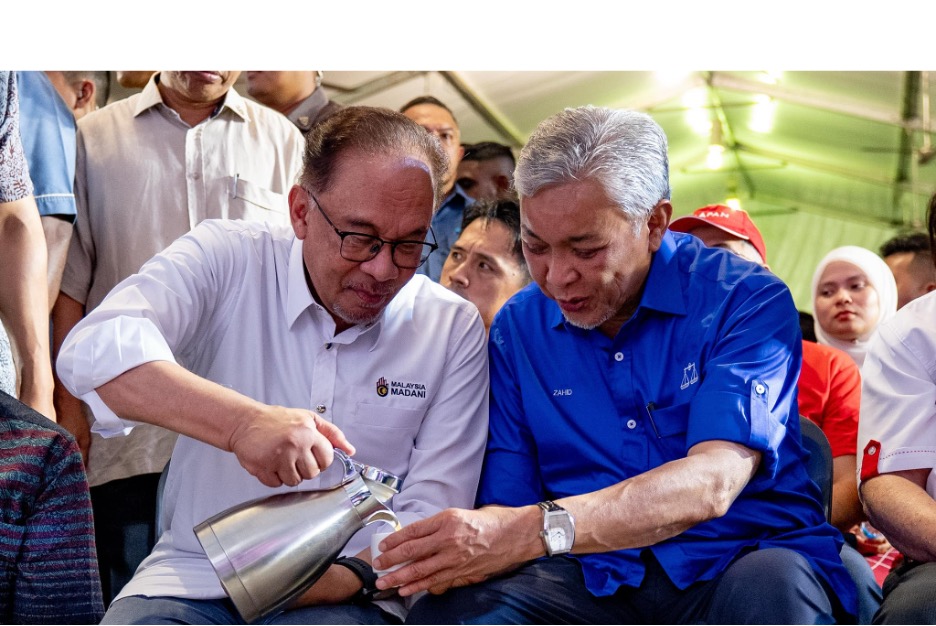
[1] It was only days ago that Prime Minister Anwar Ibrahim was once again pledging long-promised reforms. He spoke loftily about integrity in government and the need for tougher anti-corruption enforcement across politics, the civil service, and the enforcement agencies.[1]
[2] For a brief moment, it seemed as though the message from Sabah had finally registered – that a plurality of Malaysians are disaffected and disappointed with his leadership, and frustrated by his failure to honour the reforms that once defined his politics.
[3] Then came the shocking announcement from the Attorney General that no further action would be taken to pursue the charges against Deputy Prime Minister Zahid Hamidi. Apparently, the available evidence was found to be insufficient to proceed with the case.[2] If Malaysians felt blindsided, they had good reason.
[4] Remember, the court had previously found that Zahid had a prima facie case to answer on all 47 charges of corruption and abuse of power based on the evidence that the AG’s office itself had presented. The trial was already well advanced – 77 days, 114 witnesses called – when the Attorney General abruptly moved to discontinue proceedings.[3] The official excuse at the time was that the MACC was conducting further investigations.
[5] What was exceedingly strange was that the same AG served both prime ministers Muhyiddin Yassin and Ismail Sabri without any talk of a DNAA for Zahid, but after Anwar became PM the same AG apparently had a change of heart? And that too just after the lead prosecutor mysteriously retired.
[6] Forced to grant a discharge not amounting to acquittal, the judge nonetheless pointedly observed that if the prosecution later abandoned the case entirely, “precious judicial time and a great amount of taxpayers’ money” would have been wasted.[4] His message, wrapped in judicial decorum, was clear enough.
[7] Although Anwar tried to deflect public anger at the time by suggesting that the case against Zahid was politically motivated,[5] it was plain to see that a Faustian bargain had been struck: UMNO’s support for his coalition in exchange for Zahid’s legal reprieve. When they discontinued the case against Zahid in 2023, they made it sound like a temporary pause. Now, after a decent interval, Zahid is about to receive a full reprieve, never to be charged again on those 47 charges.
[8] Legally, the Attorney General is not obliged to justify his decision. Politically and morally, however, he owes the public a great deal more. When a senior political figure facing a mountain of serious charges – charges for which he is already being tried in court – is suddenly freed without even a token justification, the stench of impunity and abuse of power is hard to ignore.
[9] Until the Attorney General explains himself, Malaysians are entitled to conclude that the decision was rooted not in law or evidence but in expediency; that the prime minister cynically placed his own survival above the imperative of justice.
[10] With Anwar apparently willing to pay any price to keep Zahid on his side, Zahid has been able to write his own terms – the deputy premiership, important cabinet posts for his allies, and now freedom from all legal jeopardy.
[11] What comes next could be even more consequential. The upcoming UMNO general assembly appears poised to demand a full pardon for Najib Razak. They claim that his conviction ought not to erase a lifetime of public service. While that may be true, a lifetime of public service cannot be justification for criminal behaviour. But will Anwar – who previously helped move Najib’s pardon petition to the front of the queue – continue to defer to Zahid for the sake of unity within his coalition?
[12] Dropping all the charges against Zahid is not just bad news for the rule of law; it is the terminal betrayal of everything Anwar claimed to stand for. When push came to shove, he traded accountability for political convenience, ideals for survival.
[13] How can he now look at Malaysians and say with a straight face that he is “closely monitoring cabinet members and government officials to ensure accountability and integrity within the administration”?[6] Reformasi did not fall in one day; it bled to death in the backrooms of power. It was not defeated by its enemies, but by the man who once led it.
[Dennis Ignatius |Kuala Lumpur | 12 January 2026]


No comments:
Post a Comment