
When the gun speaks, the moral reckoning on police use of lethal force in Malaysia intensifies
By KT Maran
46 minutes ago

ON a quiet plantation in Durian Tunggal, Melaka, the crack of gunfire on Nov 24 ended three lives and reignited a national debate over when, if ever, the state may take a life in the name of law enforcement.
The fatal shooting of three men by police triggered shock, grief and deep unease among Malaysians already wary of unchecked power.
Amid conflicting narratives—police claiming a violent attack, families presenting recordings suggesting compliance—public trust has been shaken. The episode has once again thrust into the spotlight a question at the heart of policing and morality: When the police fire, who answers for the consequences?
What does the standard operating procedure (SOP) says? According to legal experts and civil-society watchdogs, Malaysia does have a framework albeit one often opaque to the public, governing when firearms may be used by law-enforcement. The principle is simple in theory: lethal force is an extreme measure, to be deployed only when strictly necessary.
The SOP says firearms may be used in self-defence or defence of others, when there is an imminent threat of death or serious injury.
They may be employed to prevent a particularly serious crime or to stop a dangerous person resisting arrest or attempting escape but only when less-lethal alternatives have failed or are not feasible.
Use of force must observe proportionality and restraint; damage or injuries minimised, with respect for human life.
After any discharge of firearms, officers are expected to report the incident, preserve all evidence (weapons, scene, surveillance, eyewitness logs), and render medical aid immediately if there are injuries. Finally, there must be investigation and accountability; lethal force must not be treated lightly or as routine.
These conditions echo the UN Basic Principles on the Use of Force and Firearms by Law Enforcement Officials, an international benchmark adopted by Malaysia decades ago.
In effect, when a police officer reaches for the gun, the burden of proof is high: he must believe that lives—not property, not suspicion, not convenience—are endangered, and that no other method could safely resolve the situation.
In the Melaka case the gun seem to have spoke too soon. In the Durian Tunggal shooting, the official narrative holds that the three men were “highly wanted criminals” suspected in a string of burglaries.
According to police, during the operation, one allegedly lunged at a corporal with a machete, inflicting serious injury, prompting the officers to open fire.
Yet the families of the deceased have publicly challenged this account. They released a purported audio recording: a phone call allegedly made by one victim during the encounter.
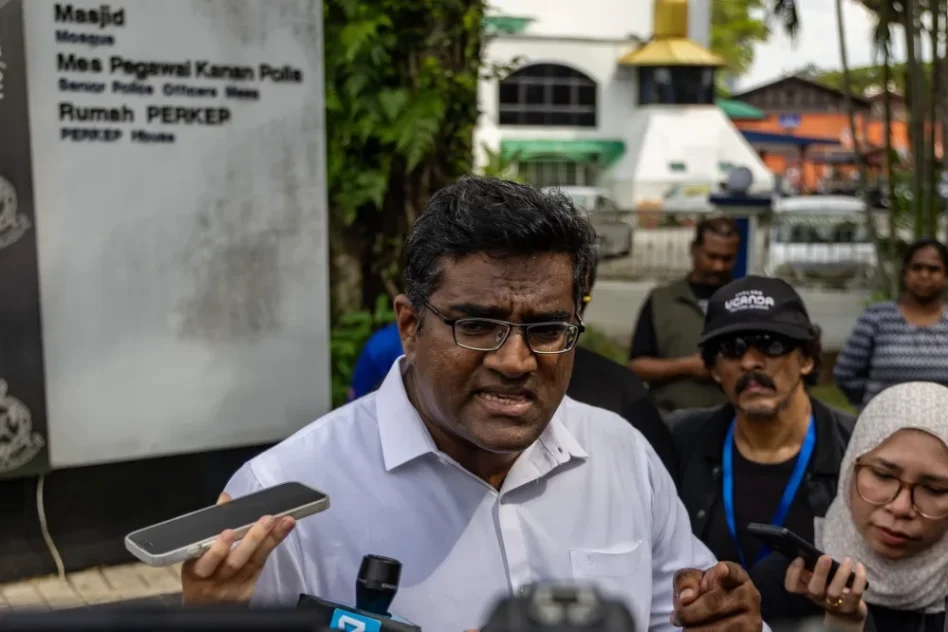
Rajesh Nagarajan (Image: Malay Mail)
According to lawyers representing the families, forensic analysis they commissioned suggests the shooting may have occurred while the men were kneeling or otherwise under control, not actively attacking.
In response, the Malaysian Bar urged immediate and independent scrutiny. It demanded transparency: all body-cam or dash-cam footage, communication logs, firearm discharge reports, forensic and ballistic evidence be preserved and made available for independent assessment.
It also called for the officers involved to be placed on administrative leave during the investigation—not as a presumption of guilt, but as a recognition that taking a life carries a weight requiring full accountability.
The shooting resulted in three deaths, many view the case as a critical test of whether lethal force in Malaysia is truly an absolute last resort or a tool too readily employed. The bigger picture matters, as public safety versus human dignity is at stake in society.
The state’s first duty is to protect its citizens. Police officers often under stress, danger, fear must have powers to respond to real threats. In some confrontations, lethal force may indeed be the only viable option.
But when the state wields a gun, it is not just enforcing law—it is exercising a power over life itself. That power demands extreme caution.
International human-rights norms emphasise that the right to life is paramount even for suspected criminals. The moment deadly force becomes easier than arrest, or when suspicion instead of danger becomes the trigger, society steps onto a slippery slope.
A core pillar of justice is accountability and transparency which builds trust not just mere fear. When police shootings happen without external oversight, each unexplained incident chips away at the public’s confidence in law enforcement. Over time, fear and distrust grow, not just of the few but of the institution itself.
As noted by human-rights observers, Malaysia has a history of policing abuses—shootings, torture, deaths in custody—often handled internally, with little public disclosure and even fewer prosecutions.
The repeated calls for independent oversight and meaningful reform are not just political posturing but are essential if the state wants to preserve legitimacy.
There is a moral cost when power fails to carry out it’s responsibility. Every human life carries dignity. When an institution claims the right to take life, even in the name of law, also assumes a moral duty to ensure that every death is justified, examined, and explained.
Without transparency and justice, the weapon becomes a symbol not of protection, but of fear. It turns the shield into a sword—and destroys the fragile trust that binds society together. ‒ Dec 11, 2025
According to lawyers representing the families, forensic analysis they commissioned suggests the shooting may have occurred while the men were kneeling or otherwise under control, not actively attacking.
In response, the Malaysian Bar urged immediate and independent scrutiny. It demanded transparency: all body-cam or dash-cam footage, communication logs, firearm discharge reports, forensic and ballistic evidence be preserved and made available for independent assessment.
It also called for the officers involved to be placed on administrative leave during the investigation—not as a presumption of guilt, but as a recognition that taking a life carries a weight requiring full accountability.
The shooting resulted in three deaths, many view the case as a critical test of whether lethal force in Malaysia is truly an absolute last resort or a tool too readily employed. The bigger picture matters, as public safety versus human dignity is at stake in society.
The state’s first duty is to protect its citizens. Police officers often under stress, danger, fear must have powers to respond to real threats. In some confrontations, lethal force may indeed be the only viable option.
But when the state wields a gun, it is not just enforcing law—it is exercising a power over life itself. That power demands extreme caution.
International human-rights norms emphasise that the right to life is paramount even for suspected criminals. The moment deadly force becomes easier than arrest, or when suspicion instead of danger becomes the trigger, society steps onto a slippery slope.
A core pillar of justice is accountability and transparency which builds trust not just mere fear. When police shootings happen without external oversight, each unexplained incident chips away at the public’s confidence in law enforcement. Over time, fear and distrust grow, not just of the few but of the institution itself.
As noted by human-rights observers, Malaysia has a history of policing abuses—shootings, torture, deaths in custody—often handled internally, with little public disclosure and even fewer prosecutions.
The repeated calls for independent oversight and meaningful reform are not just political posturing but are essential if the state wants to preserve legitimacy.
There is a moral cost when power fails to carry out it’s responsibility. Every human life carries dignity. When an institution claims the right to take life, even in the name of law, also assumes a moral duty to ensure that every death is justified, examined, and explained.
Without transparency and justice, the weapon becomes a symbol not of protection, but of fear. It turns the shield into a sword—and destroys the fragile trust that binds society together. ‒ Dec 11, 2025
KT Maran
Seremban, Negri Sembilan


No comments:
Post a Comment