Chinese J-15 Fighter Locks Onto Japanese F-15 During Carrier Operations: Which Would Have an Advantage in Combat?
Asia-Pacific , Aircraft and Anti-Aircraft
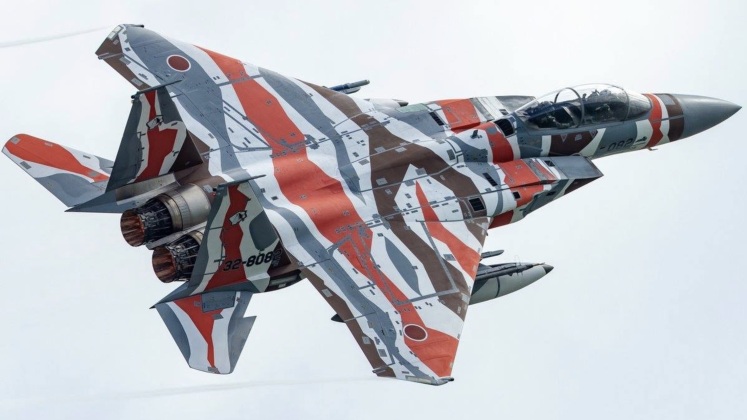
A Chinese People’s Liberation Army Navy J-15 carrier based fighter operating from the aircraft carrier Liaoning formed a radar lock on a Japanese F-15 fighter over international waters southeast of Okinawa Island on December 6. Japanese Defence Minister Shinjiro Koizumi quickly confirmed the incident, with the Japanese government issuing a protest through diplomatic and defence channels. This was the first time Japan publicly disclosed an incident in which a Chinese military aircraft directed its radar at a Japanese aircraft. The incident follows a significant rise in tensions between Tokyo and Beijing, after Japan’s new prime minister, Sanae Takaichi, threatened to intervene militarily in the ongoing conflict between the People’s Republic of China on the Chinese mainland, and the Republic of China based on Taiwan, which have for decades remained in a state of civil war.
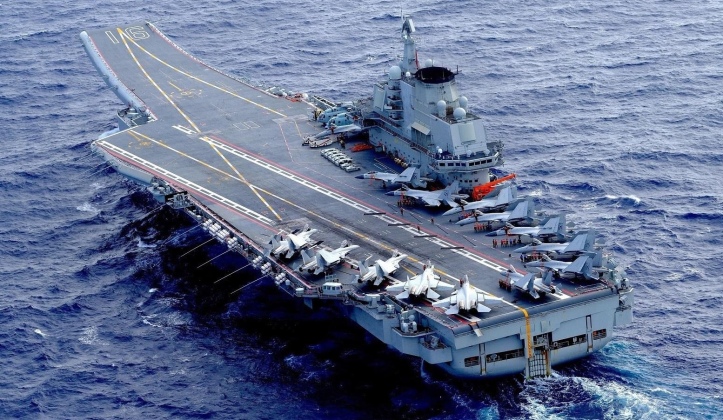
The Liaoning is one of three aircraft carries currently in service in the People’s Liberation Army Navy, and was confirmed to be sailing near Kubashima Island, west of Okinawa, on December 5. The following day the aircraft carrier passed between Okinawa and Miyakojima Island along with three destroyers, before proceeding into the Pacific Ocean. The Liaoning and its sister ship the Shandong were revealed in November 2024 to have significantly improved the capabilities of their air wings with the integration of new J-15B ‘4+ generation’ fighters and supporting J-15D electronic attack jets. The J-15B is far superior to the baseline J-15s that first joined the fleet in the early 2010s, with improvements including higher use of more advanced composite materials for a lighter and more durable airframe, use of a more advanced AESA radar, and integration of advanced stealth coatings, and use of some of the world's most sophisticated avionics and electronic warfare systems.
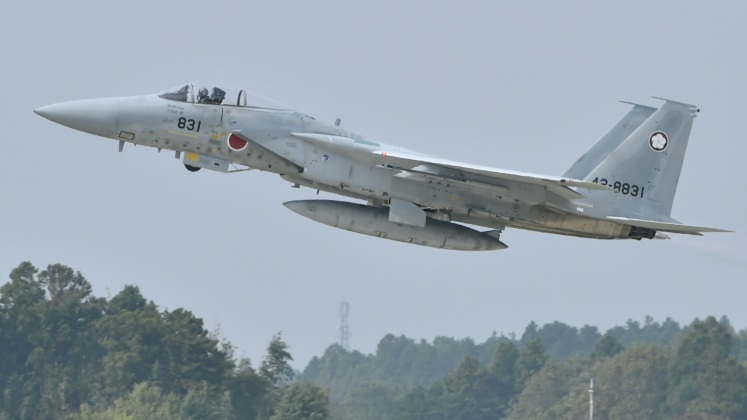
While the J-15B a close contender for the title of the world’s most capable pre-fifth generation fighter class, the F-15J by contrast is one of the oldest fourth generation fighter types still in service anywhere in the world. The fighters first entered service in 1981, and were based closely a design that first joined the U.S. Air Force six years prior in 1975. The Japanese fleet still largely relies on AIM-7 air-to-air missiles for beyond visual range combat, which are considered close to three decades beyond the Chinese PL-15 and PL-16 that equip the J-15B in their sophistication. The Japanese aircraft not only carry much smaller radars, but these rely on mechanically scanned arrays that have long since been considered obsolete, and are relatively straightforward to jam for modern electronic warfare suites.
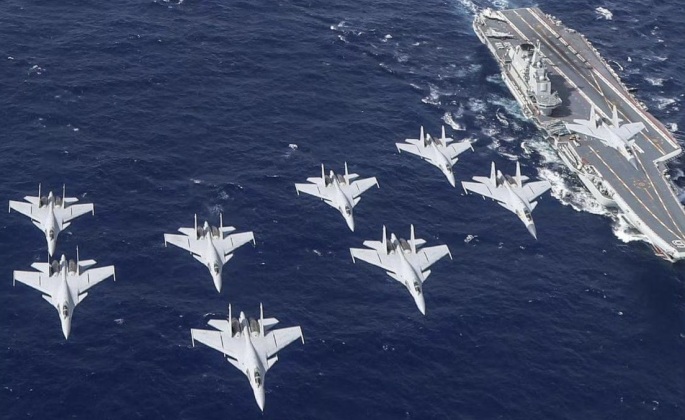
The outcome of a clash between Chinese J-15B and Japanese F-15J fighters over the Pacific would be highly one sided, although Japan could potentially seek to counterbalance Chinese advantages by deploying E-767 Airborne Warning and Control Systems to bridge the discrepancy in situations awareness. Although China’s new aircraft carrier the Fujian deploys KJ-600 Airborne Warning and Control Systems, the air wing of the Liaoning does not. Nevertheless, the age of the E-767, which uses a radar from the 1980s, seriously limits the degree of support it can provide, particularly compared to modern systems such as the E-7 and Chinese KJ-500. The system is expected to be relatively straightforward to evade should the Chinese fighters be deployed with support from J-15D electronic attack jets, which were developed specifically to conceal fighter units from radar detection in much the same way as the latest variants of the U.S. Navy E/A-18G.


"JAPAN SET TO FIELD THE LARGEST F-35 FLEET OUTSIDE THE U.S."
ReplyDeleteJapan's military resurgence is accelerating at a pace that could reshape the Indo-Pacific power dynamics by 2035.
The Air Self-Defense Force is procuring a large fleet of F-35 Lightning II stealth fighters, consisting of both F-35A conventional variants and F-35B short takeoff and vertical landing variants.
The F-35B variants are particularly significant as they will enable operations from the JMSDF's Izumo-class "helicopter destroyers" which are being modified into effective light aircraft carriers.
This fleet is projected to reach approximately 147 jets in total, making it one of the largest F-35 operators globally.
https://x.com/World_At_War_6/status/1997274824079491384?s=20
wakakakaka… 1st where to get the necessary REE for the F35 manufacturing?
DeleteRight now, all production lines of all F35 have been down-tooled in US.
Ooop… in ur wet dream, perhaps with F35 PPT!
Remember History but MOVE ON
ReplyDeleteModern Germany is Not Nazi Germany
(Take Note Eastern Bully, Modern Yapan is Not Imperial Yapan)
🇩🇪🇵🇸German Chancellor Friedrich Merz says Germany won't recognize Palestine:
“The German government, unlike other European states, has refrained from early recognition of a Palestinian state. We will not do so in the foreseeable future either”
https://x.com/Partisan_12/status/1997687606012969346?s=20
Germany is still shackled by the memories of the Holocaust
DeleteIndeed, Modern Yapan is Not Imperial Yapan!
DeleteWaiting for it to fire the 1st bullet as those mfering imperial 蝗军!
Ooop… the Japan has taken the 1st move to station medium-range surface-to-air missiles on Yonaguni, about 110km east of Taiwan & less than 300km from SE China coast.
Remember, the Cuban crisis that was initiated when SU installed ballistic missile stations in tic for tac of the US ballistic missiles placed in Turkey?
This Japanese military move IS a provocation for Chinese to react strongly & openly!
Germany REMEMBERS History but has MOVED ON.....
Delete(Eastern Bully please take note, if you do the same with Taiwan and Yapan everyone prospers. Don't Be Shackled by the Memories of Nanjing etc)
German Chancellor Merz posts after Yad Vashem visit: "I bow my head before six million men, women, and children from all over Europe who the Germans murdered because they were Jews."
https://x.com/Osint613/status/1997686042711969806?s=20
Mfer, have u ever wondered why the zionists remember the holocaust & NEVER EVER moved-on?
DeleteThis is Incredible.
ReplyDeleteNazi Germany and Imperial Yapan were part of the Evil Axis against Western Bully in WW2.
Today Yapan is purchasing F35s......now Germany too !!!
GERMANY
The German government will increase its order for F-35 Lightning fighter jets to 50 units. This means it will order an additional 15 aircraft.
With this number of F-35s, Germany will become the largest European operator of this combat aircraft.
The additional order is estimated to cost Germany 2.5 billion euros.
In this regard, the facilities where the aircraft will be housed are already under construction.
The rearmament process in Europe continues.
https://x.com/jmriosp/status/1997662710578737368?s=20
Rearmament process in Europe continues with what?
DeleteBroken arsenal supply chains due to over dependence on the yankee fire power. Europe can't ever support the daily bullets requirement in Ukraine!
Hiroshima and Nagasaki Remembered in History, Never Forget but...
ReplyDeleteMOVE ON
yell that to the zionists
DeleteAnd to Top It Off the other member of the WW2 Axis of Evil, Yitaly is also arming its F35s with the latest missiles from Western Bully.
ReplyDelete🇮🇹🇺🇸
Surprising development, the US approved a FMS for 100 JASSM-ER missiles for Italy. These will likely be equipped on Italian F-35’s, the estimated total cost is 301 million dollars. This is definitely a major capability boost.
https://x.com/NichoConcu/status/1997240921482756493?s=20
wakakakaka… what a wet dream
DeleteThis is a Russian Military Watch report where Russian and Chinese equipment are always 10 feet tall, and Western equipment are always just toys.
ReplyDeleteThe real life combat results are totally different.
F-15 has proven a Very dangerous opponent to every adversary that has ever encountered it.
wakakakaka… talking about oneupmanship of fart with yr military know-nothingneds!
Delete