
China Demonstrates Submarine Intercontinental Range Nuclear Strike Capabilities in Pacific Show of Force
Asia-Pacific , Naval
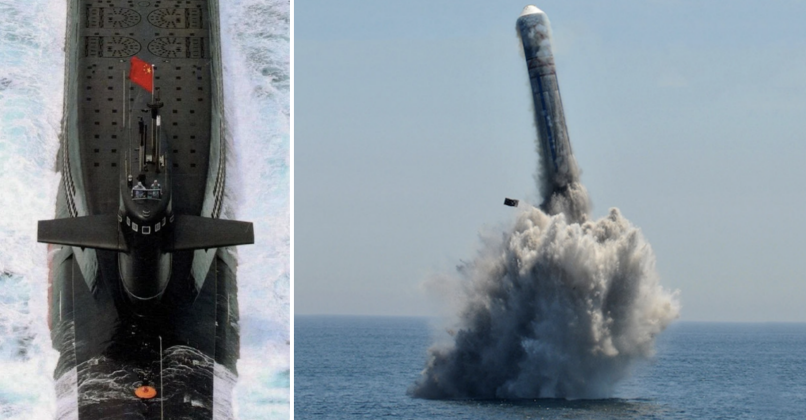
The Chinese People's Liberation Army Navy has announced that, at 12:01 on July 6, a strategic nuclear submarine successfully launched a ballistic missile carrying a training simulated warhead into the Pacific Ocean, with the missile having accurately landed in its designated target area. The missile in question is reported to have been the JL-3, which was introduced into service near the beginning of the decade to modernise the capabilities of the Navy’s Type 094 class strategic submarines. Shortly before the launch, Chinese authorities issued warnings to governments worldwide, with governments in Western Bloc countries and Japan widely criticising the launch.
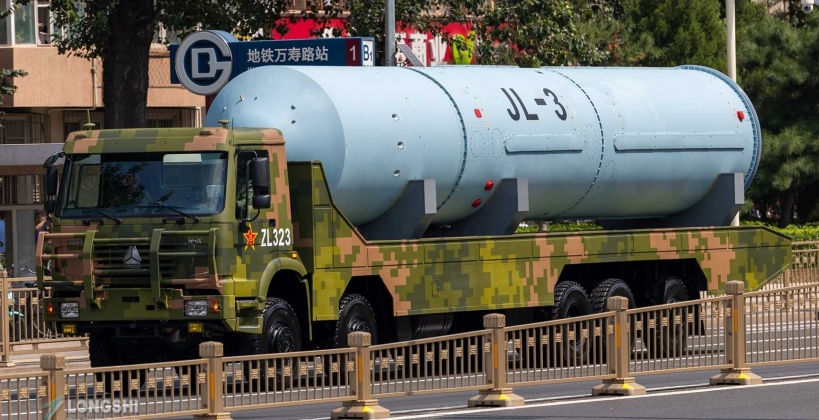
The ballistic missile is reported to have been launched from the Bohai Sea, and to have travelled approximately 7,300 kilometres. During the test, the submarine-launched strategic missile flew over the waters south of Cape Shio, the southernmost point of Honshu, Japan, in Wakayama Prefecture. It was monitored by the 30,000 ton Liaowang 1 maritime patrol ship, the 17,000 ton Yuanwang 3 space tracking ship, and the newer 25,000 ton Yuanwang 6 third-generation space tracking ship. The launch likely served as much as a test of Chinese space tracking capabilities as of the submarine-launched ballistic missile strike capability itself.
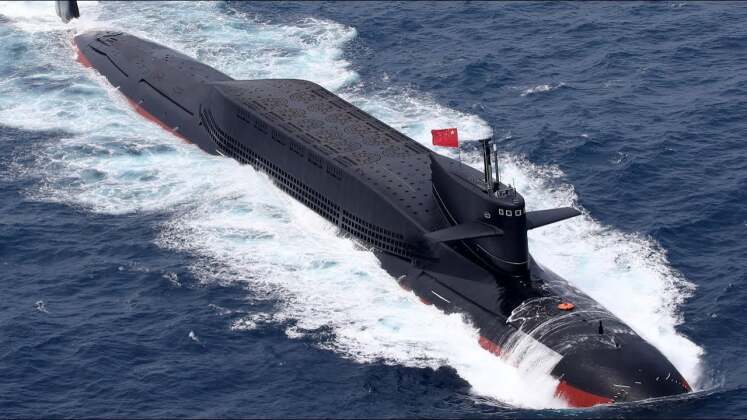
While the preceding JL-2 is generally assessed to have a range of around 8,000 kilometres, the JL-3 is widely assessed to extend the targeting range of Chinese strategic submarines to approximately 10,000–12,000 km or more. This allows Type 094 and future Type 096 class submarines to strike cities across the continental United States from safer bastions in the South China Sea or near Chinese coastal waters. The new missile benefits from significantly improved payload and missile bus efficiency, with an efficient propulsion system and improved solid-fuel technology, giving it better energy-to-weight performance. This translates into either longer range, heavier payload options, or more flexible warhead configurations compared to the JL-2.
The JL-3 is thought to integrate more warheads than the JL-2, and benefits from improved accuracy and guidance systems for the independent targeting of these warheads. Its development complements significant advances made in both expanding China’s production capacity for nuclear powered submarines, and in modernising the capabilities of these ships and in particular improving their quieting technologies. It was confirmed in early June that three operational shipyards were producing nuclear powered submarines, compared to two in the United States and just one in each other producing country. The use of magnetic drive technologies and Rim Driven Propellers, which the Chinese Type 095 class attack submarine is thought to be the first submarine class in the world to benefit from, are also expected to significantly improve the quietness of future Type 096 class ballistic missile submarines as these become the primary launch platform for the JL-3.


No comments:
Post a Comment