
‘Might makes right’ world driving energy instability, says EU envoy
Maria Castillo Fernandez says global issues are caused by breakdown in rules-based order rather than Western alliances clashing with Eastern pacts
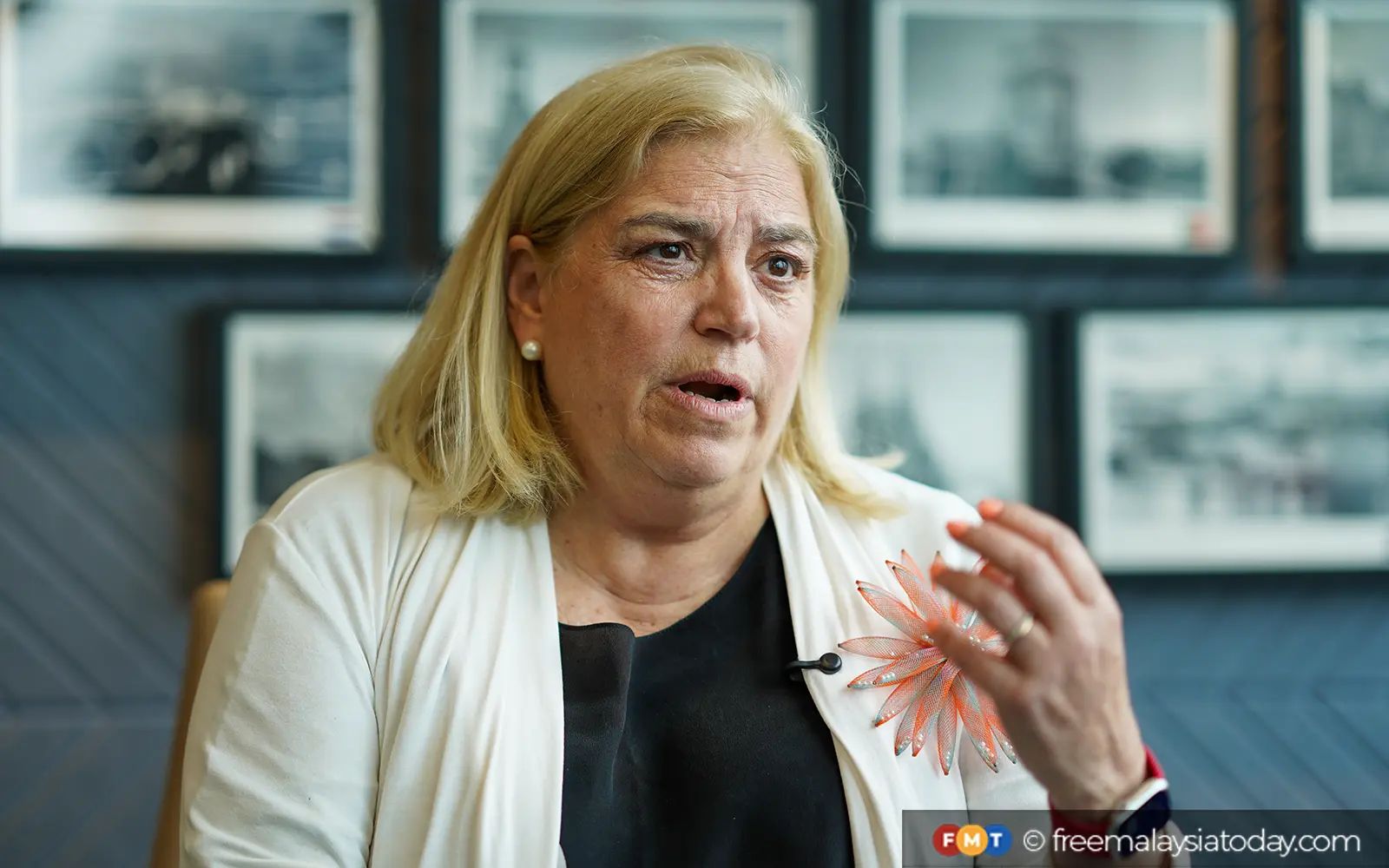
Special envoy Maria Castillo Fernandez sees the EU’s partnership with the Indo-Pacific as one of true engagement and commitment in the midst of overlapping global crises.
KUALA LUMPUR: Suggestions that tensions over the Strait of Hormuz reflect a clash between Western and Eastern blocs are inaccurate, according to a European Union envoy.
The EU’s special envoy to the Indo-Pacific, Maria Castillo Fernandez, said the current instability was the result of a world of “might makes right”, where power governs trade and security instead of rules and laws.
“It’s not about a Western or Eastern alliance,” she said in an interview with FMT. “We are in a very critical moment where there is an enormous erosion of multilateralism and international rule-based order.”
Fernandez said the real risk the world faces now is a situation in which countries abandon agreed upon rules and rely instead on force.
“We need a world with rules. We need a world where, once we commit to rules, we stick to them. Otherwise, it will be a law of the jungle, of the one who has more force wins.
“Middle countries and middle democracies would not be able to survive,” the diplomat warned.
The ongoing conflict in the Middle East between Iran, Israel and the US has heightened concerns over disruptions to energy supplies and maritime trade routes passing through the Strait of Hormuz.
Closer to home, the Straits of Malacca — one of the world’s busiest and most critical maritime routes — faces similar vulnerabilities.
While the Straits of Malacca is shorter than the Hormuz Strait, Fernandez said, the sea route serves as a key passageway for much of the world’s trade, reflecting the importance of upholding international maritime laws.
She pointed out that the current rules-based order includes various laws covering nuclear non-proliferation to the Paris Agreement on climate change, and even the United Nations Convention on the Law of the Sea — the latter having been used to reject Beijing’s expansive claims in the South China Sea.
“We have to uphold international rules. It is key and existential for all of us,” she added.
Fernandez also stressed that Europe and the Indo-Pacific are deeply interconnected, with crises in one region quickly affecting the other.
“Whatever happens on this side of the world has an impact on us. Whatever happens in Europe has an impact here — whether it is a war, a health crisis like Covid-19, or an energy crisis caused by a conflict.”
She said the EU’s partnership with the Indo-Pacific is one of true engagement and commitment at a time of overlapping global crises.
The EU–Indo-Pacific pact currently spans trade and investment deals, as well as cooperation in renewable energy, digital, and other areas.
“If you see all we have done — digital partnerships, security partnerships, green alliances, agreements for science and innovation, free trade agreements with many of the partners in the region — it’s a lot of substance and it touches people,” she pointed out.
The EU’s special envoy to the Indo-Pacific, Maria Castillo Fernandez, said the current instability was the result of a world of “might makes right”, where power governs trade and security instead of rules and laws.
“It’s not about a Western or Eastern alliance,” she said in an interview with FMT. “We are in a very critical moment where there is an enormous erosion of multilateralism and international rule-based order.”
Fernandez said the real risk the world faces now is a situation in which countries abandon agreed upon rules and rely instead on force.
“We need a world with rules. We need a world where, once we commit to rules, we stick to them. Otherwise, it will be a law of the jungle, of the one who has more force wins.
“Middle countries and middle democracies would not be able to survive,” the diplomat warned.
The ongoing conflict in the Middle East between Iran, Israel and the US has heightened concerns over disruptions to energy supplies and maritime trade routes passing through the Strait of Hormuz.
Closer to home, the Straits of Malacca — one of the world’s busiest and most critical maritime routes — faces similar vulnerabilities.
While the Straits of Malacca is shorter than the Hormuz Strait, Fernandez said, the sea route serves as a key passageway for much of the world’s trade, reflecting the importance of upholding international maritime laws.
She pointed out that the current rules-based order includes various laws covering nuclear non-proliferation to the Paris Agreement on climate change, and even the United Nations Convention on the Law of the Sea — the latter having been used to reject Beijing’s expansive claims in the South China Sea.
“We have to uphold international rules. It is key and existential for all of us,” she added.
Fernandez also stressed that Europe and the Indo-Pacific are deeply interconnected, with crises in one region quickly affecting the other.
“Whatever happens on this side of the world has an impact on us. Whatever happens in Europe has an impact here — whether it is a war, a health crisis like Covid-19, or an energy crisis caused by a conflict.”
She said the EU’s partnership with the Indo-Pacific is one of true engagement and commitment at a time of overlapping global crises.
The EU–Indo-Pacific pact currently spans trade and investment deals, as well as cooperation in renewable energy, digital, and other areas.
“If you see all we have done — digital partnerships, security partnerships, green alliances, agreements for science and innovation, free trade agreements with many of the partners in the region — it’s a lot of substance and it touches people,” she pointed out.


She Does Not Define "Might".
ReplyDeleteIn Today's Definition It Means You Have "Nuklear Bom".
Refer Russia, China, Pakistan, Yindia and North Korea.
Hmmm, you "might" have missed out a few countries
Delete